
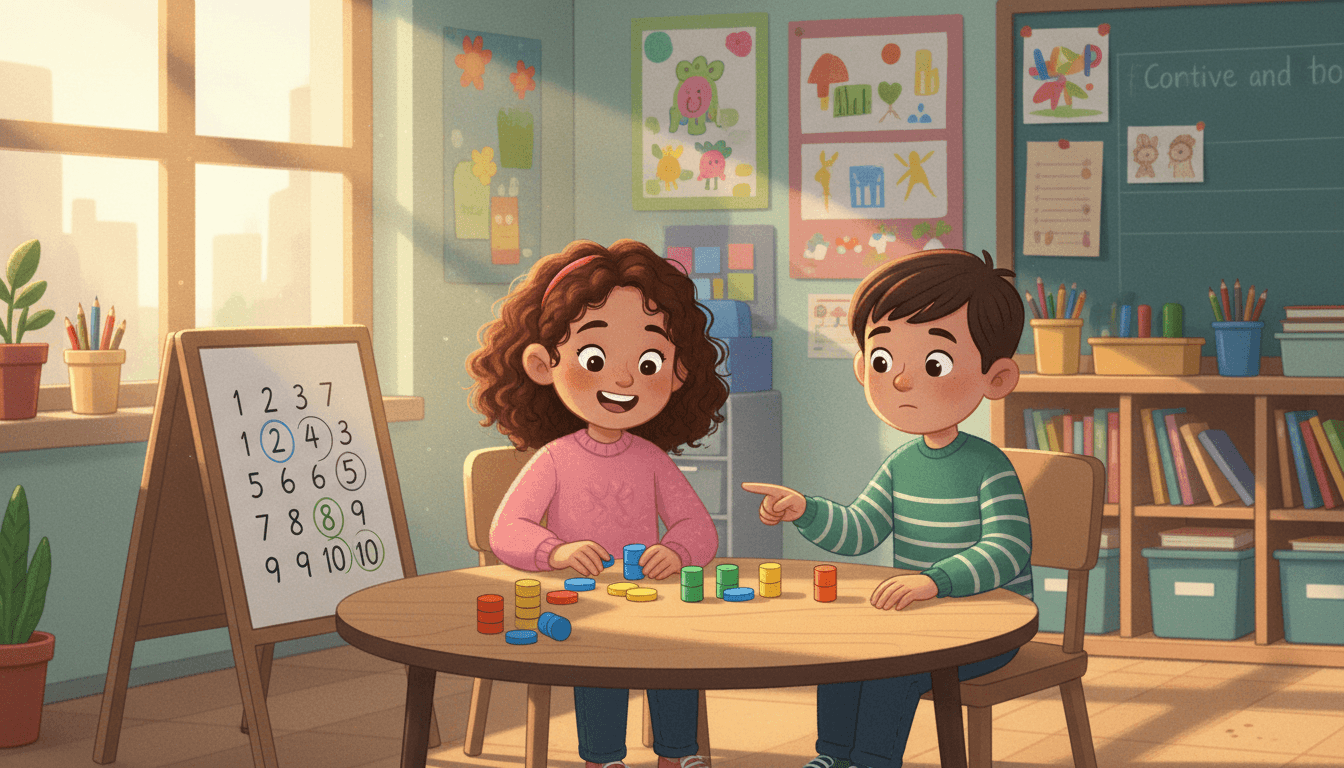
Odd and Even Numbers: How to Teach Them (Grades 1-2)
Get 30 days of free worksheet downloads
Key Takeaways
- Start with physical pairing using counters or objects before introducing any rules or patterns, so students build genuine understanding instead of memorization.
- The ones-digit shortcut (0, 2, 4, 6, 8 = even) works for any number but should only be introduced after students understand the pairing concept and why it works.
- Zero is even, not odd: it can be split into two groups of zero with nothing left over.
- Students who can chant even numbers (2, 4, 6, 8) but cannot explain why 14 is even have memorized a pattern without understanding the concept.
- Connecting odd and even to real-life situations like sharing snacks, setting a table, or class line-ups helps the concept stick beyond the classroom.
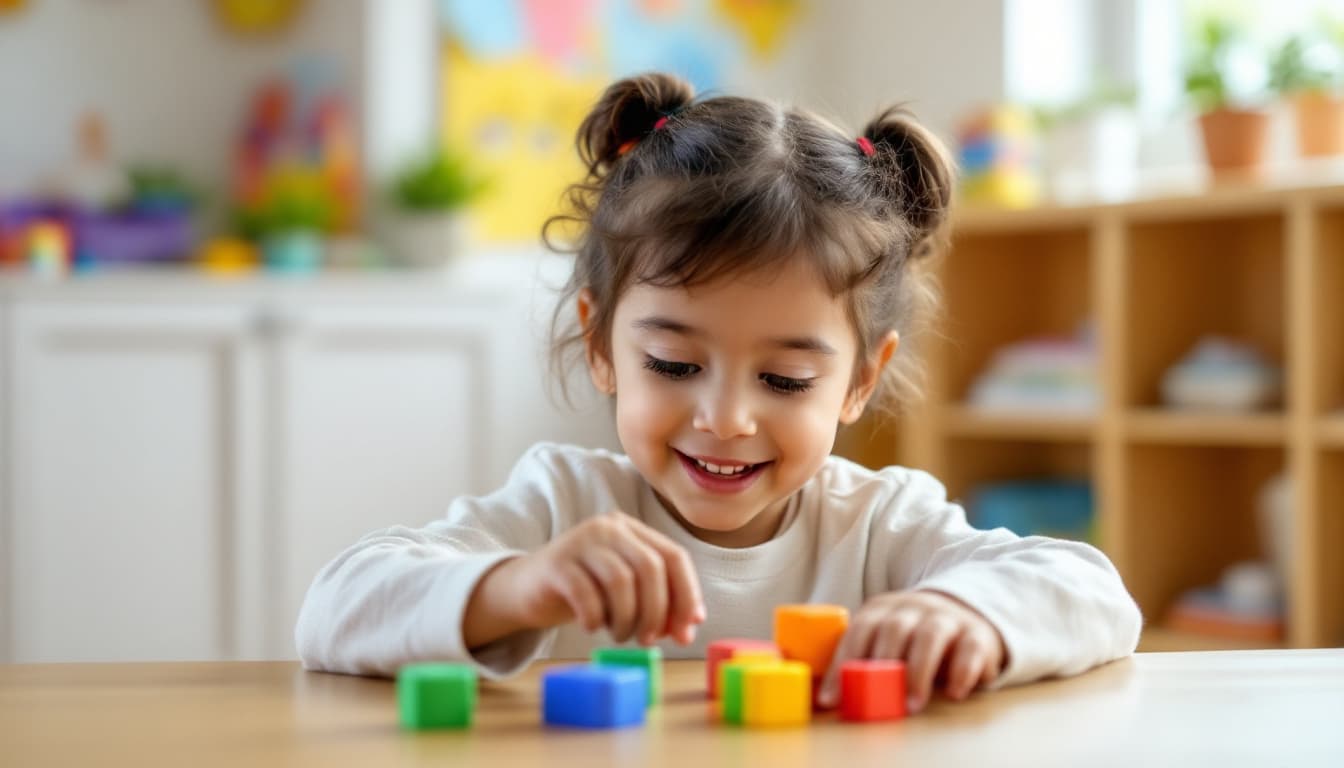
Odd and even numbers seem like they should be easy to teach. And for some kids, they are. You say "even numbers can be split into two equal groups" and they're off and running.
But for a lot of first and second graders, the concept is trickier than it looks. They can memorize the pattern (2, 4, 6, 8 are even) without actually understanding what makes a number even. And memorization without understanding falls apart the moment you ask, "Is 14 even or odd?"
Here's how to build the real understanding, not just the pattern.
What Makes a Number Odd or Even
Start with the simplest definition: an even number can be split into two equal groups with nothing left over. An odd number always has one left over.
Don't start with rules. Start with objects.
Give a child 6 counters. "Can you split these into two equal groups?" Yes. Three and three. Even.
Now give them 7. "Try to split these into two equal groups." They can't. There's always one left over. Odd.
Do this with every number from 1 to 10. Let them discover the pattern through their hands before you name it.
Key vocabulary to build gradually:
- Even: can be divided into 2 equal groups
- Odd: always has 1 left over when divided into 2 groups
- Pair: two things that go together
Some curricula introduce the formal idea that even numbers are "divisible by 2." That's accurate but probably too abstract for most first graders. Stick with "two equal groups" and "one left over." The formal language can come later.
Free Odd and Even Number Worksheets


The Pairing Strategy Kids Love
This is the single most effective way to teach odd and even, and it works every time.
Draw dots in pairs. For the number 6, draw dots like this:
- ● ●
- ● ●
- ● ●
All dots have a partner. No one is left out. Even.
For the number 7:
- ● ●
- ● ●
- ● ●
- ●
One dot doesn't have a partner. Odd.
Kids immediately grasp this. There's something about the visual of a "lonely dot" at the bottom that clicks in their brains. You'll hear them say "that one doesn't have a buddy!" and honestly, that's perfect mathematical reasoning.
Use physical pairing too. Have students line up in pairs. If everyone has a partner, the class count is even. If one person is left standing alone, it's odd. Do this at transition times and it becomes a daily math moment.
Shoe pairing activity: Collect shoes and match them into pairs. Count the total. Paired up perfectly? Even. One shoe left over? Odd. (This also reinforces one-to-one correspondence from kindergarten.)
The buddy system for numbers. Draw a number as a set of circles. Then draw lines connecting pairs. If every circle connects to exactly one other circle, it's even. If there's a loner, it's odd. Some teachers call this the "buddy check."
Skip Counting and Odd/Even Patterns
Once your students understand the pairing concept, connect it to skip counting by 2.
Even numbers are what you say when you count by 2s: 2, 4, 6, 8, 10, 12...
This is where the pattern becomes visible. Write the numbers 1 through 20 on the board. Circle the even numbers. Kids notice immediately: you're circling every other number.
Use a hundreds chart. Have students color all even numbers one color and odd numbers another. The alternating column pattern is beautiful and memorable. Some kids will stare at it for a long time. Let them.
The ones digit shortcut. For second graders ready for a rule: look at the last digit. If a number ends in 0, 2, 4, 6, or 8, it's even. If it ends in 1, 3, 5, 7, or 9, it's odd. This works for any number, no matter how big.
But make sure they understand WHY this works, not just that it works. The last digit tells you whether you can pair everything up. A number ending in 4 means after you pair up all the tens, the remaining ones (4) can also be paired. A number ending in 3 means you'll have one left over.
Test it with big numbers. "Is 46 even or odd?" Even. "Is 153 even or odd?" Odd. "Is 1,000 even or odd?" Even. Kids love testing big numbers once they know the shortcut. It feels like a superpower.
Activities for the Classroom
Here are activities that go beyond worksheets and keep the energy high:
Even/Odd sorting bins. Label two bins. Give each student a card with a number. They figure out if it's odd or even and place it in the right bin. Start with single-digit, then level up to double-digit.
Grab and count. Students grab a handful of counters (or beans, or Unifix cubes). Count them. Try to pair them. Record: "I grabbed 9. It's odd because there's 1 left over." Repeat five times and look for patterns in their results.
Odd/Even hopscotch. Draw a number line on the floor with tape. Call out a number. Students hop to it and shout "ODD!" or "EVEN!" Add time pressure for second graders who need a challenge.
Partner dice game. Both players roll a die. Add the numbers. If the sum is even, Player 1 gets a point. If odd, Player 2 gets a point. After 10 rounds, who won? (This also sneaks in addition practice.)
Building towers. Give students Unifix cubes. "Build a tower of 8. Can you split it into two equal towers?" Yes. Even. "Now build 11. Can you split it equally?" Nope. Odd. The physical act of breaking and comparing towers reinforces the core concept.
Odd/Even art. Students create a collage or drawing using only an even number of shapes. Or only odd. Then they explain their choices. This pushes creative thinking alongside math reasoning.
Odd and Even in Real Life
Connecting math to the real world isn't just good teaching. For young kids, it's essential. Abstract concepts need concrete anchors.
Setting the table. "We have 5 people for dinner. Is that odd or even? Can everyone have a partner for a conversation, or will someone be the odd one out?"
Sharing equally. "You have 9 grapes. Can you share them equally with your sister?" This connects odd/even directly to fairness, which is something every young child cares about deeply.
Pairs in nature. Eyes come in pairs (even). Spiders have 8 legs (even). Dogs have 4 legs (even). Starfish have 5 arms (odd). Making a nature list of odd and even body parts is surprisingly fun.
House numbers. On many streets, even numbers are on one side and odd numbers on the other. Take a walk and check. Kids find this mind-blowing.
Calendar math. "Today is March 22nd. Is 22 odd or even?" Do this every morning during calendar time and it becomes automatic.
Shoe check. "Everyone take off your shoes. How many shoes total? Is it odd or even?" (It should always be even, since everyone contributes a pair. But what happens if someone is absent?)
The goal is for kids to start noticing odd and even on their own. When a student says, "Hey, there are 7 kids at this table, that's odd!" unprompted, you know the concept has stuck.
Common Confusions to Watch For
After teaching this to many first and second grade classes, these are the spots where kids get stuck:
Thinking 0 is odd. Zero is even. It can be split into two groups of zero. This confuses adults too, honestly. But by the pairing definition, 0 works: there are no objects left over because there are no objects at all.
Memorizing the pattern without understanding. A child who can chant "2, 4, 6, 8" but can't explain why 14 is even hasn't learned the concept. Always go back to pairing when in doubt.
Confusion with the number 1. "But 1 is the first number, so shouldn't it be even?" Some kids associate "first" and "even" because they both feel like starting points. Be explicit: 1 is odd because you can't split 1 into two equal groups.
Thinking "even" means "big" or "odd" means "small." This happens more often than you'd expect. Reinforce that size has nothing to do with it. 2 is small and even. 99 is big and odd.
Adding odd + even confusion. Second graders start exploring what happens when you add odd + odd, even + even, or odd + even. This is great higher-level thinking, but it can muddy the basic concept if introduced too early. Save it for after the foundation is rock solid.
Only working with small numbers. If students have only practiced with 1-10, they might think the concept doesn't apply to larger numbers. Intentionally practice with numbers up to 100 once the ones-digit shortcut is in place.
Keep Reading
- How to Teach Addition to Kindergartners: Hands-On Activities That Build Understanding
- How to Teach Number Sense to Kindergartners: Activities That Build Real Understanding
- How to Teach Ordinal Numbers to Kindergartners: Activities, Tips, and What Actually Works
Practice Pages That Reinforce the Concept
Once your students understand the pairing concept and can identify odd and even numbers through 20, it's time for independent practice.
Start with concrete-to-abstract pages. The best number sense practice pages show pictures of objects that students count and then classify as odd or even. This keeps the visual anchor in place.
Sorting activities. Pages where students cut out numbers and glue them into "odd" and "even" columns give hands-on practice with a clear structure.
Color-by-number with odd/even. "Color even numbers blue and odd numbers red." The finished picture only appears if they classify correctly. Kids love the reveal.
Number line activities. Marking odd and even on a number line reinforces the alternating pattern and connects to skip counting.
Challenge problems for second graders. "I'm thinking of an even number between 30 and 40 that you say when counting by 5s." Problems like these require students to use odd/even alongside other number concepts.
Word problems. "Marcus has 13 stickers. He wants to share them equally with his friend. Can he do it without cutting a sticker?" These connect odd/even to division readiness, which is where this concept really pays off in later grades.
The beauty of odd and even is that it's one of the first times kids experience a mathematical property, a rule that's always true, no matter what number you pick. Every whole number in the universe is either odd or even. There are no exceptions. For a 6-year-old, that kind of certainty is pretty amazing. Help your kiddos feel the power of that idea, and they'll carry it with them 🔢

Adi Ackerman
Head Teacher
Adi is the Head Teacher at ClassWeekly, with years of experience teaching elementary students. She designs our curriculum-aligned worksheets and writes practical guides for teachers and parents.
Keep Reading
Ready to download? Try ClassWeekly free for 30 days.
Unlimited worksheets for PreK through 5th grade. Cancel anytime.