
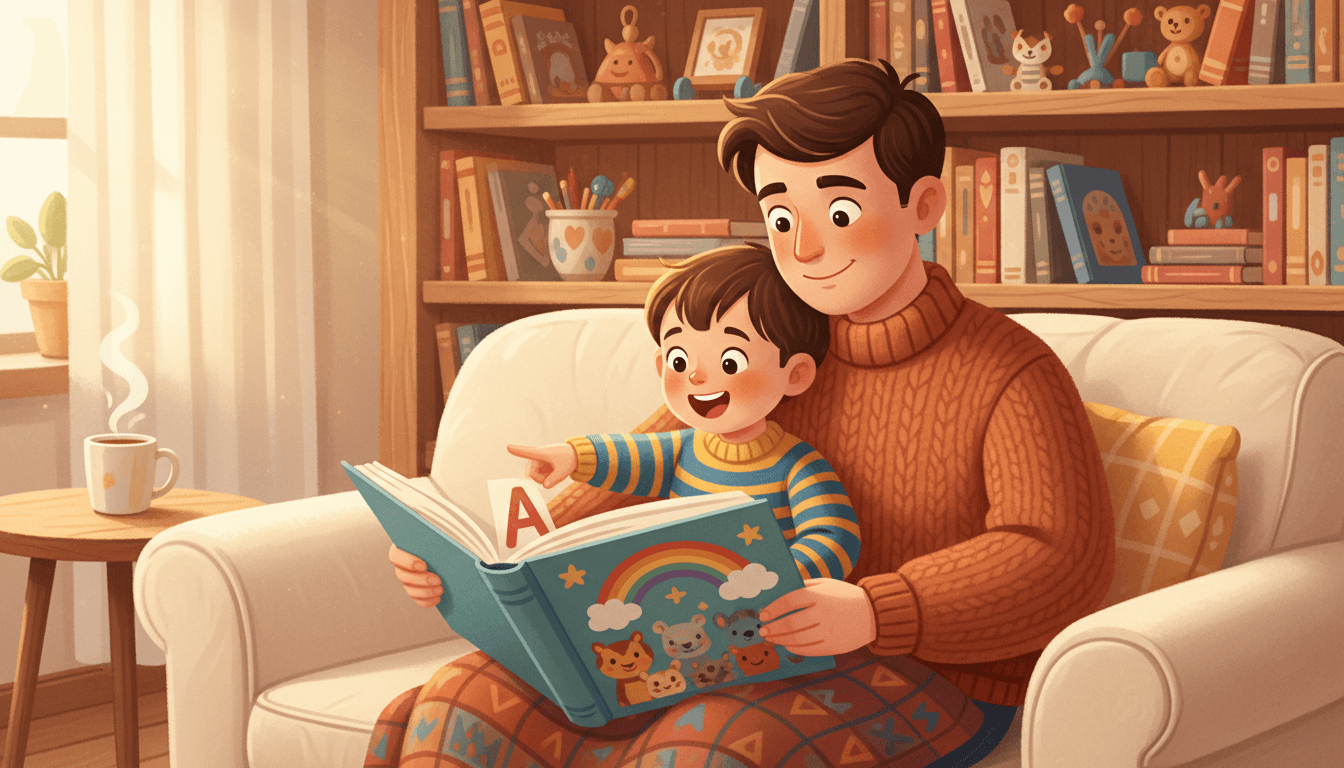
Teaching Reading to Preschoolers: Where to Start
Get 30 days of free worksheet downloads
Key Takeaways
- Reading readiness in preschool is about a cluster of skills like rhyme recognition, print awareness, and letter knowledge, not a specific age.
- Daily read-alouds are the single most impactful literacy activity for preschoolers, building vocabulary, comprehension, and print awareness simultaneously.
- Phonemic awareness is entirely an ear skill developed through rhyming games, syllable clapping, and sound stretching, requiring no printed materials.
- Teaching letter names and sounds together, starting with letters in your child's name, is more effective than teaching names first and sounds later.
- Environmental print like stop signs and cereal boxes is genuine early reading behavior and should be used as a teaching tool throughout daily life.
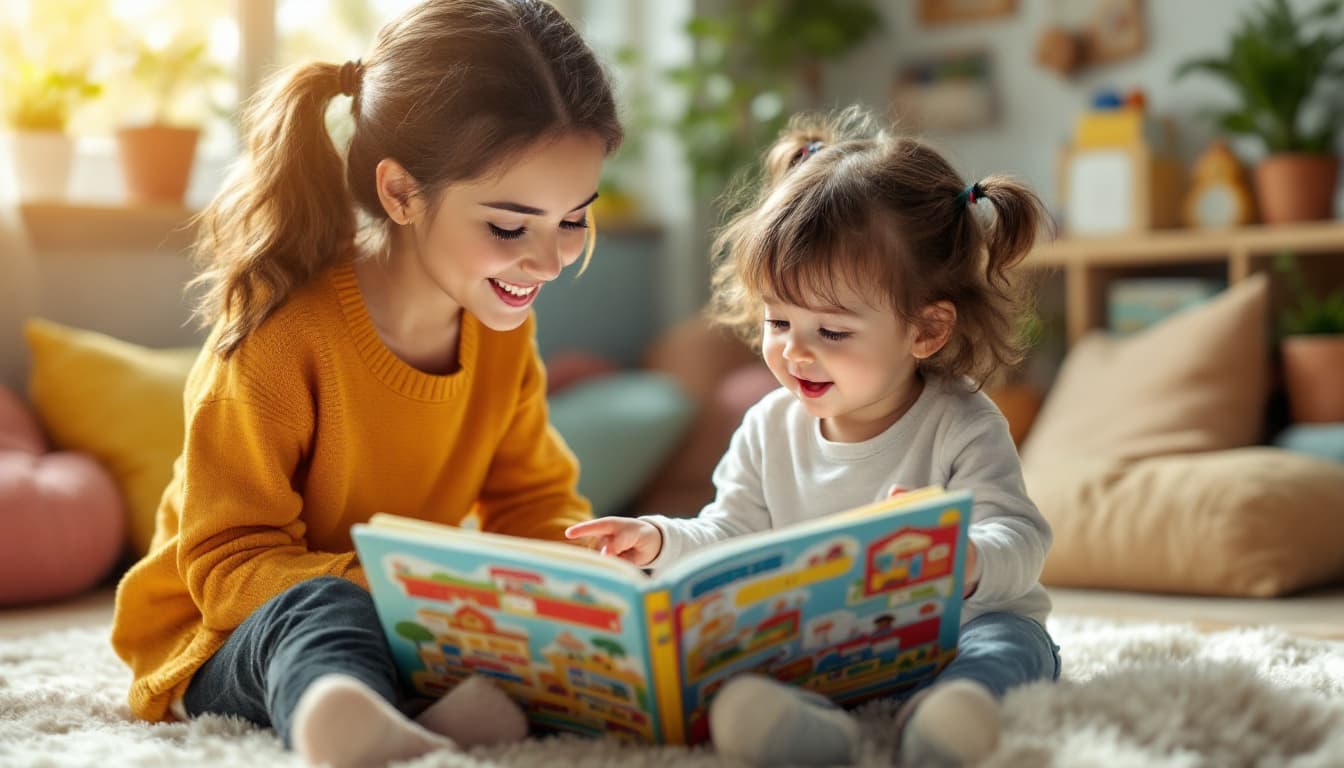
"When should I start teaching my child to read?" is probably the most common question parents of preschoolers ask. And honestly, it's a harder question than it seems.
The short answer is: you probably already have. Every time you read a bedtime story, pointed to a word on a cereal box, or sang the alphabet song, you were laying the groundwork.
The longer answer is that "teaching reading" at the preschool level doesn't look like what most parents expect. There are no flashcards. No phonics drills. No pressure to sound out words. It's gentler than that, and more effective.
Here's where to actually start.
When Are Preschoolers Ready to Start Reading
Readiness for reading isn't about age. It's about a cluster of skills that develop at different rates for every child.
Signs your preschooler is building reading readiness:
- Holds books right-side up and turns pages front to back
- Knows that we read left to right, top to bottom
- Recognizes some letters, especially the ones in their name
- Can hear rhyming words ("cat" and "hat" sound the same at the end)
- Asks what signs, labels, or words say
- Pretends to read books by retelling the story from the pictures
- Can follow a simple story from beginning to end
If your 3-year-old is doing most of these things, they're ready for more structured pre-reading activities. If your 4-year-old isn't doing some of these yet, that's okay too. Focus on the skills they're missing rather than jumping ahead.
One thing that matters more than any specific skill: does your child enjoy books? A preschooler who loves being read to and handles books with curiosity has the most important foundation of all. Everything else can be taught.
And please, resist the pressure to have your child reading before kindergarten. Some kids read at 4. Some read at 7. Research consistently shows that early readers don't maintain an advantage over later readers by 3rd grade, as long as the later readers get solid instruction.
Free Kindergarten Letter Worksheets


Read-Alouds: The Most Important Thing You Can Do
If you do nothing else on this list, do this: read to your child every single day.
That's not a cliche. It's the single most supported finding in early literacy research. Children who are read to regularly enter kindergarten with larger vocabularies, stronger comprehension skills, and more background knowledge than children who aren't.
How to make read-alouds more powerful:
Point to words as you read. Not every word on every page. But occasionally run your finger under a sentence so your child sees the connection between spoken words and printed text. This teaches print awareness without making it a lesson.
Ask questions during the story. "What do you think will happen next?" "Why is the bear sad?" "What would you do?" These questions build comprehension skills that matter more than decoding.
Read the same books over and over. Repetition is not boring to preschoolers. It's how they learn. A child who has heard "Brown Bear, Brown Bear" thirty times is memorizing sentence patterns, internalizing rhyme, and building prediction skills.
Read different kinds of books. Fiction, nonfiction, poetry, alphabet books, wordless picture books. Each type builds different skills. Nonfiction builds vocabulary. Poetry builds phonological awareness. Wordless books build narrative skills.
Let your child "read" to you. Hand them a familiar book and let them retell it from memory. They're not really reading, but they're practicing the act of reading: holding the book, turning pages, constructing a narrative. That practice matters.
Twenty minutes a day is ideal. But even five minutes is better than zero. Bedtime, breakfast, waiting rooms. Any time counts.
Teaching Letter Names and Sounds
Letter recognition is one of the strongest predictors of reading success in kindergarten. Preschoolers who know their letters arrive at school ready to learn phonics.
Start with their name. The letters in your child's name are the most meaningful letters in the world to them. Point them out everywhere: on their lunch box, their bedroom door, their artwork.
Teach letter names and sounds together. "This is the letter B. It makes the /b/ sound, like ball and banana." Research supports teaching both simultaneously rather than names first and sounds later.
Focus on a few letters at a time. Don't try to teach all 26 at once. Start with the letters in their name, then add high-utility letters (S, T, M, A, P) that appear in many words.
Use alphabet books strategically. Choose books with one letter per page and clear illustrations. "A is for apple" books work because they link the letter, the sound, and a concrete image.
Magnetic letters on the fridge. Keep a set at your child's eye level. Casually name letters as they play with them. "Oh, you found the letter R! That's the first letter in 'rainbow.'"
Alphabet puzzles. Wooden puzzles where each letter lifts out of its own shaped hole build letter recognition and fine motor skills simultaneously.
Don't worry about teaching uppercase and lowercase together at this stage. Most preschool instruction focuses on uppercase first because the shapes are simpler. Lowercase can wait for kindergarten.
And a gentle reminder: letter recognition is not reading. It's a prerequisite. A child who knows all 26 letters still needs phonemic awareness, blending skills, and vocabulary to actually read. Letters are the starting point, not the finish line.
Building Phonemic Awareness Through Play
Phonemic awareness is the ability to hear, identify, and manipulate individual sounds in spoken words. It's the foundation of phonics, and it doesn't require a single printed letter.
This is entirely an ear skill. It happens out loud, through games and conversations.
Rhyming games. "What rhymes with cat? Bat, hat, sat, mat!" Start by identifying rhymes, then progress to generating them. Nursery rhymes and Dr. Seuss books are perfect for this.
Sound sorting. "Does 'dog' start with the same sound as 'duck' or 'fish'?" Start with obvious differences and gradually make them subtler.
Syllable clapping. Clap the beats in names and words. "Wa-ter-mel-on" gets four claps. "Cat" gets one. This builds awareness that words are made of smaller parts.
Sound stretching. Pick a word and stretch it out: "mmmmm-aaaaa-nnnn." This is the precursor to blending, which is the core skill of decoding (sounding out) words.
First sound isolation. "What sound does 'sun' start with?" Start with words where the first sound is continuous (s, m, f, l) rather than stops (b, d, t, k). Continuous sounds are easier to isolate.
Sound substitution. "If I take the /k/ off 'cat' and put /b/, what word do I get?" This is advanced phonemic awareness and isn't expected until late pre-K or kindergarten, but some kids love this game.
The beauty of phonemic awareness activities is that you can do them anywhere. In the car, at the grocery store, during bath time. No materials needed. Just your voice and your child's ears.
Environmental Print: Reading Is Everywhere
Long before your child reads a book, they're reading the world around them.
Environmental print is the text that surrounds us in daily life: stop signs, restaurant logos, cereal boxes, street signs. Your preschooler probably already "reads" some of these. They see the golden arches and say "McDonald's." They see a red octagon and say "stop."
This counts. This is real reading behavior. Your child is connecting visual symbols to meaning, which is exactly what reading is.
How to use environmental print as a teaching tool:
Point out letters in signs and labels. "Look, that stop sign has four letters. S-T-O-P. Can you find the letter S?"
Play "I spy" with letters. "I spy the letter M on that sign. Can you find it?" This works in grocery stores, restaurants, on walks, anywhere.
Make a print-rich home. Label drawers and bins (SOCKS, TOYS, BOOKS). Hang a daily schedule with words and pictures. Put a menu on the play kitchen. Surround your child with meaningful text.
Create a word wall. Write 5-10 important words (your child's name, family names, favorite foods) on index cards and tape them to a wall at kid height. Add new words as they learn them.
Cook together with simple recipes. Write out a recipe in large, clear print with pictures. "Step 1: Get 2 eggs." Your child sees that written words give instructions for real-world actions.
Environmental print teaches kids that reading is useful. It's not just a school skill. It's how you know which door is the bathroom, which cereal is yours, and what street you live on. That understanding motivates kids to keep learning.
Signs Your Preschooler Is Ready for More
Some preschoolers take to pre-reading activities quickly and seem to want more. Here's how to tell if your child is ready for the next step:
They can blend sounds together. If you say "c-a-t" slowly and they say "cat!" they're demonstrating blending, which is the core skill of decoding.
They recognize most letters and know many sounds. Not all 26, but probably 15-20.
They point to words and ask what they say. This curiosity is a powerful signal.
They try to write words. Even if the spelling is wild ("KT" for "cat"), the attempt shows they understand the sound-letter connection.
They can retell a story in sequence. "First the bear went to the forest. Then he found honey. Then he went home." Narrative comprehension supports reading comprehension.
If your child is showing these signs, you can introduce simple decodable books. These are books with short words made from a limited set of letter sounds. "The cat sat on the mat." They're not exciting literature, but they give your child the experience of reading real text independently. And that first experience of reading a sentence all by yourself is genuinely magical for a child.
If your child isn't showing these signs yet, that's fine. Keep reading to them, keep playing sound games, and keep it fun. The signs will appear when the brain is ready.
Keep Reading
- How to Teach the Alphabet to Kids: A Parent's Complete Guide
- Alphabet Activities for Kids: Fun Ways to Learn Letters
- When Do Kids Learn the Alphabet? A Developmental Guide
- Going Paperless (and Where Paper Still Wins) in Elementary
Practice Pages for Pre-Reading Skills
Printable practice pages for pre-reading skills give your preschooler focused practice on the specific skills they're building. But they work best as part of a bigger routine that includes read-alouds, conversation, and play.
Letter recognition pages. Circle the letter B. Color all the M's. Match uppercase to lowercase. These build the visual discrimination skills your child needs.
Beginning sound pages. Pictures of objects sorted by starting sound. "Which pictures start with the /s/ sound? Sun, sock, sandwich." These connect phonemic awareness to letters.
Letter tracing pages. Following dotted letters builds both letter recognition and fine motor skills. Start with letters that have simple shapes (L, T, I, O) before moving to complex ones (G, Q, R).
Rhyming pages. Match pictures that rhyme. Circle the word that doesn't belong. These reinforce the phonological awareness skills you've been building through play.
Keep it low-pressure. One page at a time. Stop if your child loses interest. Pair every practice page with a fun activity. After a letter tracing page, play a letter hunt around the house.
Teaching your preschooler to read is not about drilling. It's about building a foundation of curiosity, confidence, and skill that will serve them for the rest of their lives. Read together. Play with sounds. Point out letters in the wild. And trust the process. Your kiddos are learning more than you can see.

Adi Ackerman
Head Teacher
Adi is the Head Teacher at ClassWeekly, with years of experience teaching elementary students. She designs our curriculum-aligned worksheets and writes practical guides for teachers and parents.
Keep Reading
Ready to download? Try ClassWeekly free for 30 days.
Unlimited worksheets for PreK through 5th grade. Cancel anytime.