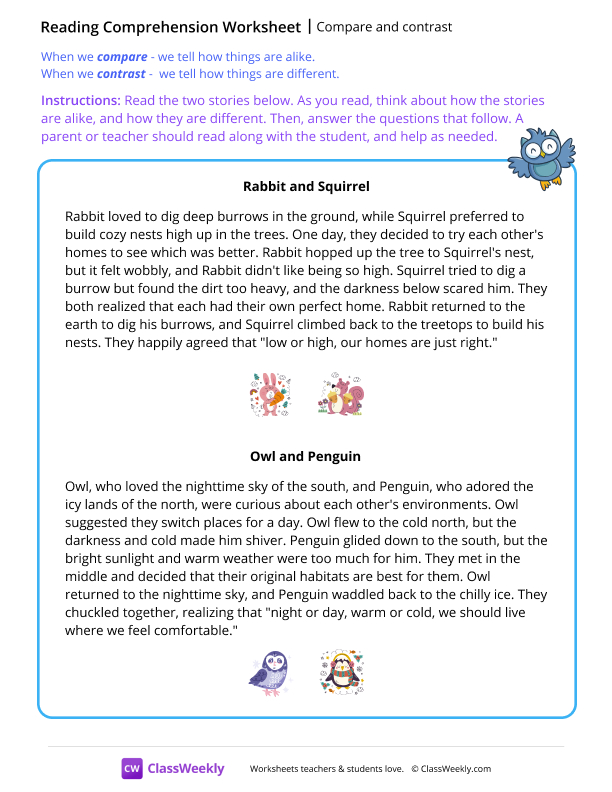
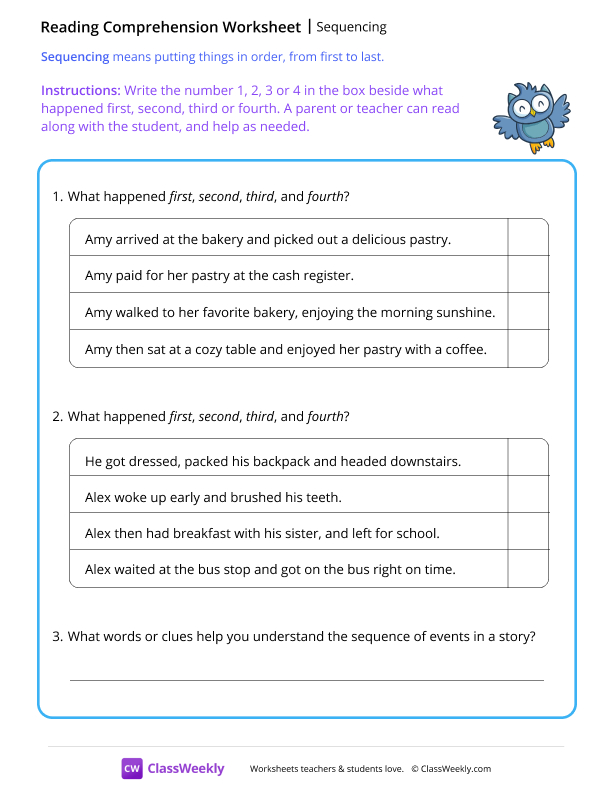
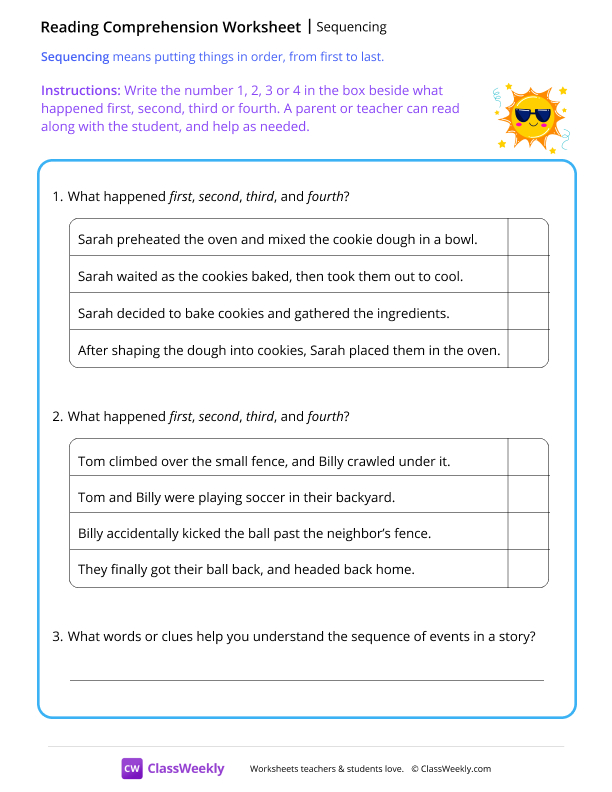
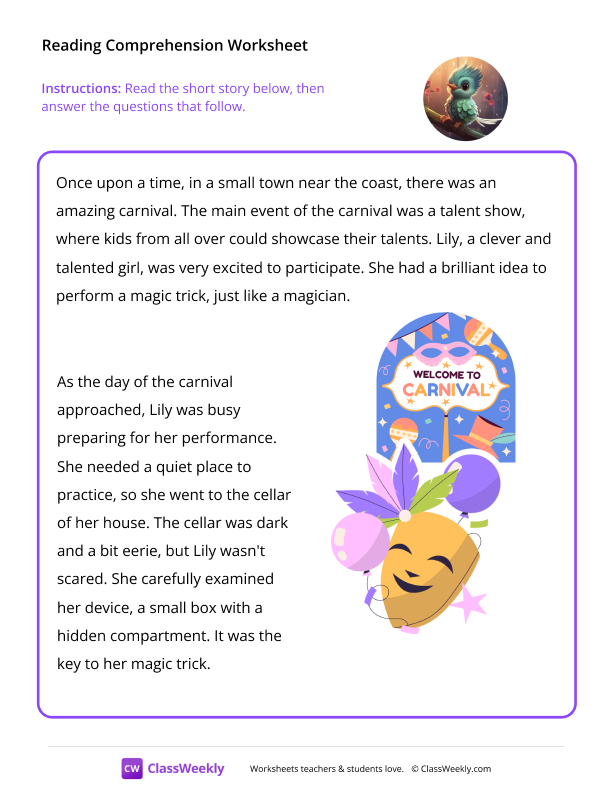
What Is Author's Purpose?
Taught in US schools
Key Takeaways
- Author's purpose is the main reason an author writes - to inform, to entertain, or to persuade (PIE).
- The same topic can be written for different purposes: an informational article informs; a persuasive letter persuades.
- Identifying author's purpose helps readers adjust how critically they read and evaluate a text.
- Authors may have more than one purpose, but one is usually dominant.
What Is Author's Purpose?
Author's purpose is the main reason an author writes a particular text. Understanding why an author wrote something helps readers approach the text more effectively and evaluate it more critically.
The three most common purposes, remembered by the acronym PIE, are:
-
P - Persuade: Convince readers to believe something or take action
-
I - Inform: Teach readers about a topic using facts and evidence
-
E - Entertain: Engage readers through story, humor, or vivid language
PIE in Action
Persuade: An op-ed arguing that schools should have longer recess. Uses opinion words ("should," "must"), emotional appeals, and arguments. Goal: change readers' minds.
Inform: An encyclopedia entry about the American Revolution. Uses facts, dates, and neutral language. Goal: teach readers something true and accurate.
Entertain: A fantasy novel about a dragon learning to fly. Uses characters, plot, and descriptive language. Goal: engage and delight readers.
Clues for Identifying Purpose
Facts, headings, diagrams: Inform
Opinion words, arguments, calls to action: Persuade
Characters, story, vivid descriptions: Entertain
Humor, wordplay: Entertain
Both sides presented equally: Inform
One side pushed strongly: Persuade
What Grade Do Kids Learn Author's Purpose?
2nd grade (RI.2.6): Students identify the main purpose of a text, including what the author wants to explain, describe, or answer.
3rd grade (RI.3.6): Students distinguish their own point of view from the author's.
4th–5th grade (RI.4.6, RI.5.6): Students compare firsthand and secondhand accounts of the same event and analyze how different purposes shape content and text structure.
Common Misconceptions
All nonfiction is informational: Some nonfiction is persuasive (essays, advertisements, opinion columns). Genre does not determine purpose - content and intent do.
Entertainment texts have no informational value: A historical novel entertains but may also inform. The question is which purpose dominates.
Author's purpose is always obvious: Some texts blend purposes subtly. A "news" article may actually be persuasive. Teaching students to read critically - to question the author's choices - is the deeper goal.
Practice Activities
-
PIE sort: Give students a stack of text excerpts to sort into Persuade, Inform, and Entertain piles.
-
Purpose detective: Read three short passages; students identify the purpose and name two clues from each text.
-
Same topic, three purposes: Write (or find) three short pieces about the same subject (e.g., dogs) - one for each purpose. Students compare how the writing changes.
-
Bias check: Read an opinion piece and identify language that reveals the author's purpose to persuade.
-
Purpose prediction: From titles and headings alone, predict the author's purpose before reading.

Frequently Asked Questions
What is author's purpose?
Author's purpose is the main reason an author writes a particular text. The three most common purposes are: to Persuade (convince readers to think or act a certain way), to Inform (teach readers about a topic), and to Entertain (tell a story or engage the reader's imagination). These three are remembered with the acronym PIE.
What does PIE stand for in author's purpose?
PIE stands for Persuade, Inform, and Entertain. To Persuade: the author wants readers to agree with a viewpoint or take an action (opinion articles, advertisements). To Inform: the author presents facts and information (textbooks, how-to guides, news articles). To Entertain: the author aims to engage or delight the reader (stories, poems, humor pieces).
How do you identify author's purpose?
Ask: Why did the author write this? Look at the text type, the language choices, and the content. Persuasive texts use opinion words and arguments. Informational texts use facts, headings, and neutral language. Entertainment texts use story structures, vivid descriptions, and engaging characters. The title, tone, and structure all give clues.
Can an author have more than one purpose?
Yes. Many texts serve multiple purposes. A story about a real historical event entertains while also informing. A food blog may inform while also entertaining. Students in upper elementary learn to identify the primary purpose while acknowledging secondary ones. The question is always: What is the author's main goal?
Why does identifying author's purpose matter?
Knowing the author's purpose helps readers read critically. When reading to be informed, you look for accuracy and evidence. When reading to be persuaded, you evaluate arguments and check for bias. When reading to be entertained, you focus on story and language. Purpose shapes how much you question the text and how you use what you learn.
Free Author's Purpose Worksheets
Curriculum-aligned printable worksheets for 2nd – 5th Grade. Download free.