What Is a Clause vs. a Phrase?
Taught in US schools
Key Takeaways
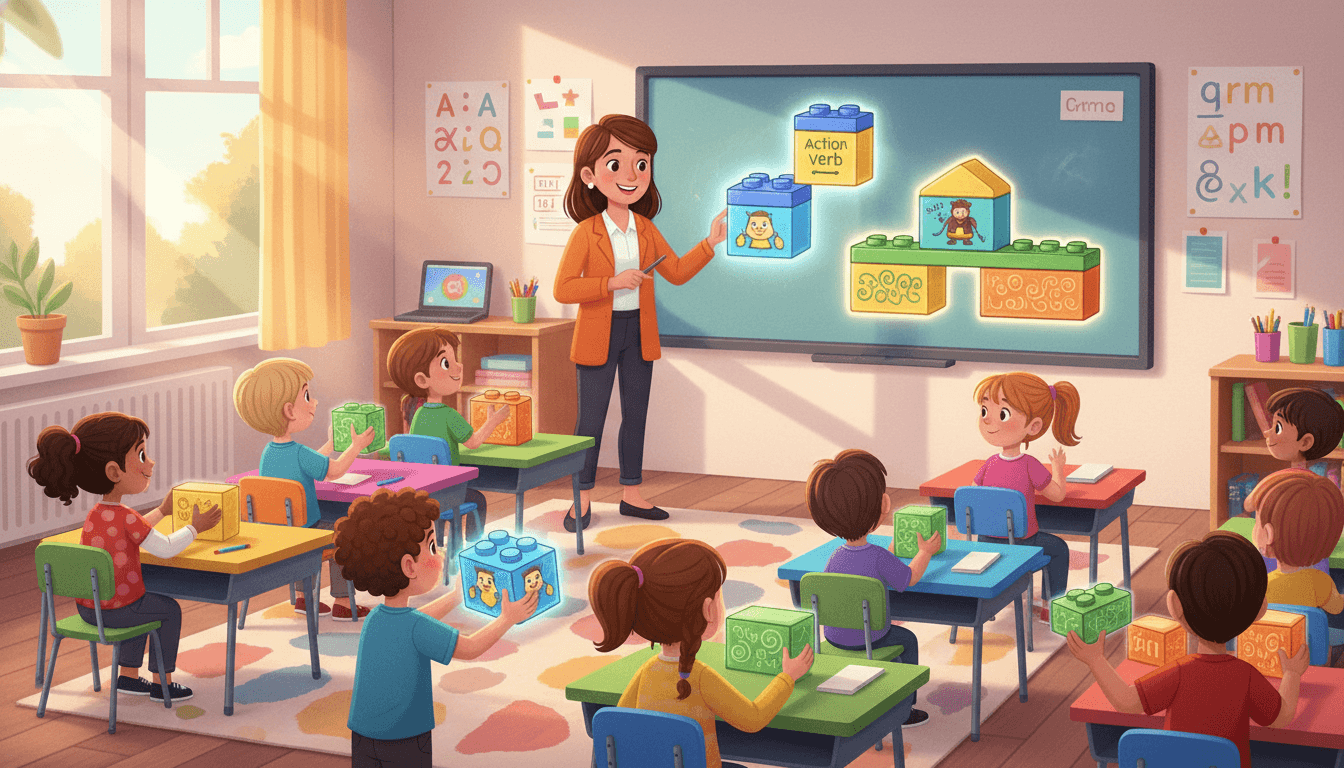
- A clause has both a subject AND a verb; a phrase does not have both.
- An independent clause can stand alone as a complete sentence; a dependent (subordinate) clause cannot - it needs an independent clause to complete its meaning.
- Common types of phrases include noun phrases, verb phrases, and prepositional phrases - none of them can stand alone as a sentence.
What Is a Clause vs. a Phrase?
Understanding the difference between a clause and a phrase is one of the most important grammar skills for 4th and 5th grade writers. The distinction controls whether a group of words can stand alone as a sentence.
The Core Difference
Clause: Yes - Yes - Sometimes
Phrase: Not necessarily - Not necessarily - Never A clause always has both a subject and a verb. A phrase is a group of related words that does NOT have both a subject and a verb together.
Types of Clauses
Independent Clause
An independent clause has a subject, a verb, and expresses a complete thought. It can stand alone as a sentence.
"The students finished their work." (subject: students; verb: finished)
Dependent (Subordinate) Clause
A dependent clause also has a subject and a verb, but it begins with a subordinating conjunction (because, when, although, if, since, after, while) or a relative pronoun (who, which, that). It cannot stand alone - it needs an independent clause.
"Because the storm knocked out the power" - subject: storm; verb: knocked - but the because creates a dependency. We need more: "Because the storm knocked out the power, school was cancelled."
Types of Phrases
Phrases are groups of related words without a subject-verb pair:
Noun phrase: Noun + modifiers - the big red barn
Verb phrase: Main verb + helping verbs - had been singing
Prepositional phrase: Preposition + object - under the old oak tree
Participial phrase: Verb form + modifiers (acts as adjective) - running down the hall
A prepositional phrase never has its own subject doing the action - it is the most common phrase type students encounter.
Why This Matters: Avoiding Fragments
A sentence fragment is a phrase or dependent clause written as if it were a complete sentence. Knowing the difference between clauses and phrases helps writers fix fragments:
"In the middle of the night.": Phrase - "In the middle of the night, a noise woke me up."
"Although it was cold outside.": Dependent clause - "Although it was cold outside, we played at recess."
"Running as fast as she could.": Participial phrase - "She ran as fast as she could."
Sentence Types and Clauses
The number and type of clauses in a sentence determines its sentence type:
-
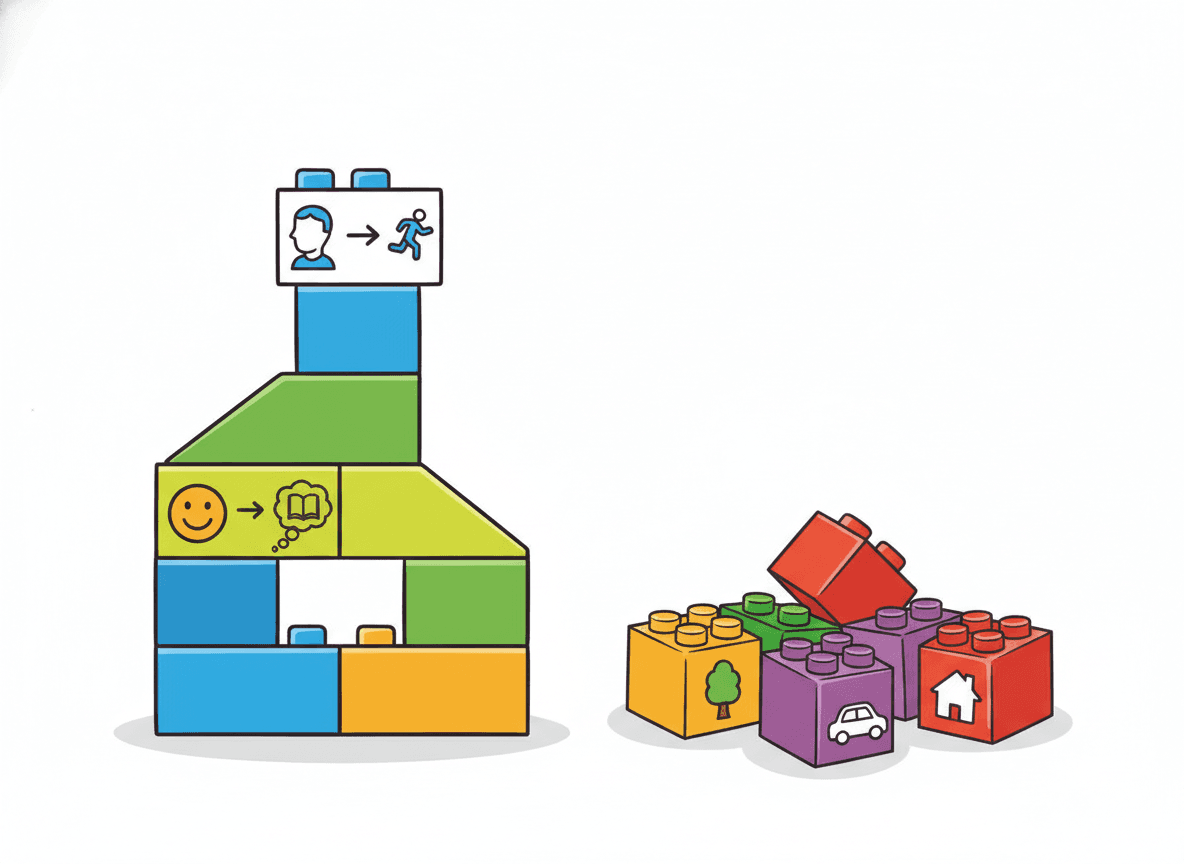
Simple sentence = 1 independent clause
-
Compound sentence = 2+ independent clauses joined by a coordinating conjunction
-
Complex sentence = 1 independent clause + 1+ dependent clauses
-
Compound-complex = 2+ independent clauses + 1+ dependent clauses
Understanding clauses and phrases prepares students for the full range of sentence types.
Practice Activities
- Give students a mixed list of word groups; they label each as "independent clause," "dependent clause," or "phrase."
- Play "Fix the Fragment" - students receive sentence fragments and must add whatever is needed to make a complete sentence.
- Sentence combining: give two simple sentences and have students join them using a dependent clause opener (e.g., "because," "although," "when").
- Color coding: students underline independent clauses in one color and dependent clauses in another color in a paragraph.
- Have students write three sentences about a topic - one simple, one compound, one complex - identifying the clauses in each.
Frequently Asked Questions
What is an independent clause?
An independent clause has a subject and a verb and expresses a complete thought - it can stand alone as a sentence. Example: 'The dog barked.' Independent clauses are the backbone of every sentence. Two independent clauses can be joined with a coordinating conjunction (FANBOYS) or a semicolon.
What is a dependent clause?
A dependent (subordinate) clause also has a subject and a verb, but it cannot stand alone because it does not express a complete thought. It begins with a subordinating conjunction (because, when, although, if, since) or a relative pronoun (who, which, that). Example: 'Because it was raining' - this has a subject (it) and a verb (was raining) but leaves you waiting for more information.
What is a sentence fragment, and how do clauses help explain it?
A sentence fragment is a group of words written as a sentence that is missing a subject, a verb, or a complete thought. A dependent clause written by itself is a fragment: 'When the bell rang.' (We want to know: what happened when the bell rang?) Attaching it to an independent clause fixes it: 'When the bell rang, the students cheered.'
Free Clause and Phrase Worksheets
Curriculum-aligned printable worksheets for 4th – 5th Grade. Download free.