What Is a Conjunction?
Taught in US schools
Key Takeaways
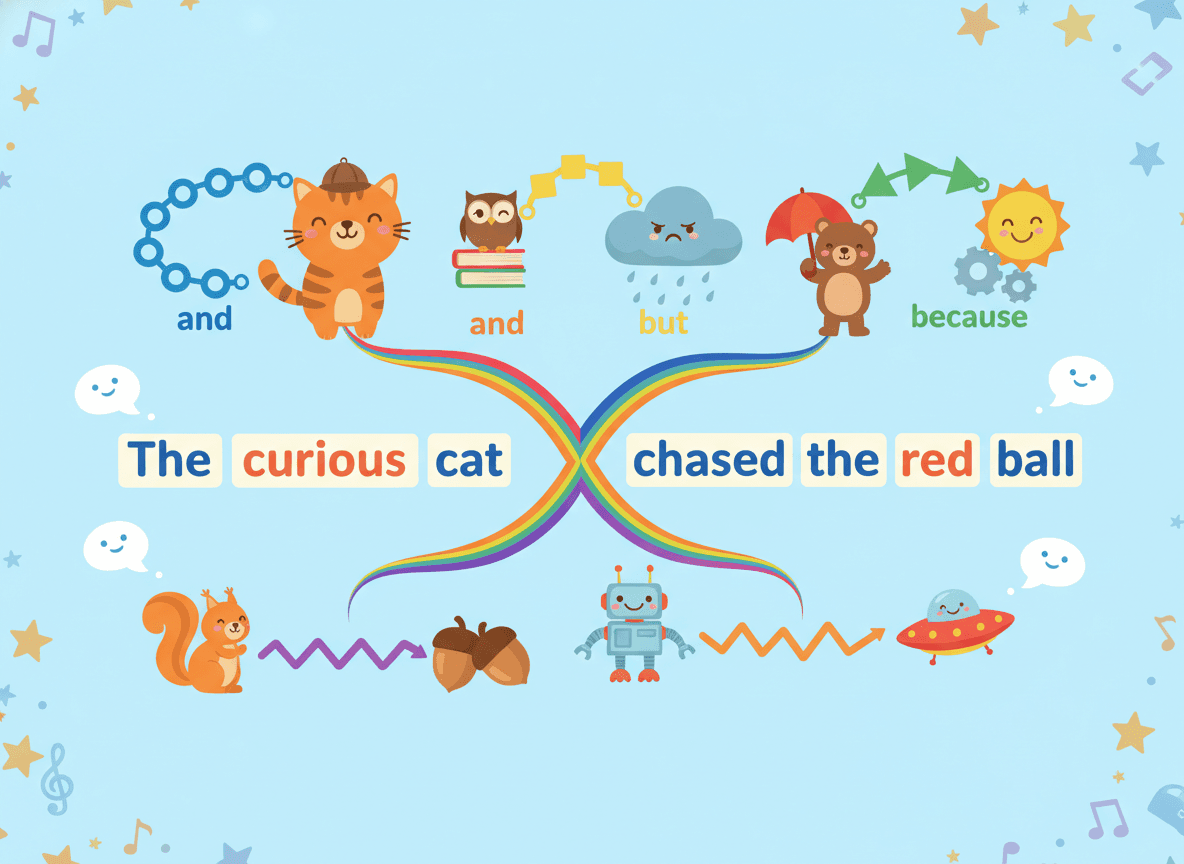
- Conjunctions connect words, phrases, or clauses - they're the glue of complex sentences.
- Coordinating conjunctions (FANBOYS): for, and, nor, but, or, yet, so - join equal elements.
- Subordinating conjunctions (because, although, when, if, since) create dependent clauses.
- Comma rule: use a comma before a coordinating conjunction joining two independent clauses.
What Is a Conjunction?
A conjunction is a word that connects words, phrases, or clauses.
Conjunctions are the glue of complex sentences - they allow writers to show relationships between ideas: addition, contrast, cause, condition, and more.
Coordinating Conjunctions: FANBOYS
The seven coordinating conjunctions join grammatically equal elements:
F: For - reason (like because)
A: And - addition
N: Nor - negative addition
B: But - contrast
O: Or - choice
Y: Yet - contrast (despite that)
S: So - result
Examples:
"She wanted to go, but it was raining." (two independent clauses) "I'll have apples or oranges." (two words) "He studied hard, so he passed." (two independent clauses)
Comma rule: Use a comma before FANBOYS when joining two independent clauses. No comma when joining two words or phrases.
Subordinating Conjunctions
Subordinating conjunctions connect a dependent clause to an independent clause, forming a complex sentence.
Common subordinating conjunctions:
because, although, when, if, since, while, after, before, unless, until, even though, as soon as
Examples:
"Because it was raining, we stayed inside." (dependent clause first → comma after it) "We stayed inside because it was raining." (dependent clause second → no comma)
Correlative Conjunctions (Pairs)
These conjunctions always come in pairs:
both / and: Both Jake and Emma came.
either / or: Either finish now or wait until later.
neither / nor: Neither cat nor dog was fed.
not only / but also: She was not only smart but also kind.
Conjunctions and Sentence Structure
Coordinating (FANBOYS): Compound sentence
Subordinating: Complex sentence
Correlative: Compound sentence (with emphasis) Requiring students to use specific conjunctions in writing directly improves sentence variety and complexity.
What Grade Do Kids Learn Conjunctions?
1st Grade: Use conjunctions in speaking and writing (L.1.1g).
3rd Grade: Use coordinating and subordinating conjunctions; produce compound and complex sentences (L.3.1h, L.3.1i).
4th–5th Grade: Use conjunctions correctly with proper comma rules; maintain parallel structure with correlative conjunctions.
Common Misconceptions
"And is the only conjunction." Many early writers overuse and - stringing clauses together with and...and...and. Explicitly teaching alternatives (but, so, because, although) expands sentence variety.
"Comma always goes before a conjunction." Only before FANBOYS joining two independent clauses. No comma for "fast and accurate."
"Because can't start a sentence." A common myth. "Because it was raining, we stayed inside" is a perfectly correct complex sentence - the dependent clause just needs to be attached to an independent clause.
Practice Activities
-
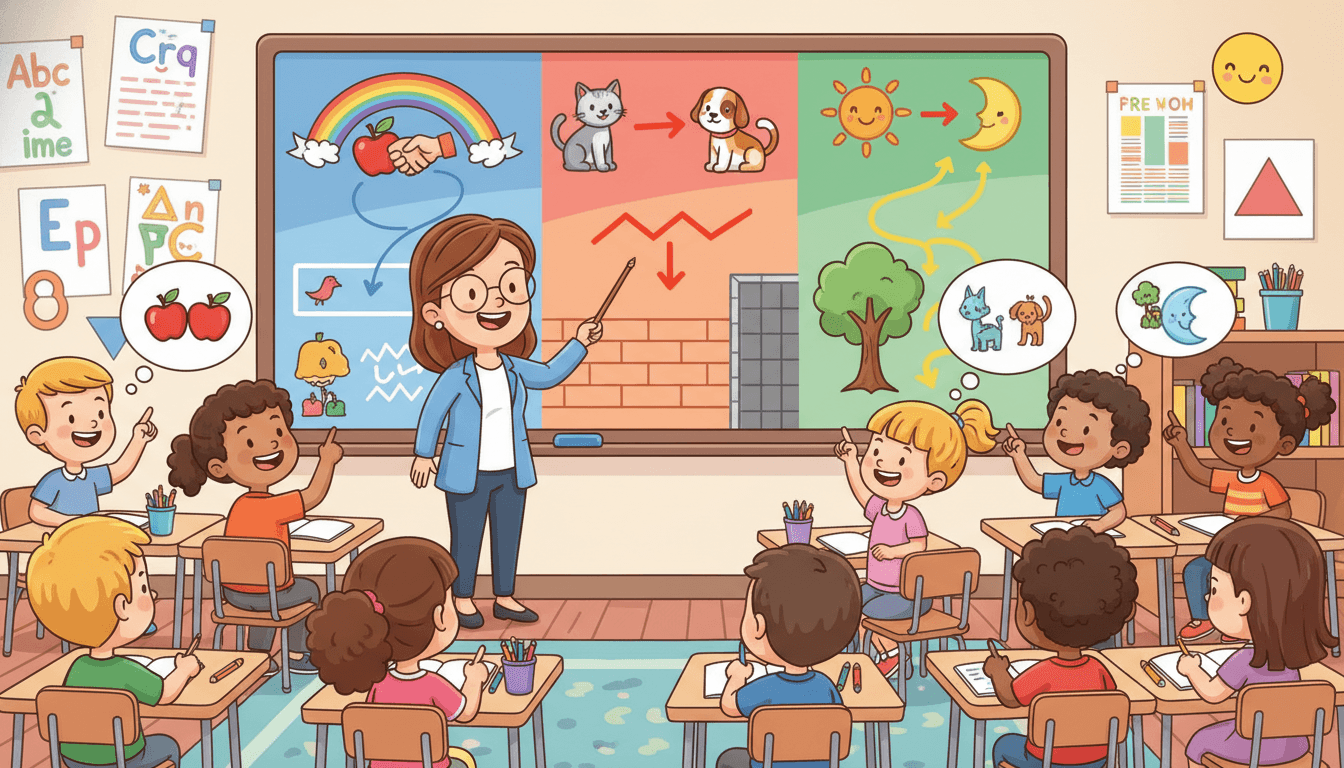
Conjunction sort: Sort conjunction cards into coordinating / subordinating / correlative columns.
-
Sentence combining: Two simple sentences combined into one using a specified conjunction.
-
FANBOYS writing challenge: Write 7 sentences - one using each FANBOYS conjunction.
-
Because/Although/When practice: Given a clause, students complete the sentence using three different subordinating conjunctions and explain how the meaning changes.
-
Comma placement practice: Sentences with conjunctions; students add or remove commas based on whether two independent clauses are joined.
Frequently Asked Questions
What are the FANBOYS conjunctions?
FANBOYS is a mnemonic for the seven coordinating conjunctions: For, And, Nor, But, Or, Yet, So. These conjunctions join two grammatically equal elements: words ('apples and oranges'), phrases ('fast but accurate'), or independent clauses ('She wanted to go, but it was raining'). When joining two independent clauses, a comma comes before the FANBOYS conjunction. FANBOYS conjunctions do NOT require a comma when joining only two words or phrases.
What are subordinating conjunctions?
Subordinating conjunctions connect a dependent (subordinate) clause to an independent clause, creating a complex sentence. Common subordinating conjunctions: because, although, when, if, since, while, after, before, unless, until, even though, as soon as. Examples: 'Because it was raining, we stayed inside.' 'She finished her homework before she played.' 'I'll help you if you ask.' When the dependent clause comes FIRST, use a comma after it. When it comes second, no comma is needed.
What are correlative conjunctions?
Correlative conjunctions come in pairs and connect equivalent elements: both/and ('Both Jake and Emma came'), either/or ('Either study or fail'), neither/nor ('Neither hot nor cold'), not only/but also ('Not only was she smart, but also kind'), whether/or ('Tell me whether you can or cannot'). Correlative conjunctions are used for emphasis and parallel structure. Subject-verb agreement with correlative conjunctions: 'Neither the dog nor the cats were fed' (verb agrees with the nearer noun, 'cats').
How do conjunctions create compound and complex sentences?
Coordinating conjunctions (FANBOYS) create compound sentences by joining two independent clauses: 'I studied hard, so I passed the test.' Subordinating conjunctions create complex sentences by attaching a dependent clause to an independent clause: 'Because I studied hard, I passed the test.' Both types move students beyond simple sentences and create the sentence variety that characterizes strong writing. Teaching conjunctions explicitly - and requiring students to use specific ones in writing - improves both grammatical range and writing quality.
What is the comma rule for conjunctions?
Coordinating conjunction (FANBOYS) joining two independent clauses: put a comma BEFORE the conjunction. 'She ran, but she didn't win.' NO comma when joining only two words or phrases: 'fast and accurate.' Subordinating conjunction at the BEGINNING of the sentence: put a comma after the dependent clause. 'Although it was hot, we played outside.' Subordinating conjunction in the MIDDLE of the sentence: usually no comma. 'We played outside although it was hot.' These comma rules are addressed in L.3.2 and L.4.2.
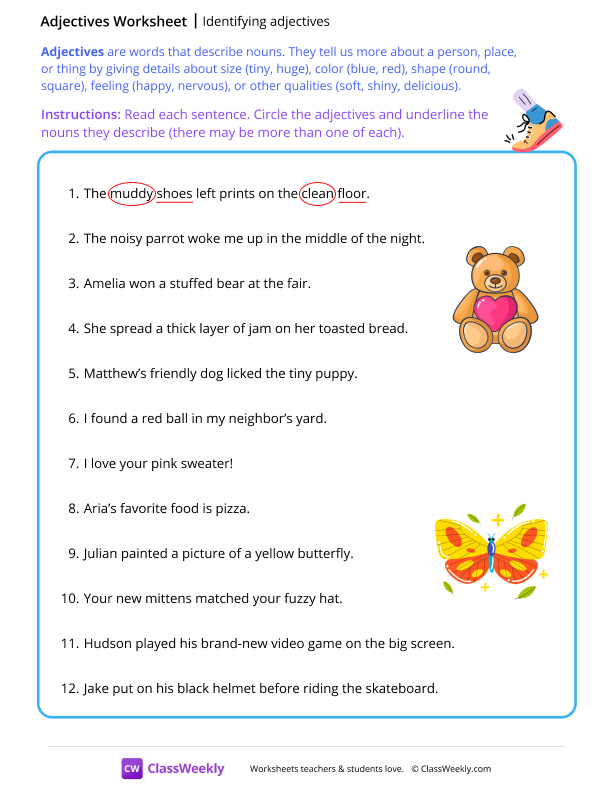
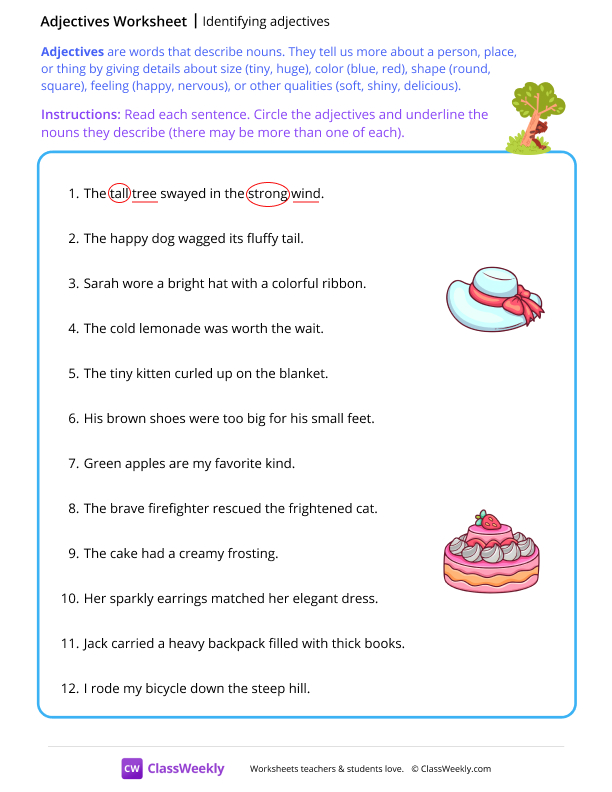
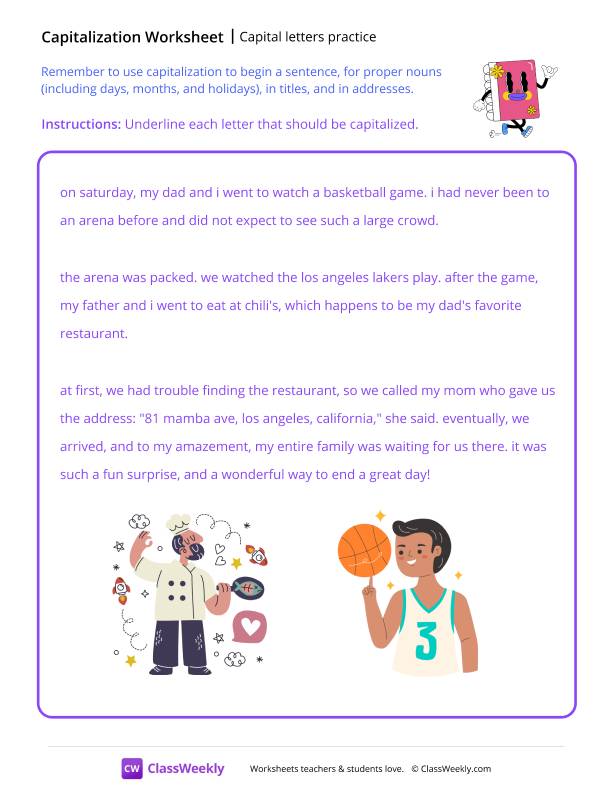
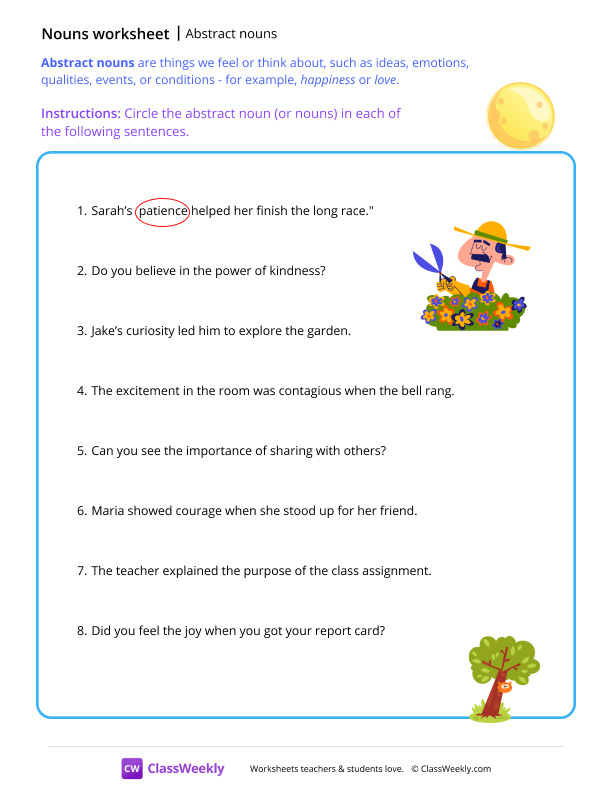
Free Conjunction Worksheets
Curriculum-aligned printable worksheets for 1st – 5th Grade. Download free.