What Is a Verb?
Taught in US schools

Key Takeaways
- A verb expresses an action (run, think), an occurrence (happen, become), or a state of being (is, are, was).
- Every complete sentence must have a verb.
- Verb tense tells when the action happened: past, present, or future.
- Helping verbs (is, are, was, will, can, should...) work with main verbs to add meaning.
Every sentence needs a verb. Without verbs, you have a list of nouns and adjectives - things and descriptions - but no action, no movement, no meaning. Verbs are what make sentences come alive. They're also where some of the most interesting grammar happens: tense, agreement, voice, mood.
What Is a Verb?
A verb is a word that expresses an action, occurrence, or state of being.
-
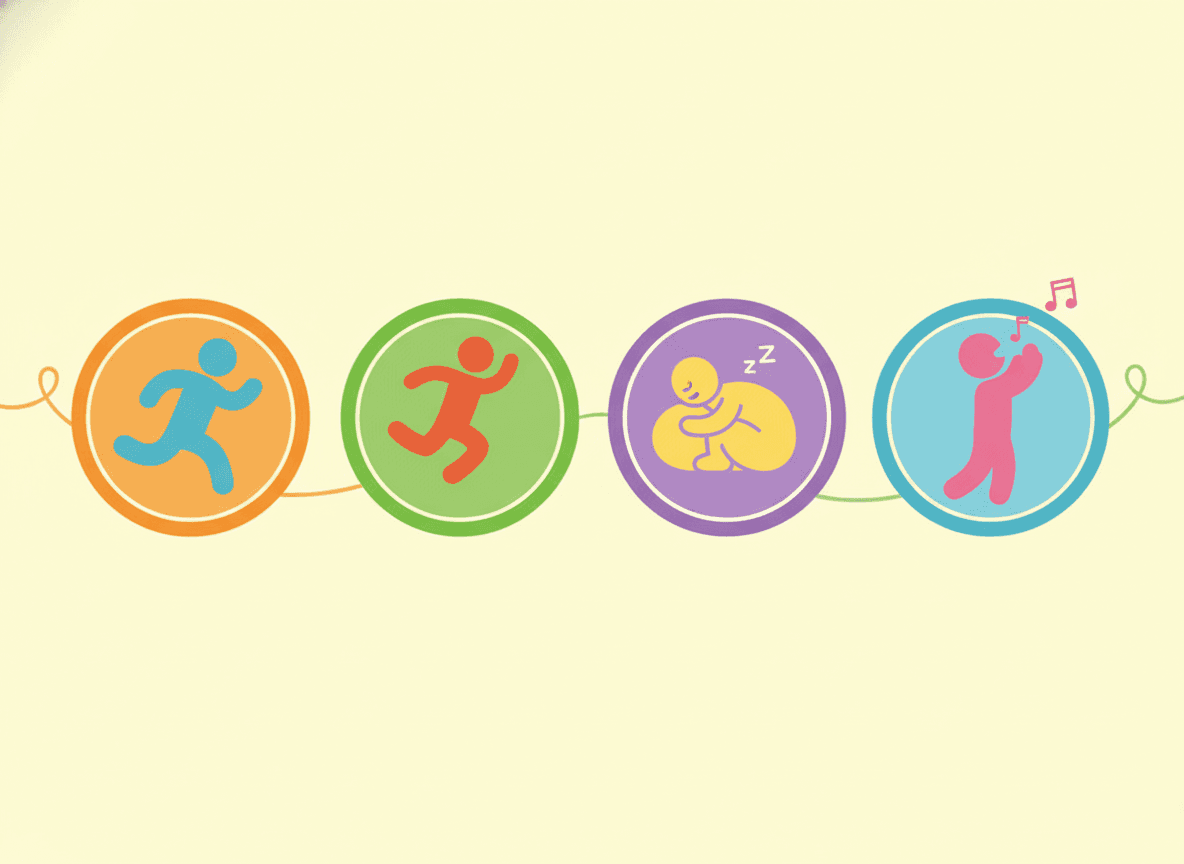
Action verbs: run, jump, think, whisper, build, eat, laugh, imagine
-
Occurrence verbs: happen, become, appear, seem, grow
-
State of being verbs (linking verbs): is, am, are, was, were, be, being, been
Every complete sentence must have a verb. "The dog" is not a sentence. "The dog runs" is a sentence. The verb runs is what makes the difference.
Types of Verbs
Action verbs are the most common. They tell what someone does: She reads every night. He kicked the ball. They argued for hours.
Linking verbs connect the subject to more information about it. The most important linking verb is "to be" in all its forms: is, am, are, was, were, been, being, be. Other linking verbs include: seem, appear, become, feel, taste, smell, look, grow, remain. "The soup tastes delicious" - tastes links soup to delicious.
Helping verbs (auxiliary verbs) work with a main verb to create verb phrases. Common helping verbs: is, are, was, were, be, been, has, have, had, do, does, did, will, would, shall, should, can, could, may, might, must. In "She is running," is is the helping verb and running is the main verb.
Modal verbs are a type of helping verb that expresses possibility, permission, or obligation: can, could, may, might, will, would, shall, should, must. "You must finish your homework" - must expresses obligation.
Verb Tense
Tense tells us when an action happens.
Past: She walked to school yesterday.
Present: She walks to school every day.
Future: She will walk to school tomorrow.
Present Perfect: She has walked to school all year.
Past Perfect: She had walked there before the bus route changed. In K-2, the focus is past, present, and future. Perfect tenses are introduced in 3rd-4th grade.
What Grade Do Kids Learn About Verbs?
Kindergarten: Identifying "action words" - what people and animals do. Matching actions to pictures.
1st Grade: Distinguishing verbs from nouns. Understanding that verbs can change to show past and present. Simple past tense (-ed). Helping verbs.
2nd Grade: Irregular past tense forms (go/went, run/ran, see/saw). Future tense with "will." Simple tense consistency within writing.
3rd Grade: Linking verbs. Subject-verb agreement. Perfect tenses. Using verb tense correctly in writing.
4th Grade: Modal verbs. More complex tense forms. Verb phrase structure. Active vs. passive voice.
Common Misconceptions
"All verbs are action words." This is the classic simplified definition teachers use in kindergarten, and it's a good starting point. But it breaks down with linking verbs and state-of-being verbs. "He seems happy" - seems is definitely a verb, but it's not an action.
"Adding -ed always makes a verb past tense." For regular verbs, yes. But irregular verbs (go/went, eat/ate, see/saw, run/ran) don't follow this rule. Kids who over-apply the -ed rule say "I goed" and "She eated" - a normal developmental stage, but one that needs correction.
"A sentence can have only one verb." Compound sentences can have multiple verbs, and complex sentences often do too. "She ran home and then cooked dinner" has two verbs. "He knew that she would come" has two as well.
"Verbs and subjects are always right next to each other." Subjects and verbs are often separated by phrases. "The dogs in the yard bark all night" - dogs is the subject, bark is the verb, separated by the prepositional phrase "in the yard." This separation causes subject-verb agreement errors.
How to Teach Verbs
Act it out. Call out a verb - run, hop, clap, whisper - and have kids do it. Physically experiencing actions makes the concept concrete before it becomes abstract.
Sort action vs. linking. Give kids a list of sentences and have them sort the verbs into "shows action" and "shows a state or connection." Discussion of borderline cases is the most instructive part.
Focus on irregular past tense with pattern sorting. Group irregular verbs by type: vowel change (run/ran, sit/sat, swim/swam), completely different word (go/went, be/was), same form (cut/cut, put/put). Patterns help.
Practice subject-verb agreement with compound subjects. The dog barks. The dogs bark. The cat and the dog bark. Build up complexity gradually.
Read for verb tense. Use mentor texts to notice how authors shift tense - or don't. "What tense is this story written in? How do you know?" builds awareness.
Practice Activities
-
Verb charades: Act out a verb; classmates guess. Build a class verb wall with the guessed words.
-
Sentence surgery: Remove the verb from a sentence ("The cat __ across the floor") and have kids fill it in. Compare different verbs and discuss how meaning changes.
-
Irregular verb matching game: Cards with base form on one side, past tense on the other. Memory matching or Go Fish.
-
Tense sort: Cards with sentences in mixed tenses; students sort into past, present, and future piles.
-
Verb upgrade: Replace a weak or vague verb with a stronger, more specific one. "The dog moved across the yard" → "The dog bounded / slunk / trotted across the yard."
Frequently Asked Questions
What is the difference between action verbs and linking verbs?
Action verbs describe what the subject does: run, think, eat, build, laugh. Linking verbs connect the subject to a description or state: She is happy. He seems tired. They became friends. The most common linking verbs are forms of 'to be' (is, am, are, was, were, be, being, been). A quick test: replace the verb with an equals sign - if the sentence still makes sense, it's a linking verb ('She = happy' works; 'She = running' doesn't).
What is verb tense?
Tense tells us when an action happens. Past tense: the action already occurred (she walked, he ran). Present tense: the action is happening now or generally (she walks, he runs). Future tense: the action will happen (she will walk, he will run). English also has perfect tenses (has walked, had walked, will have walked) for more nuanced time relationships, which kids encounter in 3rd grade and beyond.
What is subject-verb agreement?
Subject-verb agreement means the verb must match its subject in number. Singular subjects take singular verbs (The dog barks). Plural subjects take plural verbs (The dogs bark). This sounds simple but trips kids up when subject and verb are separated by other words, when collective nouns are involved, or with irregular verbs. Regular practice with varied sentence structures is the best fix.
What are irregular verbs?
Regular verbs form the past tense by adding -ed (walk → walked, jump → jumped). Irregular verbs have unpredictable past tense forms that kids must memorize: run → ran, go → went, see → saw, eat → ate, is → was, have → had, think → thought. English has hundreds of irregular verbs; the most common are learned through reading and natural language exposure in K-3.
What is an infinitive?
An infinitive is the base form of a verb, usually paired with 'to': to run, to eat, to be, to think. Infinitives can function as nouns (To read is her favorite hobby), adjectives (She has books to read), or adverbs (She ran to escape). In K-5 instruction, infinitives are most important as the base form kids use to conjugate verbs into different tenses.
Free Verb Worksheets
Curriculum-aligned printable worksheets for Kindergarten – 4th Grade. Download free.