What Is an Adverb?
Taught in US schools
Key Takeaways
- An adverb modifies a verb, adjective, or another adverb - it adds description beyond the noun.
- Adverbs answer: How? (quickly), When? (yesterday), Where? (here), To what extent? (very, really).
- Many adverbs end in -ly (slowly, carefully) - but not all -ly words are adverbs (friendly is an adjective).
- Comparative adverbs: fast → faster → fastest; carefully → more carefully → most carefully.
What Is an Adverb?
An adverb is a word that modifies (describes) a verb, adjective, or another adverb.
While adjectives describe nouns, adverbs describe actions and qualities:
- "The quick fox ran." (quick = adjective, describes fox)
- "The fox ran quickly." (quickly = adverb, describes ran)
What Questions Do Adverbs Answer?
How?: She danced gracefully. - gracefully
When?: He arrived yesterday. - yesterday
Where?: They played outside. - outside
How often?: She never misses practice. - never
To what extent?: He was extremely tired. - extremely The easiest way to identify an adverb: ask one of these questions about the verb, adjective, or other adverb.
Types of Adverbs
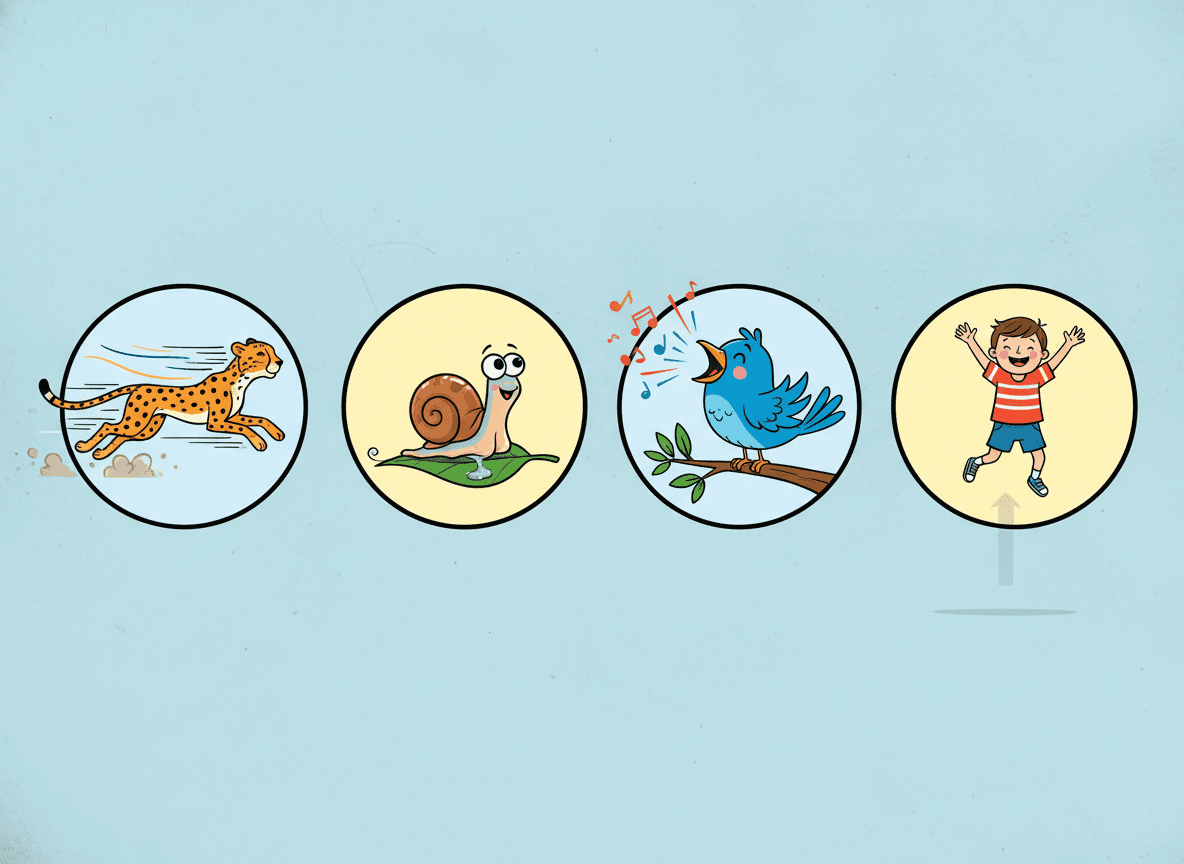
Adverbs of manner: How something is done. Usually end in -ly.
She sang beautifully. He walked slowly.
Adverbs of time: When something happens.
Yesterday, it rained. She will leave soon.
Adverbs of place: Where something happens.
They went outside. The keys are here.
Adverbs of frequency: How often.
He always forgets his lunch. She rarely complains.
Adverbs of degree: To what extent (modifies adjectives and other adverbs).
She was very happy. He drove too fast.
Comparative and Superlative Adverbs
Base: fast - carefully
Comparative: faster - more carefully
Superlative: fastest - most carefully Irregular: well → better → best; badly → worse → worst
What Grade Do Kids Learn Adverbs?
2nd Grade: Use adverbs in writing and speaking (L.2.1e).
3rd Grade: Form and use comparative and superlative adjectives and adverbs; choose between them (L.3.1g).
4th–5th Grade: Apply adverbs effectively in writing; recognize misuse of adjective/adverb pairs (good/well).
Common Misconceptions
"All -ly words are adverbs." Friendly, lovely, lonely, lively are adjectives (they describe nouns). The -ly clue is helpful for starters but not a rule.
"Adverbs only go after verbs." Adverbs of degree appear before adjectives: "She was extremely tired." Adverbs of frequency usually appear before the main verb.
"'Good' and 'well' are interchangeable." Good is an adjective; well is the adverb form. "She plays good" is incorrect; "She plays well" is correct. This distinction is explicitly addressed in Common Core.
Practice Activities
-
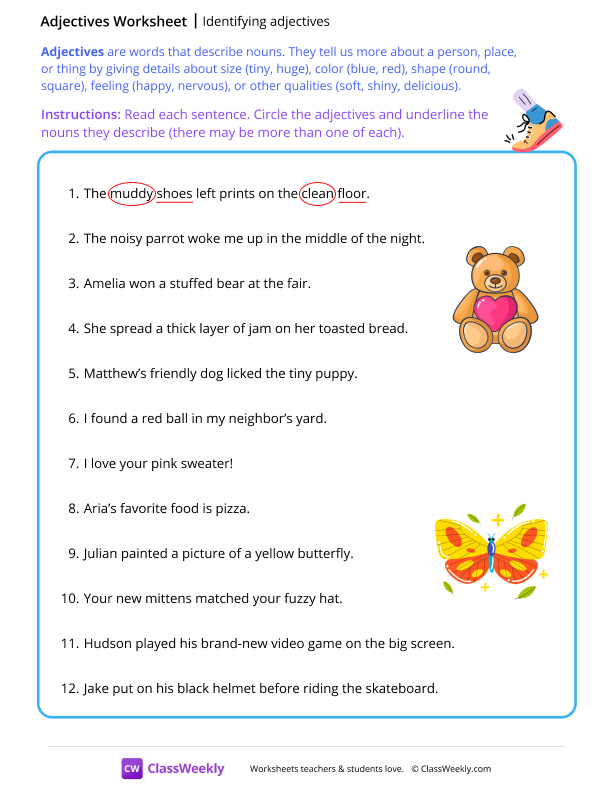
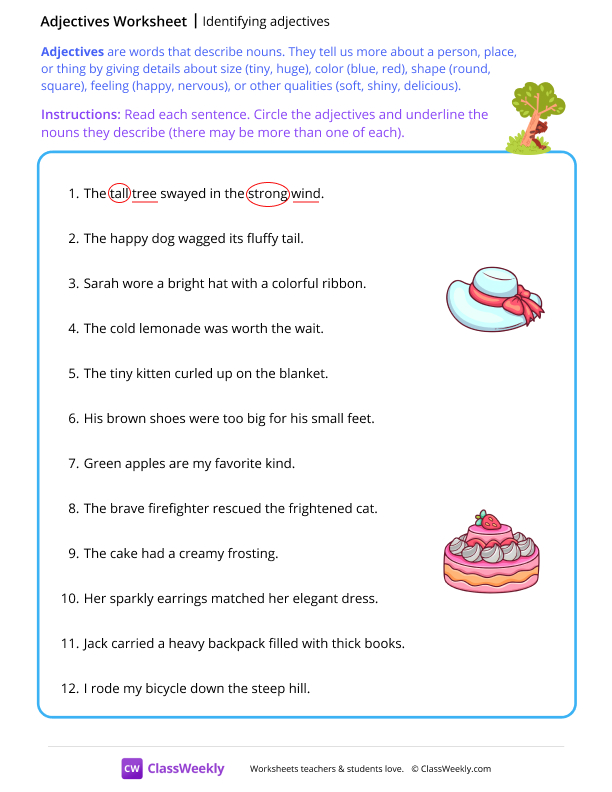
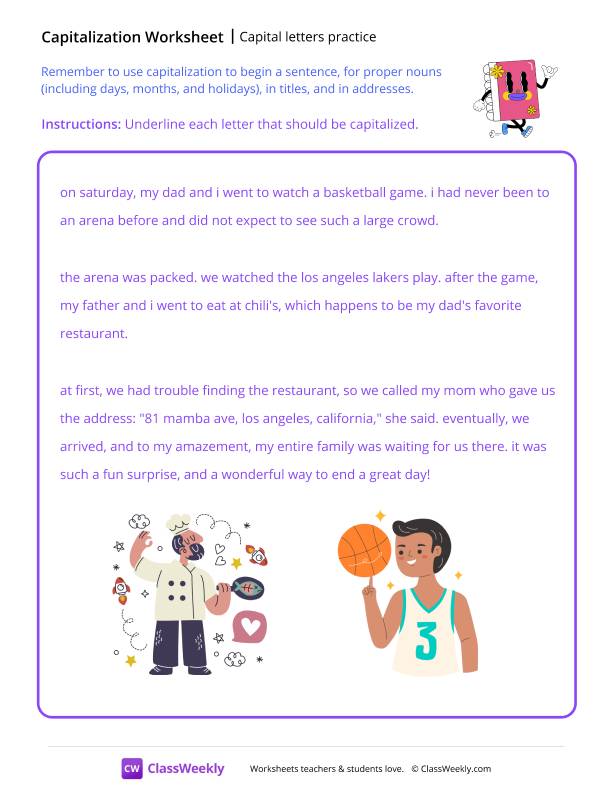
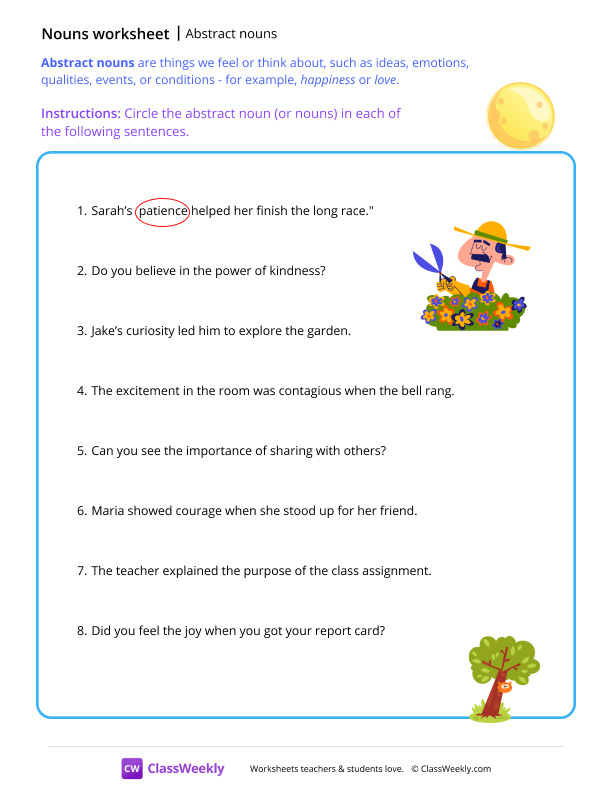
Adverb hunt: Underline adverbs in a paragraph; identify which question each answers.
-
Verb + adverb pairs: Give a verb; students brainstorm 5 adverbs that describe how it could be done (ran: quickly, slowly, excitedly, nervously, gracefully).
-
Upgrade sentences: Start with a simple sentence; add adverbs to make it more vivid.
-
Sort by type: Sort adverbs by category: manner / time / place / frequency / degree.
-
Comparative practice: Write three sentences using a base adverb, its comparative, and its superlative form.
Frequently Asked Questions
What questions do adverbs answer?
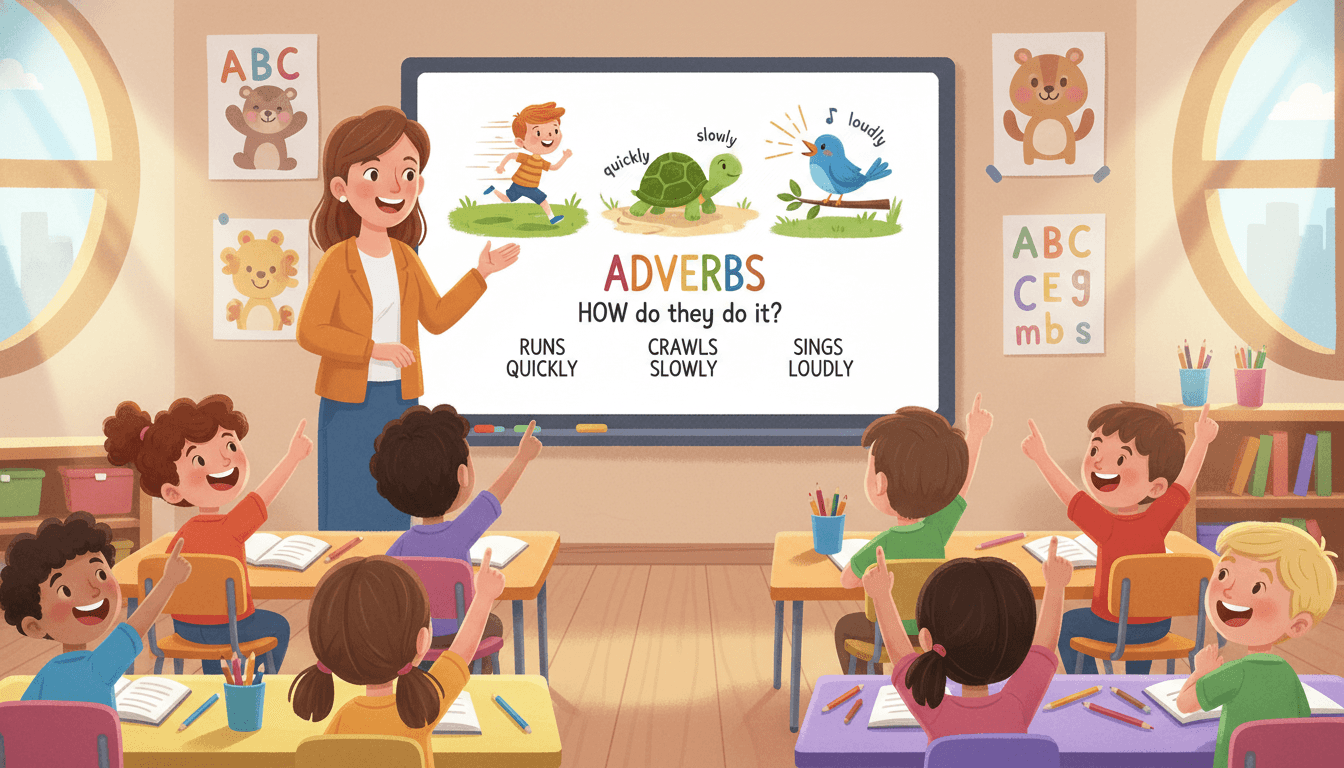
How? - She ran quickly. How was she running? Quickly. When? - He left yesterday. When did he leave? Yesterday. Where? - They played outside. Where did they play? Outside. To what extent/how much? - She was extremely tired. How tired? Extremely. These four questions cover the main adverb categories. Diagrams and simple identification questions (ask the question, find the answer word) are effective for teaching adverb recognition.
Do all adverbs end in -ly?
No - many common adverbs don't end in -ly: very, quite, soon, often, never, always, here, there, fast, hard, just, still, already. And not all -ly words are adverbs - 'friendly,' 'lovely,' and 'lonely' are adjectives. The -ly pattern is a useful starting cue for beginners, but students should learn to identify adverbs by asking the question ('How? When? Where? How much?') rather than by spelling pattern alone.
What is the difference between an adverb and an adjective?
An adjective modifies a noun ('the quick fox'). An adverb modifies a verb, adjective, or another adverb ('the fox ran quickly'). The key test: what is being described? If it's a noun or pronoun, it's an adjective. If it's a verb, adjective, or adverb, it's an adverb. Confusion often arises with linking verbs: 'She looks sad' (sad = adjective, describes she) vs. 'She looked at the sad painting sadly' (sadly = adverb, modifies looked).
What are comparative and superlative adverbs?
Comparative adverbs compare two actions: 'She runs faster than he does.' Superlative adverbs compare three or more: 'She runs the fastest of all.' Short adverbs typically add -er/-est: fast→faster→fastest, hard→harder→hardest. Longer adverbs use more/most: carefully→more carefully→most carefully. Irregular adverbs: well→better→best, badly→worse→worst. Common Core 3rd grade addresses comparative adjectives and adverbs (L.3.1g).
What is an adverb of frequency?
Adverbs of frequency tell how often something happens: always, usually, often, sometimes, rarely, never, occasionally, frequently. They typically appear before the main verb or after a helping verb: 'She always arrives early,' 'He has never seen snow.' Adverbs of frequency are among the first adverbs students encounter because they appear in oral language constantly. They're an accessible entry point for adverb instruction before -ly adverbs.
Free Adverb Worksheets
Curriculum-aligned printable worksheets for 2nd – 5th Grade. Download free.