What Is Punctuation?
Taught in US schools
Key Takeaways
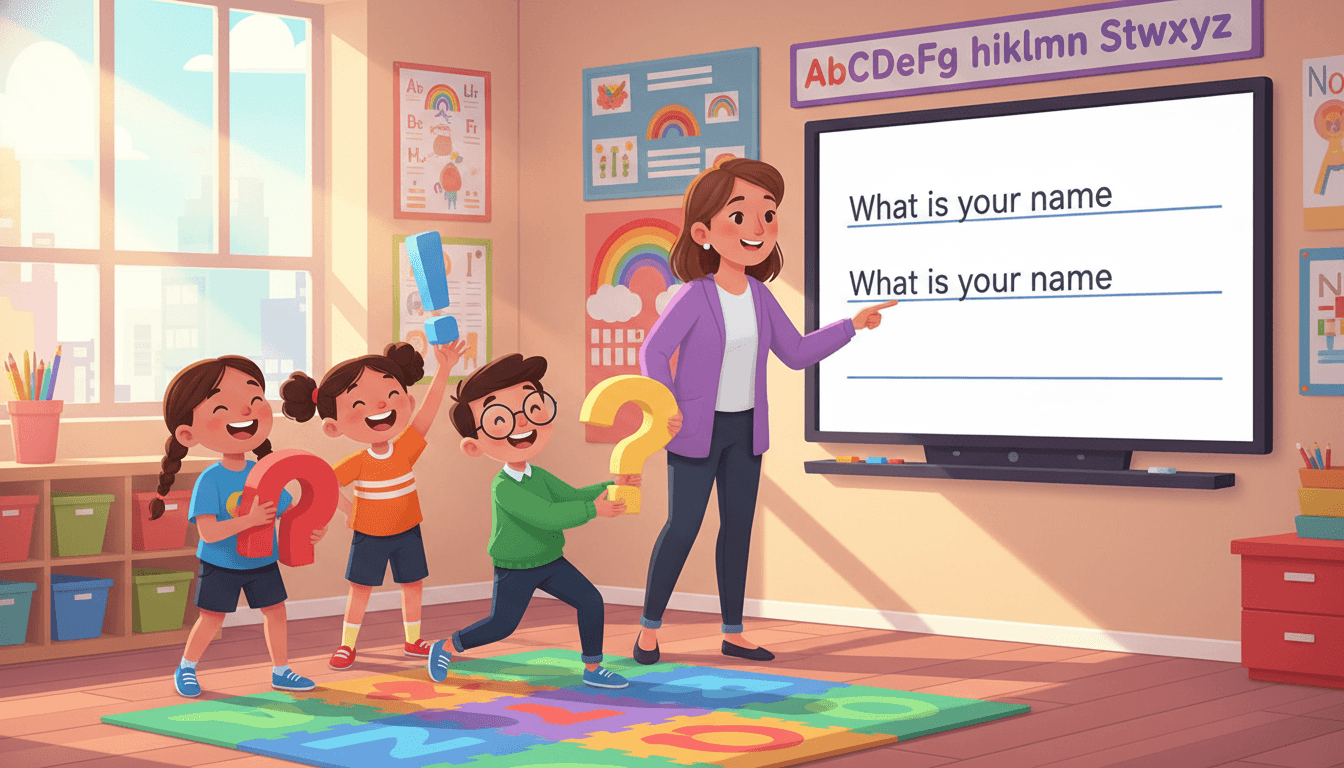
- Punctuation marks guide the reader: where to pause, stop, question, or show strong emotion.
- Periods end declarative and imperative sentences. Question marks end interrogative. Exclamation marks end exclamatory.
- Commas have many uses: lists, addresses, dates, coordinating conjunctions, introductory clauses, and appositives.
- Apostrophes show possession (dog's collar) or contraction (don't = do not).
What Is Punctuation?
Punctuation marks are symbols that guide readers - showing where sentences end, when to pause, and how to interpret the text.
Without punctuation: "Let's eat grandma" With punctuation: "Let's eat, Grandma!"
The same words mean something entirely different. Punctuation is essential for clear communication.
Core Punctuation Marks
Period (.) - Ends declarative sentences (statements) and imperative sentences (commands).
"The sun sets in the west." "Please close the door."
Question mark (?) - Ends interrogative sentences (questions).
"Where are you going?"
Exclamation mark (!) - Ends exclamatory sentences or adds strong emotion.
"Watch out!" "What a great day!"
Comma (,) - See section below.
Apostrophe (') - Shows possession or marks missing letters in contractions.
"the dog's collar" (possession) / "don't" = do not (contraction)
Quotation marks (" ") - Enclose direct speech and titles of short works.
"Are you ready?" she asked. / "The Raven" is a famous poem.
Comma Rules (Grade by Grade)
K-2: Commas in a series ("apples, bananas, and grapes"), in dates ("July 4, 2026"), and in addresses ("Chicago, Illinois").
3rd Grade: Commas in compound sentences before FANBOYS conjunctions; commas after introductory words or phrases ("First, wash your hands. After school, we practiced.").
4th Grade: Commas with coordinating adjectives; commas to indicate a direct address ("Yes, Emma, I agree.").
5th Grade: Commas to set off appositives and introductory elements; using commas for effect in writing.
Apostrophe: Possessive vs. Contraction
Possessive singular: Add 's - the dog's leash
Possessive plural (ends in s): Add ' only - the teachers' lounge
Possessive plural (irregular): Add 's - the children's books
Contraction: Apostrophe replaces missing letters - don't, it's, they're
The its/it's trap: its is possessive (no apostrophe), it's = it is. "The dog wagged its tail. It's a friendly dog."
What Grade Do Kids Learn Punctuation?
Kindergarten: End punctuation on sentences; capitalize the first word and "I" (L.K.2b).
1st Grade: End punctuation; commas in dates and to separate words in a series (L.1.2b).
2nd Grade: Commas in greetings of letters, apostrophes in contractions and possessives (L.2.2).
3rd Grade: Commas in compound sentences and after introductory elements; quotation marks for dialogue (L.3.2).
4th Grade: Correct capitalization; commas and quotation marks to mark direct speech; apostrophes for possessives (L.4.2).
5th Grade: Use punctuation for effect; commas for appositives; semicolons and colons (L.5.2).
Common Misconceptions
"Put a comma wherever you pause." Pausing is a clue, not a rule. Comma placement is governed by grammatical function, not breath.
"A period goes after a quotation mark." The period (and comma) always goes inside the closing quotation mark: "Hello," she said. This rule is different from British English.
"Apostrophes make plurals." Apostrophes show possession or contraction, never plurality. "Apple's on sale" is incorrect. "Apples on sale" needs no apostrophe.
Practice Activities
-
Punctuation hunt: Underline every punctuation mark in a paragraph; identify what rule each one follows.
-
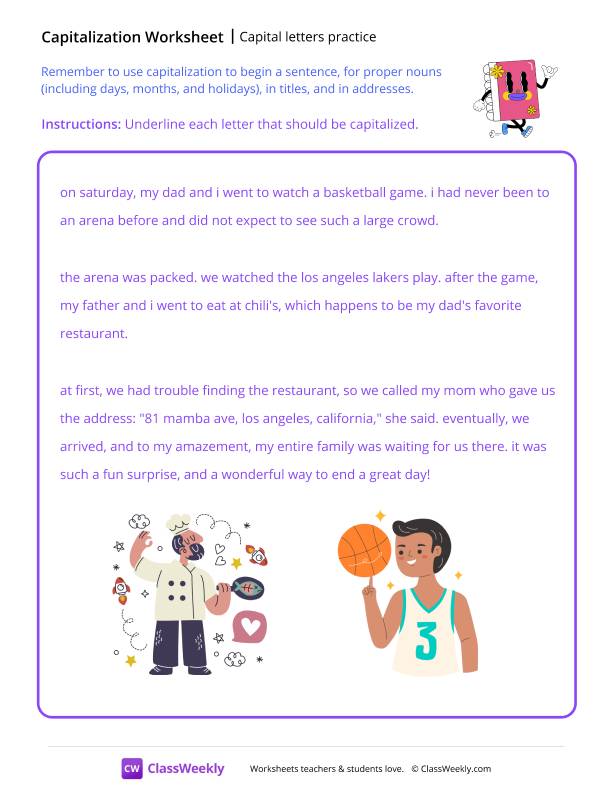
Add the punctuation: Give unpunctuated paragraphs; students insert correct marks.
-
Comma rules practice: One worksheet per comma rule; students add commas only for that rule.
-
Contraction match: Cards with full forms (do not, it is, they are); students match to contraction (don't, it's, they're).
-
Dialogue punctuation: Practice punctuating written conversations with quotation marks and commas.

Frequently Asked Questions
What are the most important punctuation marks for elementary students?
Period (.): ends declarative and imperative sentences. Question mark (?): ends interrogative sentences. Exclamation mark (!): ends exclamatory sentences or adds emphasis. Comma (,): separates items in a series, joins independent clauses with FANBOYS, follows introductory words or phrases, separates parts of dates and addresses. Apostrophe ('): shows possession or marks letters left out in contractions. Quotation marks ("..."): enclose direct speech and titles of short works. These six cover the majority of punctuation instruction through 5th grade.
How do you teach comma usage?
Commas have many rules, so teach them one at a time with examples: (1) Commas in a series: 'I bought apples, bananas, and grapes.' (2) Commas in compound sentences before FANBOYS: 'She wanted to go, but she was tired.' (3) Commas after introductory words or phrases: 'First, we need to wash the dishes. After the rain, we went outside.' (4) Commas in dates: 'July 4, 1776.' (5) Commas in addresses: 'Chicago, Illinois.' (6) Direct address: 'Emma, please come here.' Introduce each rule separately and practice it before moving on.
What is the difference between possessive apostrophes and contractions?
Possessive apostrophe: shows that something belongs to someone. 'The dog's bowl' = the bowl belonging to the dog. Singular possession: dog's, teacher's, James's. Plural possession when the noun ends in s: teachers' room, dogs' owners. Plural possession when the noun doesn't end in s: children's books, women's team. Contraction: the apostrophe replaces missing letters. Don't = do not. It's = it is. They're = they are. Common confusion: 'its' (possessive, no apostrophe) vs 'it's' (contraction for it is).
When should students use quotation marks?
Direct quotes: enclose the exact words someone said. 'Hurry up!' she called. Notice: the comma or period goes inside the closing quotation mark. Titles of short works: short stories, poems, songs, articles ('The Road Not Taken'). Longer works get italics or underlining (books, movies). A common error is using quotation marks for emphasis or as scare quotes - teach students this non-standard use specifically so they avoid it in formal writing.
What is an ellipsis and a dash, and do elementary students need them?
An ellipsis (...) indicates a pause, trailing thought, or omitted text in a quotation. A dash ( - ) marks a strong interruption or sets off extra information with more emphasis than parentheses. These are introduced in 4th-5th grade under L.4.2 and L.5.2 ('Use punctuation for effect'). They're less essential than commas and apostrophes but add stylistic sophistication to upper elementary writing. Teaching the dash is especially useful for teaching sentence variety and emphasis.
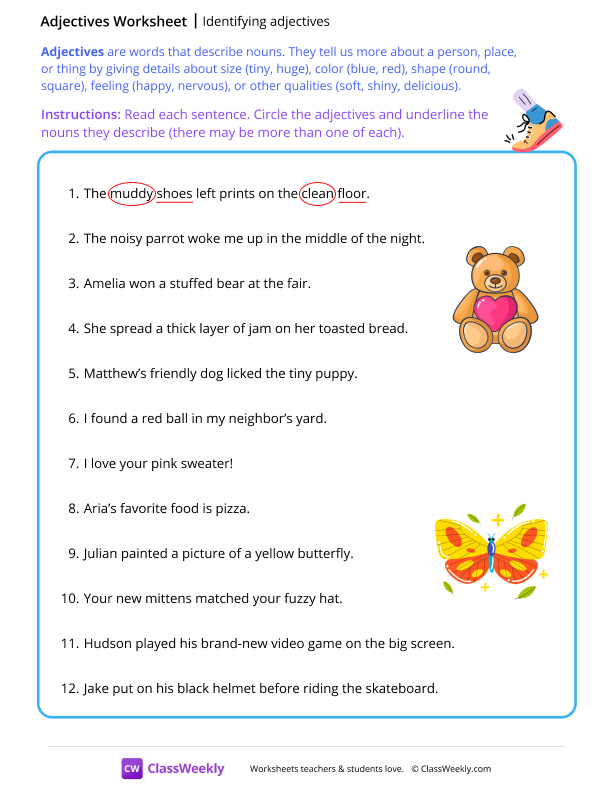
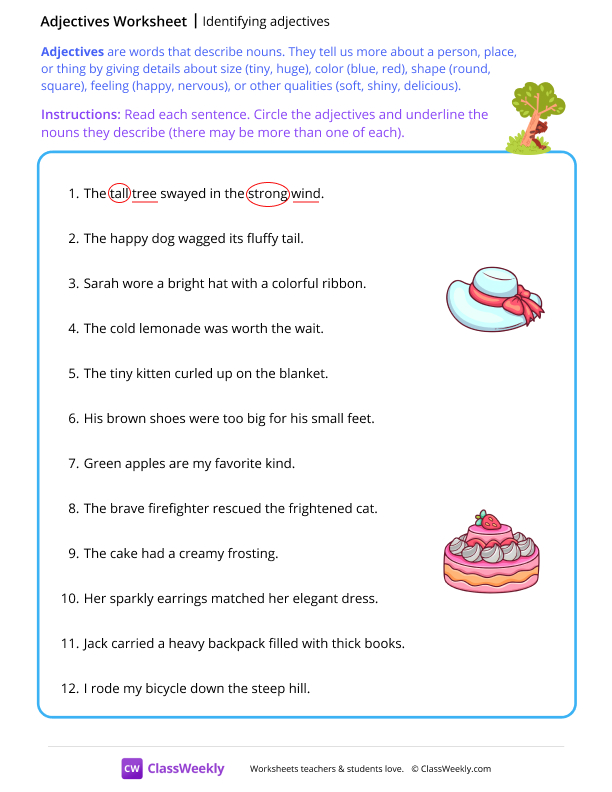
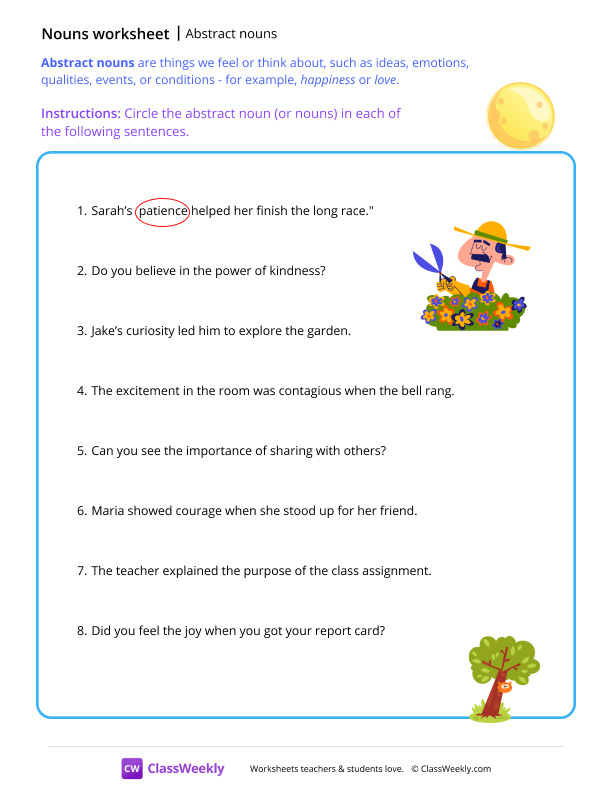
Free Punctuation Worksheets
Curriculum-aligned printable worksheets for Kindergarten – 5th Grade. Download free.