What Is a Subordinating Conjunction?
Taught in US schools
Key Takeaways
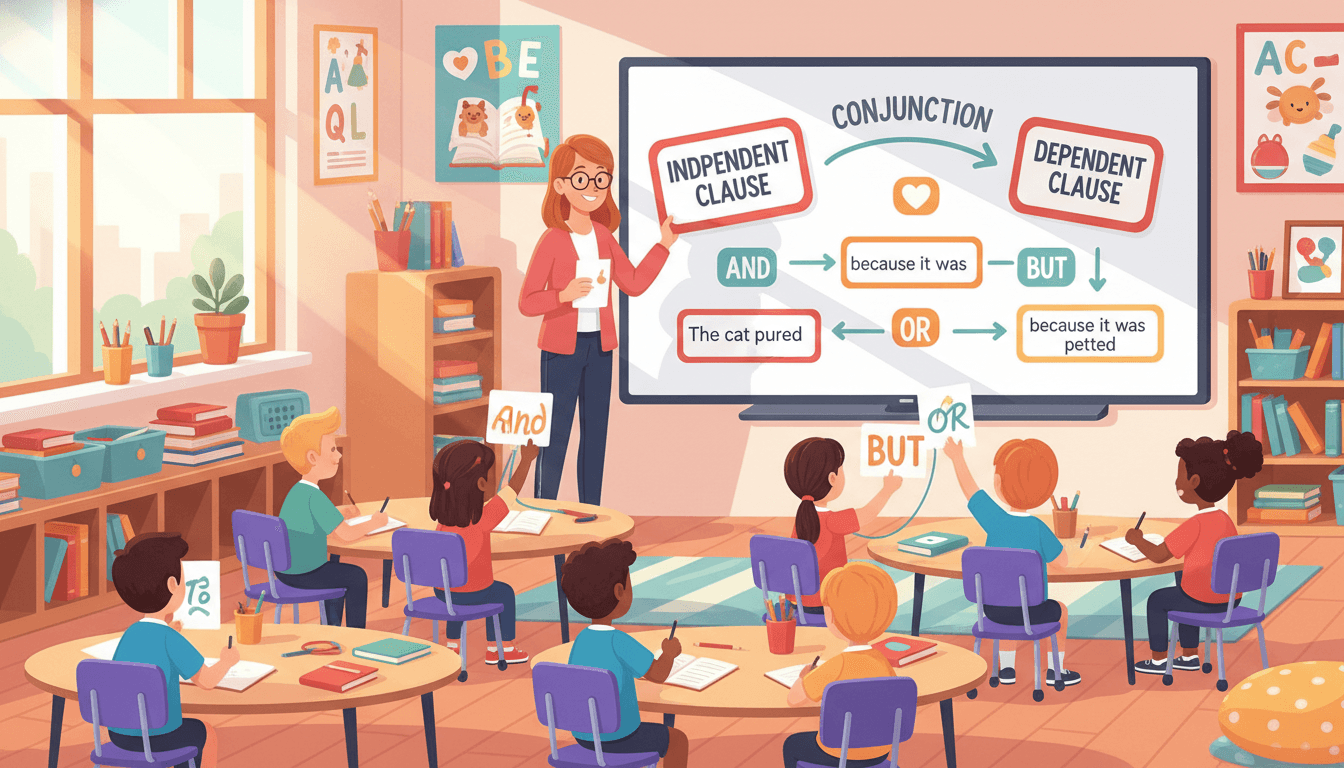
- A subordinating conjunction connects a dependent (subordinate) clause to an independent clause, creating a complex sentence.
- The AAAWWUBBIS mnemonic lists common subordinating conjunctions: although, as, after, when, while, until, because, before, if, since.
- When the dependent clause comes FIRST in a sentence, use a comma after it. When it comes second, no comma is needed.
What Is a Subordinating Conjunction?
A subordinating conjunction is a word that introduces a dependent (subordinate) clause and connects it to an independent clause. The result is a complex sentence - one that has two clauses with an unequal relationship: one can stand alone, one cannot.
Example: "Although it was cold, the children played outside."
- Although = subordinating conjunction
- Although it was cold = dependent clause (cannot stand alone)
- the children played outside = independent clause (complete sentence)
The AAAWWUBBIS Mnemonic
One of the most popular ways to remember common subordinating conjunctions is the mnemonic AAAWWUBBIS:
A: Although
A: As
A: After
W: When
W: While
U: Until
B: Because
B: Before
I: If
S: Since Additional common subordinating conjunctions not in the mnemonic: unless, even though, wherever, whenever, so that, provided that, as long as, though.
What Subordinating Conjunctions Show
Subordinating conjunctions show different kinds of relationships between clauses:
Cause/Reason: because, since, as - "She was tired because she worked all day."
Time: when, while, after, before, until, as - "After the game ended, they celebrated."
Condition: if, unless, provided that - "If you study, you will do well."
Contrast: although, even though, though, while - "Although it was late, he kept reading."
The Comma Rule
The placement of the dependent clause determines whether you need a comma:
Dependent clause FIRST → comma after it:
"Because she practiced every day, her piano skills improved."
Independent clause FIRST → no comma:
"Her piano skills improved because she practiced every day."
This comma rule is part of the CCSS for 4th grade writing (L.4.2b) and is important for standardized test writing prompts.
Subordinating vs. Coordinating Conjunctions
FANBOYS: Coordinating - Two independent clauses - Compound
AAAWWUBBIS: Subordinating - Dependent + independent clause - Complex Both types improve sentence variety, but they work differently. Students who understand both can write compound, complex, and compound-complex sentences.
Common Errors
-
Fragment: writing the dependent clause alone. "Because it was raining." - This needs an independent clause to be complete.
-
Wrong comma placement: "We went inside, because it rained." - No comma is needed when the dependent clause comes second.
-
Confusing subordinating with coordinating: "I was tired, because I worked." - "because" is not a FANBOYS word; the comma rule is different.
Practice Activities
- Give students sentence frames with a blank: "___ she was nervous, she gave the speech." Students choose the best subordinating conjunction.
- Sentence combining challenge: give two simple sentences and ask students to combine them using a subordinating conjunction, writing both orders (dependent first and second).
- Play "AAAWWUBBIS Hunt" - students search a shared text for subordinating conjunctions and identify the dependent clause in each.
- Fix-it editing: provide a paragraph with two fragment errors (dependent clauses written alone) for students to correct.
- Have students write a paragraph using at least two different subordinating conjunctions, then swap with a partner to check comma placement.
Frequently Asked Questions
What is the AAAWWUBBIS mnemonic?
AAAWWUBBIS (pronounced 'aw-wubbis') stands for: Although, As, After, When, While, Until, Because, Before, If, Since. These are some of the most common subordinating conjunctions. When students see any of these words at the beginning of a clause, they know that clause cannot stand alone - it needs an independent clause to complete the sentence.
What is the difference between a subordinating conjunction and a coordinating conjunction?
Coordinating conjunctions (FANBOYS: for, and, nor, but, or, yet, so) join two independent clauses of equal weight, creating a compound sentence. Subordinating conjunctions create a relationship of dependency between an unequal pair - one clause can stand alone (independent), and one cannot (dependent/subordinate). The sentence type created is different: compound vs. complex.
When do you use a comma with a subordinating conjunction?
The comma rule for subordinating conjunctions is based on word order. If the dependent clause comes FIRST, place a comma after it before the independent clause: 'Because it rained, we stayed inside.' If the independent clause comes FIRST and the dependent clause comes second, no comma is needed: 'We stayed inside because it rained.'
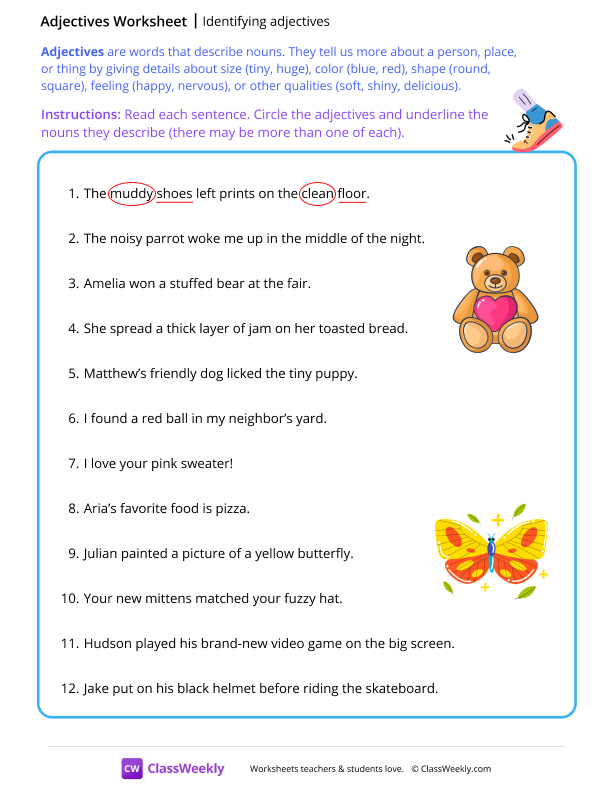
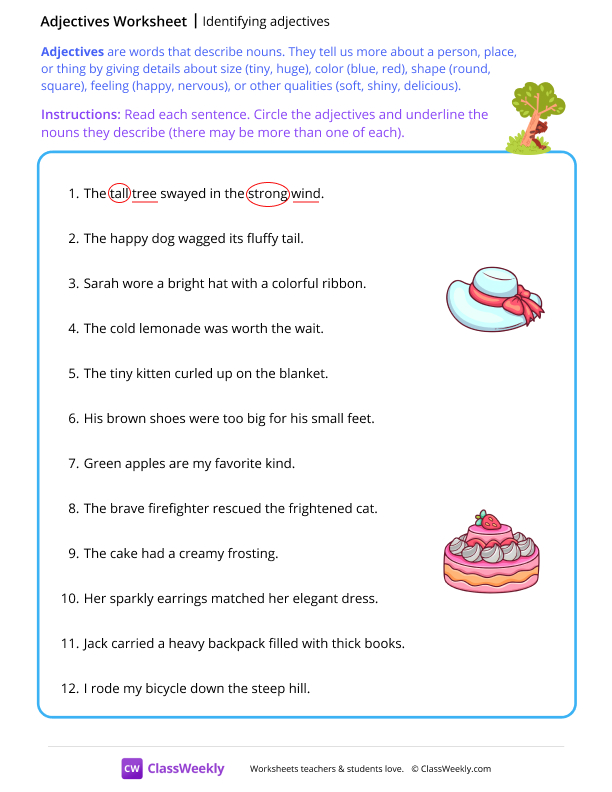
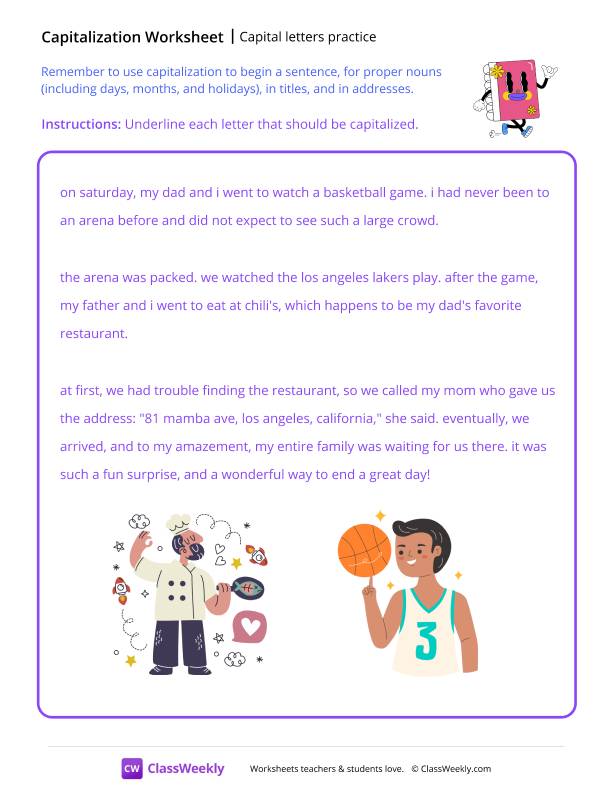
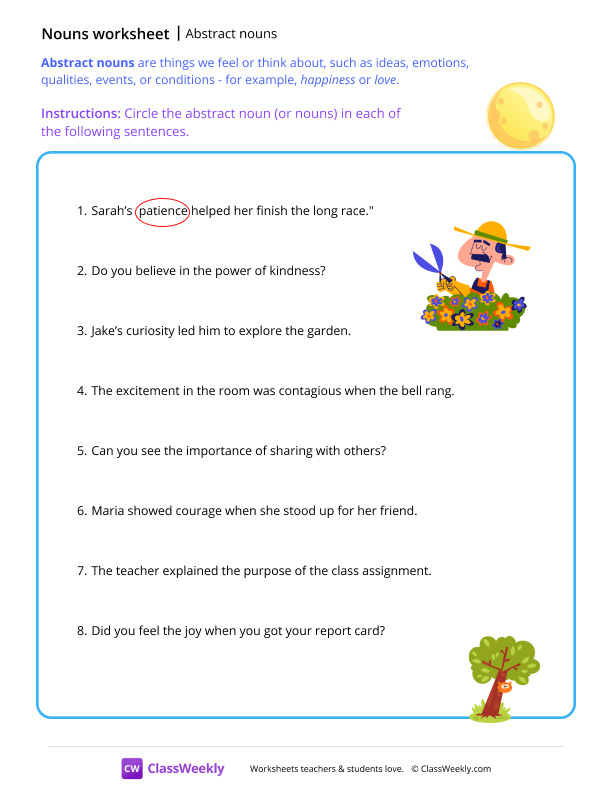
Free Subordinating Conjunction Worksheets
Curriculum-aligned printable worksheets for 4th – 5th Grade. Download free.