What Was Colonial America?
Taught in US schools
Key Takeaways
- The 13 British colonies in North America were established between 1607 and 1733, beginning with Jamestown, Virginia.
- The colonies were grouped into three regions - New England, Middle, and Southern - each with distinct economies, climates, and ways of life.
- Colonial life was shaped by farming, trade, religious beliefs, and the labor of enslaved Africans, particularly in the Southern colonies.
What Was Colonial America?
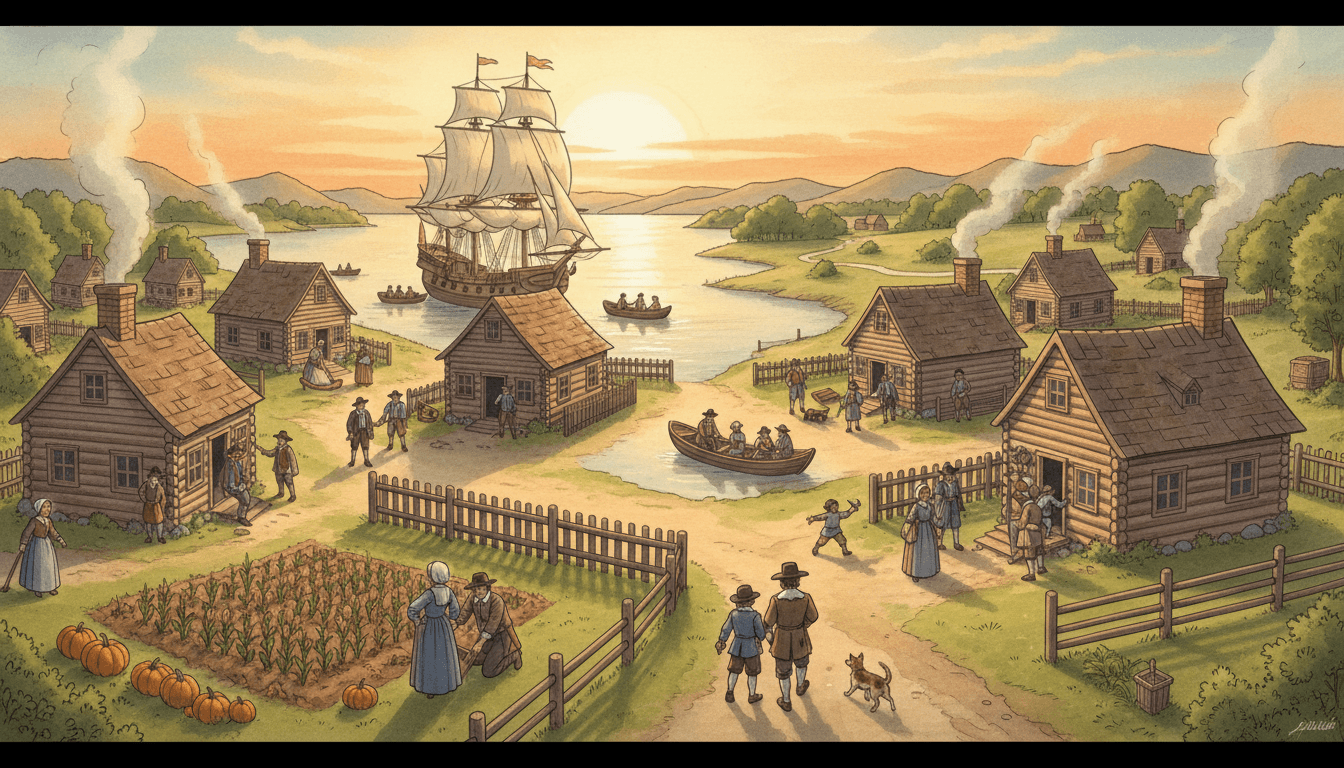
Colonial America refers to the period from 1607 to 1776 when Great Britain established 13 colonies along the eastern coast of North America. These colonies were under British rule but gradually developed their own identities, governments, and grievances - ultimately leading to the American Revolution and the birth of the United States.
How the Colonies Were Founded
1607: Jamestown, Virginia - first permanent English settlement
1620: Plymouth Colony - Pilgrims seeking religious freedom
1630: Massachusetts Bay Colony - Puritans
1681: Pennsylvania - William Penn's Quaker colony
1733: Georgia - last of the 13 colonies, founded by James Oglethorpe
The Three Colonial Regions
The 13 colonies are typically grouped into three regions based on their geography, economy, and way of life:
New England Colonies
(Massachusetts, Connecticut, Rhode Island, New Hampshire)
-
Climate: Cold winters, rocky soil - difficult for large-scale farming
-
Economy: Fishing, shipbuilding, lumber, trade
-
Society: Tight-knit Puritan communities, strong emphasis on education (Harvard founded in 1636), town meetings as local democracy
Middle Colonies
(New York, New Jersey, Pennsylvania, Delaware)
-
Climate: Mild - fertile soil well-suited for farming
-
Economy: Grain farming ("breadbasket colonies"), fur trade, diverse crafts
-
Society: Most diverse region - many ethnic and religious groups including Dutch, German, Scots-Irish, Quakers
Southern Colonies
(Maryland, Virginia, North Carolina, South Carolina, Georgia)
-
Climate: Warm, long growing season
-
Economy: Cash crops - tobacco (Virginia), rice and indigo (South Carolina)
-
Society: Large plantations worked by enslaved Africans; wealthy planter class dominated politics
Daily Life in Colonial Times
Children and Education
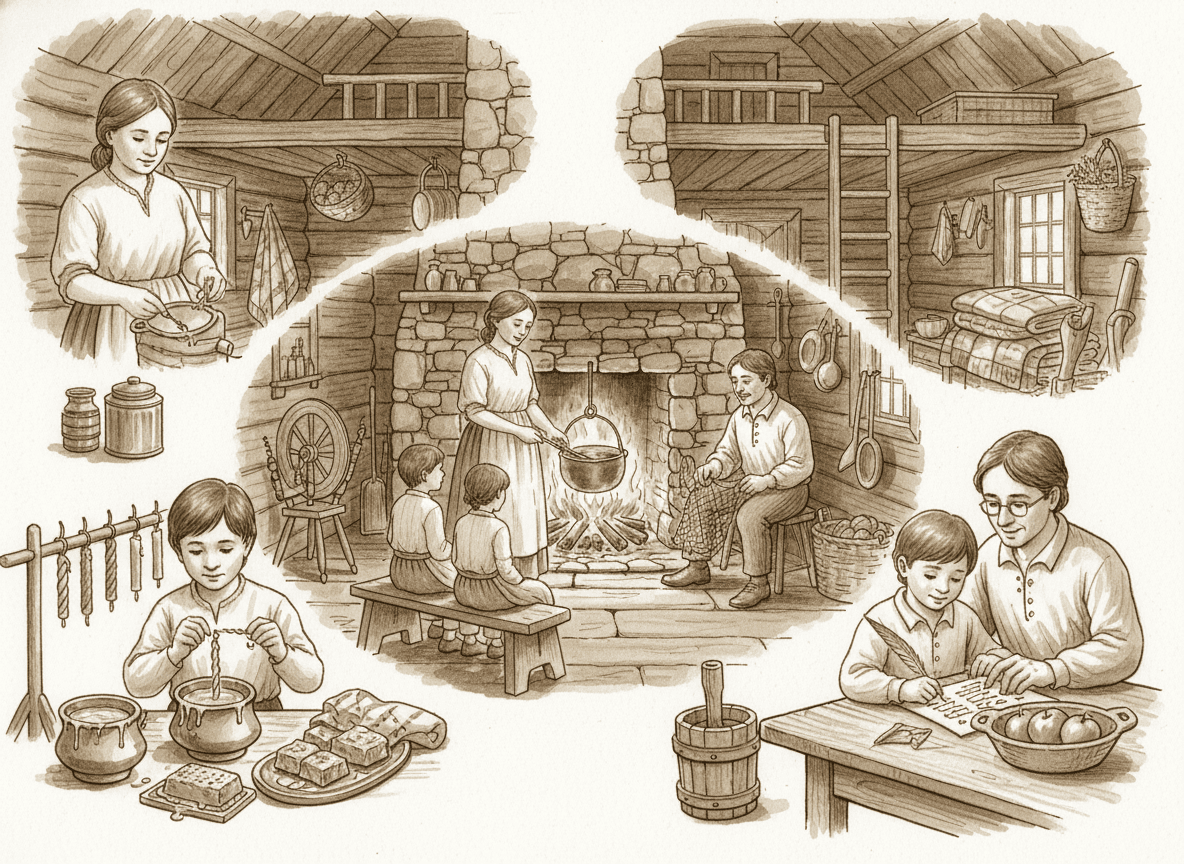
- Many children attended a one-room schoolhouse where one teacher taught all ages.
- Children learned to read primarily from the New England Primer and the Bible.
- Girls usually received less formal education; they learned domestic skills at home.
- Children were expected to work - farming, tending animals, spinning, or apprenticing in a trade.
Women's Roles Colonial women managed households, raised children, preserved food, made cloth, and often ran small businesses (baking, sewing, inn-keeping) alongside their husbands.
Trades and Apprenticeships Boys who didn't farm often became apprentices - learning a skilled trade from a master craftsman for several years before working independently. Common trades: blacksmith, printer, cooper (barrel maker), cobbler (shoemaker).
The Path to Revolution
By the 1760s, the colonists grew angry about taxation without representation - Britain taxed the colonies (Stamp Act, Townshend Acts, Tea Act) but gave them no seats in Parliament. Protests, boycotts, and events like the Boston Massacre (1770) and Boston Tea Party (1773) pushed the colonies toward independence. In 1776, the Second Continental Congress declared independence with the Declaration of Independence.
Practice Activities
- Create a colonial region comparison chart showing economy, climate, and daily life for New England, Middle, and Southern colonies.
- Research a colonial trade or craft (blacksmith, printer, candle maker) and write a first-person diary entry from an apprentice's point of view.
- Map the 13 colonies and label each one with its founding date and key fact.
- Compare colonial schooling with education today - what has changed and what has stayed the same?
- Read a primary source (a letter, a newspaper headline) from colonial times and discuss what it reveals about life in the colonies.
Frequently Asked Questions
Why did the British establish colonies in North America?
Britain established colonies for several reasons: economic gain (trading valuable resources like tobacco and timber), religious freedom (many colonists, like the Pilgrims, sought to practice their faith freely), and political expansion of the British Empire.
What was the first permanent English settlement in America?
Jamestown, Virginia, founded in 1607, was the first permanent English settlement in North America. Early settlers struggled with disease, starvation, and conflict with Indigenous peoples, but the colony survived partly because of tobacco farming.
How did colonial children's lives differ from children today?
Colonial children had far less formal education - many attended a one-room schoolhouse only for a few years, and girls often received little formal schooling. Children were expected to work alongside their parents from a young age, doing farm chores, learning trades, or helping with domestic tasks.
Free Colonial America Worksheets
Curriculum-aligned printable worksheets for 4th – 5th Grade. Download free.