What Is a Concept Map?
Taught in US schools
Key Takeaways
- A concept map is a visual tool that shows how ideas connect to each other.
- It differs from a web or mind map - concept maps label the relationships between ideas.
- Students use concept maps to organize prior knowledge, take notes, and review before tests.
- Creating a concept map forces students to think about how ideas are related, not just what they are.
What Is a Concept Map?
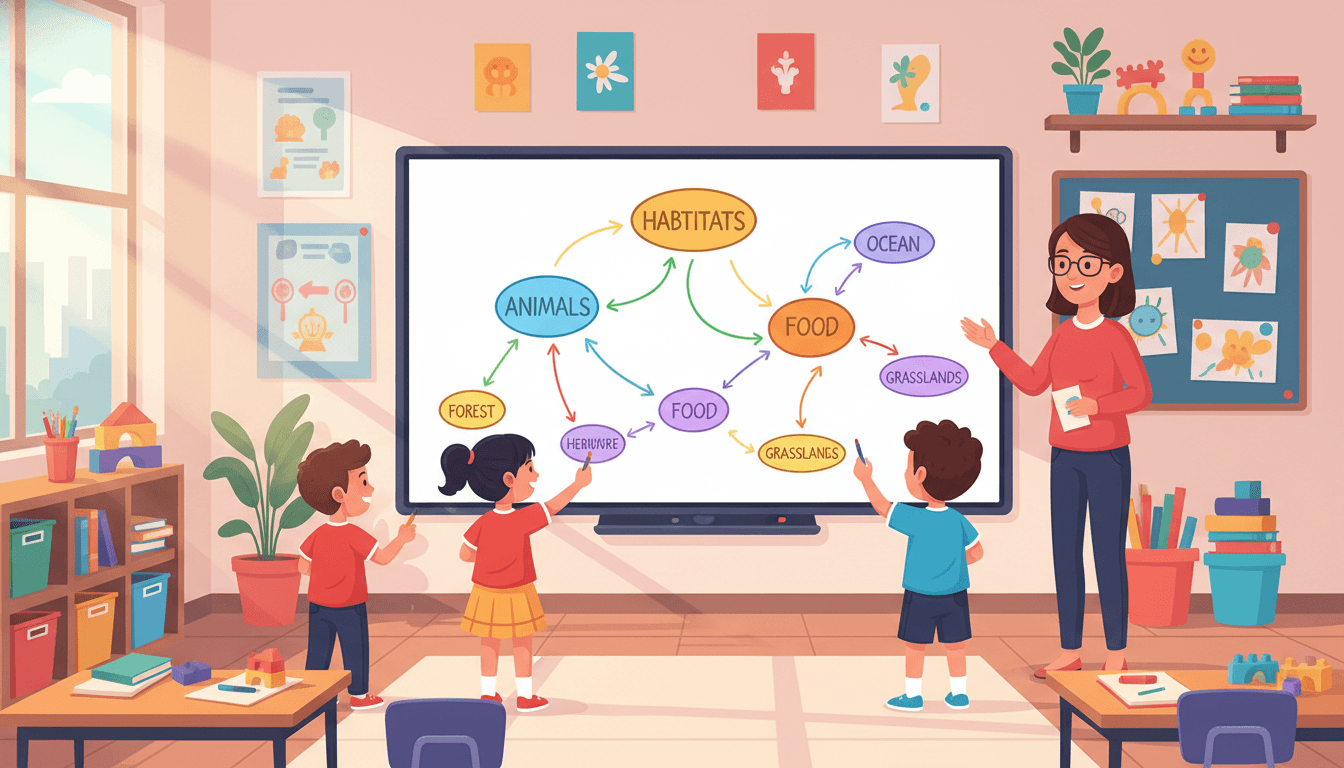
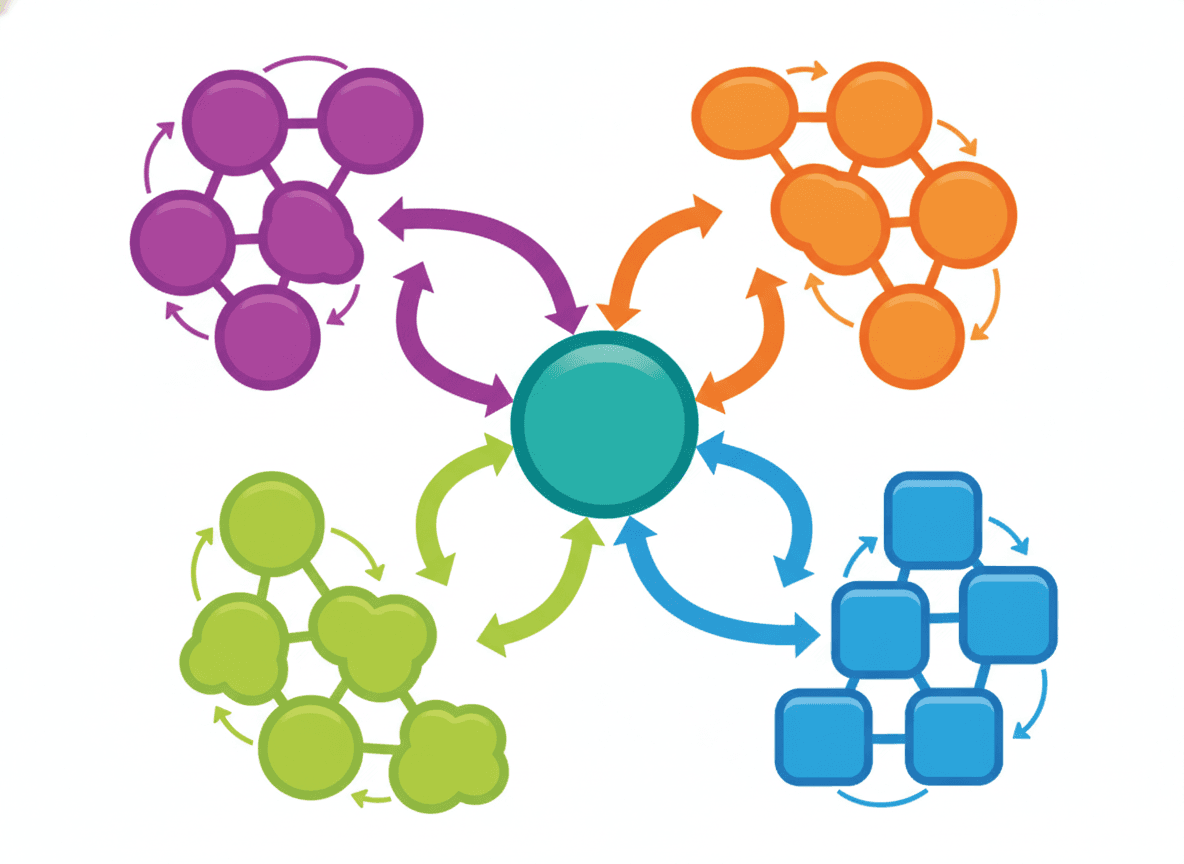
A concept map is a visual diagram that shows how ideas and concepts are related to each other. Key ideas are written in shapes (usually boxes or circles), and arrows connect them. Crucially, each arrow is labeled to describe the relationship between the two connected ideas.
This labeling of relationships is what makes a concept map more analytical than a simple web or mind map.
Example: Photosynthesis → requires → Sunlight → which provides → Energy → used to produce → Glucose
Concept Map vs. Mind Map vs. Web
Starts from: Any idea - Central topic - Central word
Connections labeled?: Yes - No - No
Best for: Analyzing relationships - Brainstorming - Vocabulary
Direction: Multi-directional - Outward from center - Outward from center
How to Create a Concept Map
- Identify the main concept - this goes in the center or at the top
- Brainstorm related ideas - add boxes for each connected concept
- Draw arrows between related concepts - show which ideas connect
- Label each arrow - use a short phrase that describes the relationship ("is a type of," "causes," "is part of," "requires," "leads to")
- Add cross-links - connect ideas across different branches when relationships exist
Uses in the Classroom
Before a unit: Have students create a concept map with everything they already know about a topic. This activates prior knowledge and reveals misconceptions.
During a unit: Students add to their concept map as they learn, creating a growing picture of their knowledge.
After a unit: Concept maps serve as excellent study tools and can be used as an alternative assessment - do the connections make sense? Are the labels accurate?
For vocabulary: Connect a new word to related words, examples, and definitions using labeled arrows.
Practice Activities
- Give students a set of vocabulary cards from a science unit and ask them to arrange and connect them into a concept map on the floor or a table before gluing them down.
- Start a class concept map on chart paper that grows throughout a unit as students add new connections.
- Compare two students' concept maps on the same topic - discuss: what connections did each person make? What is different? What's missing?
- Use a partially completed concept map as a formative assessment tool - students fill in the blanks.
Frequently Asked Questions
What is a concept map?
A concept map is a diagram that shows ideas (written in boxes or circles) connected by labeled arrows. The labels describe the relationship between ideas - not just that they are connected, but how. Example: 'Mammals → are warm-blooded → which means they → regulate their own body temperature.' This labeling of relationships is what distinguishes concept maps from simple webs or mind maps.
What is the difference between a concept map and a mind map?
A mind map starts from a central idea and branches outward, usually without labeled connections. It is great for brainstorming and free-association. A concept map explicitly labels how concepts are related (using words like 'leads to,' 'is a type of,' 'requires,' 'causes'). Concept maps are more analytical and better for showing complex, multi-directional relationships.
When should students use concept maps?
Concept maps are useful before a unit (to activate prior knowledge), during a unit (to add new connections as learning grows), and after a unit (to consolidate understanding). They are especially powerful in science and social studies, where topics have many interconnected concepts.
Free Concept Map Worksheets
Curriculum-aligned printable worksheets for 2nd – 5th Grade. Download free.