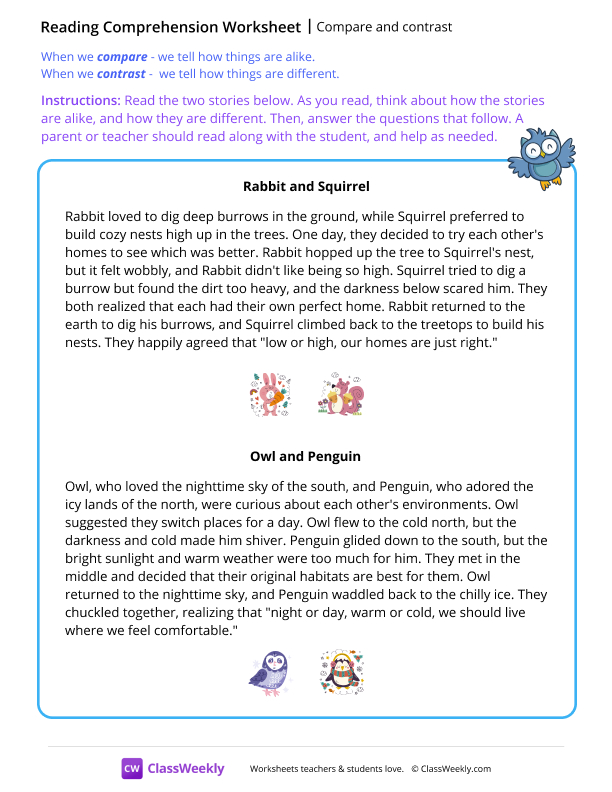
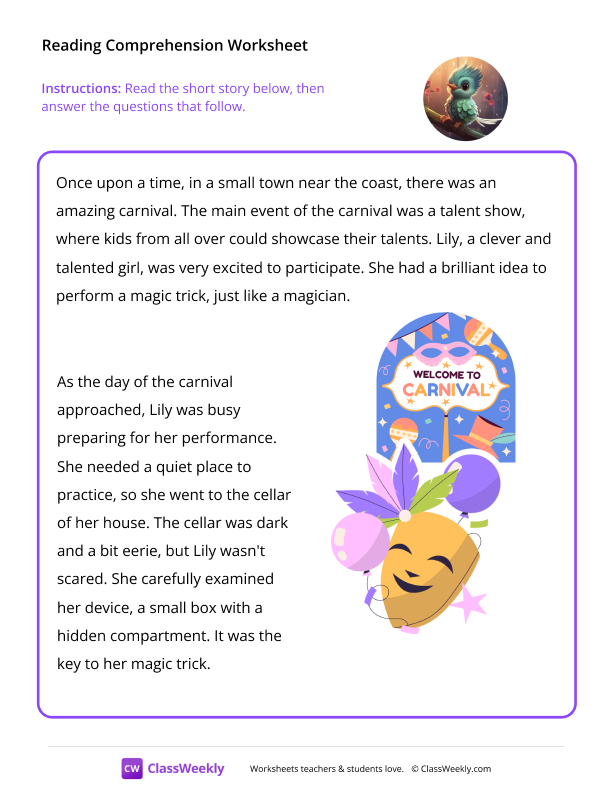
What Is Guided Reading?
Taught in US schools
Key Takeaways
- Guided reading is small-group instruction (4-6 students) working on the same text at their instructional level.
- The teacher introduces the text, listens to reading, and supports strategies for decoding and comprehension.
- Guided reading groups are flexible and change as students' reading levels progress.
- This model allows differentiated reading instruction - different groups work on different texts and skills.
What Is Guided Reading?
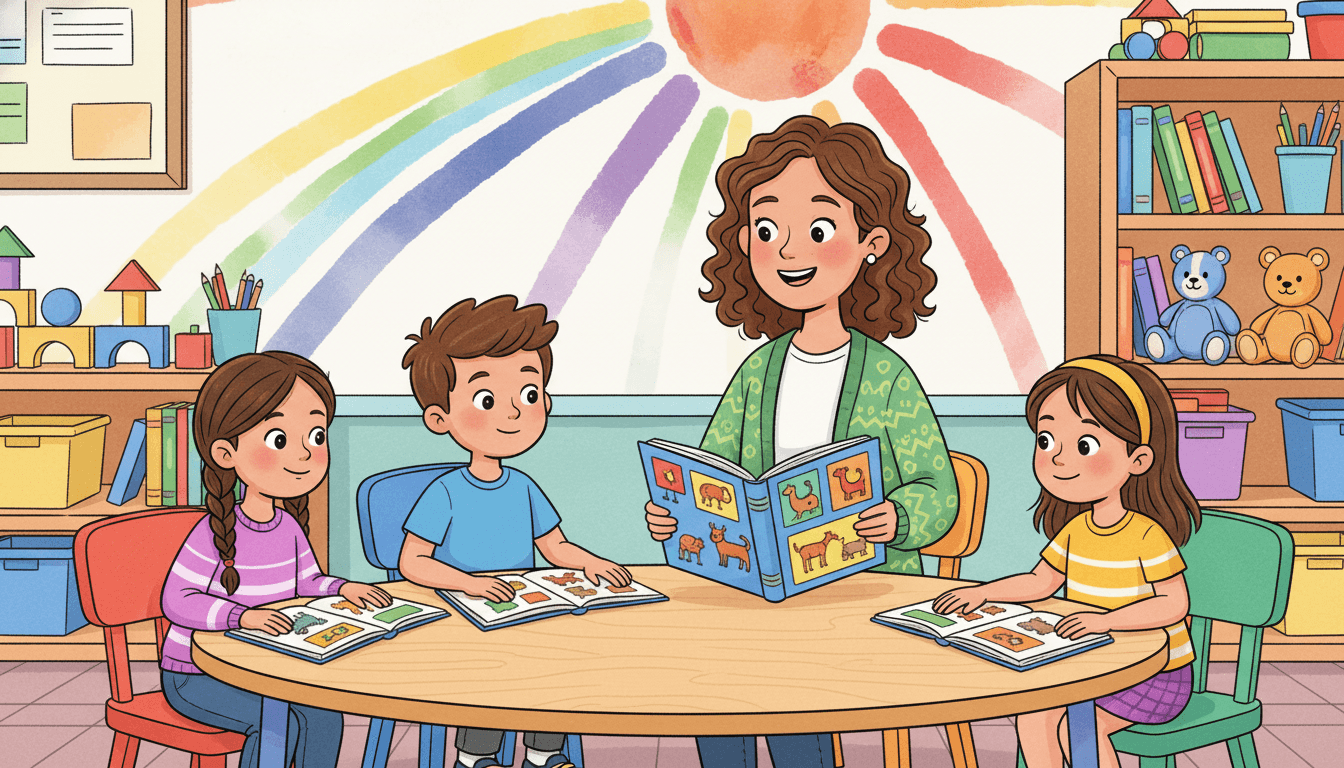
Guided reading is a small-group reading instruction model in which a teacher works with 4-6 students who read at similar levels, using a text specifically selected to provide instructional-level challenge. It is one of the most effective approaches to differentiated reading instruction in elementary school.
Guided reading allows teachers to provide targeted, responsive instruction that addresses the specific needs of each group - rather than teaching the whole class with one text that is too easy for some and too hard for others.
The Guided Reading Structure
Before reading:
- Teacher introduces the text (title, author, genre, text features)
- Builds or activates background knowledge
- Pre-teaches essential vocabulary
- Sets a purpose or focus for reading
During reading:
- Students read individually (whispering or reading quietly)
- Teacher listens to each student, taking mental or written notes
- Teacher takes a running record on one student's reading
- Teacher prompts with supportive questions, not immediate corrections
After reading:
- Discussion of the text (comprehension)
- Teacher revisits a specific teaching point
- Optional: word study, writing in response
Instructional Level vs. Independent Level
Independent: 95%+ - High - Self-selected reading at home or in school
Instructional: 90-94% - Moderate - Guided reading with teacher support
Frustration: Below 90% - Low - Avoid - too difficult even with support
Leveling Systems
Reading levels are typically measured using:
-
Guided Reading Levels (A-Z): Fountas & Pinnell system, widely used in K-5
-
Lexile Levels: Quantitative text complexity measure (e.g., 400-600L)
-
DRA Levels (Developmental Reading Assessment): 1-80 scale
-
Grade equivalents: Approximate grade-level alignment
What Grade Is Guided Reading For?
Guided reading is used across all elementary grades. It is most intensive in K-2 when foundational reading skills are developing rapidly. In grades 3-5, guided reading groups focus increasingly on comprehension strategies, vocabulary, and text complexity rather than decoding.
Common Misconceptions
Guided reading groups are permanent: Groups should be flexible and change as students grow. A student who starts the year in a lower group should move up as their reading level increases. Checking in and reassessing regularly is essential.
Guided reading is the same as round-robin reading: Round-robin reading (students taking turns reading aloud from the same text) is not guided reading. Guided reading is differentiated, teacher-supported, and focused on individual strategy use.
You need lots of time to do guided reading: Guided reading sessions can be effective in as little as 15-20 minutes. The key is frequency and intentionality, not session length.
Practice Activities
-
Running records: Regular assessment tool to monitor reading accuracy and strategy use.
-
Book introductions: Practice introducing books with attention to vocabulary, structure, and purpose.
-
Strategy prompts: Create a bookmark of prompts for students who get stuck: "Try the first sound. Skip it and read on. Does that make sense?"
-
Reading response journals: Students write a brief response to the guided reading text independently.
-
Partner reading extension: After guided reading, partners reread the text together for fluency practice.

Frequently Asked Questions
What is guided reading?
Guided reading is a small-group reading instruction model developed by education researchers, most prominently Irene Fountas and Gay Su Pinnell. The teacher works with a small group of 4-6 students who read at similar levels. The teacher selects a book at the group's instructional level, introduces it, listens to students read (often quietly to themselves or in a whisper), and provides targeted support for reading strategies, vocabulary, and comprehension.
How is guided reading different from shared reading?
Shared reading uses a single large text that everyone can see (a big book, a projected text, or an anchor text) and is typically a whole-class activity where the teacher models strategies. Guided reading is small-group, with each student having their own copy of the text, working at their individual instructional level. Guided reading allows differentiated instruction; shared reading creates shared community texts and experiences.
What is an 'instructional level' text?
An instructional level text is one the student can read with about 90-94% accuracy and reasonable comprehension - not too easy (independent level), not too hard (frustration level). At the instructional level, the text offers enough challenge to build skills and strategies while remaining accessible with teacher support. Reading levels are often expressed as Lexile bands, guided reading levels (A-Z), or DRA levels.
What does the teacher do during guided reading?
Before reading: introduces the book, previews text features and vocabulary, sets a purpose. During reading: listens to individual students reading quietly or in a whisper, takes running records, observes miscues, prompts with questions ('What could you try? Does that make sense?'). After reading: leads a brief discussion of comprehension, revisits a specific teaching point, may do a quick word study activity.
How often should guided reading groups meet?
Ideally, each small group meets 4-5 times per week in the early grades (K-2), and 3-4 times per week in grades 3-5. Groups that need the most support should meet most frequently. While one group meets with the teacher, other students engage in independent reading, literacy centers, or partner reading. The workshop model supports this rotation.
Free Guided Reading Worksheets
Curriculum-aligned printable worksheets for Kindergarten – 5th Grade. Download free.