What Is an Interjection?
Taught in US schools

Key Takeaways
- An interjection is a word or phrase that expresses emotion and stands alone grammatically.
- Strong interjections express intense emotion and are followed by an exclamation point: Wow! Ouch! No!
- Mild interjections express gentler emotion and are followed by a comma: Well, that's interesting.
- Interjections can be removed from a sentence without affecting its grammatical structure.
What Is an Interjection?
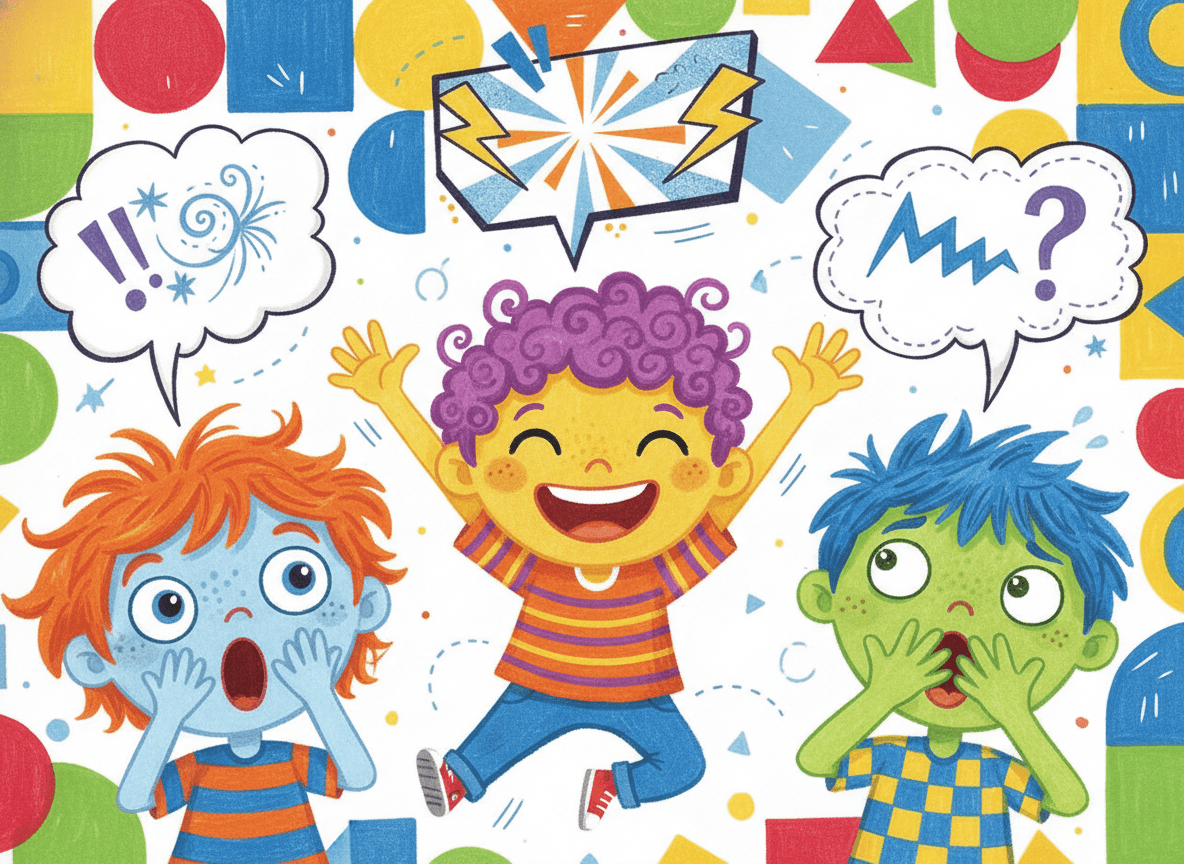
An interjection is a word or phrase that expresses sudden emotion and is grammatically independent from the rest of the sentence. Interjections don't connect to nouns, verbs, or other sentence parts - they stand alone as expressions of feeling.
Examples:
-
Wow! That trick was incredible.
-
Ouch! That really hurt.
-
Hmm, I'm not sure what to say.
-
Yay! We won the game!
-
Oh no, I forgot my homework.
Interjections are the most distinctly human of the eight parts of speech - they are the spontaneous expressions of emotion that burst into language.
Strong vs. Mild Interjections
Strong interjections: Express intense emotion; followed by an exclamation point.
- Wow! Hey! No! Yikes! Hooray! Ouch!
Mild interjections: Express gentler emotion, hesitation, or transition; followed by a comma.
- Well, that's not what I expected.
- Oh, I see what you mean.
- Hmm, let me think about that.
Common Interjections by Emotion
Surprise: Wow! Oh! What!
Pain: Ouch! Ow!
Joy: Yay! Hooray! Whoo-hoo!
Disgust: Eww! Yuck! Gross!
Relief: Phew! Whew!
Alarm: Yikes! Uh-oh! Help!
Frustration: Ugh! Argh!
Thought: Hmm... Well... Um...
Interjections in Writing
Interjections are valuable in:
-
Dialogue: Characters naturally use interjections ("Wow, you really did it!" she said).
-
Personal narrative: First-person stories benefit from authentic emotional expression.
-
Creative writing: Interjections create voice and personality.
They are less appropriate in:
- Formal essays and research papers
- Academic arguments
- Persuasive writing (where logical language is preferred)
What Grade Do Kids Learn Interjections?
2nd–3rd grade: Students encounter interjections in picture books and dialogue; learn that exclamation points signal strong emotion.
4th grade: Some curricula include interjections as the eighth part of speech in parts-of-speech instruction.
5th grade (L.5.1a): Students explain the function of conjunctions, prepositions, and interjections.
Common Misconceptions
Interjections are only exclamations: Some interjections are quiet and gentle (Hmm, Well, Oh). Not all interjections end with exclamation points.
You can use as many interjections as you want: Overusing interjections makes writing feel dramatic and juvenile. Teaching restraint is as important as introducing the concept.
Interjections are not a "real" part of speech: Some older grammars listed only seven parts of speech, excluding interjections. Modern English grammar includes them as the eighth part of speech.
Practice Activities
-
Emotion match: Match interjection cards to emotion category cards.
-
Punctuation practice: Decide whether each interjection needs an exclamation point or a comma.
-
Dialogue writing: Students write a short dialogue between two characters, including at least 4 interjections.
-
Interjection hunt: Find all interjections in a chapter of a class novel.
-
Replace and compare: Rewrite a dialogue replacing interjections with neutral words; discuss how the tone changes.
Frequently Asked Questions
What is an interjection?
An interjection is a word or short phrase that expresses sudden emotion - surprise, excitement, pain, joy, disgust, or hesitation. It is grammatically independent: it doesn't modify any other word in the sentence and isn't required for the sentence to make grammatical sense. Examples: 'Wow, that sunset is beautiful!' or 'Ouch! I stubbed my toe!'
What punctuation follows an interjection?
Strong interjections expressing intense emotion are followed by an exclamation point: Wow! Ouch! Hurray! No! Oh! Mild interjections expressing gentler emotion or hesitation are followed by a comma and then a complete sentence: 'Well, I'm not sure about that.' 'Hmm, let me think.' The punctuation reflects the level of emotional intensity.
What are common interjections students learn?
Common interjections: Wow (surprise/admiration), Ouch/Ow (pain), Yikes (alarm), Hey (getting attention), Oh (realization/surprise), Uh-oh (concern), Hooray/Yay (celebration), Eww/Yuck (disgust), Hmm (thinking/uncertainty), Ugh (frustration), Phew (relief), No/Yes (affirmation/negation used as exclamation). Also: please, thank you, and excuse me can function as interjections in certain contexts.
Are interjections important in formal writing?
Interjections are appropriate in dialogue, personal narratives, informal writing, and creative writing. They are generally avoided in formal essays, research reports, and academic writing. Teaching students when to use interjections builds register awareness - the ability to adjust language formality for different audiences and purposes.
What is the difference between an interjection and an exclamatory sentence?
An interjection is a single word or short phrase that expresses emotion ('Wow!'). An exclamatory sentence is a complete sentence that expresses strong feeling ('What a beautiful sunset it is!'). Both end with exclamation points to signal high emotion, but an exclamatory sentence has a subject and predicate, while an interjection may not.
Free Interjection Worksheets
Curriculum-aligned printable worksheets for 2nd – 4th Grade. Download free.