What Are the Parts of Speech?
Taught in US schools

Key Takeaways
- There are 8 parts of speech: noun, verb, adjective, adverb, pronoun, preposition, conjunction, and interjection.
- A word's part of speech is determined by its function in a sentence, not its form alone.
- The same word can be different parts of speech in different sentences: 'light' can be a noun, verb, or adjective.
- Understanding parts of speech is the foundation for grammar, sentence structure, and writing clarity.
What Are the Parts of Speech?
Parts of speech are the eight categories that classify words by their function in a sentence. Every word in the English language belongs to one of these categories - though many words can serve as different parts of speech depending on context.
Understanding parts of speech gives students the vocabulary to discuss language, analyze sentences, and make intentional choices as writers.
The Eight Parts of Speech
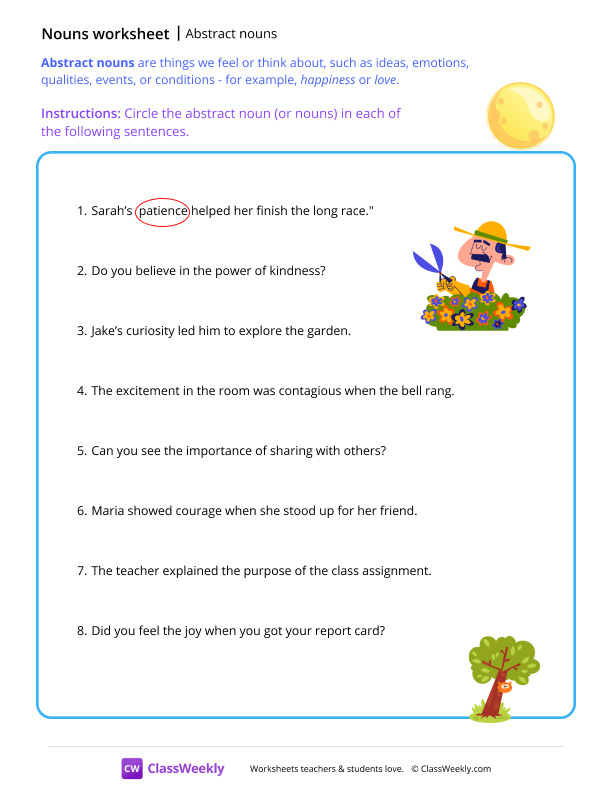
1. Noun
Names a person, place, thing, or idea. teacher, Chicago, ocean, freedom, happiness
2. Verb
Expresses action or state of being. run, think, is, becomes, sparkled
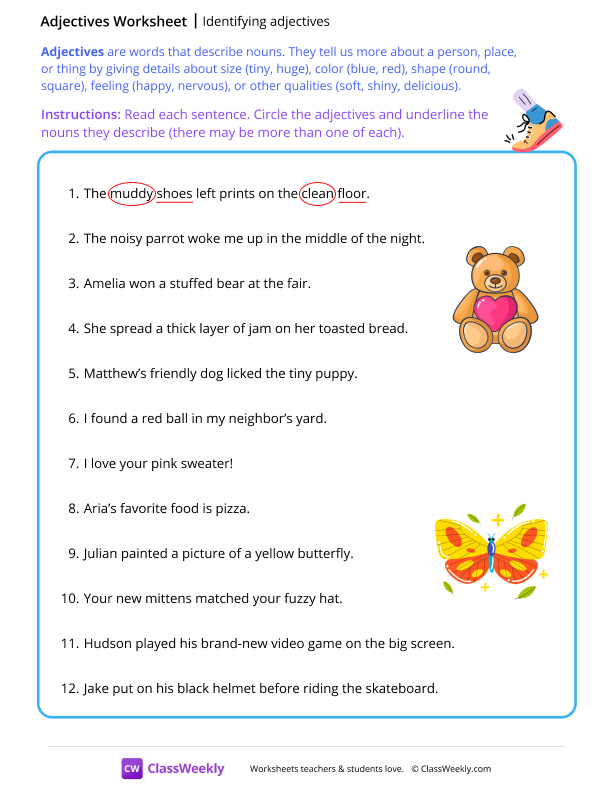
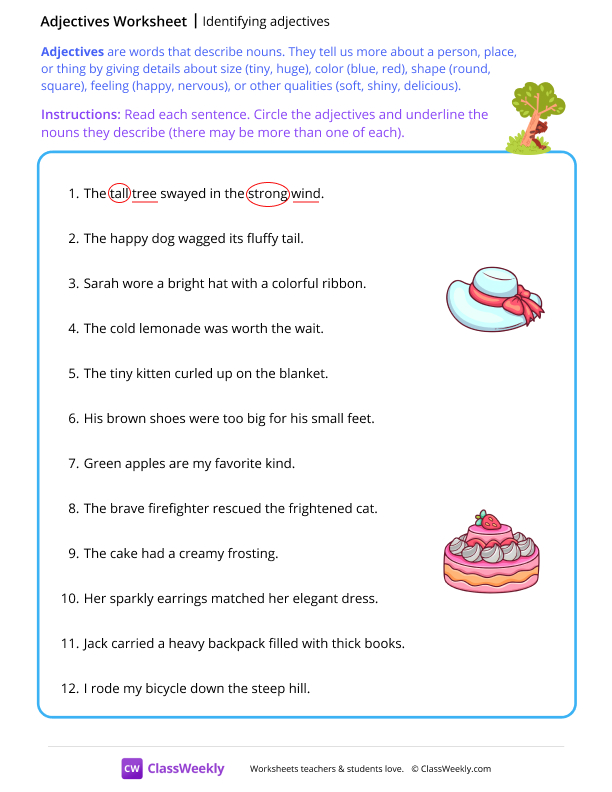
3. Adjective
Describes or modifies a noun or pronoun. tall, three, red, tired, extraordinary
4. Adverb
Modifies a verb, adjective, or another adverb - often tells how, when, where, or how much. quickly, never, very, loudly, tomorrow
5. Pronoun
Replaces a noun to avoid repetition. he, she, it, they, we, I, me, him, our, themselves
6. Preposition
Shows relationships between a noun (or pronoun) and other words in the sentence. in, on, under, between, toward, during, despite
7. Conjunction
Connects words, phrases, or clauses. and, but, or, because, although, while, if
8. Interjection
Expresses sudden emotion and is grammatically independent of the rest of the sentence. Wow! Ouch! Hey! Oh no! Yikes!
One Word, Multiple Parts of Speech
The same word can serve as different parts of speech:
-
"Fast" as adjective: a fast car
-
"Fast" as adverb: She runs fast
-
"Fast" as noun: a religious fast
-
"Fast" as verb: She chose to fast
This is why context - not just the word itself - determines its part of speech.
What Grade Do Kids Learn Parts of Speech?
2nd grade (L.2.1): Students form and use common nouns, proper nouns, adjectives, verbs, and adverbs.
3rd grade (L.3.1): Students explain the function of nouns, pronouns, verbs, adjectives, and adverbs in sentences.
4th grade (L.4.1): Students use relative pronouns and adverbs; form and use progressive verb tenses; place modifiers correctly.
5th grade (L.5.1): Students explain the function of conjunctions, prepositions, and interjections; use correlative conjunctions.
Common Misconceptions
Words have one fixed part of speech: Many words shift categories based on function in the sentence. Never identify a word's part of speech without considering the sentence.
Adverbs always end in -ly: Many adverbs end in -ly, but not all: "fast," "hard," "well," "yesterday," "very," and "quite" are all adverbs that don't end in -ly.
Adjectives always come before nouns: In English, adjectives usually precede nouns, but they can follow linking verbs: "The soup is hot." Here, "hot" is still an adjective (predicate adjective), describing "soup."
Practice Activities
-
Color-code sentences: Each part of speech gets its own color; students color-code sentences.
-
Part of speech sort: Cards with words; students sort into 8 piles (context sentences provided).
-
Fill-in-the-blank by category: "Add an ADVERB: The dog barked ___."
-
Sentence building: Students build sentences by selecting words from labeled parts-of-speech bins.
-
Word shift exploration: Choose a word like "light" and write sentences using it as 3 different parts of speech.
Frequently Asked Questions
What are the eight parts of speech?
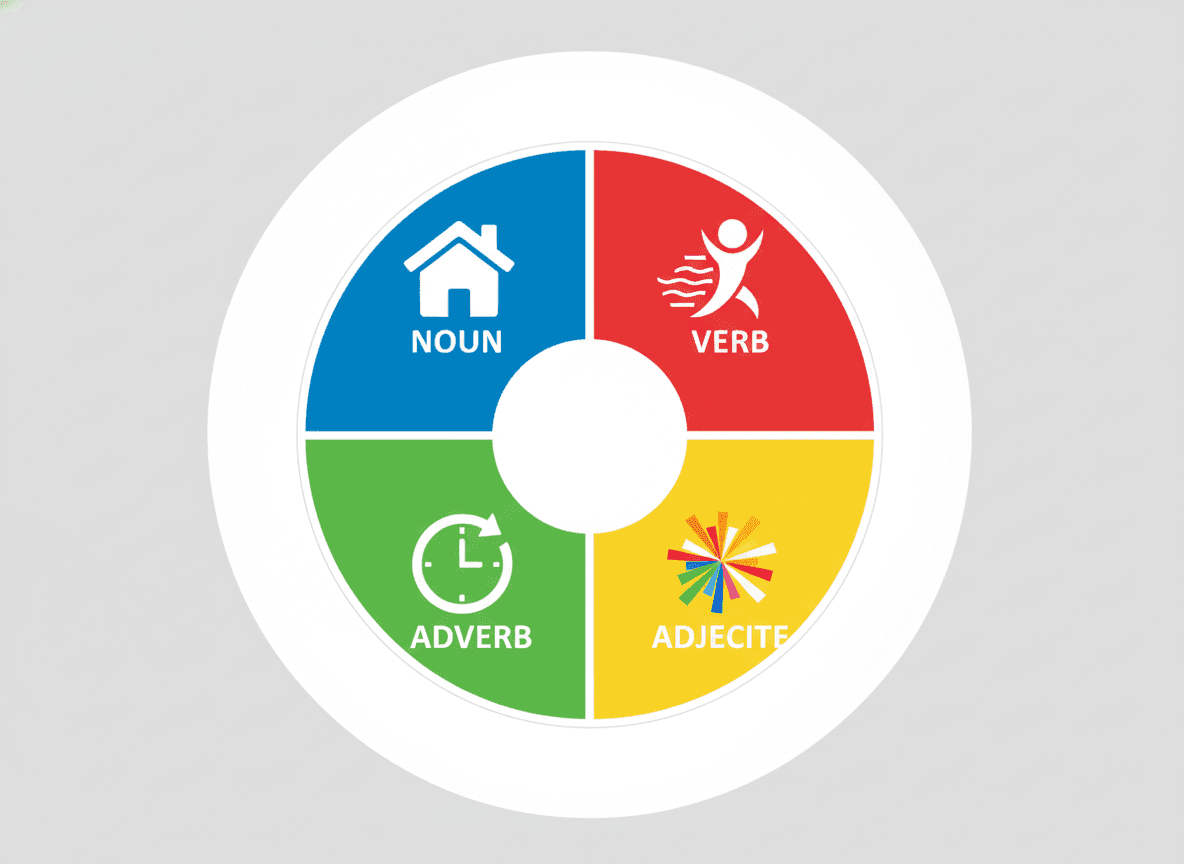
The eight parts of speech are: (1) Noun - names a person, place, thing, or idea. (2) Verb - shows action or state of being. (3) Adjective - describes a noun. (4) Adverb - modifies a verb, adjective, or other adverb. (5) Pronoun - replaces a noun. (6) Preposition - shows relationships between words. (7) Conjunction - joins words or clauses. (8) Interjection - expresses emotion.
Does every word belong to one part of speech permanently?
No - many words function as different parts of speech depending on their role in a sentence. 'Run' is a verb in 'I run every day,' a noun in 'She went for a run,' and an adjective in 'run-down neighborhood.' This is called functional shift or conversion and is a common feature of English. Context determines part of speech.
Why do students need to learn parts of speech?
Parts of speech are the foundational grammar concepts that underpin sentence structure, punctuation, and writing clarity. Knowing that a word is a noun helps students use articles correctly; knowing a word is a verb helps with subject-verb agreement; knowing an adverb modifies verbs helps students write more precisely. Grammar terminology also enables precise discussion of writing choices.
Which parts of speech are most important to learn first?
Nouns and verbs are the most essential - every complete sentence needs at least one of each. These are typically introduced in kindergarten and 1st grade. Adjectives and adverbs follow, then pronouns, prepositions, and conjunctions. Interjections are typically last. This scaffolded sequence mirrors Common Core Language standards.
How do parts of speech relate to sentence structure?
Parts of speech are the building blocks of sentences. A complete sentence requires a subject (usually a noun or pronoun) and a predicate (including a verb). Adjectives and adverbs add description; prepositions create phrases; conjunctions connect ideas; interjections add expression. Understanding how parts of speech combine explains why sentences work the way they do.
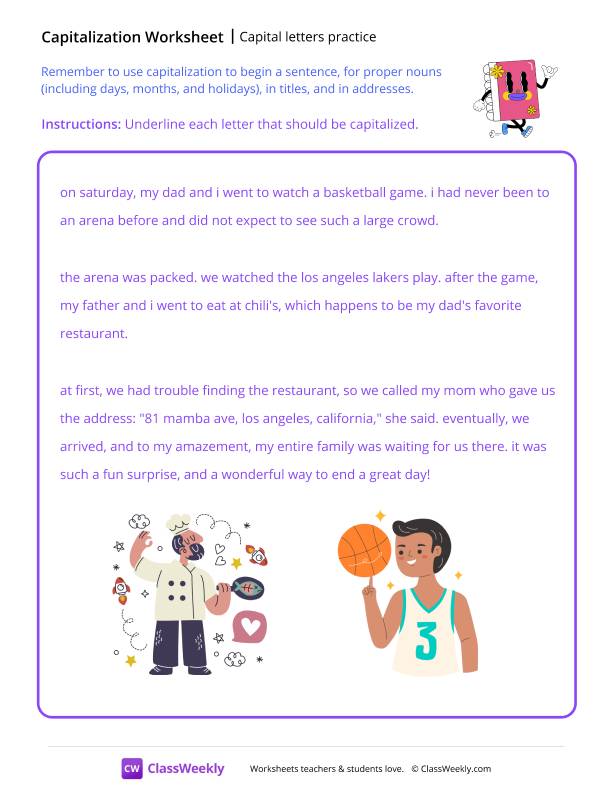
Free Parts of Speech Worksheets
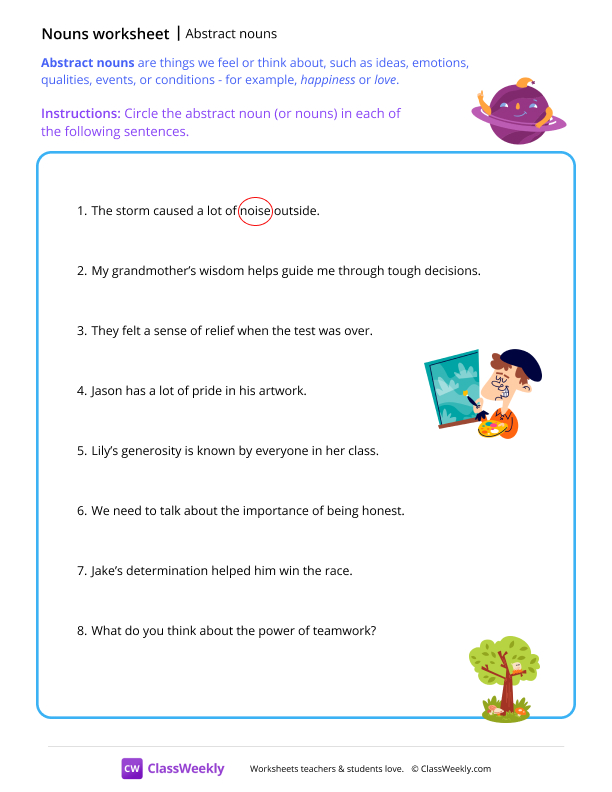
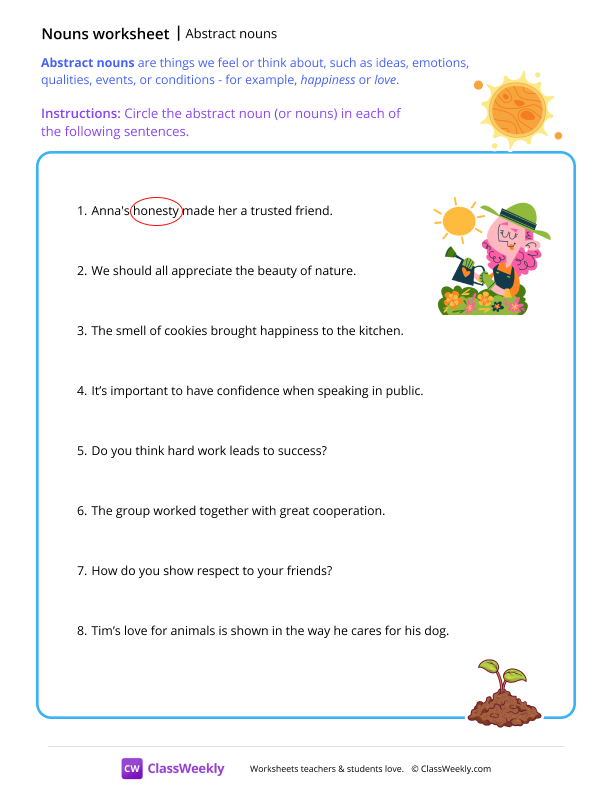
Curriculum-aligned printable worksheets for 2nd – 5th Grade. Download free.