What Is a Pronoun?
Taught in US schools
Key Takeaways
- A pronoun replaces a noun to avoid awkward repetition: 'Maya likes reading. She reads every night.'
- The noun a pronoun replaces is called the antecedent - pronoun and antecedent must agree.
- Subject pronouns: I, you, he, she, it, we, they. Object pronouns: me, you, him, her, it, us, them.
- Pronoun-antecedent agreement (he/she/they matching a singular/plural noun) is a key 3rd-4th grade skill.
What Is a Pronoun?
A pronoun is a word that takes the place of a noun to avoid repetition.
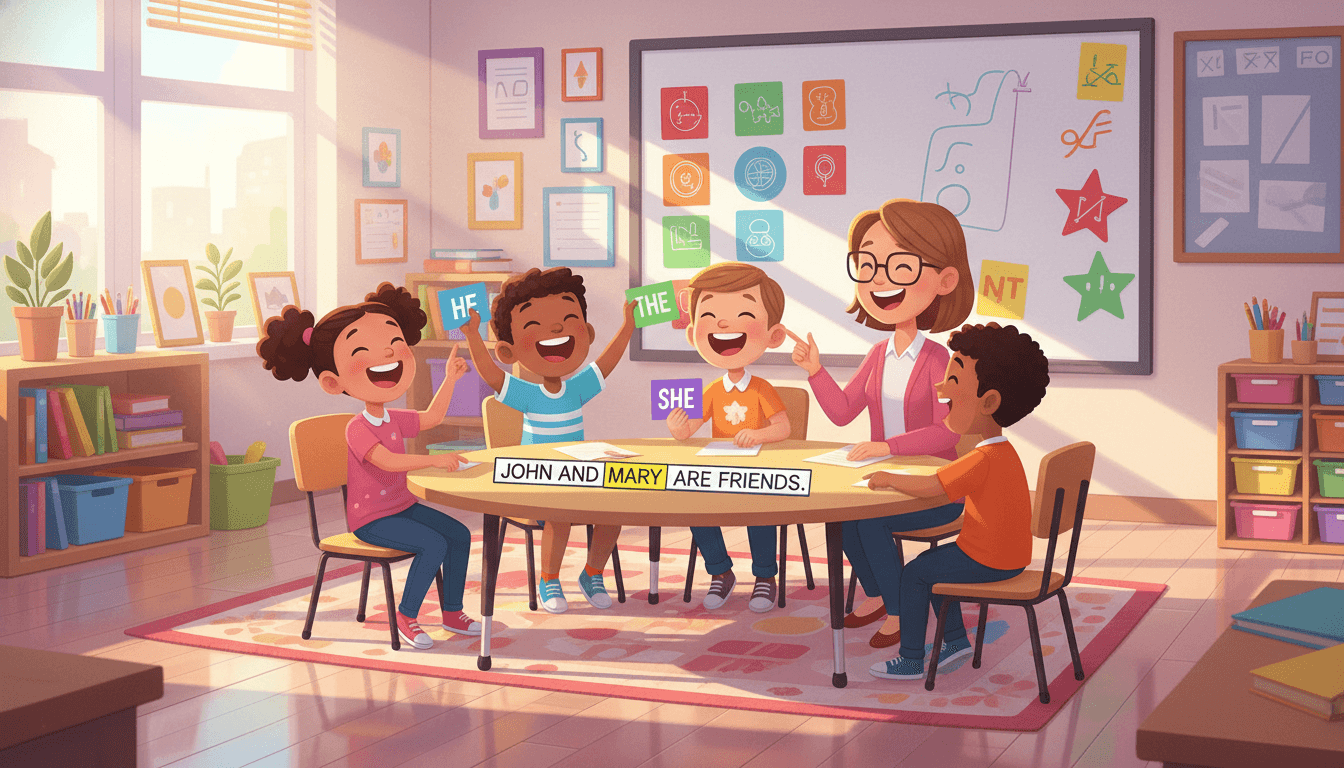
Without pronouns: "Maya loves Maya's dog. Maya takes Maya's dog for walks every evening." With pronouns: "Maya loves her dog. She takes it for walks every evening."
Pronouns make language flow naturally. The noun being replaced is called the antecedent.
Types of Pronouns
Personal pronouns:
1st singular: I - me - my - mine
2nd: you - you - your - yours
3rd singular: he/she/it - him/her/it - his/her/its - his/hers/its
1st plural: we - us - our - ours
3rd plural: they - them - their - theirs
Reflexive pronouns: myself, yourself, himself, herself, itself, ourselves, themselves
"She did the project herself." / "He saw himself in the mirror."
Indefinite pronouns: everyone, someone, anyone, no one, each, both, many, few, all
Pronoun-Antecedent Agreement
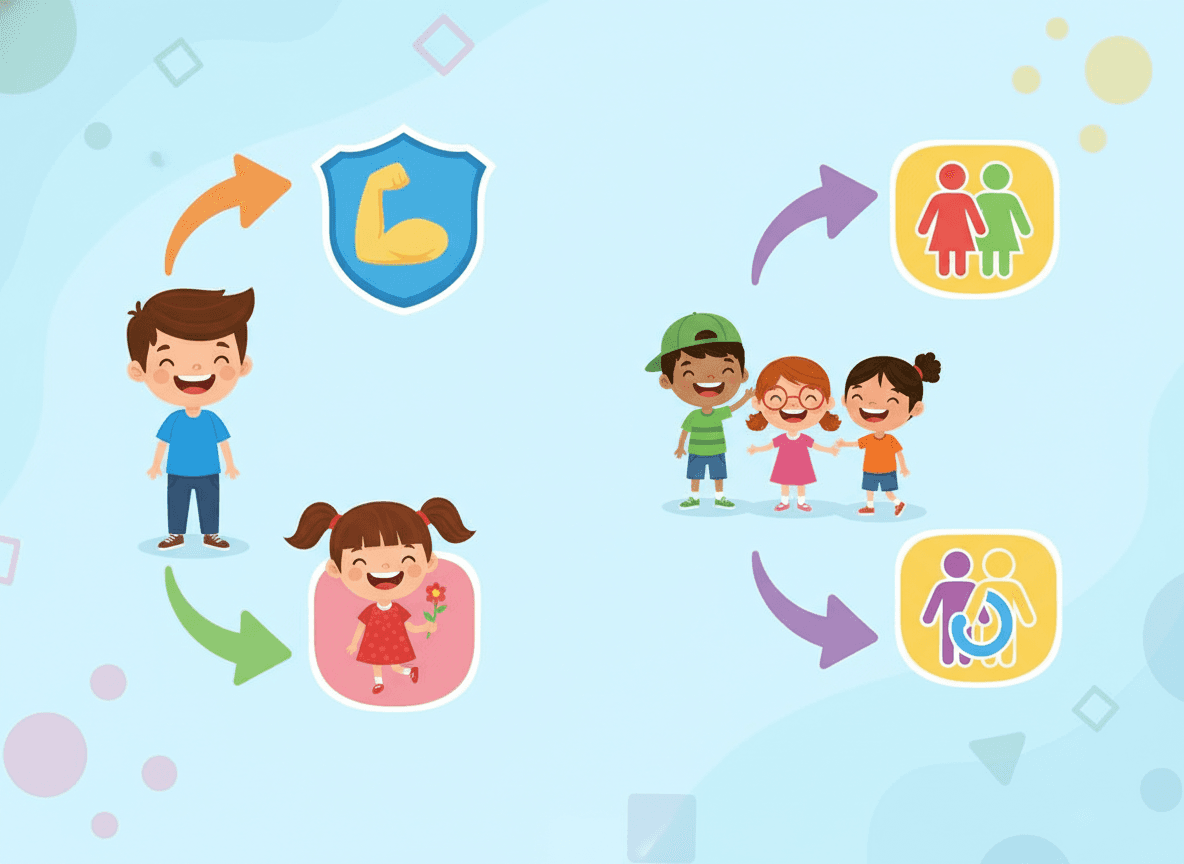
The pronoun must match its antecedent in number and gender.
one dog (singular): it, its
the girls (plural): they, them
Marcus (male, singular): he, him, his
my sister (female): she, her, hers Common error: "Every student should bring their book." (every = singular; his or her was traditional, but singular their is now widely accepted.)
Subject vs. Object Pronouns
Subject pronouns perform the action:
I, you, he, she, it, we, they - go before the verb. "She gave the book to him."
Object pronouns receive the action or follow a preposition:
me, you, him, her, it, us, them - go after the verb or preposition. "She gave the book to him."
The drop test: Remove the other name.
"Jake and me went..." → "Me went..." ✗ "Jake and I went..." → "I went..." ✓
What Grade Do Kids Learn Pronouns?
1st Grade: Use personal, possessive, and indefinite pronouns; ensure subject-verb agreement (L.1.1d).
2nd Grade: Form and use reflexive pronouns; use possessive pronouns correctly (L.2.1c).
3rd Grade: Ensure pronoun-antecedent agreement; recognize and correct vague or ambiguous pronouns (L.3.1f).
4th Grade: Correct inappropriate shifts in pronoun number and person; use intensive pronouns (L.4.1a).
Common Misconceptions
"Me and Jake" is correct as a subject. Drop the other name: "Me went" is wrong. Always use "Jake and I" as a subject.
"Myself" can replace "I" or "me" for formality. "Please contact Jake or myself" is incorrect. Reflexive pronouns are only correct when the subject performs and receives the action.
"They" is only plural." Singular they is standard English for indefinite or unspecified gender antecedents.
Practice Activities
-
Pronoun substitution: Underline nouns in a paragraph; rewrite using appropriate pronouns.
-
Antecedent arrows: Draw arrows from each pronoun to its antecedent. Identify any that are unclear.
-
Subject/object sort: Sort pronoun cards into "subject" and "object" columns.
-
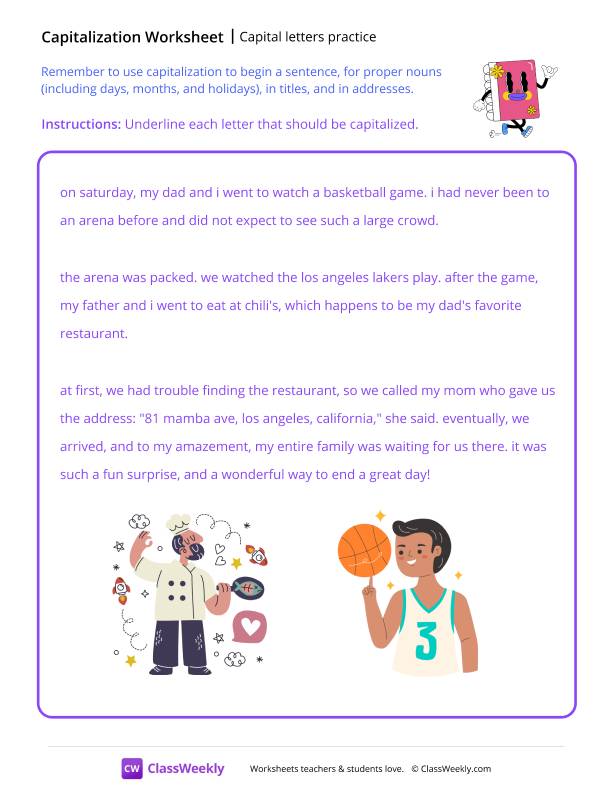
Error correction: Sentences with common pronoun errors (me/I, myself, agreement). Students identify and fix.
-
Pronoun detective: Read a paragraph, circle all pronouns, identify what noun each replaces.
Frequently Asked Questions
What is an antecedent?
The antecedent is the noun that a pronoun refers to or replaces. In 'Maya loves dogs. She has three of them,' Maya is the antecedent of 'she,' and dogs is the antecedent of 'them.' Pronoun-antecedent agreement requires that the pronoun match the antecedent in number (singular/plural) and gender (he/she/it/they). When the antecedent is unclear, the result is a vague pronoun reference - a common writing error addressed in 4th-5th grade.
What is the difference between subject and object pronouns?
Subject pronouns perform the action (they come before the verb): I, you, he, she, it, we, they. 'She gave the book to him.' Object pronouns receive the action or follow a preposition: me, you, him, her, it, us, them. 'She gave the book to him.' The most common error is 'Me and Jake went to the store' (should be 'Jake and I went'). A test: remove the other name and see if the pronoun still works. 'Me went to the store' vs. 'I went to the store.'
What are possessive pronouns?
Possessive pronouns show ownership and replace possessive nouns: mine, yours, his, hers, its, ours, theirs. 'That book is Maya's' → 'That book is hers.' Possessive pronouns should not be confused with possessive adjectives (my, your, his, her, its, our, their), which appear before nouns: 'her book.' Possessive pronouns stand alone; possessive adjectives must precede a noun. Both are addressed in 2nd-3rd grade.
What are reflexive pronouns?
Reflexive pronouns end in -self or -selves: myself, yourself, himself, herself, itself, ourselves, yourselves, themselves. They're used when the subject and object refer to the same person ('He hurt himself') or for emphasis ('She did it herself'). A common error is using reflexive pronouns as subject or object pronouns: 'Jake and myself went...' is incorrect. The reflexive is only correct when the same person both performs and receives the action.
What are indefinite pronouns?
Indefinite pronouns refer to unspecified people or things: everyone, someone, anyone, no one, each, both, all, few, many, several. Agreement can be tricky: 'everyone' and 'someone' are grammatically singular ('Everyone has their book' vs. 'Everyone has his or her book' - the singular 'their' is now widely accepted). 'Both,' 'few,' and 'many' are plural. Indefinite pronoun-verb agreement is addressed in 4th-5th grade writing standards.
Free Pronoun Worksheets
Curriculum-aligned printable worksheets for 1st – 4th Grade. Download free.