What Is a Just-Right Book?
Taught in US schools
Key Takeaways
- A just-right book is one a student can read independently with high accuracy and good comprehension.
- The 'five finger rule' helps students self-assess: if you miss 5+ words on a page, the book may be too hard.
- Students should read a mix of just-right, easy, and challenging books for different purposes.
- Book choice and reading level are distinct - interest and motivation also matter.
What Is a Just-Right Book?
A just-right book (sometimes called an independent level book) is a book that a student can read independently - with enough accuracy to decode the text and enough comprehension to understand what they're reading.
The phrase comes from the Goldilocks principle: not too easy, not too hard - just right.
Why Book Level Matters
Reading is a skill developed through practice. To improve, students need to read texts they can actually read - not texts so hard that they spend more time struggling with words than absorbing meaning.
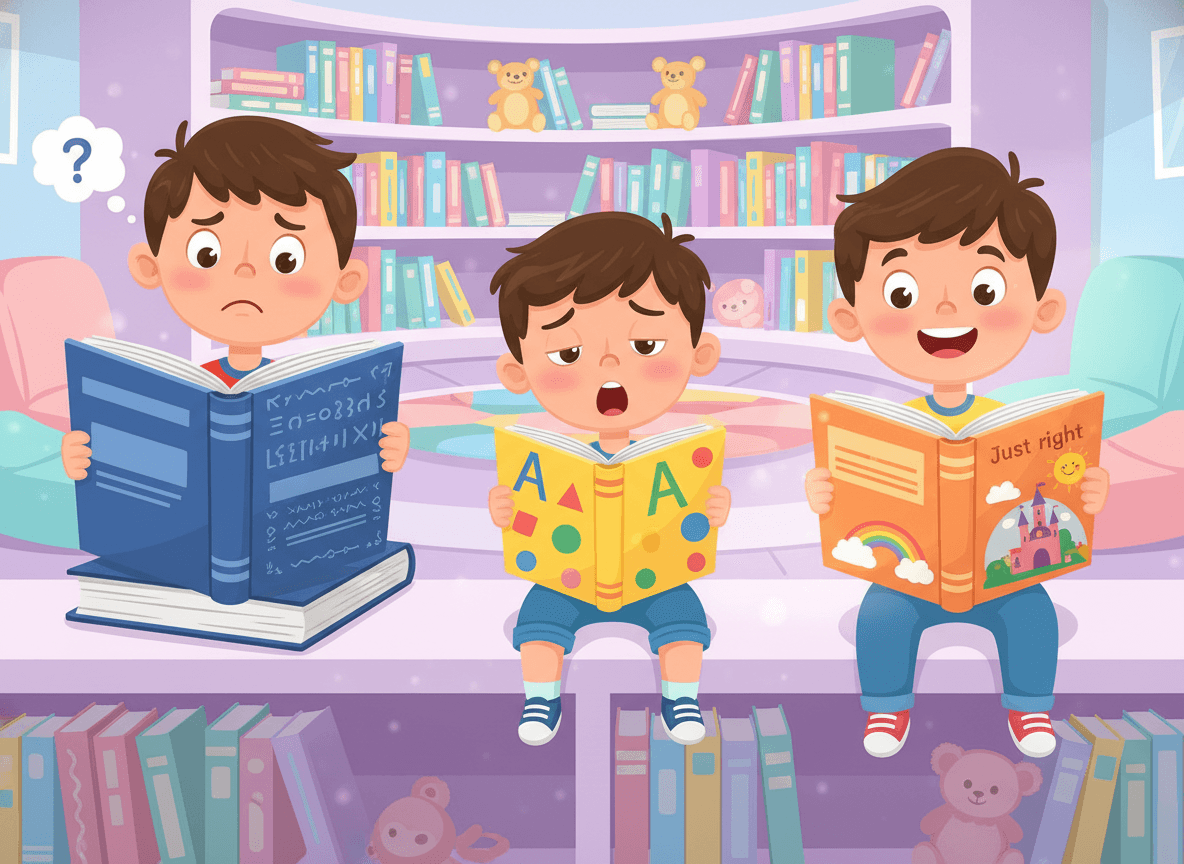
Too hard: Student misses many words, rereads frequently, can't retell the story or explain what they read. Comprehension breaks down.
Too easy: Student reads quickly but isn't being challenged, not building new vocabulary or comprehension skills.
Just right: Student reads with high accuracy, understands the text, and encounters some new words that expand their vocabulary.
How to Find a Just-Right Book
The Five Finger Rule: Open the book to any page. Begin reading. Each time you hit a word you don't know, hold up one finger.
- 0-1 fingers: too easy for a challenge (still great for pleasure reading)
- 2-3 fingers: just right
- 4-5 fingers: may be too hard for independent reading
Accuracy guideline: A 95% accuracy rate is the threshold for independent level. That means reading 19 out of every 20 words correctly. Below 90% (called the frustration level), reading breaks down.
Comprehension check: After reading a page or short passage, can the student retell the main idea in their own words? Can they answer basic questions about what they read? If not, the book may be too hard even if the words seem manageable.
Beyond Just-Right: Reading for Different Purposes
Students benefit from different types of reading:
-
Independent level (just-right): For daily independent reading - fluency practice and pleasure
-
Instructional level (slightly hard): For guided reading with teacher support - where growth happens
-
Easy level (below level): For building confidence, fluency, and enjoyment
-
Interest level (any level): Books a student is passionate about - motivation is real and powerful
Interest and motivation matter enormously. A student deeply interested in sharks may successfully read a book above their "level" because motivation compensates for difficulty.
Practice Activities
- Teach the five finger rule explicitly and have students practice on several books before selecting their independent reading choice.
- Book shopping sessions: give students time to browse and choose their own books, with guidance from the teacher.
- Book talks: teachers briefly introduce 5-6 books at different levels and let students select based on interest and level.
- Reading conferences: during independent reading, check in with students about their book - "Is it just right? How do you know?"
Frequently Asked Questions
What is a just-right book?
A just-right book is one that matches a student's independent reading level - challenging enough to be engaging but readable enough that the student can understand it independently, without constant teacher support. A general guideline: a student should be able to read the text with at least 95% accuracy (missing no more than 1 word in 20) and with good comprehension. If the student is struggling with many words or unable to retell what happened, the book may be too hard.
What is the five finger rule for choosing a just-right book?
The five finger rule is a simple self-selection strategy: open a book to any page and begin reading. Each time you come to a word you don't know, hold up one finger. If you raise all five fingers before reaching the end of the page, the book is probably too difficult for independent reading right now - but it might be a great read-aloud or shared reading book.
Should students always read just-right books?
Not always. Students should read MOSTLY just-right books during independent reading - where fluency and comprehension practice happen. But easy books (below level) build confidence, fluency, and enjoyment. And challenging books (above level) can be motivating when a student is highly interested in the topic, especially with support. The goal is not rigid level-matching but thoughtful book selection for different purposes.
Free Just-Right Book Worksheets
Curriculum-aligned printable worksheets for Kindergarten – 5th Grade. Download free.