What Are Learning Styles?
Taught in US schools
Key Takeaways
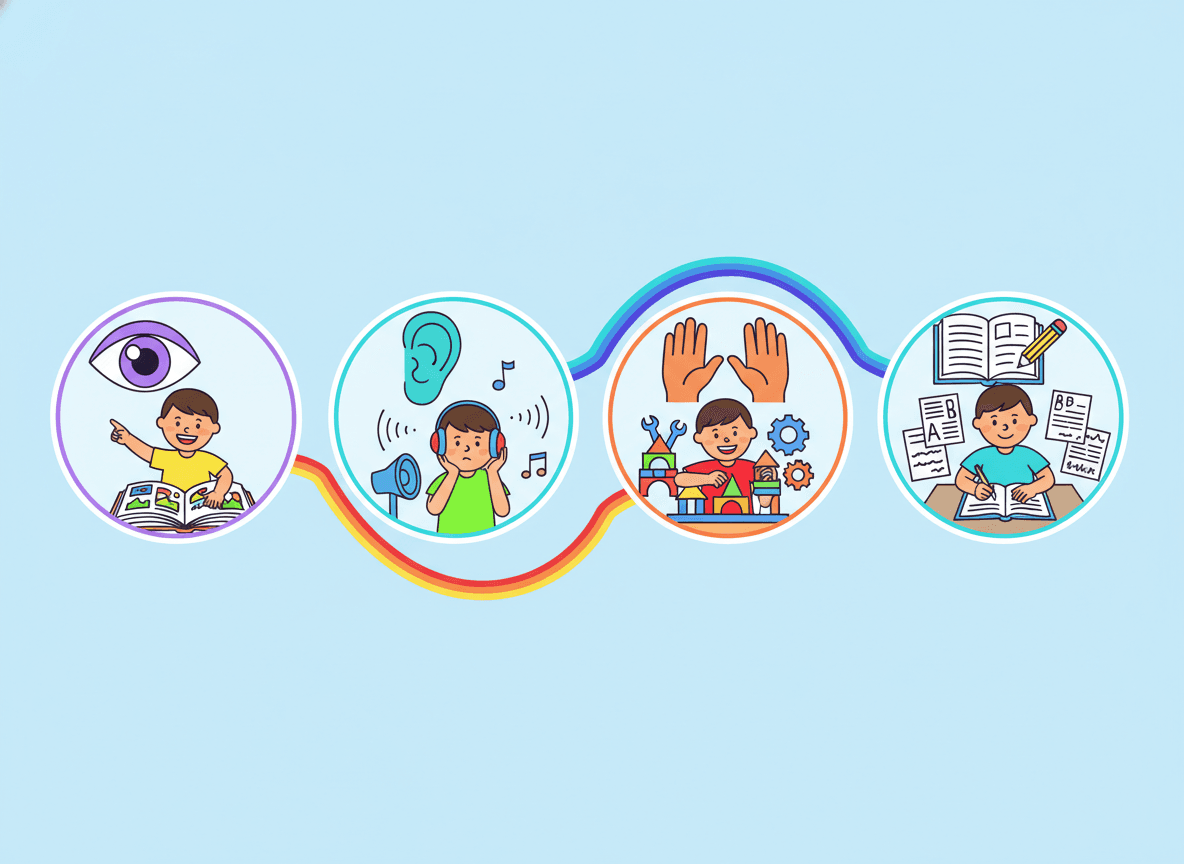
- The VARK model describes four learning modalities: Visual, Auditory, Read/Write, and Kinesthetic.
- Research does NOT support the idea that teaching to a single preferred style improves learning - but multi-modal instruction that reaches all styles IS effective for all students.
- A student's learning profile includes more than modality preference - it also includes strengths, interests, background knowledge, and social context.
What Are Learning Styles?
Learning styles is a concept in education describing individual preferences for how people take in and process information. The underlying idea is that people differ in which sensory or cognitive channel feels most natural to them - some learn best by seeing, others by hearing, others by doing.
The most widely used model is VARK, developed by Neil Fleming in 1987.
The VARK Model
****Visual (V): Learns through charts, diagrams, color-coding, spatial layouts - Graphic organizers, anchor charts, color-coded notes, concept maps
****Auditory (A): Learns through listening, discussion, music, verbal explanation - Lectures, class discussions, read-alouds, study groups, rhymes
****Read/Write (R): Learns through written words - reading texts and writing notes - Reading assignments, note-taking, lists, written summaries
****Kinesthetic (K): Learns through hands-on experience, movement, and practice - Labs, manipulatives, role play, building, experiments
Example: When learning about fractions, a Visual learner might benefit from fraction bars and pie charts. An Auditory learner benefits from talking through the concept. A Kinesthetic learner benefits from folding paper into halves, thirds, and quarters.
What the Research Actually Says
This is where it gets nuanced. Teachers should know two things:
The "Meshing Hypothesis" is not supported by evidence.
The idea that you should identify each student's preferred learning style and then teach them only in that style does not improve learning outcomes. A student who self-identifies as a "visual learner" does not necessarily learn science better from diagrams alone than from reading, discussing, and experimenting.
Multi-modal instruction IS effective for everyone.
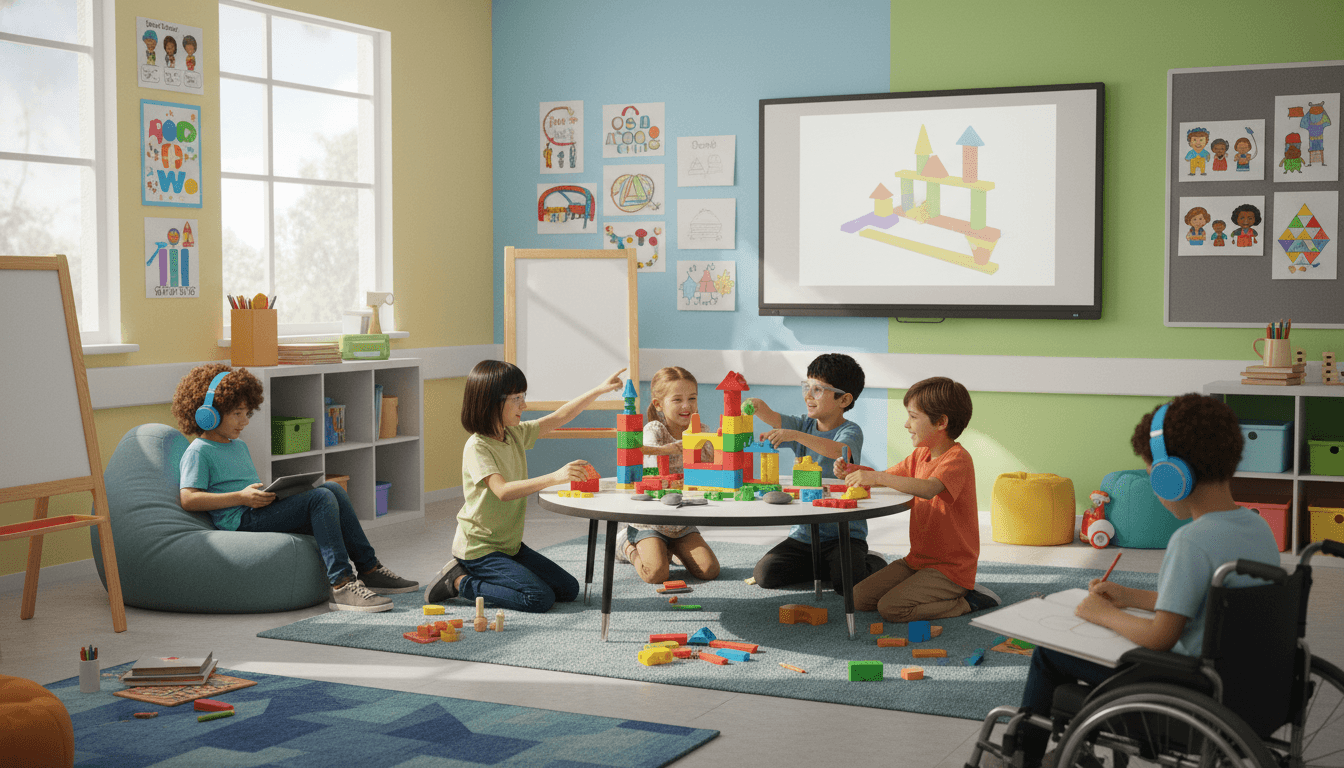
Using multiple modes - visual aids AND discussion AND hands-on activity AND written reflection - consistently benefits all learners more than any single-mode approach. The reason: different parts of the brain process different types of input, and using multiple modes creates stronger memory networks.
Bottom line for teachers: Don't sort students into boxes and limit their instruction. Instead, design lessons that reach all modalities for all students.
Beyond Learning Styles: The Full Learning Profile
Modern differentiated instruction research suggests looking at each student through multiple lenses:
Readiness: What does the student currently know and what are they ready to learn next?
Interests: What topics, activities, and contexts engage this student?
Learning Profile: What modalities, social settings, and pacing work best?
Background Knowledge: What prior experiences and knowledge does the student bring?
Cognitive Strengths: Does the student process language, images, patterns, or narratives more easily?
Practical Application in the Classroom
Even without endorsing the meshing hypothesis, teachers can apply learning modalities to improve instruction:
-
Include visual supports in every lesson: anchor charts, diagrams, models
-
Build in discussion time: partner talk, whole-group discussion, verbal explanation
-
Use hands-on activities: manipulatives in math, experiments in science, movement in phonics
-
Require writing: written reflections, notes, and responses strengthen retention for all students
Practice Activities
- Have students complete a simple VARK questionnaire and reflect: Do they agree with their result? When has another style worked just as well?
- Design one lesson four ways - once with a strong visual element, once discussion-based, once reading/writing-based, once hands-on - and discuss which version felt most engaging.
- Try a multi-modal lesson on one concept: show a diagram, discuss it, read a paragraph, and do a quick hands-on activity - then ask students which part helped them understand most.
- Research and discuss: Why do we keep teaching learning styles even though the research doesn't fully support them? What is useful about the framework?
- Create a "How I Learn Best" profile card where students describe their own preferences, interests, and what helps them when they are stuck.
Frequently Asked Questions
Is the learning styles theory scientifically proven?
No. Decades of research have failed to find evidence that matching instruction to a student's preferred modality (meshing hypothesis) improves learning outcomes. However, most researchers agree that varied, multi-modal instruction - using visuals, discussion, movement, and reading together - is more effective than relying on a single delivery method for anyone.
What is the VARK model?
VARK stands for Visual, Auditory, Read/Write, and Kinesthetic. It was developed by Neil Fleming in 1987 and describes four preferences for how people like to receive and process information. It is widely used in education even though its prescriptive application (teach visuals only to visual learners) is not research-supported.
What is the difference between a learning style and a learning profile?
A learning style refers specifically to a modality preference. A learning profile is broader - it includes strengths (what the student does well), interests (topics that motivate them), background knowledge, cognitive processing differences, and social preferences. A fuller picture of a learner requires all of these dimensions.
Free Learning Styles Worksheets
Curriculum-aligned printable worksheets for Kindergarten – 5th Grade. Download free.