What Is a Life Cycle?
Taught in US schools
Key Takeaways
- Every living organism goes through a life cycle that includes birth, growth, reproduction, and death.
- Different animals have very different life cycles - butterflies go through complete metamorphosis, while frogs go through incomplete metamorphosis.
- Plants also have life cycles, starting as a seed and ending when the plant produces new seeds.
What Is a Life Cycle?
A life cycle is the series of stages that every living thing - plant or animal - goes through from the beginning of its life to the end. Life cycles show us how organisms are born, grow, reproduce (make offspring), and eventually die. Every living thing on Earth has its own unique life cycle, but they all share these basic steps.
Understanding life cycles is one of the most important concepts in elementary science because it connects so many ideas: how animals behave, why plants grow the way they do, and how species continue to exist on Earth.
Key Life Cycle Examples
The Butterfly: Complete Metamorphosis
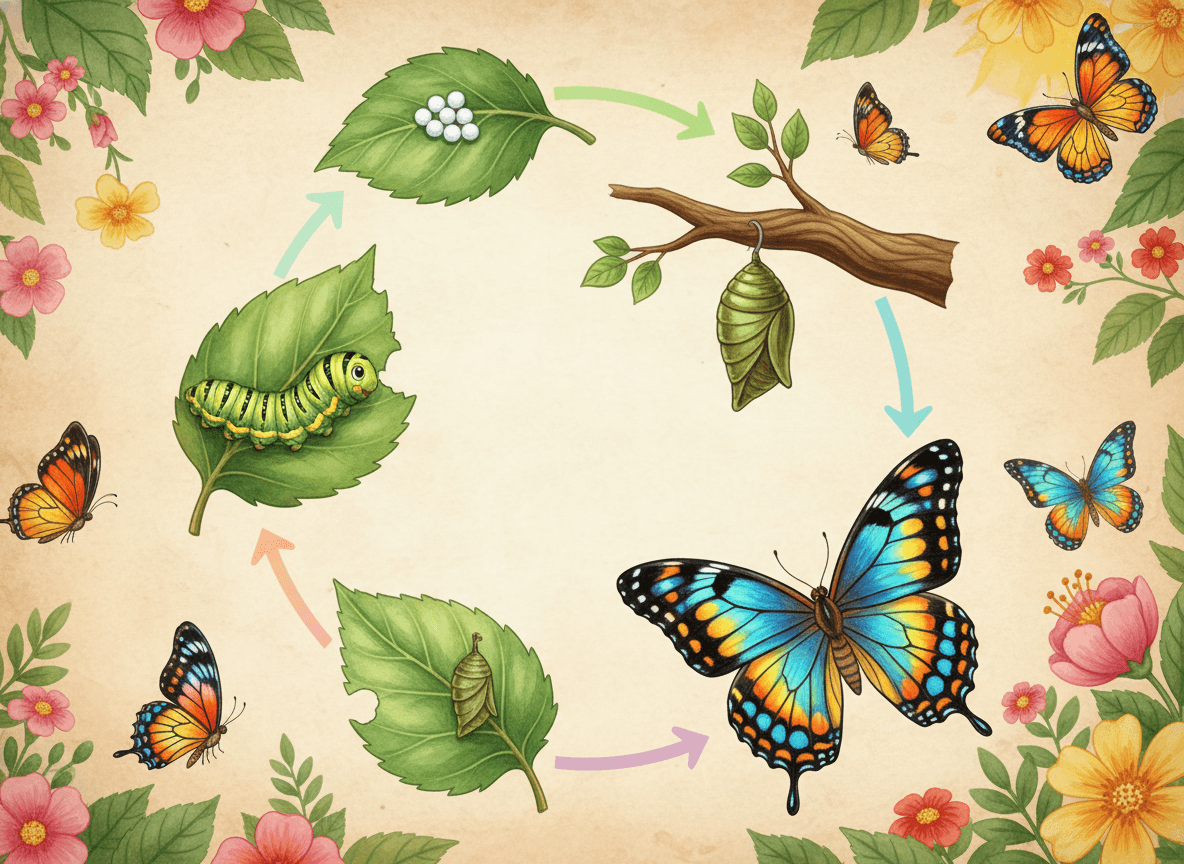
The butterfly is the most famous example of a dramatic life cycle. Butterflies go through complete metamorphosis - meaning they change completely in form:
1: Egg - Laid on a leaf; tiny and round
2: Larva (Caterpillar) - Hatches and eats leaves constantly
3: Pupa (Chrysalis) - Wraps in a case; body reorganizes
4: Adult Butterfly - Emerges; can fly and lay eggs
The Frog: Incomplete Metamorphosis
Frogs go through incomplete metamorphosis - they change, but less dramatically than butterflies:
- Egg - laid in water in a jelly-like mass
- Tadpole - hatches with a tail and breathes with gills
- Froglet - grows legs; tail shrinks; starts breathing air
- Adult Frog - fully formed; lives on land and in water
The Plant Life Cycle
Plants have their own life cycle too:
A seed sprouts → grows into a seedling → matures into an adult plant → flowers → produces fruit and seeds → the cycle begins again.
Grade-by-Grade Breakdown
Kindergarten: What living things need to grow; basic birth-to-death idea
1st Grade: Compare life cycles of two plants or animals
2nd Grade: Compare plant life cycles; how traits pass from parent to offspring
3rd Grade: Life cycles in depth; inheritance; how environments affect life cycles
Why Life Cycles Matter
Life cycles help explain biodiversity - why there are so many different kinds of living things. When organisms reproduce, they pass on traits to their young. Over many generations, this can lead to species that are better adapted to their environment.
Life cycles also explain why we see certain animals at certain times of year. Many insects only appear as adults in summer because their larval stage lasts through winter.
Practice Activities
-
Sort the stages: Give students pictures of life cycle stages and ask them to arrange them in the correct order.
-
Life cycle wheel: Create a spinning wheel with drawings of each stage of the butterfly or frog life cycle.
-
Compare two life cycles: Use a Venn diagram to compare a butterfly life cycle and a frog life cycle.
-
Grow a plant: Plant bean seeds in clear plastic cups so students can observe the plant life cycle from seed to seedling.
-
Research project: Each student picks a different animal and creates a poster showing its life cycle stages.
Frequently Asked Questions
What are the four stages of a butterfly's life cycle?
A butterfly's life cycle has four stages: egg, larva (caterpillar), pupa (chrysalis), and adult butterfly. This process is called complete metamorphosis.
How is a frog's life cycle different from a butterfly's?
A frog goes through incomplete metamorphosis with stages: egg, tadpole, froglet, and adult frog. Unlike butterflies, frogs do not have a pupa stage.
Do all animals have the same life cycle?
No. Some animals like mammals are born live and look similar to their parents. Others, like butterflies and frogs, look completely different from adults at birth and change dramatically as they grow.
Free Life Cycle Worksheets
Curriculum-aligned printable worksheets for Kindergarten – 3rd Grade. Download free.


