What Are Plants?
Taught in US schools
Key Takeaways
- Plants are living things that make their own food through photosynthesis using sunlight, water, and carbon dioxide.
- A plant has six main parts: roots, stem, leaves, flower, fruit, and seed - each with its own job.
- There are many types of plants - flowering and nonflowering, trees and grasses, and plants that grow on land or in water.
What Are Plants?
Plants are living organisms that produce their own food using sunlight, water, and carbon dioxide through a process called photosynthesis. They are found in almost every environment on Earth - from tropical rainforests to arctic tundra, from mountain peaks to the ocean floor.
Plants are producers: they are the base of nearly every food chain, providing food and oxygen for animals and humans. Without plants, life as we know it could not exist.
Parts of a Plant
Roots: Anchor the plant in soil; absorb water and minerals
Stem: Supports the plant; transports water, minerals, and food
Leaves: Capture sunlight; carry out photosynthesis; exchange gases through stomata
Flower: Reproductive structure; attracts pollinators (bees, butterflies)
Fruit: Protects the seed; helps disperse seeds (eaten by animals)
Seed: Contains a new plant embryo; can sprout when conditions are right
How Plants Make Food
Plants make food through photosynthesis:
-
Inputs: sunlight, water (from roots), carbon dioxide (from air through stomata)
-
Outputs: glucose (sugar for energy) + oxygen (released into the air)
Sunlight + Water + CO₂ → Glucose + Oxygen
Types of Plants
Flowering vs. Nonflowering
Flowering plants (angiosperms): Flowers, fruit, seeds - Roses, apples, sunflowers, corn
Conifers: Cones with seeds - Pine, spruce, fir, cedar
Ferns: Spores (no seeds or flowers) - Boston fern, bracken fern
Mosses: Spores - Sphagnum moss, carpet moss
Vascular vs. Nonvascular
-
Vascular plants have tube systems (xylem and phloem) to transport water and nutrients. Most plants you know - trees, grasses, flowers - are vascular.
-
Nonvascular plants (mosses, liverworts) lack these tubes and must stay small and moist.
How Plants Reproduce
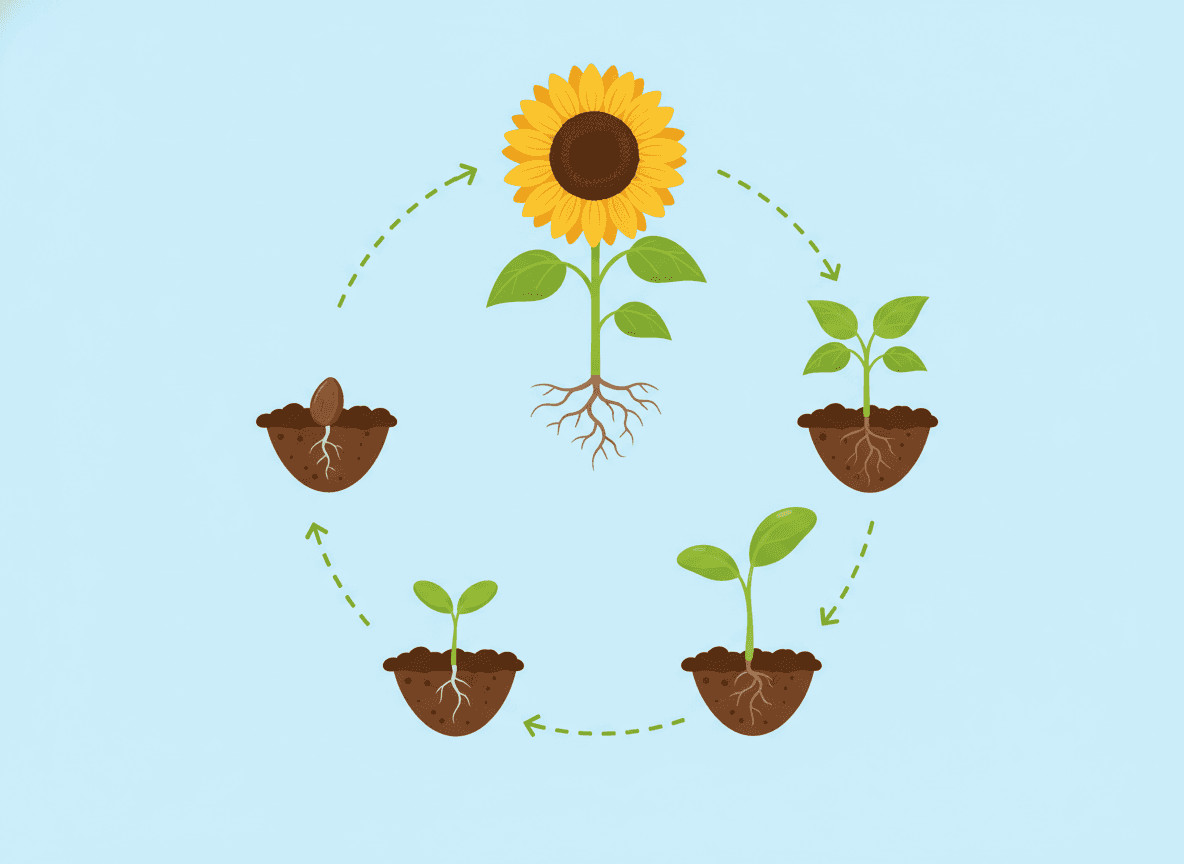
Most plants reproduce using seeds. Seeds form inside fruits and are spread by:
-
Animals eating fruit and depositing seeds elsewhere
-
Wind carrying lightweight seeds (like dandelion seeds)
-
Water floating seeds to new locations
-
Explosion - some seed pods burst and shoot seeds out
Some plants also reproduce asexually - without seeds - by sending out runners, growing new plants from cut stems, or producing bulbs.
Plants and Their Environment
Plants need four things to grow:
- Sunlight (for photosynthesis)
- Water (absorbed by roots)
- Air / Carbon dioxide (absorbed through stomata)
- Nutrients in soil (nitrogen, phosphorus, potassium)
Practice Activities
-
Dissect a flower: Give each student a simple flower and identify petals, stamens, pistil, and sepals.
-
Label a plant diagram: Students label the six main parts of a plant on a worksheet.
-
Celery and food dye: Place white celery in colored water to watch water travel up through the stems (xylem).
-
Seed dispersal experiment: Design paper helicopter seeds and drop them from different heights to simulate wind dispersal.
-
Plant needs experiment: Grow identical plants with different conditions (no light, no water, no soil) and observe the results.
Frequently Asked Questions
What are the six parts of a plant and what does each do?
Roots anchor the plant and absorb water and nutrients from the soil. The stem transports water and nutrients between roots and leaves and supports the plant. Leaves capture sunlight and carry out photosynthesis. Flowers attract pollinators for reproduction. Fruit protects seeds and helps spread them. Seeds contain a new plant waiting to grow.
What is the difference between vascular and nonvascular plants?
Vascular plants have a system of tubes (xylem and phloem) that transport water and nutrients throughout the plant - like trees, flowers, and ferns. Nonvascular plants lack these tubes and are small and low to the ground - like mosses and liverworts. They absorb water directly through their surfaces.
Do all plants have flowers?
No. Flowering plants (angiosperms) produce flowers and fruits with seeds - like roses, apple trees, and dandelions. Nonflowering plants reproduce differently: conifers use cones (like pine trees), ferns use spores, and mosses also use spores.
Free Plants Worksheets
Curriculum-aligned printable worksheets for Kindergarten – 3rd Grade. Download free.


