What Is a Food Chain?
Taught in US schools
Key Takeaways
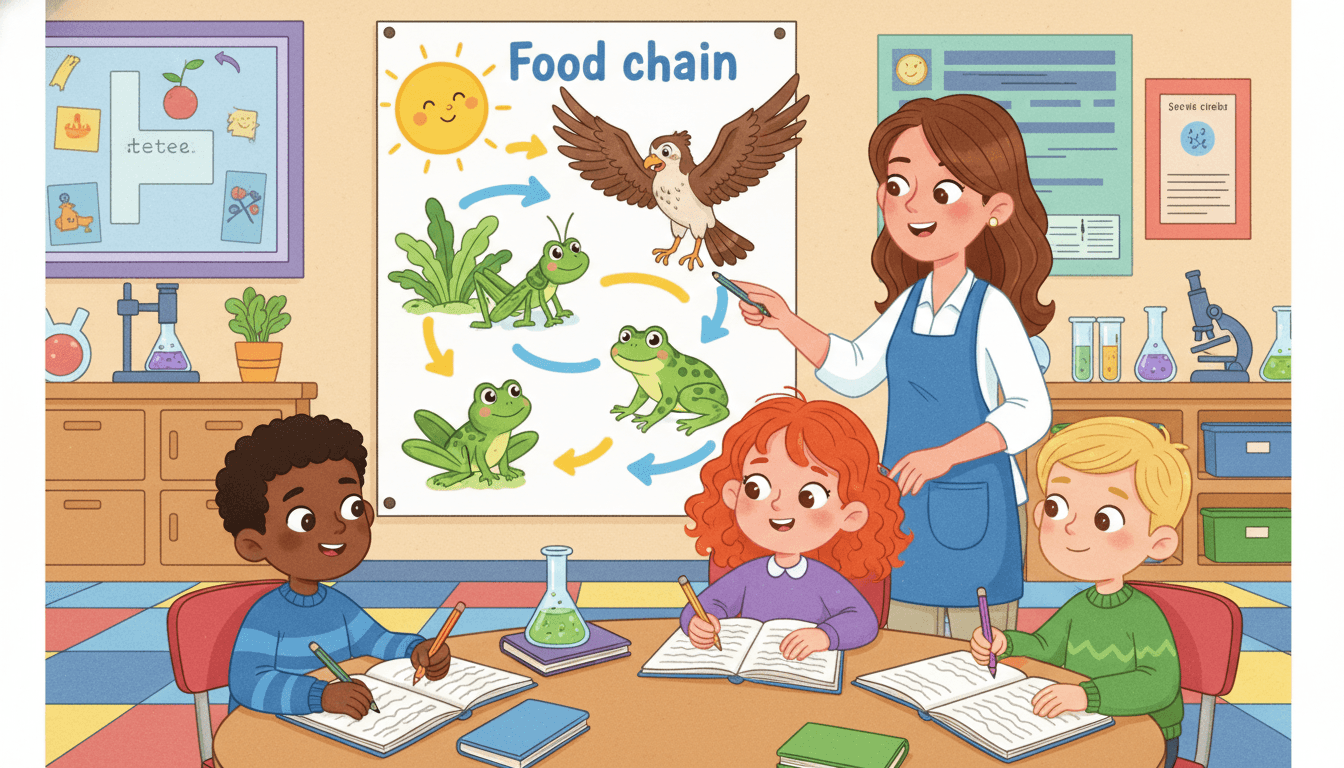
- A food chain shows how energy moves from the sun to producers, then to consumers, and finally to decomposers.
- Producers (plants) make their own food; consumers eat other organisms; decomposers break down dead matter.
- A food web is more realistic than a food chain because most animals eat more than one thing.
What Is a Food Chain?
A food chain is a diagram that shows how energy moves from one living thing to another in an ecosystem. Starting with the sun and ending with decomposers, food chains track the flow of energy that keeps all life on Earth going.
Every time one organism eats another, energy is transferred. But energy is lost at each step - only about 10% of energy passes from one level to the next. This is why there are always more plants than plant-eaters, and more plant-eaters than meat-eaters.
The Levels of a Food Chain
1. The Sun
All energy in a food chain ultimately comes from the sun. Plants capture sunlight and use it to make food through photosynthesis.
2. Producers
Producers are organisms - mostly plants and algae - that make their own food using sunlight, water, and carbon dioxide. They are always the first link in a food chain.
Examples: grass, oak trees, seaweed, corn, algae
3. Primary Consumers
Primary consumers are animals that eat producers. They are also called herbivores because they eat plants.
Examples: rabbits, caterpillars, deer, cows, grasshoppers
4. Secondary Consumers
Secondary consumers eat primary consumers. Many are carnivores (meat-eaters) or omnivores (eat both plants and animals).
Examples: frogs, snakes, foxes, small fish
5. Tertiary Consumers / Apex Predators
Tertiary consumers eat secondary consumers. Apex predators are at the very top of the food chain with no natural enemies.
Examples: eagles, sharks, lions, orcas, wolves
6. Decomposers
Decomposers break down dead plants and animals, returning nutrients to the soil so producers can grow again. They complete the cycle.
Examples: mushrooms, bacteria, earthworms, beetles
A Sample Food Chain
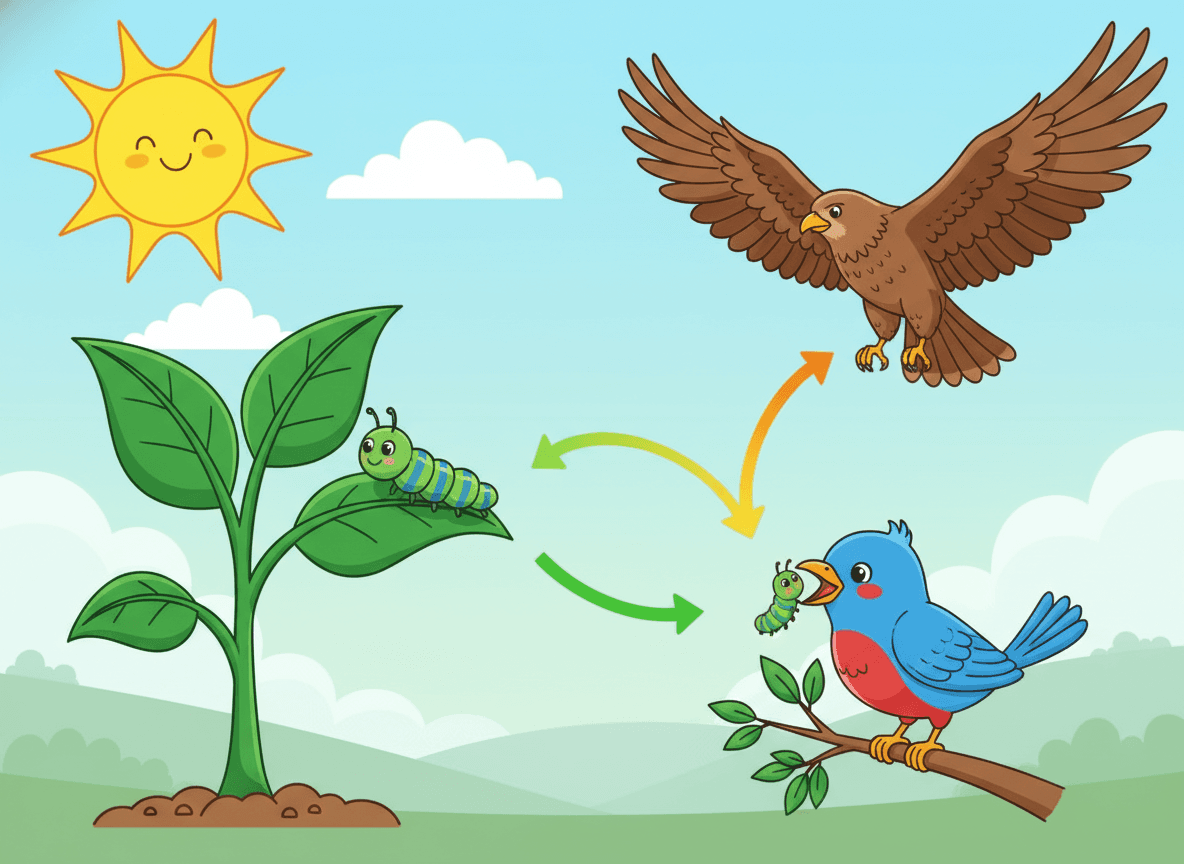
Sun → Grass → Grasshopper → Frog → Snake → Hawk → Decomposers
Food Chain vs. Food Web
Structure: Linear (one path) - Interconnected (many paths)
Realism: Simplified - More accurate
Example: Grass → Rabbit → Fox - Multiple overlapping chains Most ecosystems have food webs because animals eat many different things. A food chain is a useful starting point for understanding energy flow.
Why Food Chains Matter
Food chains show us how connected all living things are. If one population collapses - say, too many rabbits are eaten - it affects everything above and below it in the chain. This is called a trophic cascade. Understanding food chains helps scientists protect ecosystems and make conservation decisions.
Practice Activities
-
Build a food chain: Give students organism cards and ask them to arrange a food chain in the correct order, from sun to decomposer.
-
Label the levels: Provide a blank food chain diagram and have students label producer, primary consumer, secondary consumer, and apex predator.
-
Food web construction: Students research a local ecosystem and draw a food web with at least 8 organisms.
-
Jenga food web: Write organism names on Jenga blocks and pull them out to see what happens when one species disappears.
-
10% energy rule: Calculate how much energy reaches each level starting with 10,000 calories from the sun.
Frequently Asked Questions
What is the difference between a food chain and a food web?
A food chain shows a single straight line of energy transfer (grass → rabbit → fox). A food web shows all the overlapping food chains in an ecosystem, which is more realistic because most animals eat more than one type of food.
What would happen if all the producers disappeared?
If all producers (plants) disappeared, the entire food chain would collapse. Primary consumers would have nothing to eat and would die off, followed by secondary consumers, and so on up the chain.
What is an apex predator?
An apex predator is an animal at the very top of the food chain that has no natural predators. Examples include sharks, lions, and eagles. They help control the populations of animals below them.
Free Food Chain Worksheets
Curriculum-aligned printable worksheets for 2nd – 5th Grade. Download free.


