What Is Media Literacy?
Taught in US schools
Key Takeaways
- Media literacy is the ability to think critically about all forms of media - TV, advertising, social media, news.
- All media is constructed - someone made choices about what to include, emphasize, and leave out.
- Media messages reflect values and points of view that may not be obvious.
- Media literacy is a civic skill - informed citizens must be able to evaluate information sources.
What Is Media Literacy?
Media literacy is the ability to access, analyze, evaluate, and create media in all its forms. It means being a critical consumer of the messages that surround us - recognizing that all media is constructed by someone, for a purpose, from a particular point of view.
Media includes everything: TV shows and commercials, newspapers and websites, social media posts, YouTube videos, podcasts, photographs, movies, video games, and billboards. A media literate person can engage with all of these critically and thoughtfully.
The Core Idea: All Media Is Constructed
The foundational principle of media literacy is that media is not a neutral window on reality - it is a constructed representation. Someone made choices:
- What to include and what to leave out
- What words to use
- What images to show and from what angle
- Who speaks and who doesn't
- What story to tell and what story to ignore
Recognizing these choices - and asking why they were made - is what media literacy is about.
The Five Core Questions
These questions, developed by the Center for Media Literacy, are the foundation of media analysis:
- Who created this message?
- What techniques are used to attract attention?
- How might different people interpret this message?
- What values, lifestyles, or ideas are promoted or left out?
- What is the purpose - why was this made?
Applying these questions to a cereal commercial, a news headline, a social media post, or a political advertisement reveals how much is constructed and how much is omitted.
Teaching Media Literacy in Elementary School
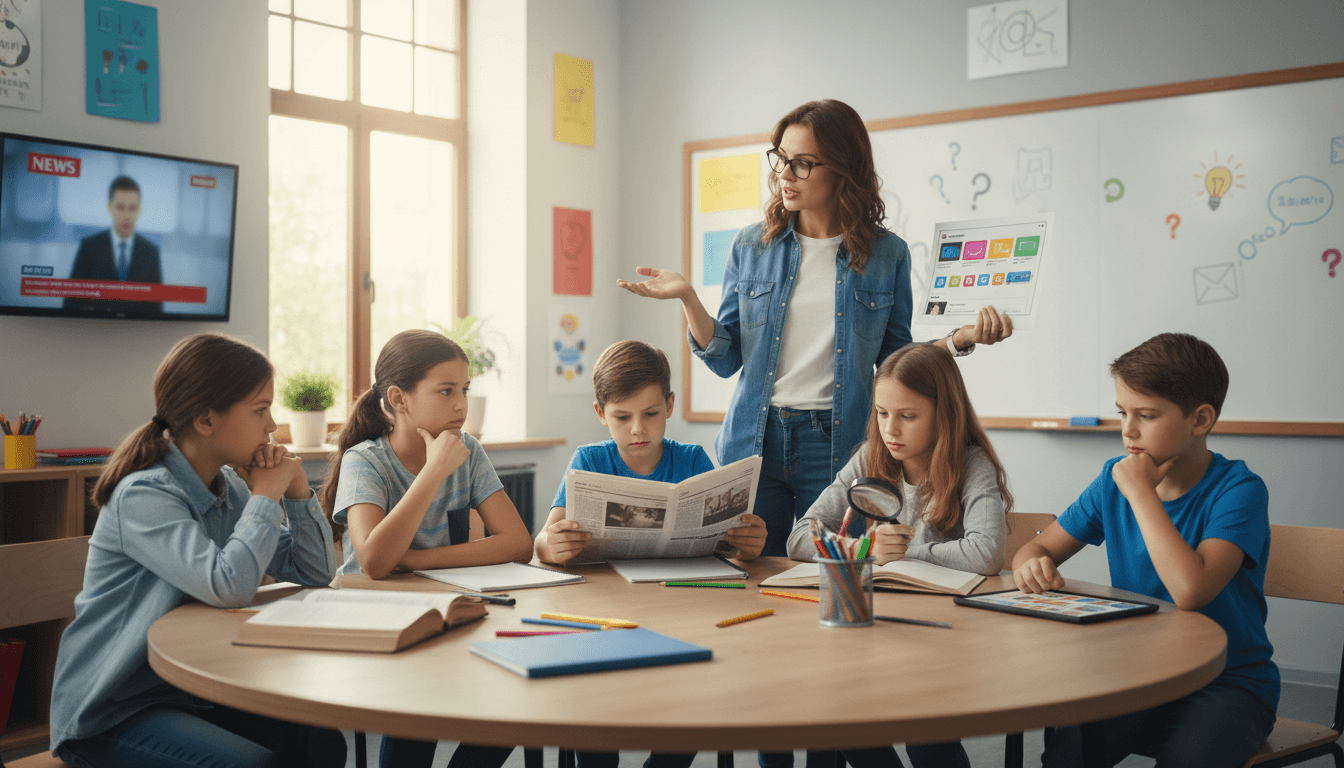
Advertising analysis (grades 2-5): Study how ads use color, music, celebrity, and emotional appeals to influence consumers. Distinguish between what is shown and what is true.
News literacy (grades 4-5): Compare how different news sources cover the same event. Identify opinion vs. fact. Practice "lateral reading" - checking what other sources say about a source before trusting it.
Image analysis: Discuss how photographs can be cropped, staged, or edited to suggest a particular message.
Social media and memes (grades 4-5): Discuss how memes spread ideas - often out of context or with altered meaning. Who benefits when false information spreads?
Practice Activities
- Analyze a TV commercial together: "What are they really selling? What emotional buttons does it push? What does it not tell you?"
- Compare two newspaper headlines about the same event: "What words did each choose? How does word choice change the impression?"
- Spot the difference: show students two photos of the same scene taken from different angles. Discuss: "Which photo 'tells the truth'? Is either of them lying?"
- Create a media literacy pledge: students write their own commitments to checking sources before sharing.

Frequently Asked Questions
What is media literacy?
Media literacy is the ability to access, analyze, evaluate, and create media in all its forms - print, TV, film, digital, social media, advertising, and more. A media literate person can ask: Who made this? Why? What is being shown and what is left out? Who is the intended audience? What values or perspectives are being promoted? Media literacy is closely related to but broader than digital literacy.
Why is media literacy important for kids?
Children today are surrounded by media from a very young age. By age 8, American children spend an average of 5+ hours per day with screens. Without media literacy skills, students cannot distinguish reliable from unreliable information, recognize advertising, understand how images can be manipulated, or identify bias in news sources. Media literacy is essential for informed participation in democracy.
What are the key questions of media literacy?
The five key questions of media literacy (from the Center for Media Literacy): (1) Who created this message? (2) What creative techniques are used to attract attention? (3) How might different people understand this message differently? (4) What values, lifestyles, and points of view are represented or omitted? (5) Why was this message sent - what is the purpose?
Free Media Literacy Worksheets
Curriculum-aligned printable worksheets for 2nd – 5th Grade. Download free.