What Are Multiples?
Taught in US schools
Key Takeaways
- Multiples of a number are found by multiplying it by whole numbers: 1, 2, 3, 4...
- Every number is a multiple of itself (n × 1 = n) and a multiple of 1.
- Multiples are infinite - the list of multiples for any number never ends.
- Common multiples and the Least Common Multiple (LCM) are used when adding fractions with unlike denominators.
What Are Multiples?
Multiples of a number are the products you get when you multiply that number by 1, 2, 3, 4, 5, and so on. The list of multiples for any number never ends - it is infinite.
Multiples of 5: 5, 10, 15, 20, 25, 30, 35... Multiples of 9: 9, 18, 27, 36, 45, 54...
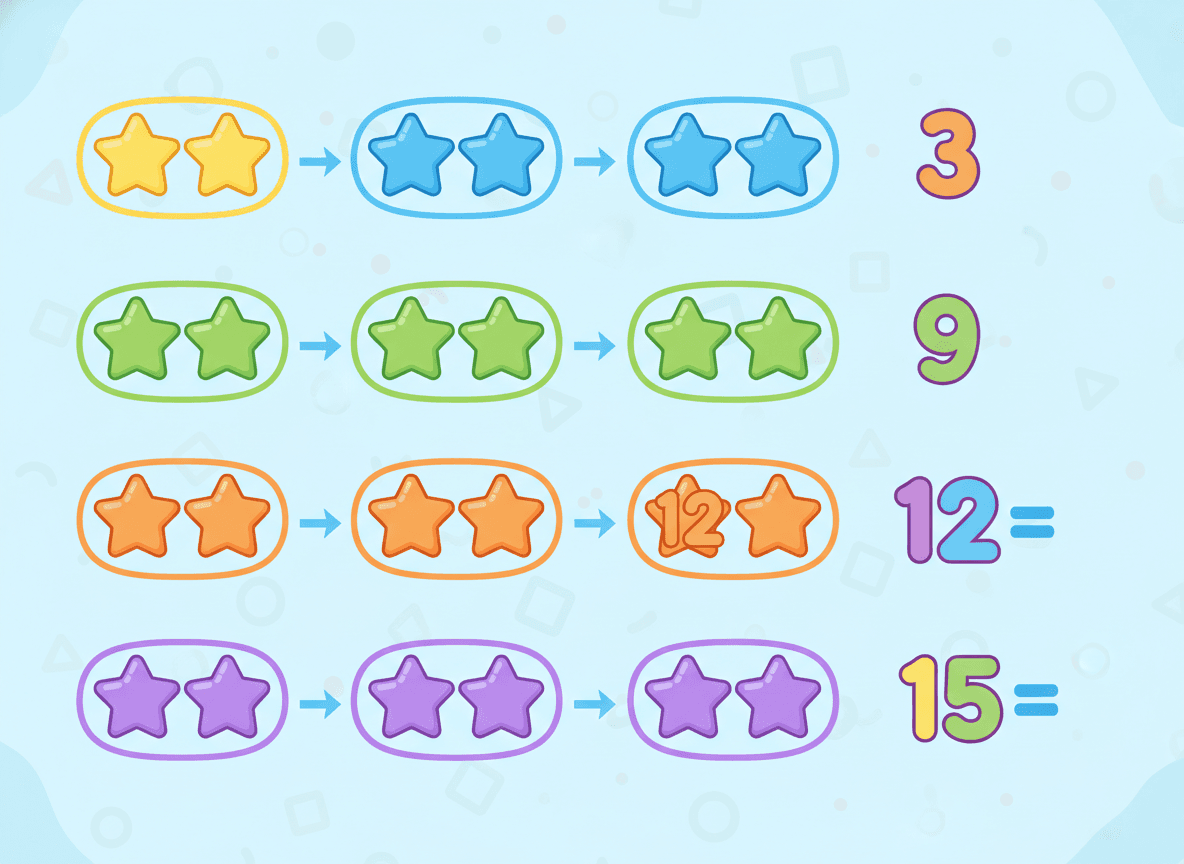
You can also recognize multiples as the results of skip-counting. Counting by 6s gives you 6, 12, 18, 24 - all multiples of 6.
Key Facts About Multiples
- Every number is a multiple of 1 (1 × any number = that number).
- Every number is a multiple of itself (n × 1 = n).
- Every even number is a multiple of 2.
- Multiples of 10 always end in 0.
- Multiples of 5 always end in 0 or 5.
These patterns are divisibility rules and help students check their work.
Common Multiples and LCM
A common multiple is a number that is a multiple of two or more numbers.
Multiples of 3: 3, 6, 9, 12, 15, 18, 24... Multiples of 4: 4, 8, 12, 16, 20, 24...
Common multiples of 3 and 4: 12, 24, 36...
The Least Common Multiple (LCM) = 12 (the smallest one).
The LCM is essential for finding common denominators when adding or subtracting fractions with unlike denominators.
What Grade Do Kids Learn Multiples?
3rd grade (3.OA.C.7): Students develop fluency with multiplication facts, which means knowing the multiples of 1–10.
4th grade (4.OA.B.4): Students explicitly find and identify multiples of given single-digit numbers and determine if a number is a multiple of another.
5th grade: Students apply LCM when working with fractions with unlike denominators.
Common Misconceptions
Every number is a multiple of 0: 0 × any number = 0, so technically all multiples of 0 are 0. However, the practical teaching of multiples begins at 1, not 0, in elementary school.
Multiples stop at 100: Students may think the multiplication table is the full list of multiples. Emphasize that multiples are infinite - the table just shows the first ten.
Factors and multiples are the same thing: These are inverse concepts. Use "factors are FEW (finite) and multiples are MANY (infinite)" to keep them straight.
Practice Activities
-
100 chart skip-counting: Color multiples of 3 in blue, multiples of 4 in red - where do colors overlap (common multiples)?
-
LCM word problems: Two buses leave a depot - one every 6 minutes, another every 9 minutes. When do they leave together? (LCM = 18 minutes)
-
Multiple bingo: 5 × 5 bingo grids with products; teacher calls multiples.
-
Highest number wins: Students list multiples of a given number for 30 seconds; most listed wins.
-
Common denominator practice: Use LCM to add fractions like 1/4 + 1/6.
Frequently Asked Questions
What is a multiple?
A multiple of a number is the result of multiplying that number by any whole number. Multiples of 4 include 4, 8, 12, 16, 20, 24... and continue infinitely. You can think of multiples as the skip-counting sequence for that number: counting by 4s gives you the multiples of 4.
What is the difference between a multiple and a factor?
A factor divides evenly into a number; a multiple is a product of that number. For example, 4 is a factor of 20 (because 20 ÷ 4 = 5). 20 is a multiple of 4 (because 4 × 5 = 20). Every factor relationship has a corresponding multiple relationship: if A × B = C, then C is a multiple of both A and B.
What is the Least Common Multiple (LCM)?
The Least Common Multiple (LCM) of two numbers is the smallest number that is a multiple of both. LCM of 4 and 6: multiples of 4 are 4, 8, 12, 16... multiples of 6 are 6, 12, 18... The smallest multiple they share is 12. LCM(4, 6) = 12. The LCM is used to find common denominators for fractions.
Is every number a multiple of 1?
Yes. Every whole number is a multiple of 1 because any number × 1 = that number. Similarly, every number is a multiple of itself (n × 1 = n) and every even number is a multiple of 2.
How do multiples relate to skip counting?
Skip counting and listing multiples are the same thing. Counting by 3s (3, 6, 9, 12...) produces the multiples of 3. Counting by 7s (7, 14, 21, 28...) produces the multiples of 7. This connection helps students who are building multiplication fluency see skip counting as a scaffold to times tables.
Free Multiples Worksheets
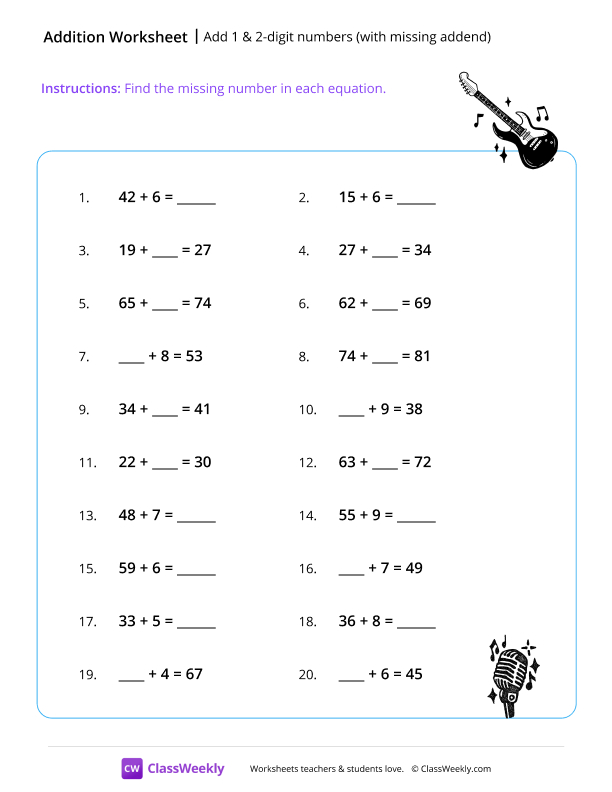
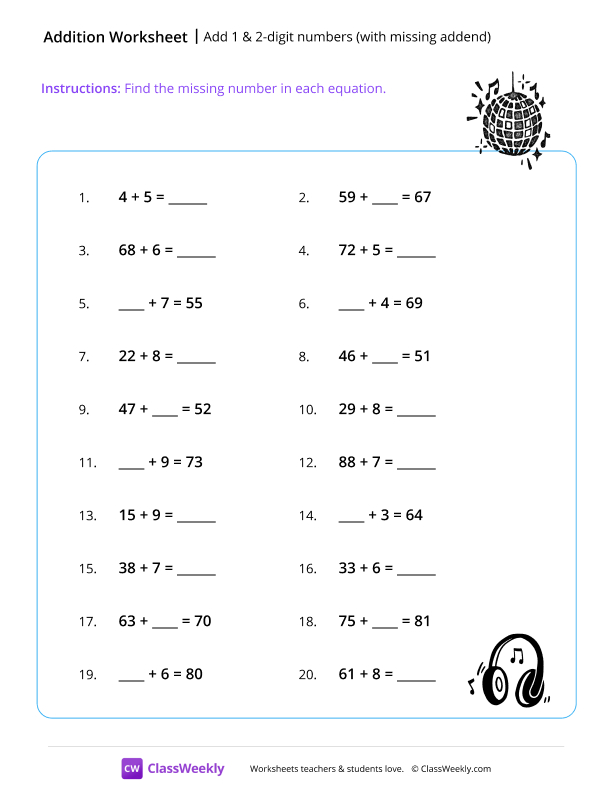
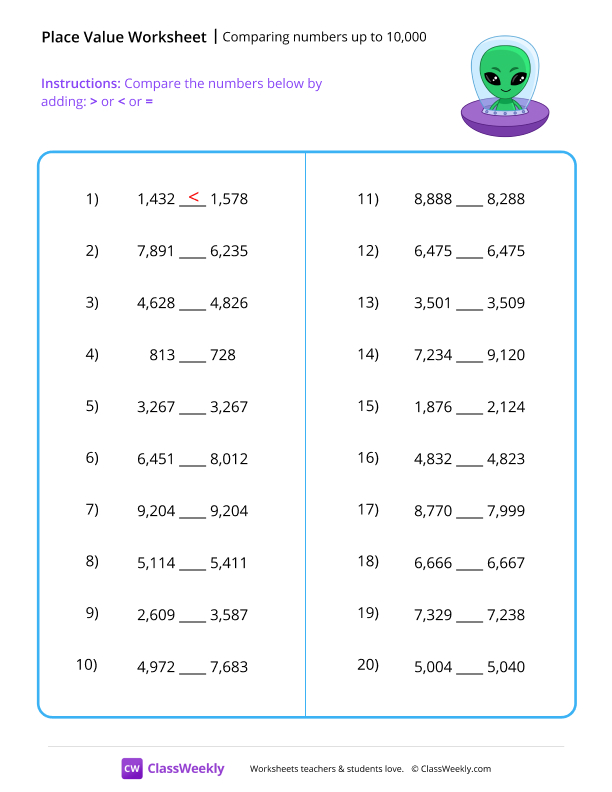
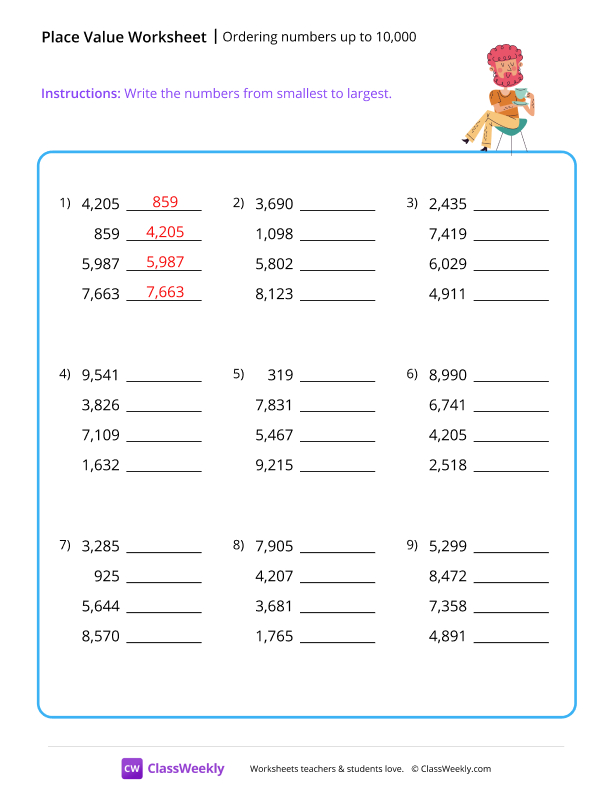
Curriculum-aligned printable worksheets for 3rd – 5th Grade. Download free.