Who Are Native Americans?
Taught in US schools
Key Takeaways
- Native Americans are the Indigenous peoples of North America - hundreds of distinct nations with unique languages, cultures, and traditions.
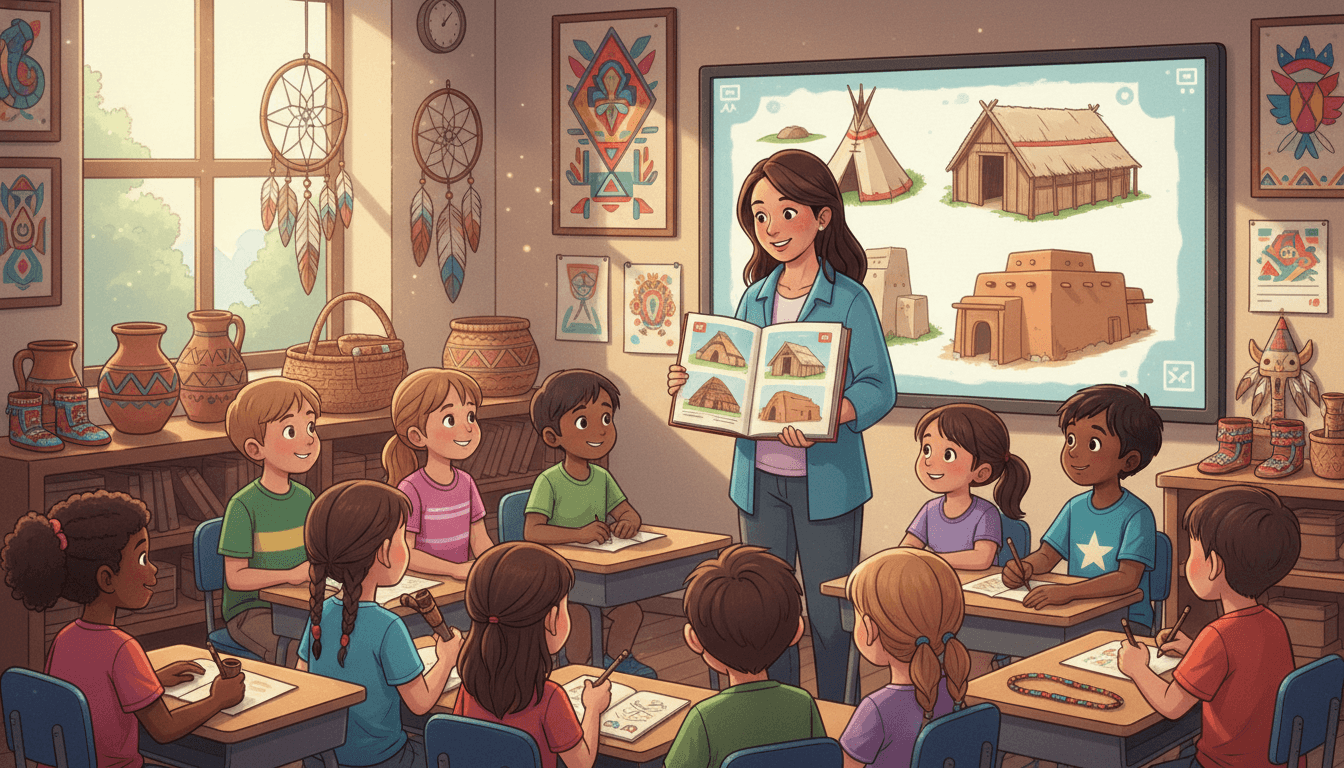
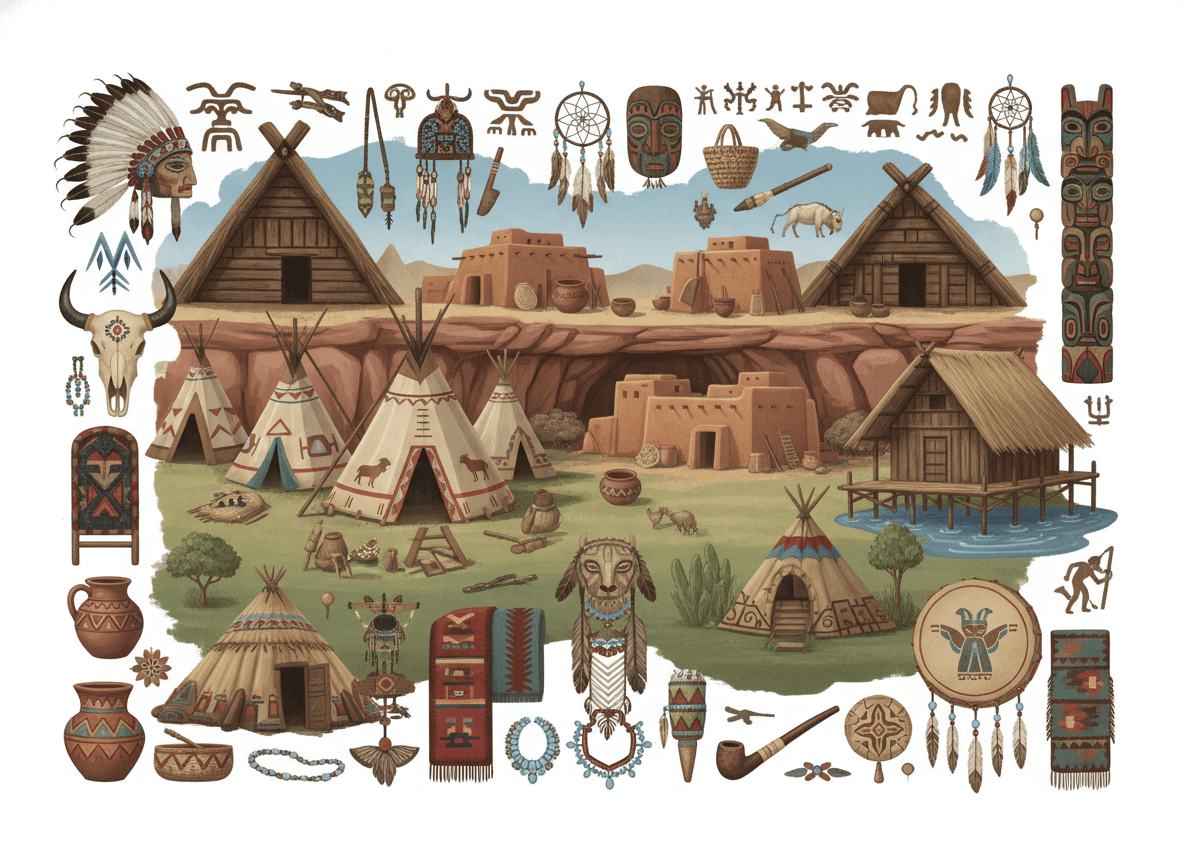
- Native American cultures varied greatly based on region: Northeast tribes built longhouses; Plains tribes followed bison herds; Southwest tribes built adobe pueblos.
- Native peoples had complex societies, trade networks, and forms of government long before European contact.
Who Are Native Americans?
Native Americans - also called American Indians, Indigenous peoples, or First Nations peoples - are the descendants of the people who lived in North America before European contact. They are not one group but hundreds of distinct nations, each with their own language, government, spiritual traditions, and way of life.
Native peoples have lived in North America for at least 15,000 years - and many traditions say they have been here since the beginning of time.
Regional Cultures
Because North America has many different environments, Native peoples developed very different ways of living based on where they lived.
Northeast - Iroquois, Algonquin, Wampanoag
- Lived in longhouses or wigwams
- Farmed corn, beans, and squash (the "Three Sisters")
- The Iroquois Confederacy (Haudenosaunee) was one of the world's oldest democracies - a model of united self-governance
Southeast - Cherokee, Creek (Muscogee), Choctaw, Chickasaw, Seminole
- Called the "Five Civilized Tribes" by Europeans for their developed governments and farms
- Many were forcibly removed to Oklahoma in the 1830s on the Trail of Tears
Plains - Sioux (Lakota), Cheyenne, Comanche, Crow, Arapaho
- Nomadic or semi-nomadic; followed bison herds across the Great Plains
- Lived in tepees (portable, easy to move)
- The horse (reintroduced by Spanish settlers in the 1600s) transformed Plains cultures
Southwest - Navajo (Diné), Apache, Pueblo peoples (Hopi, Zuni, Acoma)
- Pueblo peoples built multi-story adobe (mud brick) villages
- Known for weaving, pottery, and desert farming
- The Navajo Nation is the largest land area of any US Native nation today
Northwest Coast - Chinook, Makah, Haida, Tlingit
- Lived near the ocean; skilled fishers and traders
- Carved elaborate totem poles to record family histories and honor important figures
Core Values Across Cultures
While Native cultures are highly diverse, many share certain values:
-
Respect for the land and nature - a deep belief that humans are part of the natural world, not its rulers
-
Community and family - decisions often made by community elders or councils
-
Oral tradition - histories, laws, and stories passed down through storytelling, not writing
-
Spiritual connection - ceremonies and practices honoring the natural world and ancestors
Native Americans Today
Today, about 5.2 million people in the United States identify as Native American or Alaska Native. More than 570 federally recognized tribes exercise their own sovereignty (self-government). Native Americans today maintain their cultural traditions while also participating fully in modern American life as artists, athletes, lawyers, politicians, and more.
November is Native American Heritage Month in the United States.
Practice Activities
-
Regional culture map: Students place each Native nation on a map of North America in the region where they lived.
-
Research project: Each student studies one nation and presents on their home region, culture, and one important tradition.
-
Three Sisters garden: Learn about the corn-beans-squash companion planting technique and how it supported many Native communities.
-
Iroquois Confederacy discussion: Read about the Haudenosaunee Great Law of Peace and compare it to the US Constitution.
-
Contemporary connections: Research a living Native American leader, artist, or athlete and share their contributions.
Frequently Asked Questions
How many Native American tribes are in the United States?
There are over 570 federally recognized Native American tribes in the United States today, each with its own government, culture, and history. There are also many state-recognized tribes and groups that have not yet received federal recognition. The total Native American population in the US is about 5.2 million.
What are some examples of well-known Native American nations?
Some well-known nations include the Iroquois Confederacy (Northeast), Cherokee and Creek (Southeast), Sioux (Lakota), Cheyenne, and Comanche (Plains), Navajo and Pueblo peoples like the Hopi and Zuni (Southwest), and the Chinook and Makah (Northwest Coast). Each has a distinct language, culture, and history.
What is the Iroquois Confederacy?
The Iroquois Confederacy (also called the Haudenosaunee or League of the Iroquois) was a powerful alliance of six nations in the Northeast: the Mohawk, Oneida, Onondaga, Cayuga, Seneca, and later Tuscarora. Founded before European contact, it was one of the oldest participatory democracies in the world, and some historians believe it influenced the framers of the U.S. Constitution.
Free Native Americans Worksheets
Curriculum-aligned printable worksheets for 2nd – 5th Grade. Download free.