What Are Negative Numbers?
Taught in US schools
Key Takeaways
- Negative numbers are less than zero and are written with a minus sign: -3, -15, -0.5.
- On a number line, negative numbers appear to the left of zero; positive numbers appear to the right.
- Real-world contexts for negative numbers include temperature, sea level, debt, and golf scores.
- The concept is introduced in 5th grade on the number line and formalized in 6th grade.
What Are Negative Numbers?
Negative numbers are numbers less than zero. They are written with a minus sign directly before them: –1, –7, –25.5. Negative numbers represent quantities that go "below" a reference point - temperatures below freezing, money owed, floors below ground level, and positions below sea level.
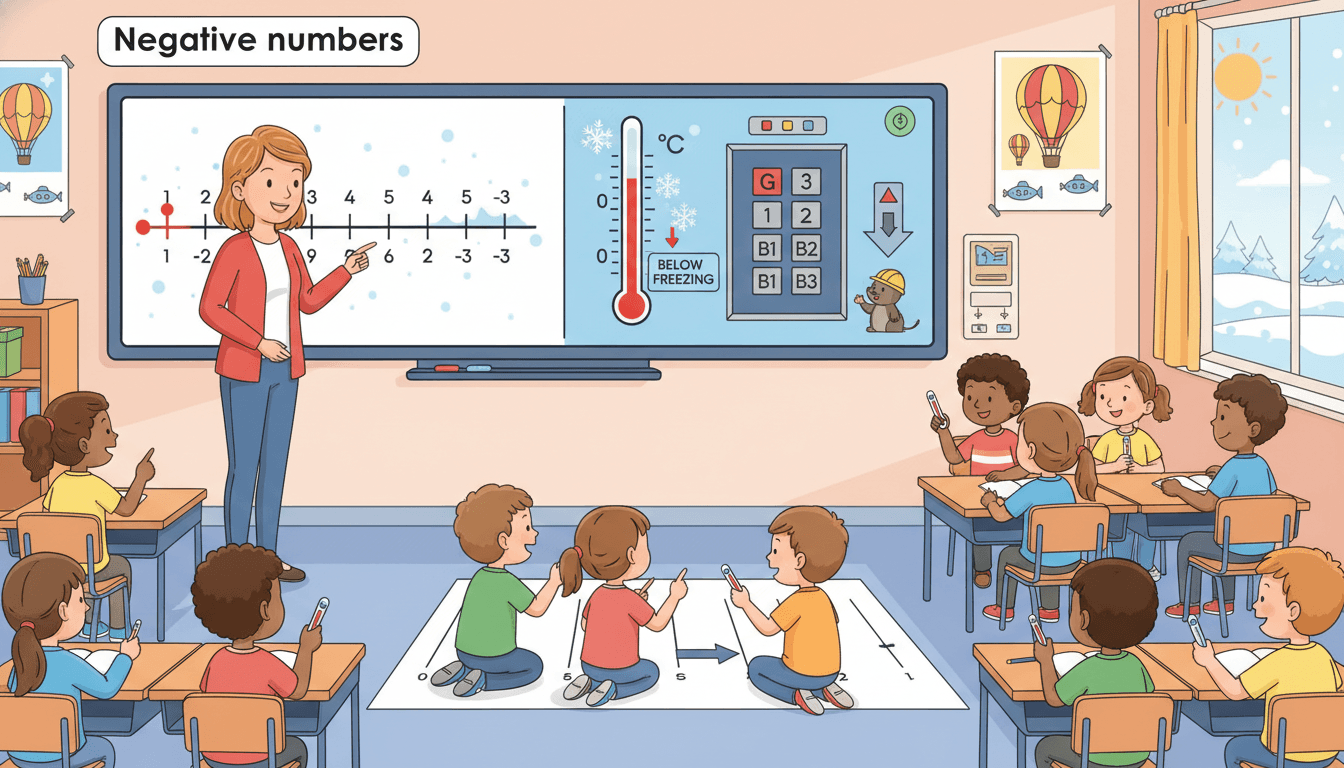
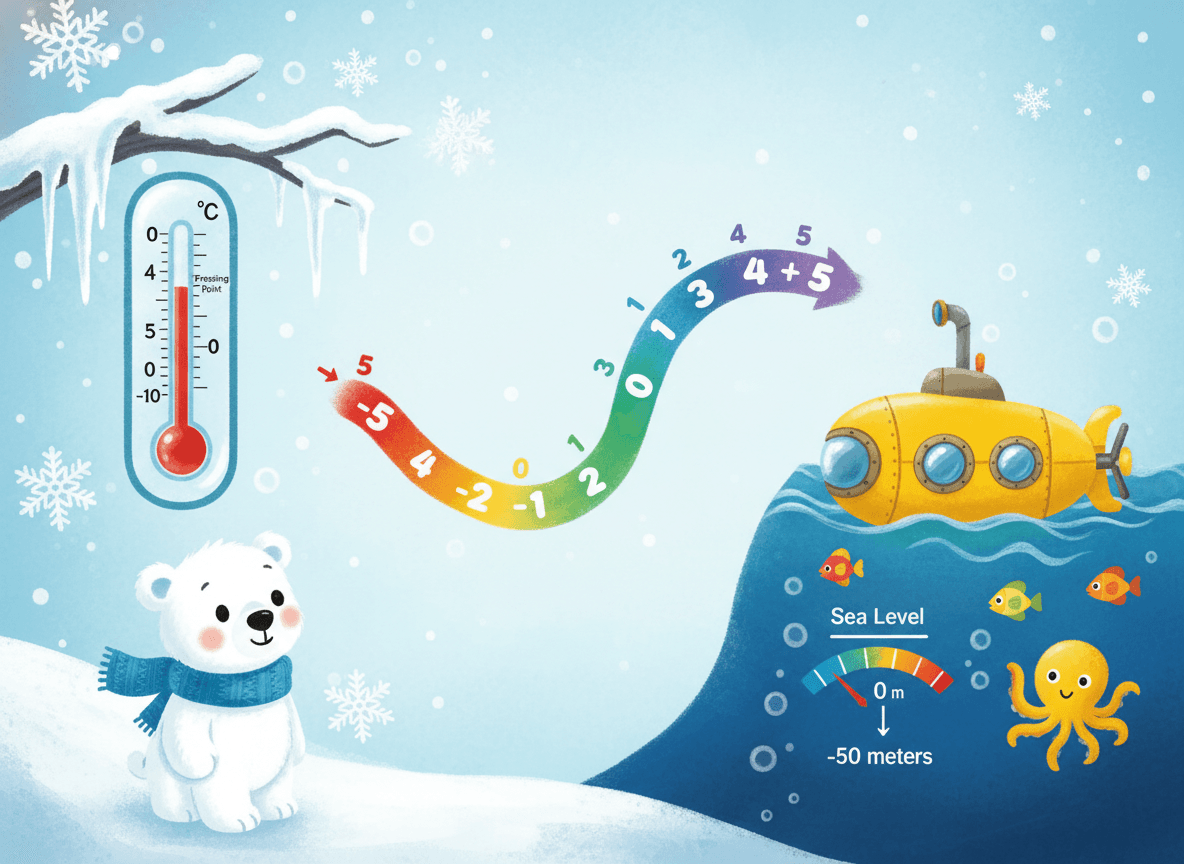
On a number line, positive numbers extend to the right of zero, and negative numbers extend to the left. The farther left a number is, the smaller its value: –100 < –5 < –1 < 0.
Negative Numbers in Real Life
Temperature: –10°F = 10° below zero
Elevation: –282 ft = 282 ft below sea level
Money: –$20 = $20 owed (debt)
Golf: –4 = 4 under par
Time: –3 days = 3 days before an event Real-world contexts help students understand that negative numbers have meaning, not just abstract value.
Number Line and Ordering
To compare negative numbers, plot them on a number line:
- Numbers to the right are always greater.
- –2 > –9 (–2 is to the right of –9 on the number line, so it is greater)
This is counterintuitive for many students - a "bigger" negative means a smaller value.
Opposites
Every number has an opposite - a number the same distance from zero but in the other direction.
- Opposite of 4 is –4
- Opposite of –12 is 12
- Opposite of 0 is 0
Opposites sum to zero: 4 + (–4) = 0. This concept prepares students for adding and subtracting negative numbers in 6th grade.
What Grade Do Kids Learn Negative Numbers?
5th grade: Informal introduction via temperature and number lines below zero. Students see that the number line extends past zero in both directions.
6th grade (6.NS.C.5–6): Formal study - understanding signs, ordering and plotting positive and negative numbers, and working in all four quadrants of the coordinate plane.
Common Misconceptions
–5 is bigger than –2: Students confuse larger absolute value with larger number. A number line makes it visual: –5 is to the left of –2, so –5 < –2.
Negative numbers aren't "real": Students sometimes resist negative numbers as impossible or made-up. Real-world contexts (temperature, bank accounts) establish their concrete meaning.
The minus sign and the negative sign are the same: A minus sign means subtraction (5 – 3). A negative sign means the number is below zero (–3). They look the same but represent different things. In context, students learn to distinguish them.
Practice Activities
-
Temperature timeline: Plot daily high temperatures for a week in a cold-weather city on a number line.
-
Elevator model: Draw a building with floors above and below ground; label floors with positive and negative numbers.
-
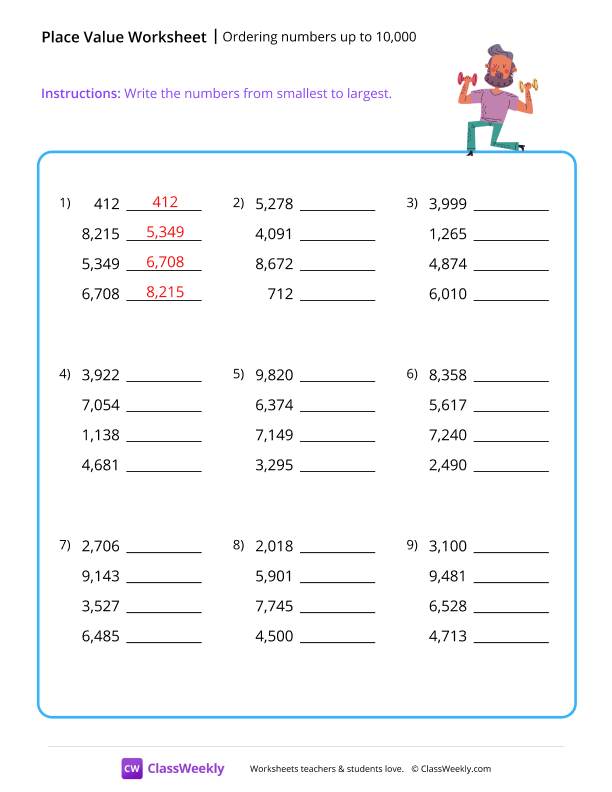
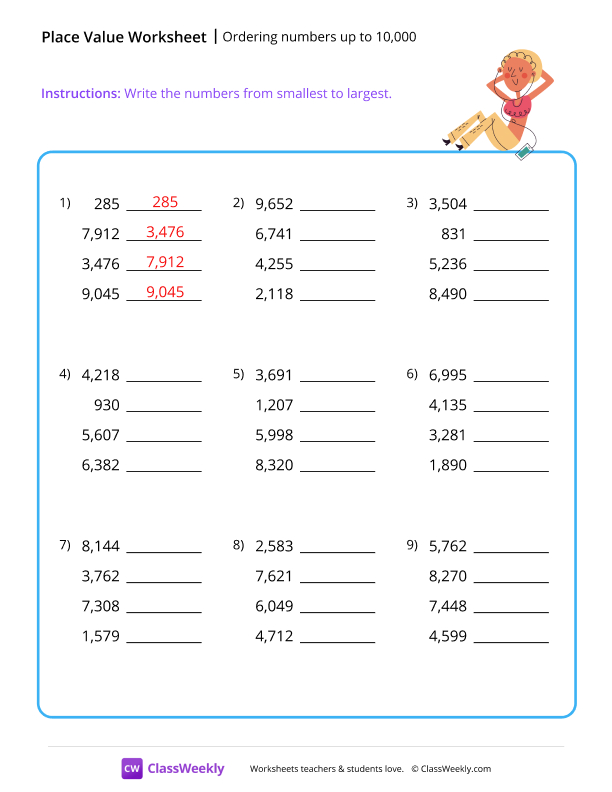
Ordering cards: Sort a set of number cards (including negatives) from least to greatest.
-
Opposite match: Match each card with its opposite number.
-
Coordinate plane quadrant I + negatives: Plot points in all four quadrants, identifying which coordinates are negative.
Frequently Asked Questions
What are negative numbers?
Negative numbers are values less than zero, written with a minus sign (–) before the number. The number –5 is read as 'negative five.' Negative numbers exist on both sides of zero on the number line, with negatives extending to the left of 0 and positives to the right.
What are real-world examples of negative numbers?
Temperature: –10°F is 10 degrees below zero. Elevation: Death Valley is 282 feet below sea level (–282 ft). Finance: A bank account overdrawn by $15 shows –$15. Golf: A score of –3 means 3 under par. Floors in buildings: Parking garage floor B2 might be labeled –2. These contexts help students make sense of numbers below zero.
How are negative numbers shown on a number line?
A number line extends in both directions from zero. Positive numbers go to the right (1, 2, 3...) and negative numbers go to the left (–1, –2, –3...). Zero is neither positive nor negative. The farther left a number is, the smaller it is: –10 < –3 < 0 < 2 < 7.
What is the opposite of a number?
The opposite of a number is its mirror image across zero on the number line. The opposite of 5 is –5; the opposite of –8 is 8. The opposite of 0 is 0 (zero is its own opposite). Opposites are the same distance from zero but in different directions. The formal term is 'additive inverse.'
When do students formally learn negative numbers?
The full curriculum treatment of negative numbers (comparing, ordering, plotting in all four quadrants, and operating with them) occurs in 6th grade (6.NS.C.5–6). However, 5th grade students encounter negative numbers informally through number lines below zero and real-world temperature contexts.
Free Negative Numbers Worksheets
Curriculum-aligned printable worksheets for 5th Grade. Download free.
Common Core Standards