What Is a Number Line?
Taught in US schools

Key Takeaways
- A number line shows numbers in order at equal distances, making magnitude and sequence visible.
- Number lines support addition and subtraction by showing jumps forward and backward.
- Fraction number lines help students understand that fractions live between whole numbers.
- Number lines extend below zero to introduce negative numbers in upper elementary grades.
What Is a Number Line?
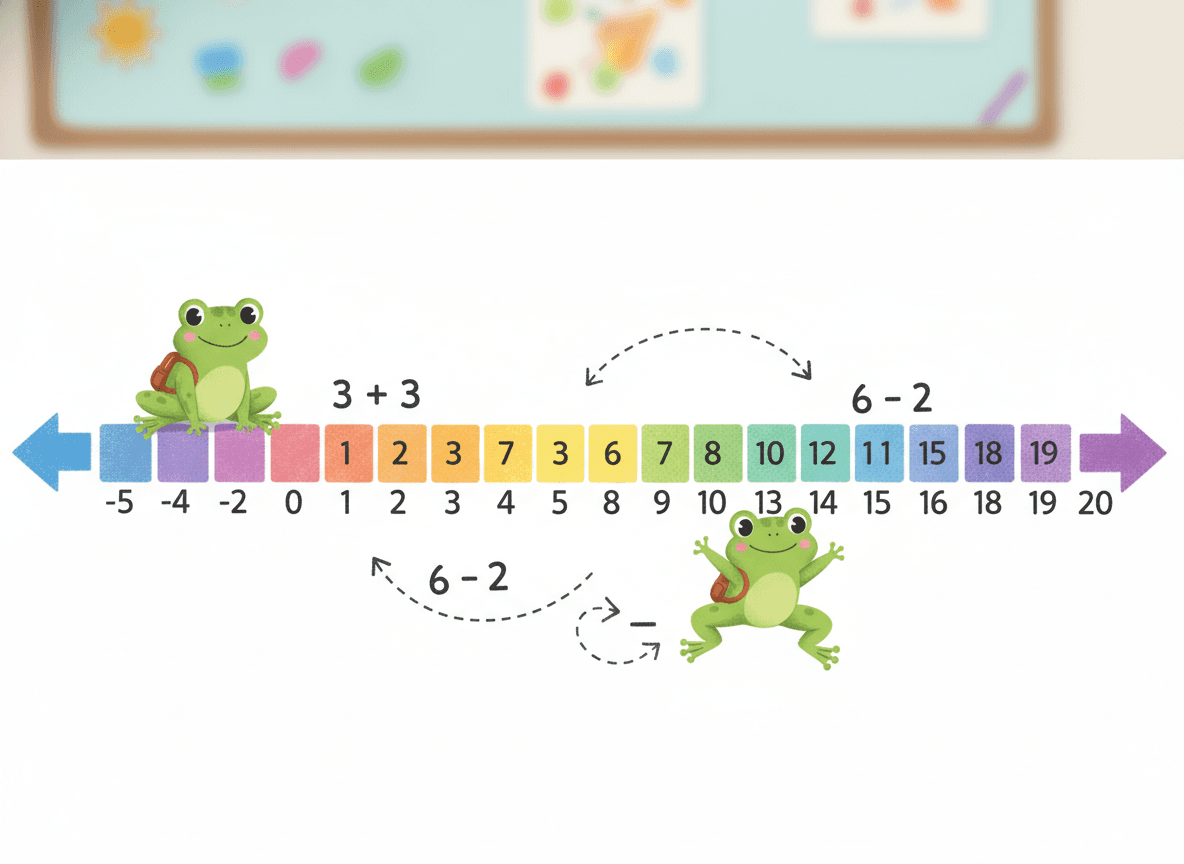
A number line is a horizontal line with numbers placed at equal intervals from left to right. Smaller numbers appear on the left and larger numbers on the right. Number lines are one of the most versatile tools in elementary mathematics - they appear in every grade and across every operation.
From counting in kindergarten to placing fractions in 3rd grade to working with negative numbers in 5th grade, the number line grows with students as their mathematical understanding deepens.
Uses of Number Lines Across Grade Levels
Kindergarten and 1st grade: Counting forward and backward, comparing which number is bigger or smaller, understanding that numbers increase to the right.
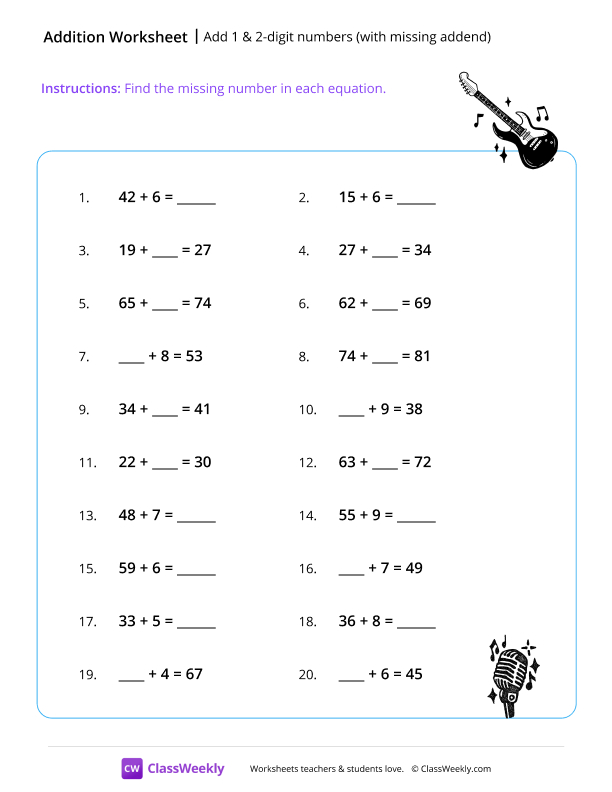
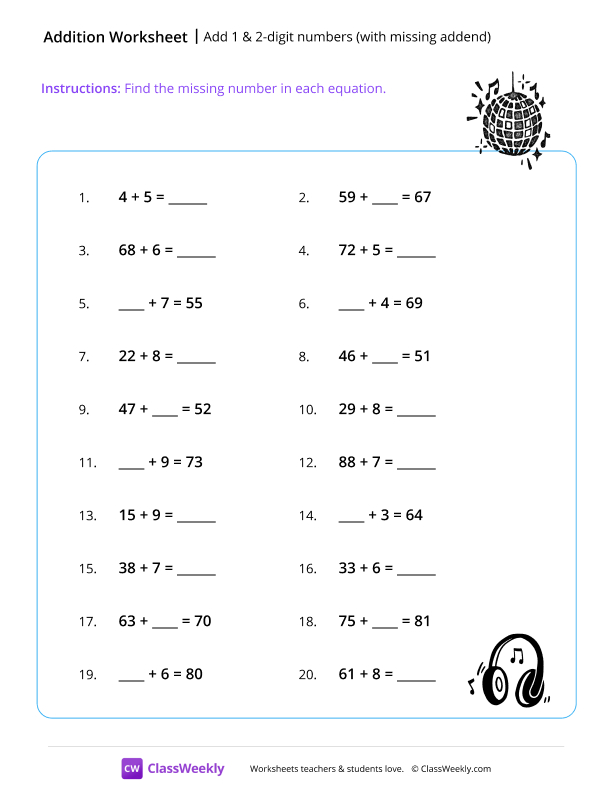
2nd grade: Adding and subtracting within 100 by making jumps on the number line; measuring length on rulers (which are number lines).
3rd grade: Placing fractions on a number line between 0 and 1 (and beyond); understanding that fractions are numbers, not just parts of shapes.
4th grade: Comparing fractions with unlike denominators by plotting them on the same number line.
5th grade: Extending the number line below zero to introduce negative numbers; placing decimals.
Open Number Lines
An open number line is blank - students draw their own jumps and label their own numbers. Instead of counting every tick mark, they make strategic leaps:
For 63 + 28:
- Start at 63
- Jump +20 → 83
- Jump +8 → 91
This approach builds number sense and makes mental math strategies visible.
Fraction Number Lines
When a number line is divided into equal parts between whole numbers, it models fractions. Dividing the space between 0 and 1 into 3 equal parts creates tick marks at 1/3 and 2/3. This visual is critical because it shows fractions as actual numbers with magnitude, not just parts of a circle.
Common Misconceptions
Number lines are just for small numbers: Students may think number lines only go from 0 to 20. Teachers can extend number lines to thousands, fractions, decimals, or negatives - the scale changes but the concept stays the same.
Fractions can't be on a number line: Before formal instruction, students sometimes think fractions only exist as parts of shapes. Fraction number lines correct this and deepen understanding of fractions as quantities.
Jumping counts the marks, not the spaces: When adding 4 by jumping, students count the tick marks they land on rather than the spaces they cross. Emphasize that each jump is one space, not one mark.
Practice Activities
-
Hop and land: Students use a floor number line (masking tape) to physically jump addition and subtraction problems.
-
Fraction placement race: Give students fraction cards and a blank 0–2 number line; they race to place fractions correctly.
-
Open number line strategies: Present a two-digit addition problem and ask students to solve it three different ways on open number lines.
-
Estimate and check: Mark a mystery point on a number line and have students estimate its value, then verify.
-
Temperature number line: Use a vertical thermometer number line to introduce negative numbers in real-world context.
Frequently Asked Questions
What is a number line used for in math?
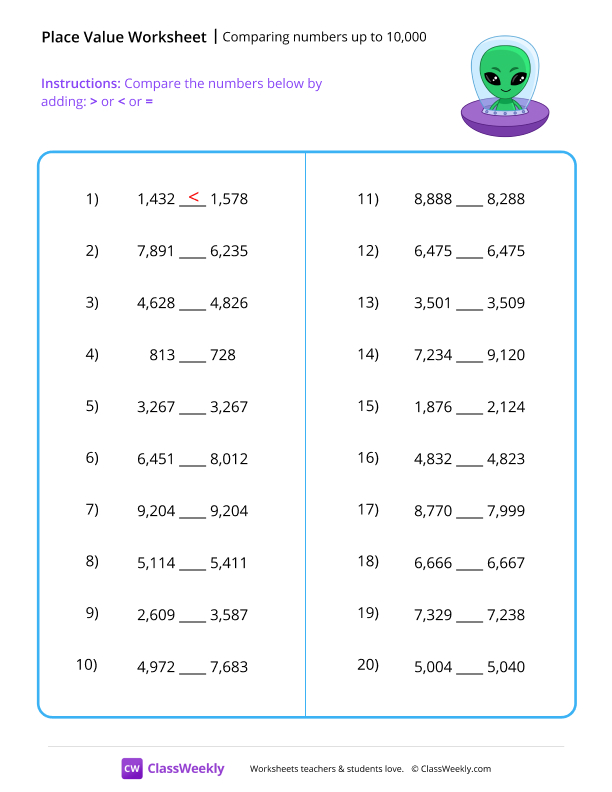
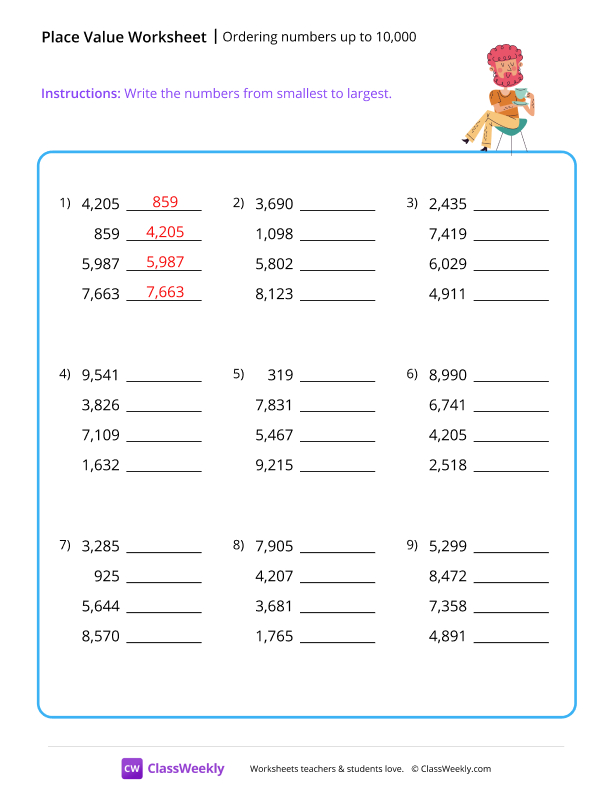
Number lines are used for counting, comparing numbers, adding and subtracting, placing fractions and decimals, rounding, and introducing negative numbers. They give students a visual representation of quantity and number relationships that complements abstract computation.
How do you add and subtract on a number line?
To add, start at the first number and jump right (toward larger numbers) by the amount you are adding. To subtract, start at the first number and jump left (toward smaller numbers). For 7 + 5, start at 7, jump 5 spaces right, and land on 12.
How are fractions shown on a number line?
A fraction number line divides the space between whole numbers into equal parts. To show 3/4, divide the space between 0 and 1 into 4 equal parts and mark the third tick. This helps students see that fractions are numbers with specific positions, not just pieces of shapes.
What is an open number line?
An open number line has no pre-marked numbers - students place their own landmarks and jumps. It is a flexible mental math tool where students show their thinking for addition, subtraction, or rounding without being locked into a fixed scale. It's especially useful for 2nd and 3rd grade computation strategies.
When do students learn about negative numbers on a number line?
Students are typically introduced to negative numbers on a number line in 5th grade (5.NS.C.6 in CCSS). The number line extends to the left of zero, with -1, -2, -3 and so on. Temperature and elevation are common real-world contexts used to introduce this extension.
Free Number Line Worksheets
Curriculum-aligned printable worksheets for Kindergarten – 5th Grade. Download free.