What Is Addition?
Taught in US schools
Key Takeaways
- Addition means combining two or more quantities to find a total.
- Kids move from counting objects → using strategies (making ten, doubles) → automatic facts → regrouping.
- Understanding addition conceptually (what it means) matters as much as memorizing facts.
- The commutative property (3+4 = 4+3) is a key insight that dramatically reduces how many facts kids need to memorize.
Addition is where the math story begins. Before kids can multiply, work with fractions, or reason about algebra, they need a deep understanding of what it means to combine quantities. Getting addition right - conceptually, not just procedurally - pays dividends for years.
What Is Addition?
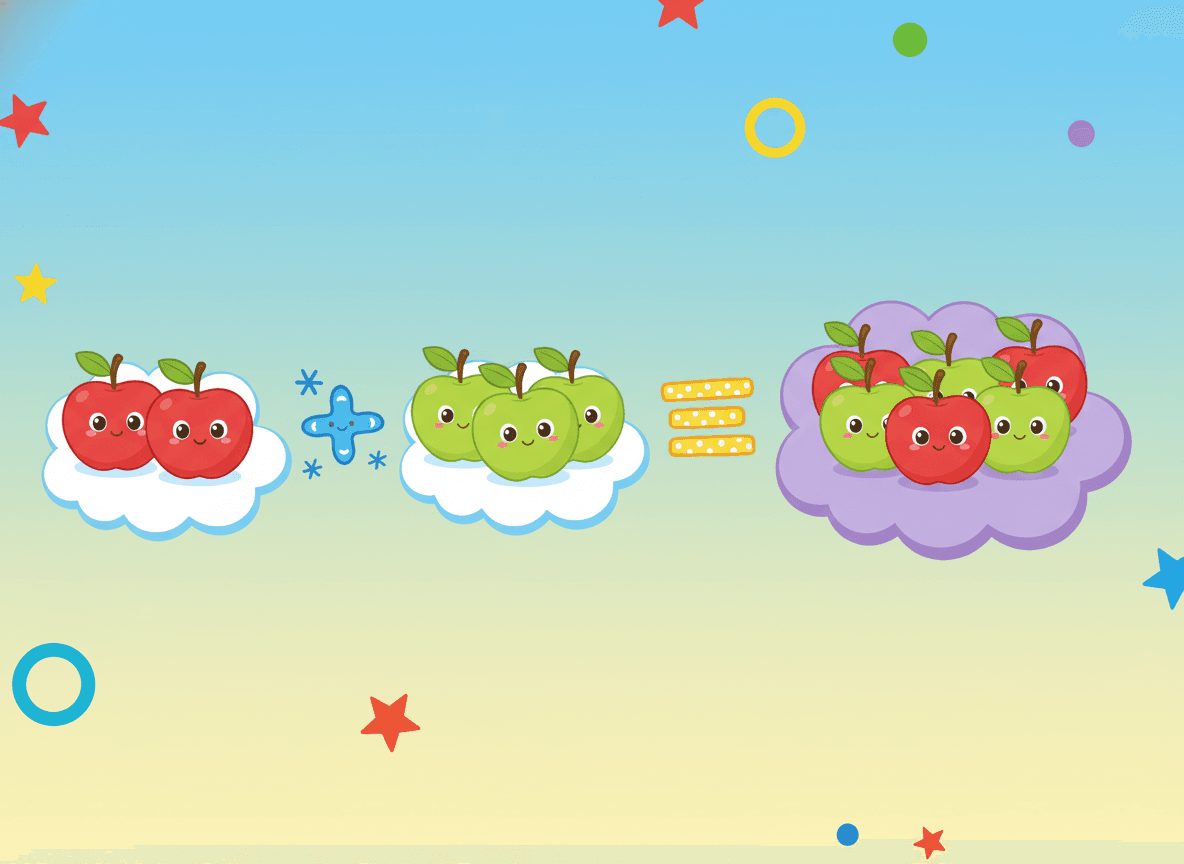
Addition is the operation of combining two or more numbers to find a total. If you have 3 apples and someone gives you 4 more, addition tells you that you now have 7 apples.
The formal vocabulary:
-
Addends: the numbers being added (3 and 4)
-
Sum: the result (7)
-
Plus sign (+): the symbol indicating addition
-
Equals sign (=): shows that both sides have the same value
Addition can represent several real-world situations: joining groups, adding more to a collection, combining parts into a whole, or moving forward on a number line.
For Kids: What Addition Means
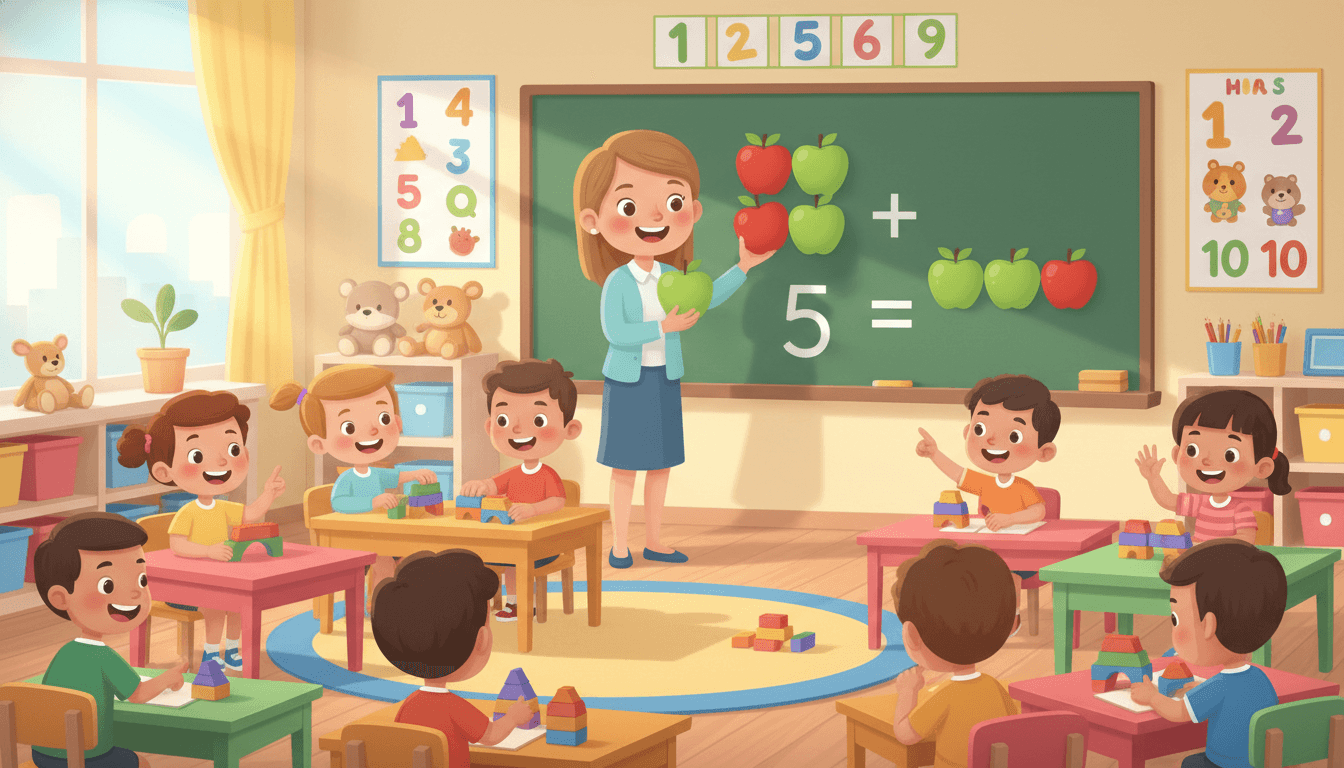
Here's a child-friendly way to explain it: "Addition means putting things together and counting how many you have in all. If you have 2 cookies and I give you 3 more cookies, we add them together: 2 + 3 = 5 cookies."
What Grade Do Kids Learn Addition?
Kindergarten: Adding within 10 using objects, pictures, and fingers. Understanding that addition means putting groups together. Simple word problems.
1st Grade: Adding within 20, strategies for addition facts (counting on, making ten, doubles, doubles-plus-one), understanding the commutative and associative properties. Introduction to multi-digit addition with tens and ones.
2nd Grade: Fluency with single-digit facts, two-digit addition with and without regrouping, three-digit addition, adding multiple two-digit numbers.
3rd Grade: Multi-digit addition within 1,000, applying addition in word problems, using addition as the inverse of subtraction.
Why Addition Matters
Addition isn't just a math skill - it's the foundation for multiplication (which is repeated addition), fractions (adding parts of a whole), algebra (solving for unknowns), and virtually every other math concept. A shaky addition foundation shows up as confusion in surprising places years later.
Beyond math class, addition is one of the most used practical skills in daily life: adding up prices, keeping score, measuring ingredients, and managing money all depend on it.
Common Misconceptions
"Counting on fingers is a sign of a struggling learner." In early kindergarten and 1st grade, using fingers is entirely appropriate - it's a legitimate bridge strategy. The concern is when finger-counting persists into 2nd or 3rd grade without developing more efficient strategies.
"Memorizing facts is the same as understanding addition." Kids can memorize 7+8=15 without understanding why that's true or when to apply it. Conceptual understanding (what addition means, its properties, how it connects to subtraction) is what allows flexible problem-solving.
"If a child can do addition worksheets, they understand addition." Worksheets with equations in a predictable format can be solved by pattern-matching, not understanding. Word problems and novel contexts reveal whether understanding is truly there.
"Addition always makes numbers bigger." True for positive numbers, but kids who don't understand this as a general principle can get confused later when adding negative numbers or working with zero.
How to Teach Addition
Start with concrete objects. Counters, cubes, blocks, fingers. Kids need to physically combine groups before they can represent the action symbolically. The concrete-representational-abstract (CRA) sequence is well supported by research.
Use multiple representations. Show addition as combining objects, as movement on a number line, as part-part-whole diagrams, and as equations. Each representation adds flexibility.
Teach strategies, not just facts. Counting all, counting on, making ten, using doubles, using near-doubles. Kids who have strategies can figure out forgotten facts; kids who only have memorization are stuck.
Target the commutative property early. Once kids see that 4+7 = 7+4, the number of addition facts they need to learn essentially halves. This insight is worth spending time on.
Use word problems with varied structures. "Put together" problems (3 + 4 = ?), "add to" problems (3 + ? = 7), and "compare" problems all develop different facets of addition understanding.
Build toward automaticity gradually. Conceptual understanding first, then strategy use, then fluency. Rushing to timed drills before strategies are solid creates math anxiety without building real skill.
Practice Activities
-
Ten-frame mats: Use a ten-frame to show addition problems visually. Seeing how numbers fill a frame builds intuition about combinations that make 10.
-
Story problems: "Maria has 5 stickers. She gets 3 more. How many does she have?" Embedding addition in story contexts makes it meaningful.
-
Number bonds: A simple diagram with two parts and a whole. Write any two of the three numbers; kids find the third. This models the relationship between addition and subtraction.
-
Doubles song: "1+1 is 2, 2+2 is 4..." Doubles are usually the easiest facts to memorize and serve as anchor points for near-doubles.
-
Number line hops: Use a number line on the floor or paper. Start at one addend, hop forward the number of the second addend. Physically moving builds the "counting on" concept.
Frequently Asked Questions
When should kids know their addition facts by heart?
Common Core expects fluency with addition within 10 by end of 1st grade, and fluency within 20 using strategies by end of 2nd grade. Automatic recall of all single-digit addition facts is the goal by the end of 2nd grade. Rushing this before kids have solid conceptual understanding tends to backfire - kids who rely on fact memorization without understanding struggle more with regrouping and multi-digit addition later.
What does 'making ten' mean?
Making ten is a mental math strategy where kids decompose one addend to form a group of 10, then add what's left. For example: 8 + 5. Instead of counting up, a child thinks: 8 needs 2 more to make 10, so I'll take 2 from the 5, making 10 + 3 = 13. It's a powerful bridge strategy between counting and automatic recall.
What is regrouping in addition?
Regrouping (sometimes called 'carrying') happens in multi-digit addition when the sum of a column exceeds 9. For example: 47 + 35. In the ones column, 7 + 5 = 12. The 2 stays in the ones place, and the 1 (representing 10) is 'carried' to the tens column. Kids in 2nd grade begin learning regrouping with two-digit numbers.
What's the difference between addition and counting?
Counting involves listing numbers one by one (1, 2, 3...). Addition means combining quantities and finding a new total. Early on, kids often add by counting - counting all objects, then counting on. But addition mastery means being able to find totals without counting every item. The shift from counting to arithmetic reasoning is a key developmental milestone.
What are addition properties, and why do they matter?
The commutative property (a+b = b+a) means order doesn't change the sum: 4+7 = 7+4. The associative property means grouping doesn't matter: (2+3)+4 = 2+(3+4). The identity property means adding zero doesn't change a number: 6+0 = 6. These properties don't just make addition easier - they're the foundation for algebraic thinking in later grades.
Free Addition Worksheets
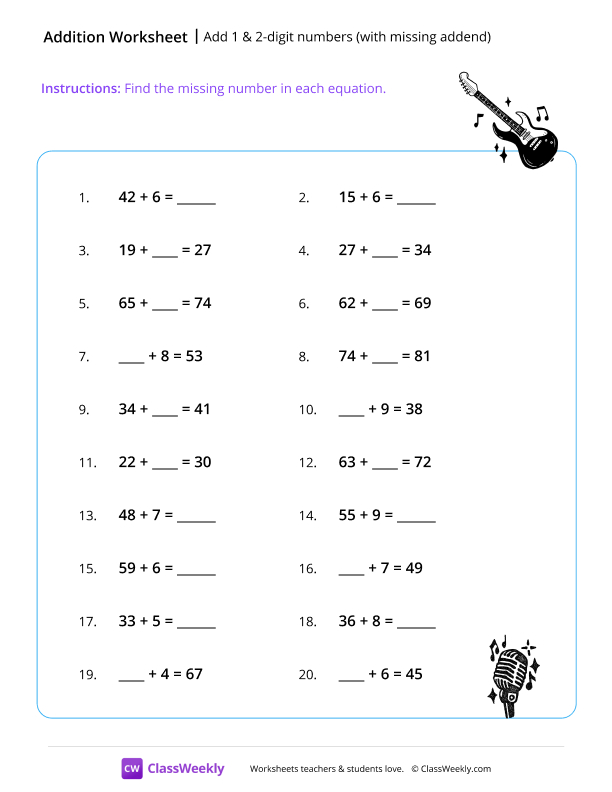
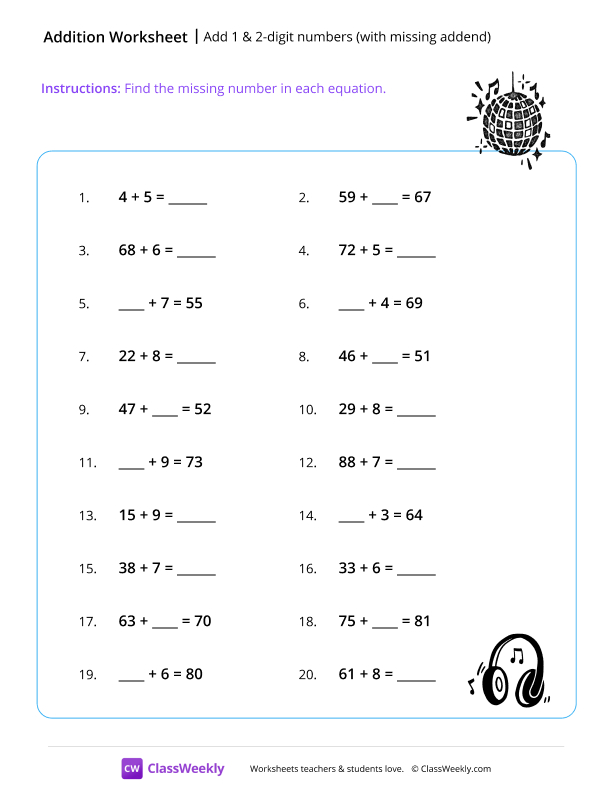
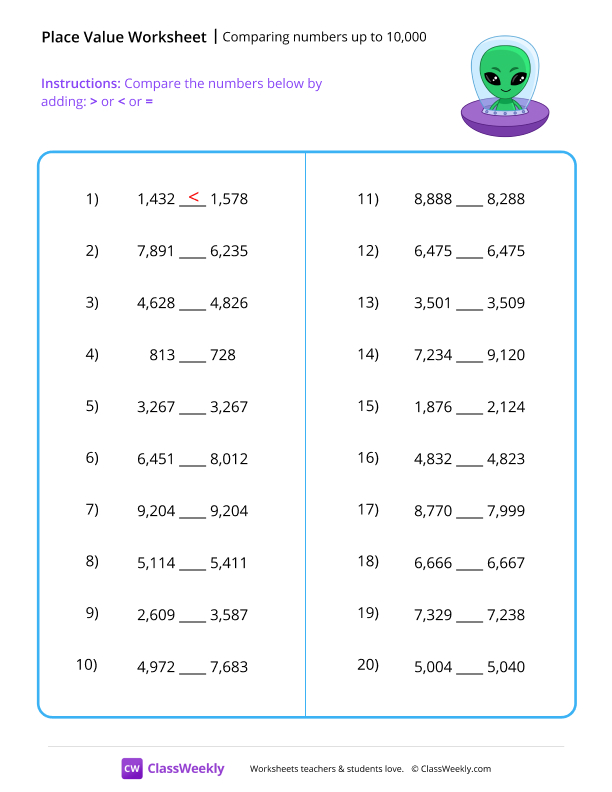
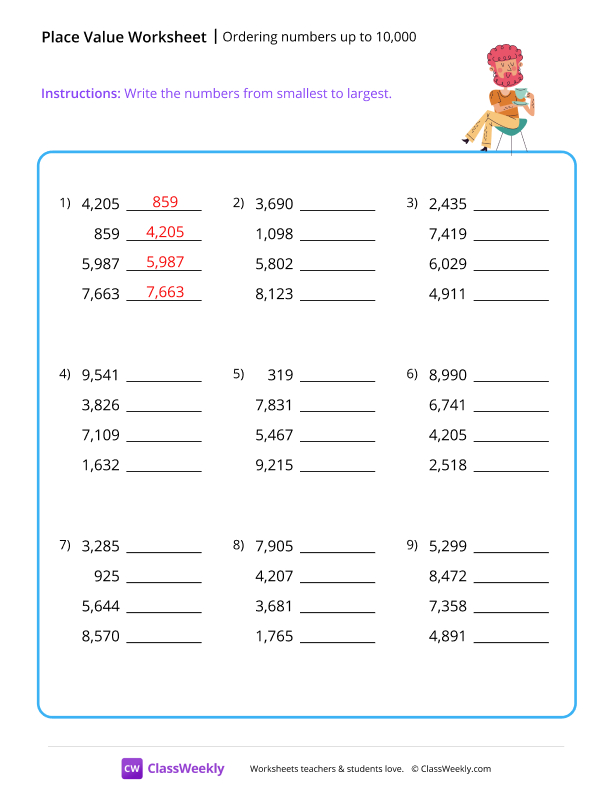
Curriculum-aligned printable worksheets for Kindergarten – 3rd Grade. Download free.