What Is Place Value?
Taught in US schools
Key Takeaways
- Place value means a digit's value depends on where it sits in a number.
- Each position is ten times the value of the position to its right.
- Place value is the foundation for addition with regrouping, subtraction with borrowing, multiplication, and decimals.
- Kids learn place value in stages: tens and ones (K-1), hundreds (2nd), thousands (3rd), larger numbers (4th-5th), and decimals (4th-5th).
Place value is the hidden architecture of our number system. Without it, you couldn't do multi-digit addition, long multiplication, understand decimals, or make sense of why 10 ones equals 1 ten. It's one of those foundational math concepts that teachers revisit at every grade level - each time at greater depth - because it underpins everything else.
What Is Place Value?
Place value means that a digit's value is determined by its position in a number, not just by the digit itself.
In the number 347:
- The 7 is in the ones place - it represents 7
- The 4 is in the tens place - it represents 40
- The 3 is in the hundreds place - it represents 300
Total: 300 + 40 + 7 = 347.
The same digit means something completely different depending on where it sits. A 5 in the ones place is just 5. A 5 in the hundreds place is 500.
The Core Pattern: Each Place Is Ten Times the One to Its Right
This is the key insight kids need to internalize: our number system is base ten, meaning each position is ten times the value of the position to its right.
1,000,000: 100,000 - 10,000 - 1,000 - 100 - 10 - 1 - . - 0.1 - 0.01 10 ones = 1 ten. 10 tens = 1 hundred. 10 hundreds = 1 thousand. This pattern never breaks. Kids who see this pattern - rather than just memorizing place names - can reason flexibly about any number.
What Grade Do Kids Learn Place Value?
Kindergarten: Understanding that teen numbers (11-19) are made of one ten and some ones. "13 is 1 ten and 3 ones."
1st Grade: Tens and ones for all numbers to 100. Understanding place value in two-digit numbers, comparing numbers using tens and ones, using place value to add and subtract.
2nd Grade: Hundreds, tens, and ones up to 1,000. Understanding 100 as a group of 10 tens, comparing three-digit numbers, using place value for mental math and regrouping.
3rd Grade: Numbers up to 10,000. Understanding rounding using place value. Applying place value in multi-digit addition and subtraction.
4th Grade: Multi-digit whole numbers to 1,000,000. Multiplying and dividing by 10 and 100. Introduction to decimal place value (tenths and hundredths).
5th Grade: Decimal place value extending to thousandths and beyond. Powers of 10. Performing operations with decimals.
Why Place Value Matters
Place value is not just one math topic - it's the lens through which kids understand all of these:
-
Regrouping in addition: When ones add to 10+, you regroup a ten into the tens place
-
Borrowing in subtraction: You're decomposing a ten into 10 ones
-
Multiplication: 4 × 30 is the same as 4 × 3 tens = 12 tens = 120
-
Rounding: 347 rounded to the nearest 100 means "which hundred is it closest to?"
-
Decimals: 0.4 means 4 tenths - a fraction of the ones place
Common Misconceptions
"The bigger the number, the more digits it has." Not always. This confuses kids when they compare 999 and 1,000. The number of digits is a function of the size, not the other way around.
"Zero is nothing - it doesn't count." Zero as a placeholder is crucial. In 405, the zero means there are zero tens - not that the tens place is missing. Without the zero, 405 would look like 45.
"You always regroup in multi-digit addition." Regrouping only happens when a column sums to 10 or more. Kids who apply regrouping mechanically without understanding will sometimes "carry" when they don't need to.
"Bigger digits mean bigger numbers." A child might think 962 > 1,023 because 9 is a bigger digit than 1. This misunderstanding shows up constantly and is fixed only by a firm grasp of what place positions mean.
How to Teach Place Value
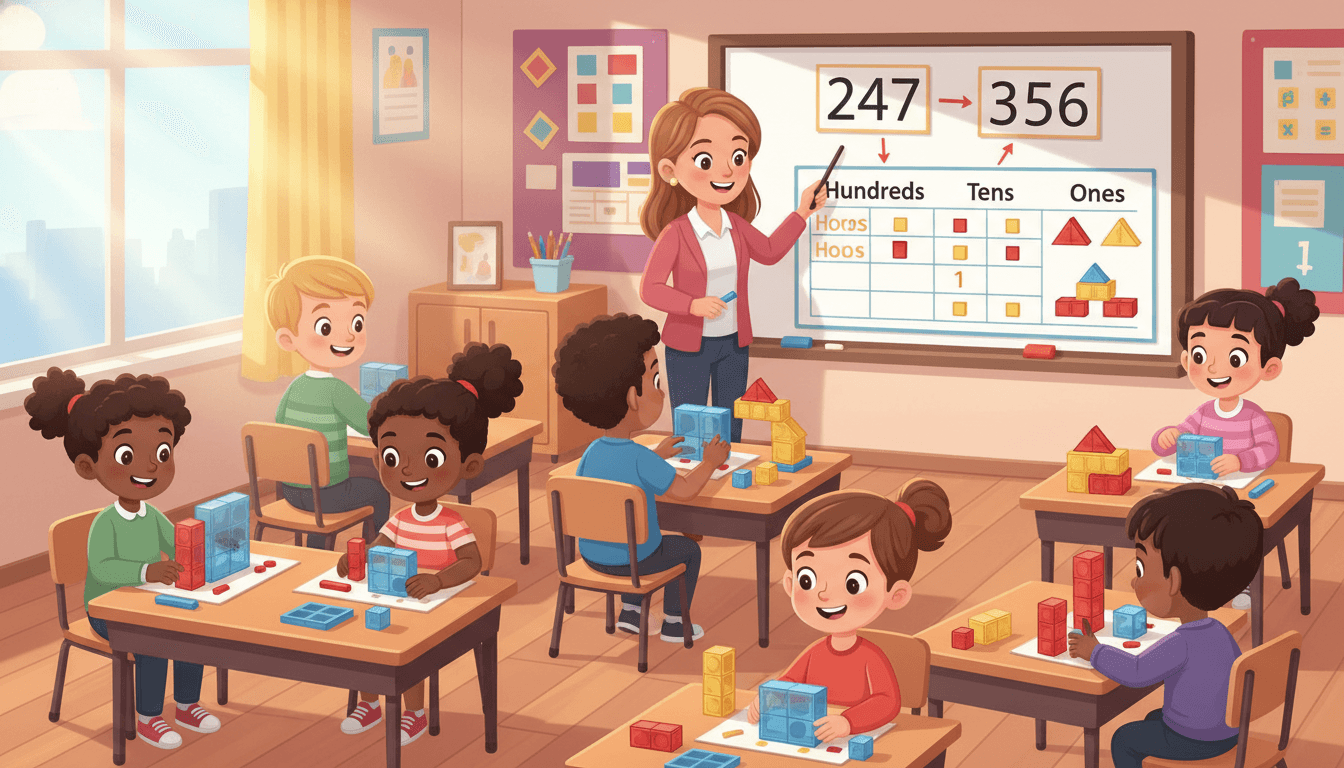
Start with concrete manipulatives. Base-ten blocks, place value discs, bundled straws - physical objects make the abstract concrete. Kids who count out 10 ones and snap them into a ten rod have a felt sense of what regrouping means.
Build two-digit understanding before three-digit. Don't rush to hundreds before tens and ones are solid. Every added place multiplies the cognitive load.
Use a place value chart constantly. Posting a laminated place value chart at every student's desk keeps the positional language in front of kids during practice.
Teach expanded form alongside standard form. Writing 347 = 300 + 40 + 7 makes the contribution of each place explicit. It's also the conceptual foundation for regrouping.
Count by tens and hundreds explicitly. "10, 20, 30, 40..." and "100, 200, 300..." build the rhythmic sense of how places work. Connect skip counting to the structure of the number system.
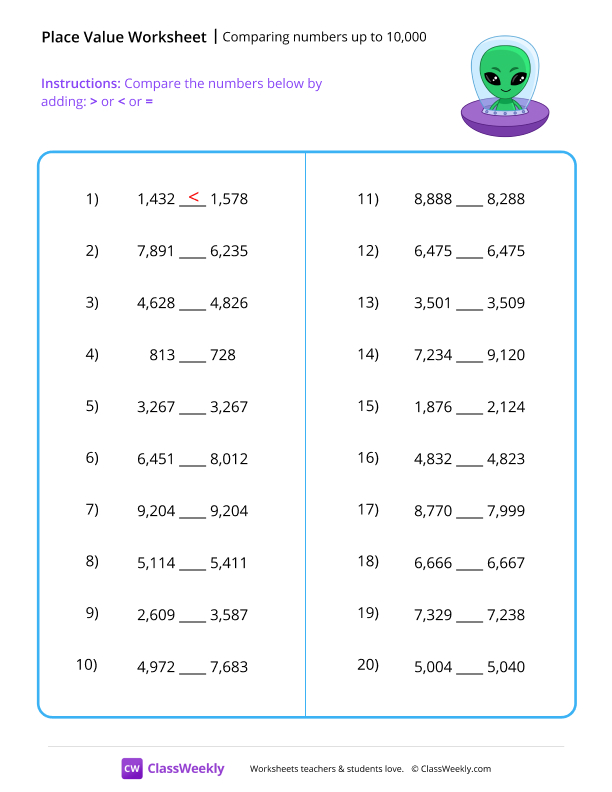
Expose misconceptions with number comparison tasks. Have kids explain why 1,023 is greater than 962. The explanation reveals whether understanding is real or surface-level.
Practice Activities
-
Base-ten block building: Represent a given number with blocks, then regroup (exchange 10 ones for 1 ten). Physical regrouping before paper regrouping.
-
Place value mat work: Students have a mat with ones, tens, hundreds columns. Draw cards and place the appropriate number of discs or chips.
-
Number of the day routine: Pick a multi-digit number and represent it in 5+ ways: standard form, expanded form, word form, base-ten picture, number sentence.
-
Rounding practice: Given a number on a number line between two multiples of ten (or hundred), which multiple is it closer to?
-
Digit Detective: "I'm thinking of a number. It has 4 tens and 7 ones. What is it?" Switch roles - kids write their own clues.
Frequently Asked Questions
What is the difference between place value and face value?
Face value is the digit itself - the 4 in 347 has a face value of 4. Place value is what that digit represents based on its position - the 4 in 347 has a place value of 40 (4 tens). A 4 in the hundreds position would have a place value of 400. Same digit, completely different values depending on where it sits.
Why do kids struggle with place value?
The core challenge is that our number system is abstract - a 3 can mean 3, 30, 300, or 3,000 depending on position. That's counterintuitive. Kids also have trouble with zeros as placeholders: in 405, the zero means 'zero tens' not 'no number here.' And regrouping (borrowing and carrying) requires fluent place value thinking under pressure, which is cognitively demanding.
What are base-ten blocks and how do they help?
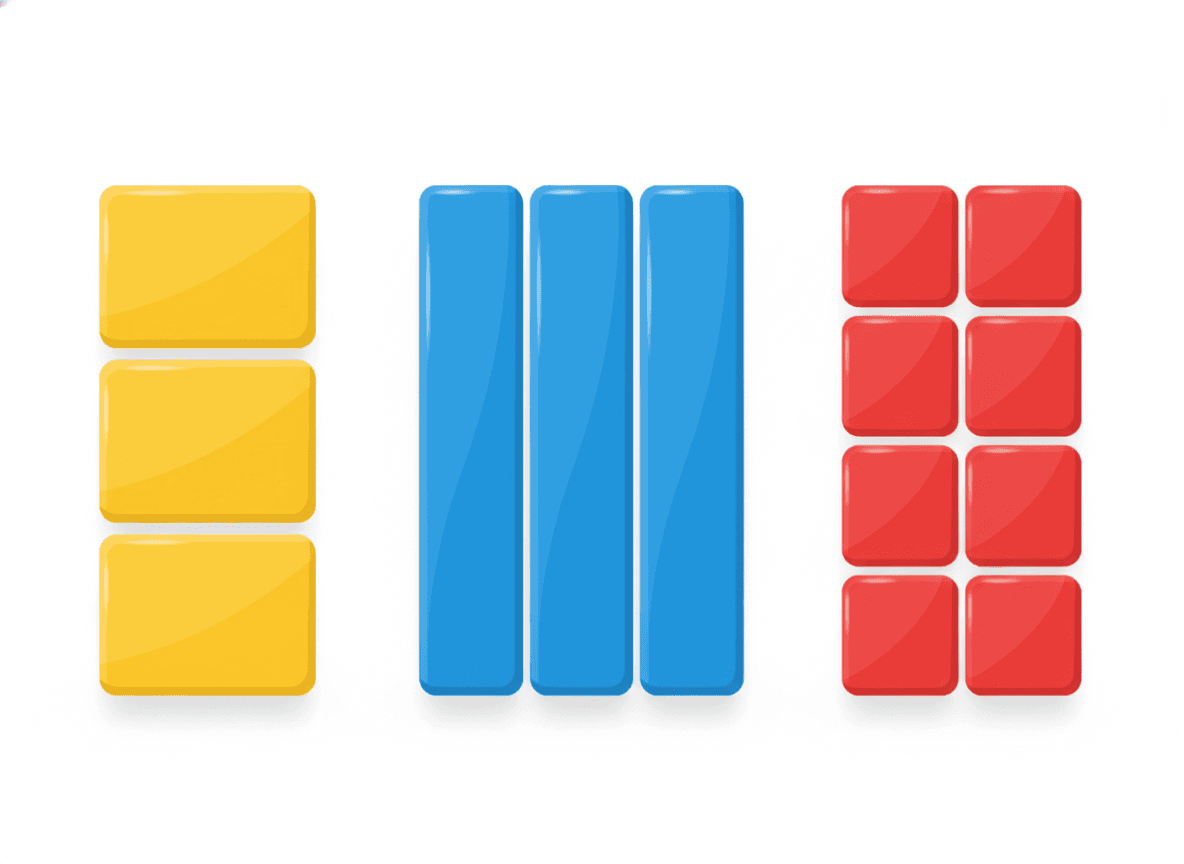
Base-ten blocks are physical manipulatives: small unit cubes (ones), long rods of 10 (tens), flat squares of 100 (hundreds), and large cubes of 1,000. They make place value concrete - kids can see and touch that a 'ten' is literally 10 ones snapped together. Exchanging 10 ones for a ten rod, or 10 tens for a hundreds flat, makes regrouping visible and sensible.
When do kids learn about decimals as place value?
Decimals as place value typically arrive in 4th grade (tenths and hundredths) and extend in 5th grade (thousandths). The key insight is that the pattern continues: just as 10 ones = 1 ten, 10 tenths = 1 one. The decimal point marks where 'ones' live - everything to the left is whole units getting bigger by tens, everything to the right is parts of a whole getting smaller by tenths.
What does 'expanded form' mean?
Expanded form writes a number as the sum of each digit's place value. 347 in expanded form is 300 + 40 + 7. It's a powerful teaching tool because it makes the place value contribution of each digit explicit. Kids in 2nd and 3rd grade use expanded form to understand and explain regrouping in addition and subtraction.
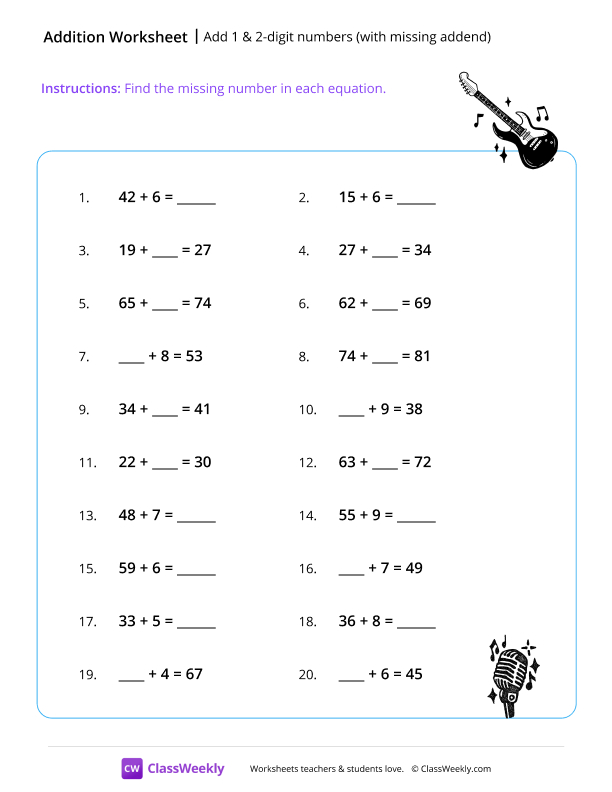
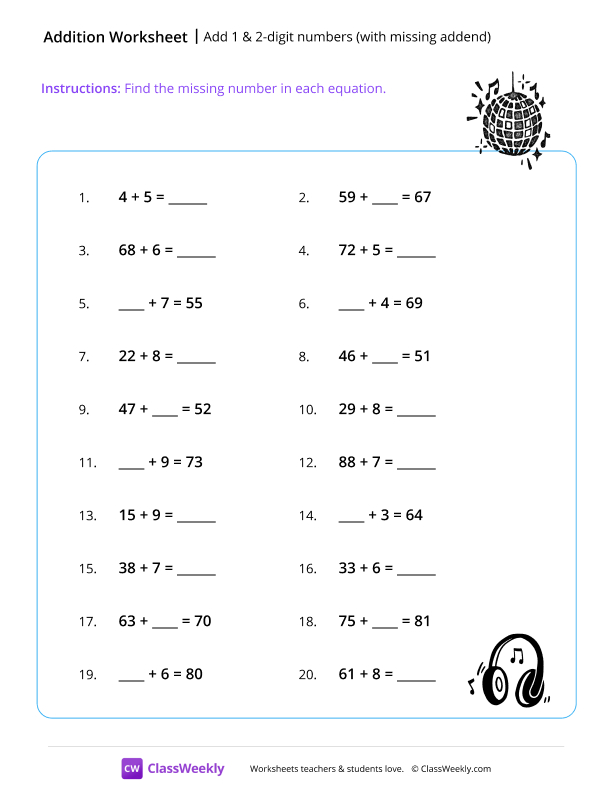
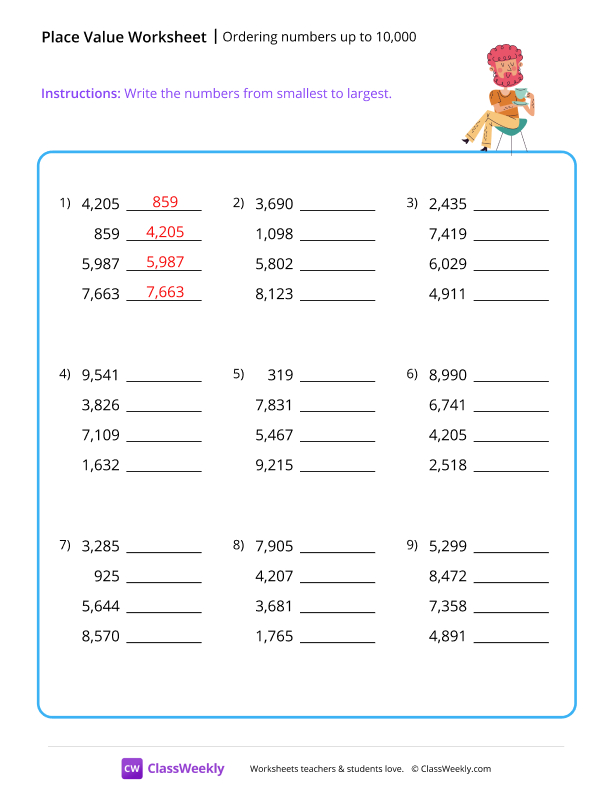
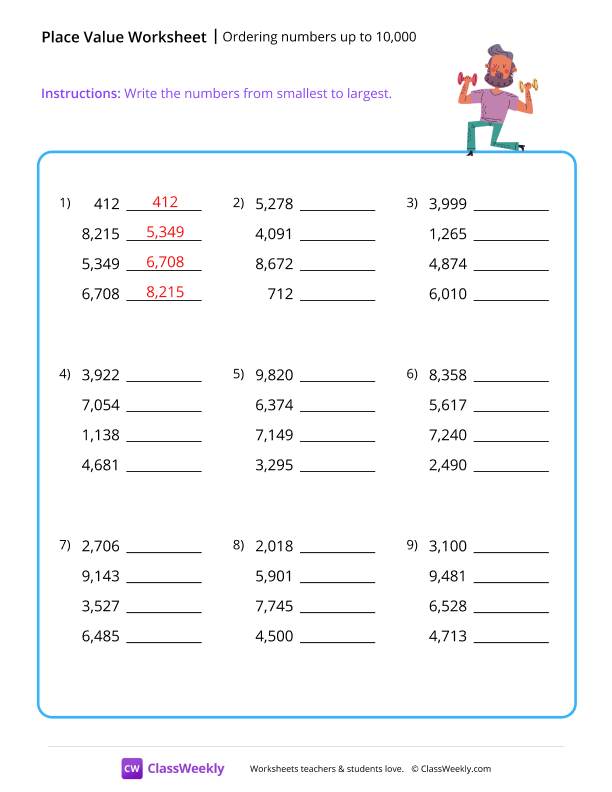
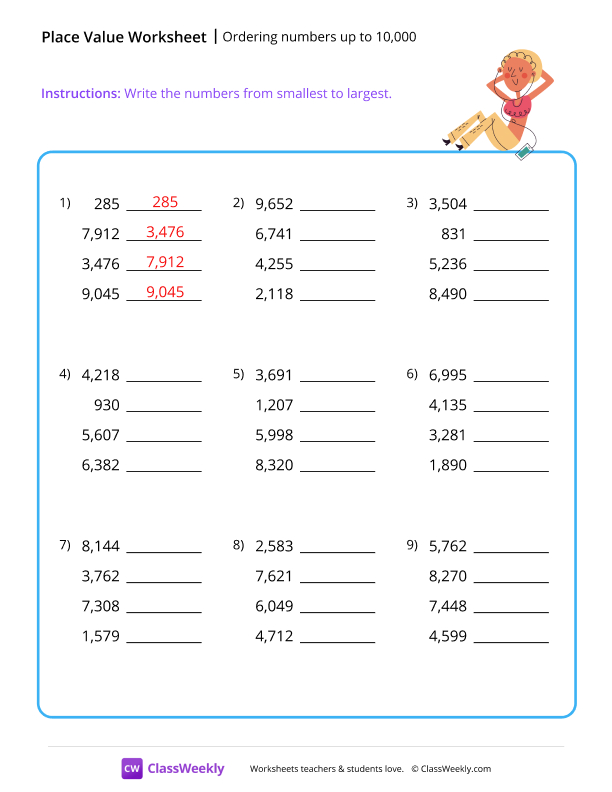
Free Place Value Worksheets
Curriculum-aligned printable worksheets for Kindergarten – 5th Grade. Download free.