What Is Personification?
Taught in US schools
Key Takeaways
- Personification gives human traits, feelings, or actions to non-human things - animals, objects, nature, or abstract ideas.
- It is distinct from simile (uses like/as) and metaphor (direct comparison) - personification specifically attributes human characteristics to non-human subjects.
- Authors use personification to make descriptions more vivid and relatable, build mood, and give non-human elements an emotional presence in a story or poem.
What Is Personification?
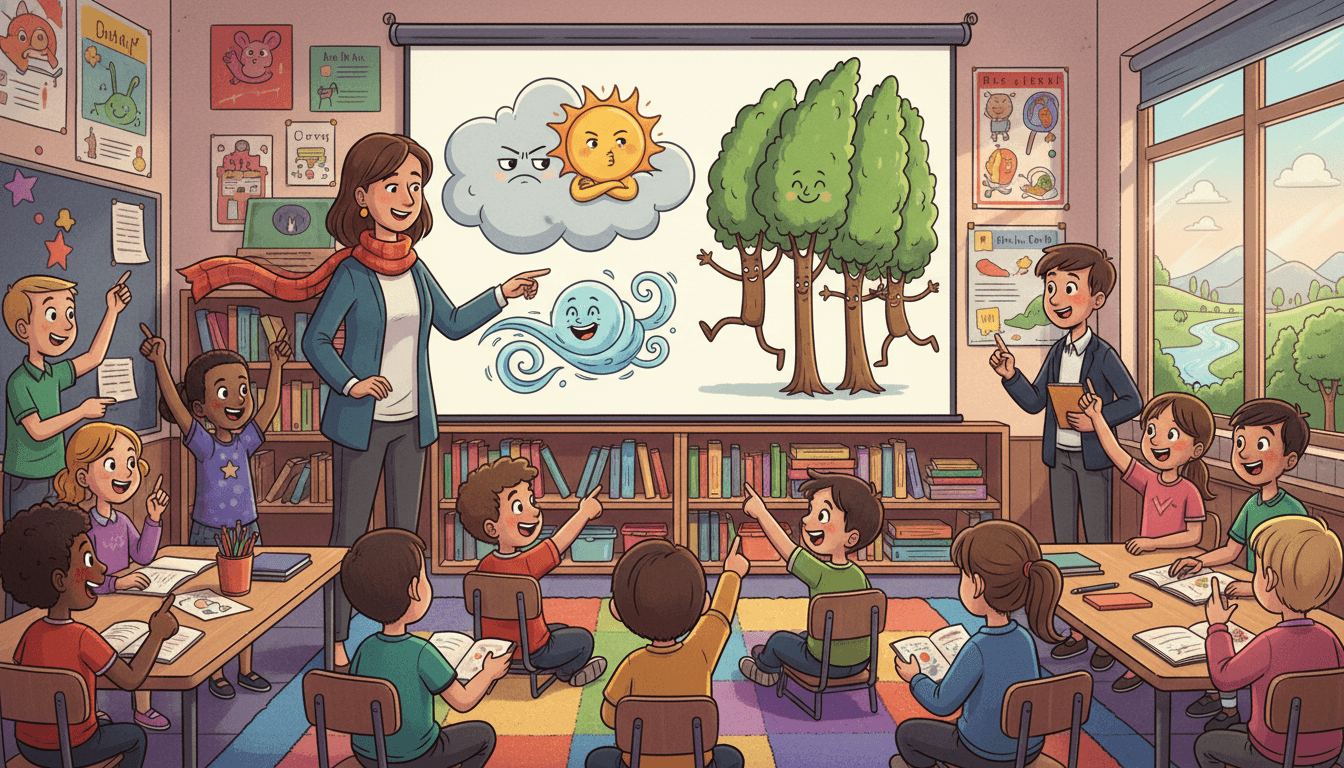
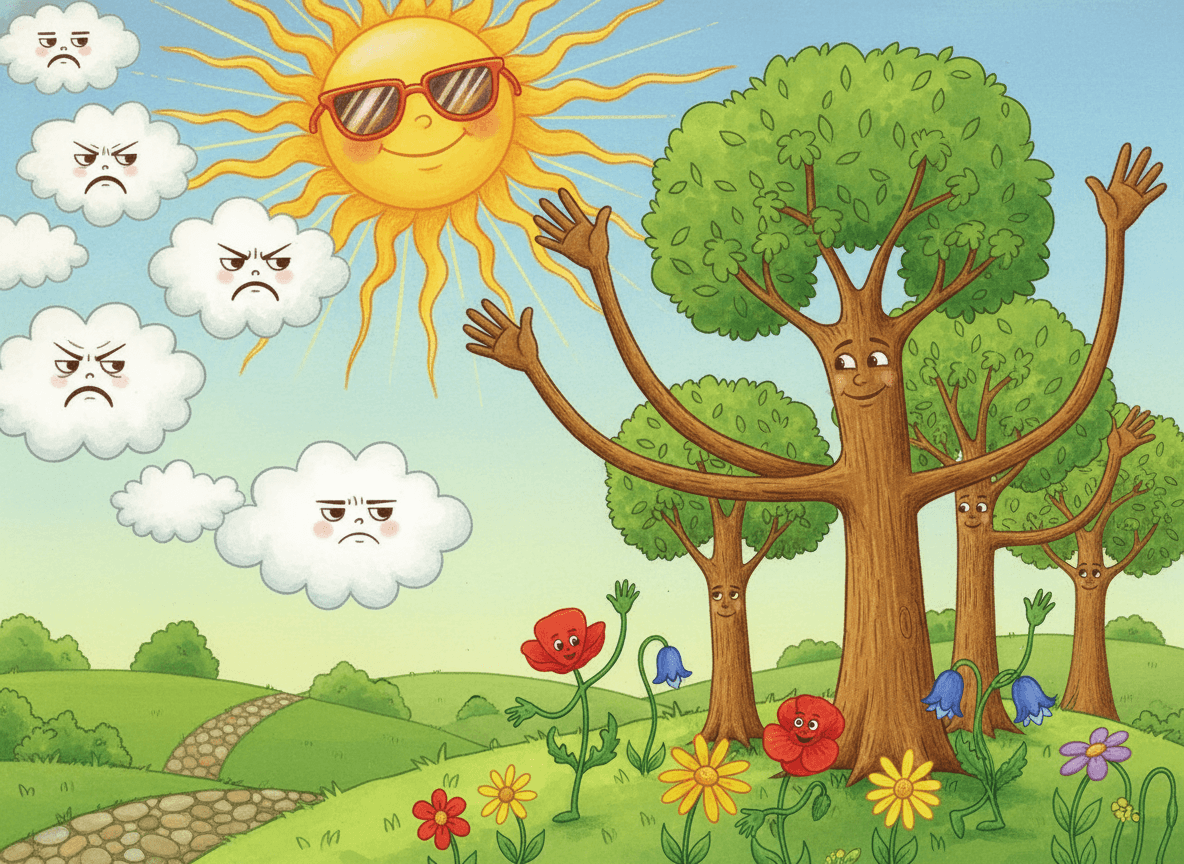
Personification is a figure of speech that gives human qualities, feelings, or actions to non-human things - objects, animals, nature, or abstract ideas. When the wind "whispers," when stars "dance," or when the ocean "roars," the author is using personification.
Personification makes writing vivid and emotionally engaging by connecting the familiar territory of human experience to the non-human world.
Examples of Personification
"The wind whispered through the trees." (The wind has a human voice) "The stars danced in the night sky." (Stars perform a human action) "The hungry forest swallowed them whole." (The forest acts like a predator) "Time waits for no one." (Time has human patience - or impatience) "The old engine coughed and groaned to life." (The engine has a human ailment) "The flowers nodded in agreement." (Flowers perform a human gesture)
What Makes Personification Distinct
Personification is part of the figurative language family, but it has a specific identity:
Simile: Comparison using like or as - "The tree stood like a tired old man."
Metaphor: Direct comparison - "The tree was a tired old man."
Personification: Human trait given to non-human - "The tree sighed in the evening breeze." The key test for personification: Is a human action, emotion, or quality attributed to something non-human? If yes, it's personification.
Personification vs. Anthropomorphism
When animals are given full human personalities, speak, and act as humans throughout an entire story, that is technically anthropomorphism (from Greek: anthropo- = human + morphe- = form). Examples: Charlotte in Charlotte's Web, Wilbur the pig, Aslan in The Chronicles of Narnia.
Personification in figurative language is briefer - a flash of human quality in a single image or phrase. The distinction is subtle, and at the elementary level, both fall under the broader understanding of giving non-human things human traits.
Why Authors Use Personification
1. Creates vivid images "The shadows crept across the floor" is more sinister and alive than "the shadows spread across the floor."
2. Builds mood Human actions carry emotional weight. "Crept" suggests stealth and danger; "danced" suggests joy. Personification transfers that emotional weight to non-human elements, building mood efficiently.
3. Makes abstract ideas concrete "Justice wept at the verdict" makes the abstract concept of justice feel present, emotional, and relatable.
4. Creates relatability Connecting non-human things to human experience helps readers form emotional connections. A personified storm feels more menacing; a personified spring morning feels more welcoming.
Personification in Poetry
Personification is especially common in poetry, where compression requires that every word carry maximum meaning:
"Because I could not stop for Death, / He kindly stopped for me." (Emily Dickinson)
Death is personified as a patient, courteous gentleman in a carriage - a far more unsettling and memorable image than a simple description of dying.
Spotting Personification: What to Look For
Ask: "Is this non-human thing doing something that only a human can do?"
- Speaking, singing, crying, laughing, shouting → human actions
- Feeling happy, sad, angry, bored → human emotions
- Deciding, thinking, planning, waiting → human mental processes
- Smiling, frowning, nodding, shrugging → human physical expressions
If a non-human thing is doing any of these, it's personification.
Practice Activities
- Personification Hunt: students search a poem or paragraph for personification and highlight each example, then explain what human quality is being given to what non-human thing.
- "Write Like the Wind": give students a natural phenomenon (rain, fog, lightning, seasons) and have them write three personification sentences for it.
- Illustration activity: students illustrate a personification sentence - showing the non-human thing with a human expression or action.
- Compare two weather descriptions: one using only literal language, one using personification. Which is more engaging? Why?
- Poem writing: students write a four-line poem from the point of view of an object (a pencil, a backpack, a window) using personification throughout.
Frequently Asked Questions
What is the difference between personification and a metaphor?
A metaphor makes a direct comparison between two things ('The classroom was a zoo'). Personification is a specific type of comparison where a non-human thing is given specifically HUMAN traits ('The classroom breathed with the energy of thirty excited students'). All personification is metaphorical, but not all metaphors are personification. The key test: does the non-human thing perform a human action or have a human feeling? If yes, it's personification.
Is it personification when animals talk in a story?
When animals talk and act like humans in a fable or animal story (like Charlotte's Web or Aesop's fables), it is technically called anthropomorphism - giving animals human characteristics as a sustained feature of the narrative. Personification in figurative language is typically a brief, one-time description used for effect ('The old clock ticked patiently'). The distinction is subtle and often not required at the elementary level - both involve giving human traits to non-humans.
Why do authors use personification?
Personification makes descriptions more vivid and emotionally resonant by connecting non-human things to human experiences. When a poet writes 'the sun smiled down on the valley,' readers can relate to the warmth and good cheer of a smile in a way that 'the sun shone brightly' does not capture. Personification also builds mood: 'the shadows crept across the floor' creates a sinister mood because creeping is something associated with stealth and danger.
Free Personification Worksheets
Curriculum-aligned printable worksheets for 3rd – 5th Grade. Download free.