What Is Imagery in Writing?
Taught in US schools

Key Takeaways
- Imagery is language that appeals to one or more of the five senses (sight, sound, smell, taste, touch) to help readers vividly experience what the author is describing.
- Imagery can be literal (a real sensory detail) or figurative (a comparison like a simile or metaphor that creates a sensory image) - both types are imagery.
- Authors use imagery to build mood, show rather than tell, engage readers emotionally, and make writing come alive on the page.
What Is Imagery in Writing?
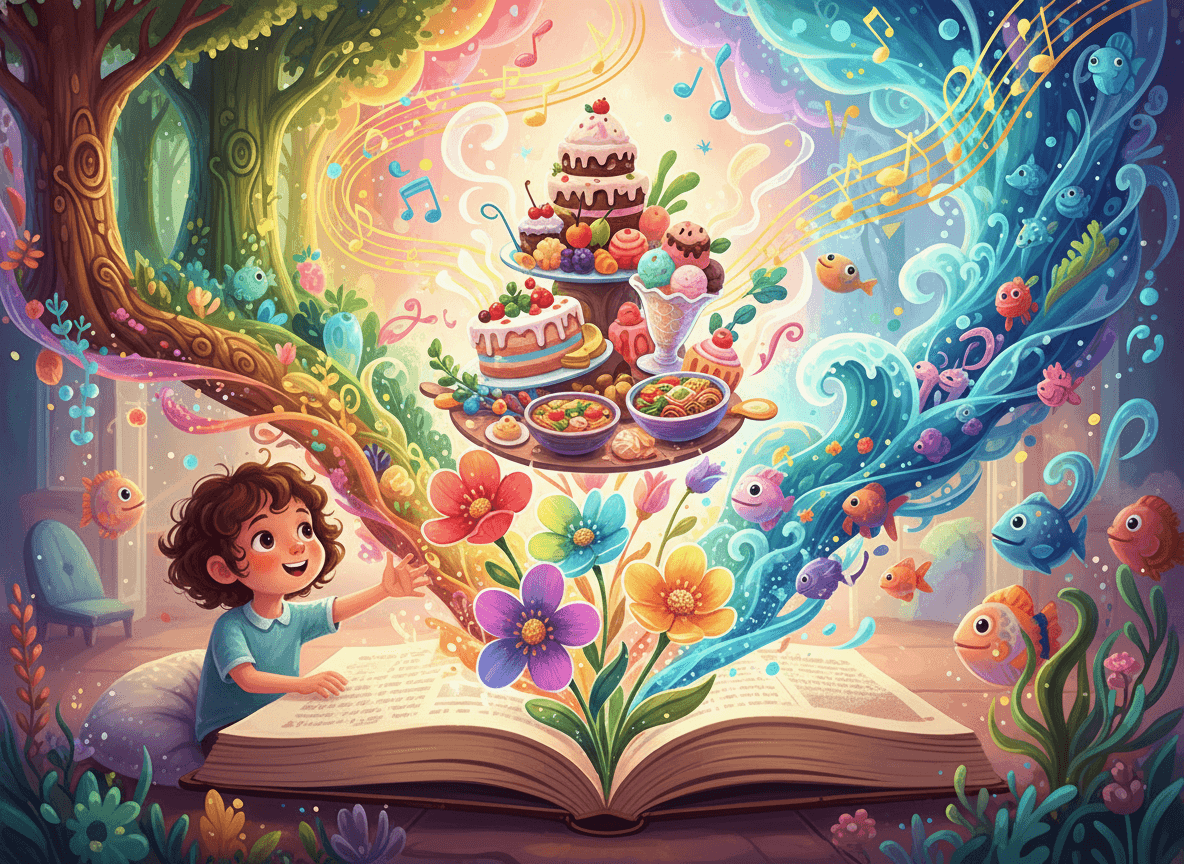
Imagery is language that creates vivid mental pictures and sensory experiences by appealing to the five senses: sight, sound, smell, taste, and touch. When authors use imagery, they describe things in ways that help readers not just understand, but actually experience - see, hear, smell, taste, or feel - what is happening on the page.
Imagery is a core element of author's craft and appears in poetry, fiction, narrative nonfiction, and descriptive writing.
The Five Types of Imagery
Sight: Visual imagery - "The maple tree blazed orange and red against the gray sky."
Sound: Auditory imagery - "The screen door creaked and snapped shut behind her."
Smell: Olfactory imagery - "The air smelled of pine needles and rain-soaked earth."
Taste: Gustatory imagery - "The lemon candy stung her tongue with sharp sweetness."
Touch: Tactile imagery - "The gravel bit into her bare feet with every step."
Bonus: Kinesthetic imagery (sometimes called a sixth type) describes a sense of movement or physical sensation in the body, like dizziness or the feeling of falling.
Literal vs. Figurative Imagery
Imagery can be either literal or figurative:
Literal imagery describes something directly with vivid sensory detail:
"The soup steamed in the bowl, filling the kitchen with the smell of thyme and garlic."
Figurative imagery uses comparison (simile, metaphor, personification) to create a sensory picture:
"Her voice was velvet wrapped around iron." (metaphor → creates a tactile/auditory image) "The pines sighed in the wind." (personification → creates an auditory image)
Both types are imagery because both create a sensory experience in the reader's mind.
Why Authors Use Imagery
Imagery is how skilled authors show rather than tell:
"It was a beautiful sunset.": "The sky melted from orange to deep rose, the last sliver of sun dissolving into the water."
"The room smelled bad.": "A sour, damp smell clung to the walls like something forgotten for years."
"She was cold and scared.": "She wrapped her arms around herself, teeth chattering, listening to the wind scratch at the window." Imagery:
-
Builds mood - dark, cold imagery creates an eerie or somber mood; bright, warm imagery creates joy
-
Creates emotional connection - readers feel alongside characters
-
Engages the imagination - a reader who can see and hear and smell a scene is far more engaged than one who is simply told facts
-
Shows character - what details a narrator notices reveals their personality and emotional state
Imagery in Poetry
Imagery is especially central to poetry, where economy of language makes every sensory detail powerful.
"I wandered lonely as a cloud / That floats on high o'er vales and hills" (Wordsworth)
The visual image of a single cloud drifting alone captures both a scene and an emotion simultaneously.
Identifying Imagery: Questions to Ask
When reading for imagery, ask:
- "What sense does this language appeal to?"
- "Can I picture, hear, smell, taste, or feel this?"
- "What emotion does this image create?"
- "Is this literal description or figurative comparison - and does it matter?"
Practice Activities
- "Sense Detectives": give students a passage and ask them to find one example of each type of imagery; they record the quote and label the sense.
- "Show, Don't Tell" revision: give students flat sentences ("The garden was pretty") and have them expand each into an image-rich description using at least two senses.
- Poetry reading: share a short, image-rich poem (e.g., by Langston Hughes, Shel Silverstein, or Mary Oliver) and have students draw what they visualize - compare drawings to discuss how imagery affects interpretation.
- Writing workshop: students write a one-paragraph description of a place (real or imaginary) using at least three different types of sensory imagery.
- Mentor text analysis: return to a passage from a class read-aloud and identify all the imagery - note which senses are most represented and discuss why.
Frequently Asked Questions
Is imagery the same as figurative language?
Imagery and figurative language overlap but are not identical. Imagery can be literal (directly describing what something looks, sounds, feels, smells, or tastes like) or figurative (using a simile, metaphor, or personification to create a sensory picture). Figurative language is always figurative; imagery can be either literal or figurative. All figurative language that creates a sensory picture is imagery, but not all imagery uses figurative language.
What are the five types of imagery?
The five types correspond to the five senses: (1) Visual imagery - what something looks like (colors, shapes, light). (2) Auditory imagery - what something sounds like (noises, music, silence). (3) Olfactory imagery - what something smells like. (4) Gustatory imagery - what something tastes like. (5) Tactile imagery - what something feels like to touch (texture, temperature, pain). Kinesthetic imagery (a sense of movement) is sometimes listed as a sixth type.
Why do writers use imagery?
Writers use imagery because it transforms abstract descriptions into concrete, sensory experiences. 'She was sad' tells a reader about an emotion but doesn't help them feel it. 'She pressed her forehead against the cold glass, watching rain blur the streetlights into smears of yellow' shows the sadness through sensory detail. Good imagery makes writing vivid, builds emotional connection, creates mood, and engages readers far more deeply than flat description.
Free Imagery Worksheets
Curriculum-aligned printable worksheets for 3rd – 5th Grade. Download free.