What Is Point of View?
Taught in US schools
Key Takeaways
- Point of view determines who is telling the story and what readers can know.
- First person uses 'I' and 'me' - the narrator is a character inside the story.
- Third person uses 'he,' 'she,' or 'they' - an outside narrator tells the story.
- Different points of view create different effects: intimacy vs. distance, limited vs. omniscient knowledge.
What Is Point of View?
Point of view (POV) is the perspective from which a story is told. It determines who the narrator is, what readers can know, and how closely readers connect to characters. Authors choose point of view carefully - it is one of the most powerful tools in a writer's toolkit.
The Main Points of View
First-Person
Pronouns: I, me, my, we, us
Who narrates: A character inside the story
What readers know: Only what the narrator sees, hears, thinks, and feels
Effect: Intimate, immediate, personal - but potentially limited or biased
Example: "I held my breath as I pushed open the door."
Third-Person Limited
Pronouns: he, she, they, his, her
Who narrates: An outside narrator closely following one character
What readers know: The thoughts and feelings of one character only
Effect: More perspective than first-person, but still focused
Example: "She wondered if she had made the right decision."
Third-Person Omniscient
Pronouns: he, she, they, his, her
Who narrates: An all-knowing outside narrator
What readers know: The thoughts and feelings of multiple characters
Effect: Broad view, but can feel less intimate
Example: "She worried, not knowing that across town, Tom was thinking the same thing."
What Grade Do Kids Learn Point of View?
3rd grade (RL.3.6): Students distinguish their own point of view from that of the narrator or characters.
4th grade (RL.4.6): Students compare and contrast the point of view from which stories are narrated.
5th grade (RL.5.6): Students describe how a narrator's or speaker's point of view influences how events are described.
Common Misconceptions
Author and narrator are the same: The author creates the story; the narrator tells it. They are not always the same person. A male author may write a female first-person narrator.
Third person is always omniscient: Many third-person stories follow only one character's thoughts (limited). Students learn to distinguish limited from omniscient by asking: "Can we read all characters' minds?"
Point of view only applies to fiction: Informational texts also have point of view - who wrote it and from what perspective. Nonfiction point-of-view analysis is a key skill in 4th and 5th grade.
Practice Activities
-
POV pronoun hunt: Find and highlight all pronouns in a passage to identify the point of view.
-
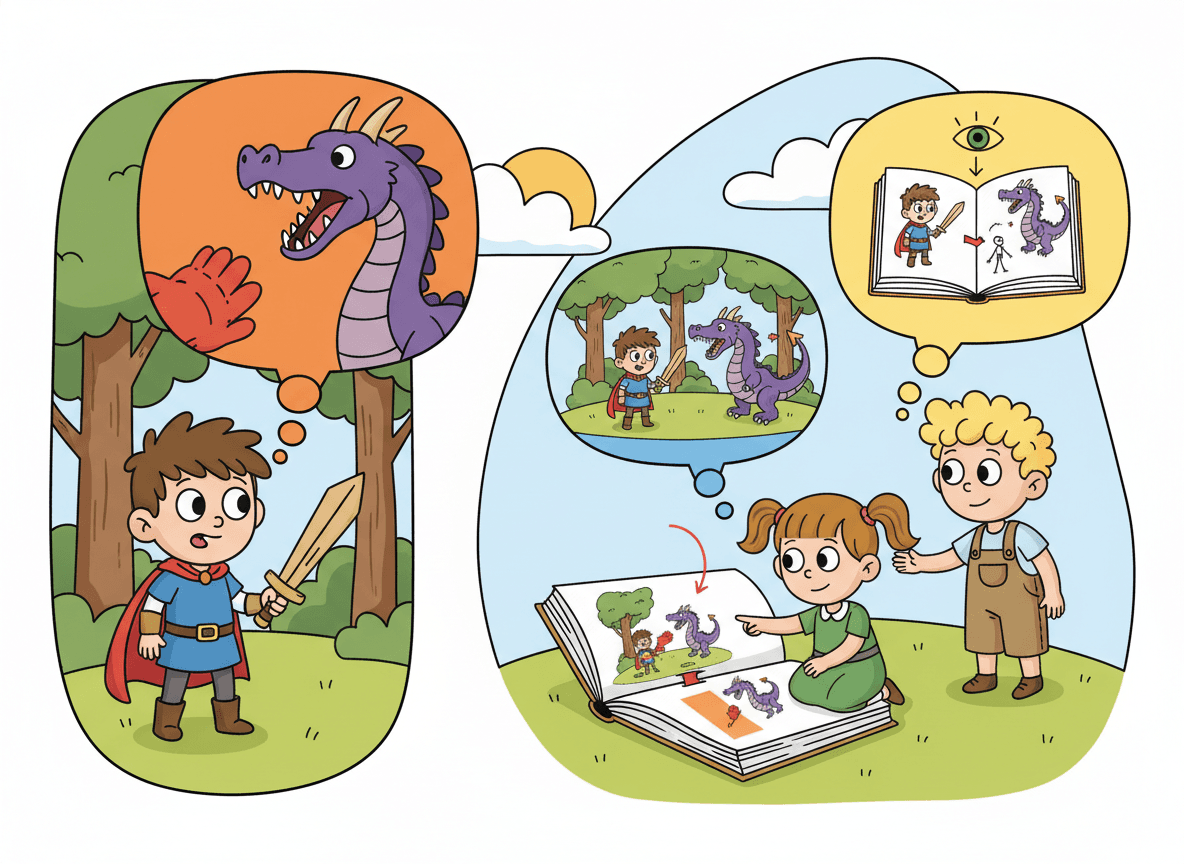
Rewrite the scene: Take a passage written in first person and rewrite it in third person (or vice versa). Discuss what changes.
-
Two-character perspectives: Read a scene from one character's POV, then write it from the other character's perspective.
-
Reliability debate: Is the narrator of a given text trustworthy? Students argue yes or no with text evidence.
-
Compare texts: Read two versions of the same event (e.g., a wolf's version and a pig's version of Three Little Pigs). Analyze how POV changes the story.
Frequently Asked Questions
What is point of view in literature?
Point of view is the perspective from which a story is narrated. It controls what readers know, feel, and understand. First-person narration puts readers inside the narrator's mind. Third-person narration observes characters from outside. The author chooses point of view deliberately to create specific effects and connection with readers.
What is first-person point of view?
In first-person point of view, the narrator is a character in the story and uses 'I,' 'me,' and 'my.' Readers experience events through the narrator's eyes and have access only to what that character sees, thinks, and feels. This creates intimacy and immediacy. Example: 'I couldn't believe what I saw when I opened the door.'
What is third-person point of view?
In third-person point of view, an outside narrator refers to characters as 'he,' 'she,' or 'they.' Third-person limited follows one character's thoughts closely. Third-person omniscient allows the narrator to know the thoughts and feelings of multiple characters. Most novels use one of these two third-person perspectives.
Why does point of view matter?
Point of view shapes what readers know and how they feel. A first-person narrator can only share their own perspective - which may be biased or incomplete. A third-person omniscient narrator can reveal what multiple characters think. Understanding point of view helps readers think critically about reliability, bias, and what information might be missing.
What is an unreliable narrator?
An unreliable narrator is a first-person narrator whose account the reader cannot fully trust - because the narrator is too young, is lying, is mentally compromised, or is too emotionally involved to see clearly. In upper elementary, students begin to recognize that what a narrator says may not be the whole truth of the story.
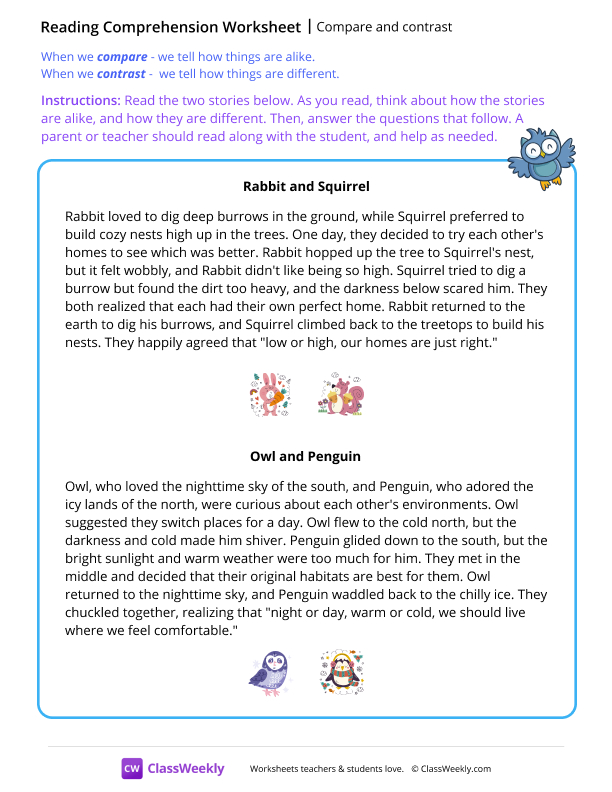
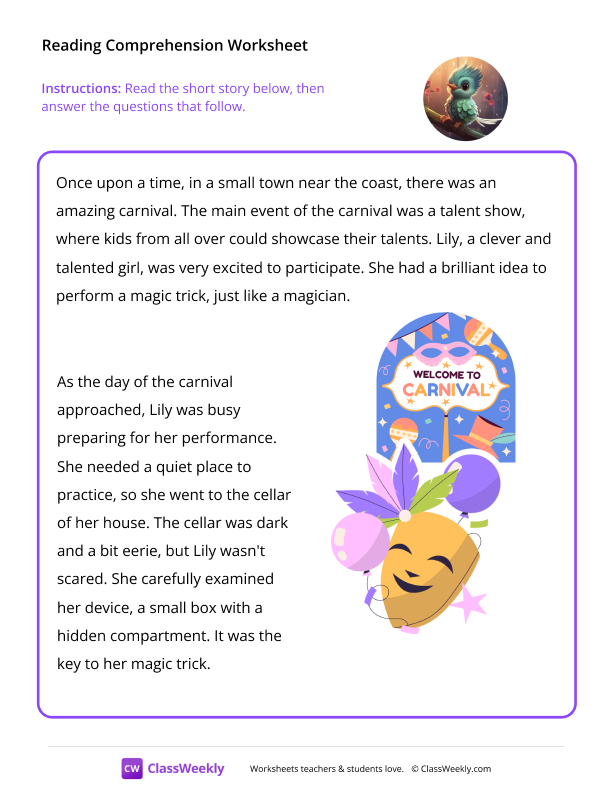
Free Point of View Worksheets
Curriculum-aligned printable worksheets for 3rd – 5th Grade. Download free.