What Is Project-Based Learning?
Taught in US schools
Key Takeaways
- PBL centers learning around a driving question that is open-ended, relevant, and requires sustained investigation to answer.
- True PBL gives students voice and choice in how they investigate and what they create - it is different from simply completing a project.
- PBL builds not only content knowledge but also collaboration, critical thinking, communication, and real-world problem-solving skills.
What Is Project-Based Learning?
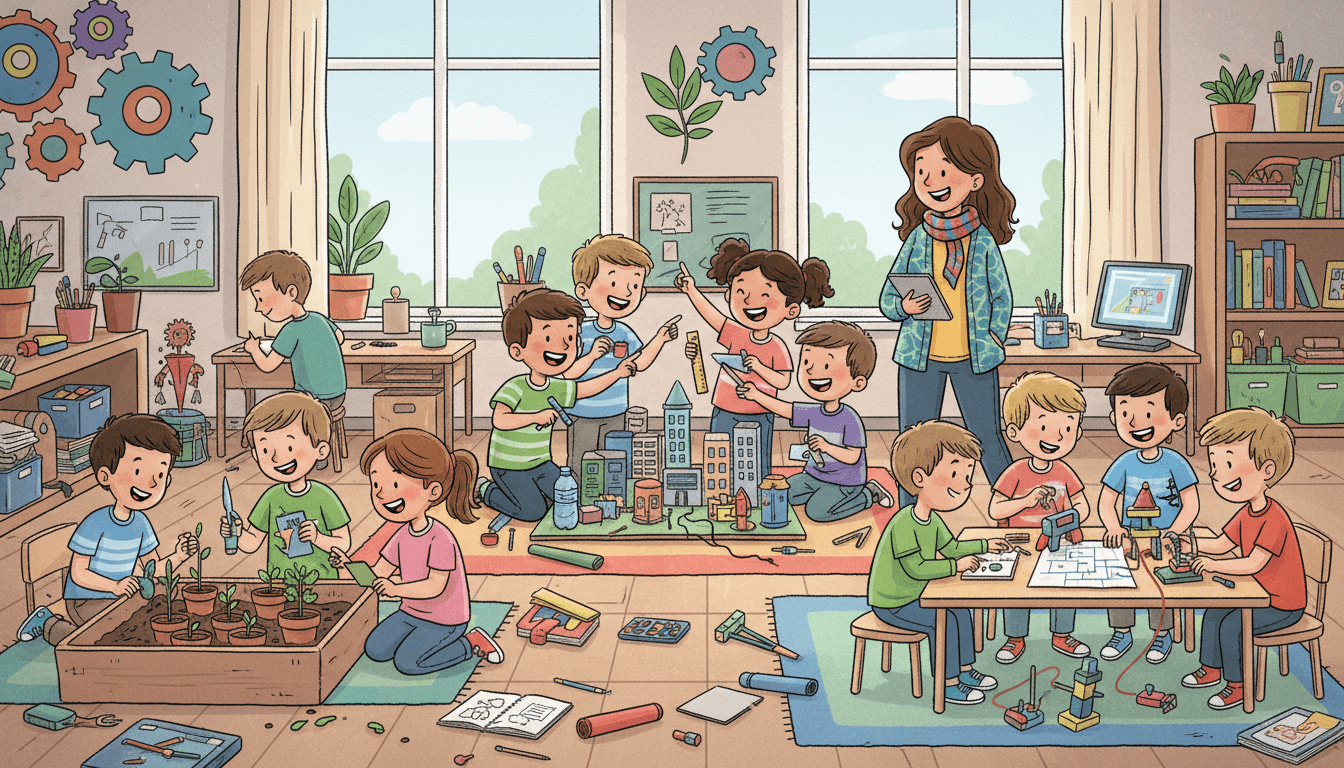
Project-Based Learning (PBL) is an instructional approach where students learn by working on a real, meaningful challenge over an extended period of time - days, weeks, or longer. Rather than learning content and then applying it in a project, students discover content through the process of investigating a genuine question or problem.
PBL builds deep understanding alongside the collaboration, communication, and critical-thinking skills students will need throughout their lives.
PBL vs. "Doing a Project"
This is the most important distinction:
Assigned at the end of a unit: The unit IS the project
Demonstrates what students already know: Students discover new knowledge through inquiry
Usually completed alone: Typically collaborative
Teacher-directed process: Student voice and choice in the approach
Narrow, fact-based output: Open-ended, real-world product
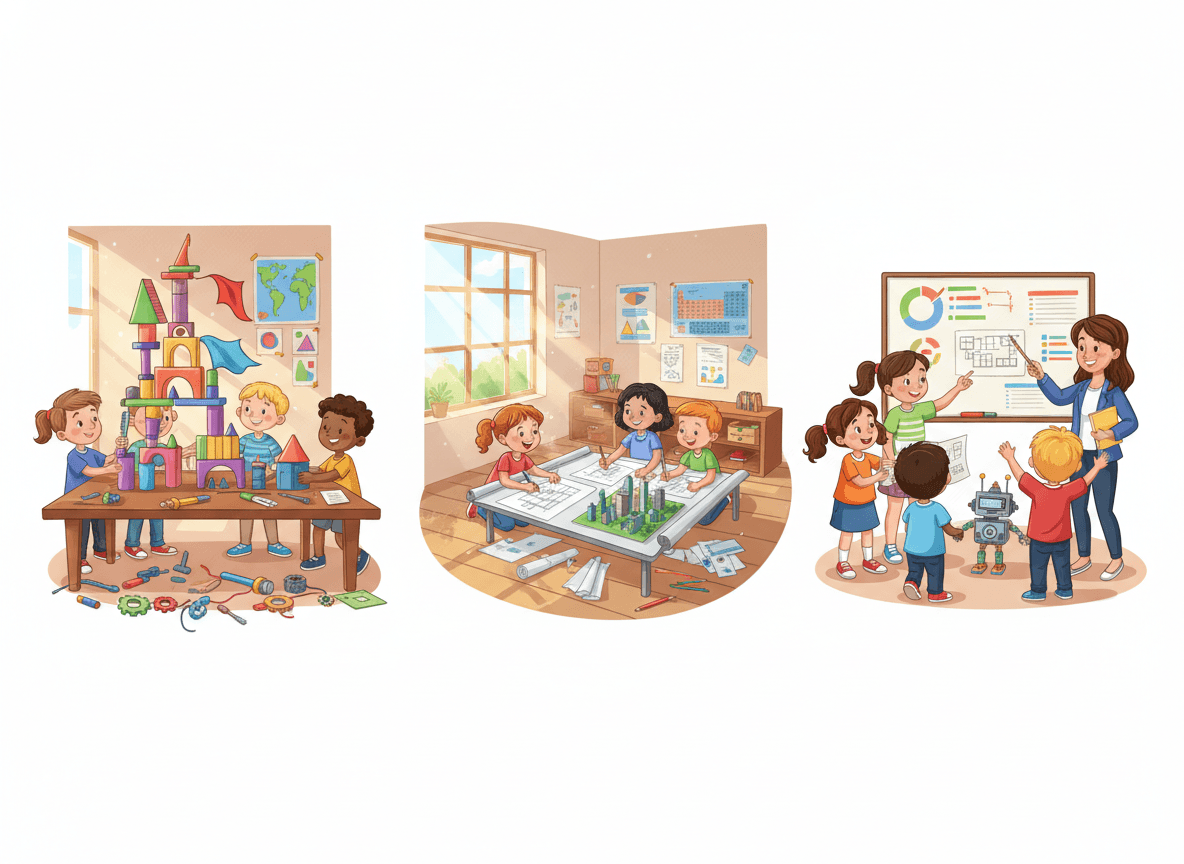
Example of the difference: Having students make a poster about rainforests after learning about them is a traditional project. Having students investigate the question "How can our class take action to protect a local habitat?" - with research, planning, and a real presentation to a community group - is PBL.
Key Elements of PBL
The Buck Institute for Education (PBLWorks) identifies these essential elements:
Driving Question: An open-ended question that guides the entire investigation
Sustained Inquiry: Students ask questions, find answers, and generate new questions over time
Authenticity: The problem is real and the solution matters to someone beyond the classroom
Student Voice and Choice: Students make decisions about how to approach the problem
Reflection: Students regularly pause to think about what they are learning and how
Critique and Revision: Work is reviewed, given feedback, and improved
Public Product: Students share their learning with an audience beyond the teacher
Examples of Elementary PBL Projects
K–1: How can we make our playground safer for everyone? - Presentation to the principal with improvement ideas
2nd: How can we help new families feel welcome at our school? - Welcome guide or video for new students
3rd: How does our local waterway affect our community? - Water quality report presented to a community group
4th: How can we design a community garden that works for our school? - Blueprint and proposal submitted to the school board
5th: How can we reduce single-use plastic waste in our school? - Action plan and presentation to student council
Why PBL Works
Research on PBL shows it improves:
-
Long-term retention of content knowledge
-
Transfer - applying learning to new situations
-
Motivation and engagement, especially for students who struggle with traditional instruction
-
Equity - PBL's open-ended structure allows students of all ability levels to contribute meaningfully
PBL also develops the "Four Cs" of 21st-century learning: Critical Thinking, Collaboration, Communication, and Creativity.
Practice Activities
- Start small: try a mini-PBL lasting one week around a community question relevant to your current unit.
- Craft a driving question as a class - evaluate whether it is open-ended, authentic, and inquiry-worthy.
- Teach students the critique protocol: give warm feedback (what works) and cool feedback (questions and suggestions) on each other's work.
- Build in a public presentation: even a hallway display or a visit from another class counts as a real audience.
- Use a project planning wall with sticky notes for each phase - students can see the whole arc of the project and track their progress.
Frequently Asked Questions
What is the difference between doing a project and Project-Based Learning?
A traditional project is usually a task assigned at the end of a unit to demonstrate what students already learned. In PBL, the project IS the learning - students investigate to find answers they do not yet know. The inquiry drives the learning rather than following it.
What is a driving question?
A driving question is the open-ended, authentic question that anchors a PBL unit. It should be genuinely interesting, require research and problem-solving to answer, and connect to real-world context. Example: How can we reduce waste in our school cafeteria? A good driving question cannot be answered with a simple Google search.
How is PBL assessed?
PBL is typically assessed through rubrics that evaluate the final product or presentation, process work (research notes, drafts, collaboration), and individual reflection. Teachers also conduct formative check-ins during the project to provide feedback and redirect students.
Free Project-Based Learning Worksheets
Curriculum-aligned printable worksheets for Kindergarten – 5th Grade. Download free.