What Are STEM and STEAM?
Taught in US schools
Key Takeaways
- STEM stands for Science, Technology, Engineering, and Mathematics - an integrated approach to learning through real-world problem-solving.
- STEAM adds Arts to emphasize creativity, design thinking, and communication alongside technical skills.
- The engineering design process - ask, research, imagine, plan, create, test, improve - is the central method in STEM education.
What Are STEM and STEAM?
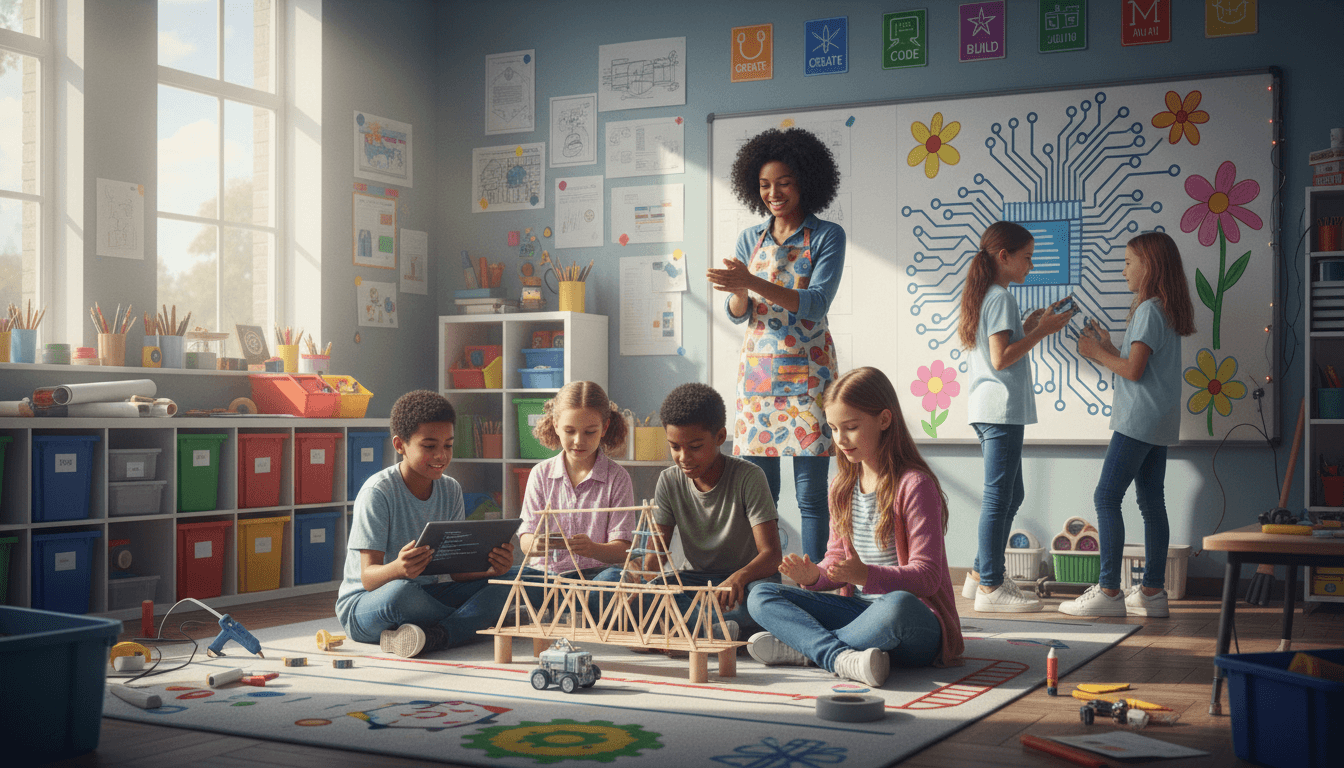
STEM stands for Science, Technology, Engineering, and Mathematics - and it represents an approach to education that integrates these four disciplines rather than teaching them in isolation. Instead of learning science facts in one room and math procedures in another, STEM asks students to apply all four areas together to solve real-world problems.
STEAM extends this by adding Arts - recognizing that creativity, design, and visual communication are inseparable from innovation.
Why Integration Matters
In the real world, engineers use math. Scientists use technology. Programmers use logic and design. A doctor uses biology, chemistry, statistics, and communication skills. No real-world problem fits neatly into one subject.
STEM education is designed to reflect this reality by presenting students with authentic challenges that require drawing on multiple disciplines simultaneously.
The Engineering Design Process
At the heart of STEM is the Engineering Design Process - a repeatable cycle of thinking and making:
Ask: Define the problem: What do we need to solve? What are the constraints?
Research: Gather information about the problem and existing solutions
Imagine: Brainstorm multiple possible solutions without judging any of them
Plan: Choose the most promising idea, sketch a design, list needed materials
Create: Build a prototype of the solution
Test: Test the prototype against the original criteria
Improve: Use test results to redesign and try again
The key insight: Failure is part of the process. Engineers rarely succeed on the first try. Each test reveals new information that makes the next attempt better.
STEM in the Elementary Classroom
Elementary STEM looks different from a lab or tech company - but the thinking is the same:
-
Kindergarten: Build the tallest tower from marshmallows and toothpicks
-
1st–2nd grade: Design a bridge that holds the most weight using index cards and tape
-
3rd grade: Build a device that slows a falling egg (exploring gravity and force)
-
4th grade: Design and test a water filtration system
-
5th grade: Code a simple program that solves a defined problem
The Arts in STEAM
Adding Arts to STEM creates STEAM, which recognizes that:
- Design matters - a solution must be communicated clearly (technical drawing, infographic, presentation)
- Creativity fuels innovation - some of the greatest inventions came from artists and designers thinking like engineers
- Expression and storytelling make science accessible to everyone
STEAM projects often include creating a model, poster, video, or performance to present the solution.
21st-Century Skills
STEM and STEAM develop skills that employers consistently rank as most important:
-
Critical thinking: analyzing problems from multiple angles
-
Collaboration: working in teams toward a shared goal
-
Communication: explaining ideas clearly in writing, speaking, and visuals
-
Creativity: generating novel solutions and approaches
Practice Activities
- Complete a classic engineering challenge: build the tallest structure using only spaghetti and marshmallows in 15 minutes.
- Walk through the design process steps using a simple problem: design a container that keeps an ice cube from melting.
- Do a STEAM gallery walk: display student-made models and have students write feedback on sticky notes.
- Invite a local scientist, engineer, or coder to speak about how they use STEM skills in their daily work.
- Complete a coding activity (using Scratch or Code.org) and debrief: how did the engineering design process apply to writing code?

Frequently Asked Questions
What is the difference between STEM and STEAM?
STEM focuses on the technical disciplines of science, technology, engineering, and math. STEAM adds Arts, recognizing that creativity, design, and communication are equally essential 21st-century skills. A STEAM project might involve designing a structure AND creating a blueprint or presentation to communicate the solution.
What is the engineering design process?
The engineering design process is a cycle of steps used to solve problems: Ask (define the problem), Research (gather information), Imagine (brainstorm solutions), Plan (choose the best idea and sketch it), Create (build a prototype), Test (see if it works), Improve (redesign based on results). It encourages iteration - trying again after failure.
Why is STEM important in elementary school?
Early STEM experiences build curiosity, problem-solving skills, and growth mindset. Research shows that students who engage in hands-on STEM in elementary school are more likely to pursue STEM careers and develop stronger math and science skills. STEM also builds collaboration and communication skills essential across all careers.
Free STEM and STEAM Worksheets
Curriculum-aligned printable worksheets for Kindergarten – 5th Grade. Download free.