What Are Learning Objectives?
Taught in US schools

Key Takeaways
- Learning objectives state what students will know or be able to do by the end of a lesson - not what the teacher will do.
- Effective objectives use action verbs (identify, explain, compare, write) that describe observable, measurable behavior.
- Student-facing 'I can' statements translate teacher objectives into language students can understand and own.
- Objectives align instruction and assessment: if the objective is to compare, the assessment must ask students to compare.
What Are Learning Objectives?
Learning objectives are specific, measurable statements of what students will know or be able to do by the end of a lesson or unit. They answer the fundamental question of instruction: What exactly do I want students to learn today?
Well-written learning objectives drive every decision in a lesson - what to teach, how to teach it, how long to spend, and how to know whether students learned it.
Objectives vs. Standards vs. Activities
These three things are often confused:
Standard: Broad, grade-level expectation
Learning objective: Specific, lesson-level target
Activity: How students will practice The standard is the destination. The objective is the lesson-level step. The activity is how students will practice toward the objective.
How to Write an Effective Learning Objective
Structure: Students will be able to + [action verb] + [content] + [conditions/criteria]
Action verbs by Bloom's level:
-
Remember: identify, list, name, recall, define
-
Understand: explain, describe, summarize, classify
-
Apply: use, solve, demonstrate, show
-
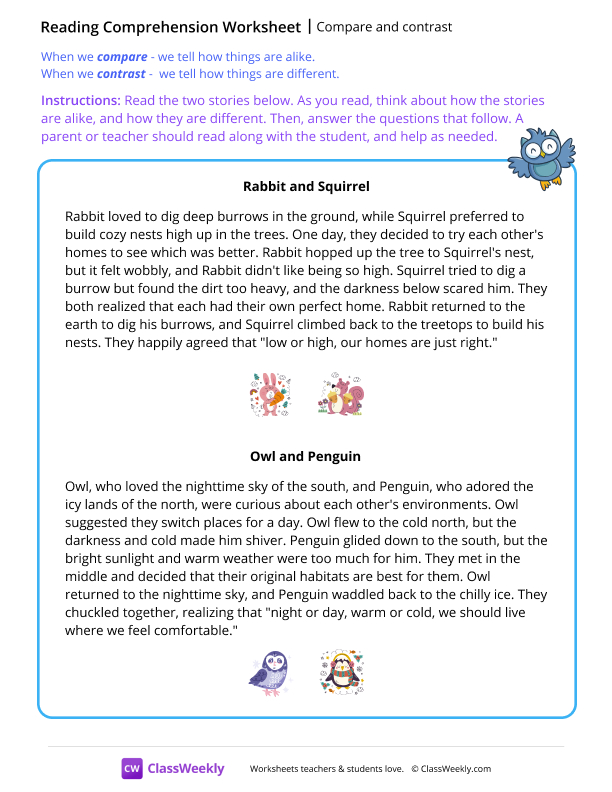
Analyze: compare, contrast, examine, distinguish
-
Evaluate: justify, argue, defend, assess
-
Create: write, design, construct, compose
Weak vs. Strong:
Understand fractions: Compare two fractions using <, >, or =
Learn about poetry: Identify rhyme scheme in a 4-line poem
Know about character: Describe a character trait with text evidence
Student-Facing "I Can" Statements
Teacher objectives become "I can" statements for students:
Teacher objective: Students will be able to identify the central message of a fable.
"I can" statement: I can find the lesson (central message) in a fable and explain it in my own words.
"I can" statements are:
- Posted visibly in the classroom
- Referenced at the start of lessons ("Today's goal is...")
- Checked at the end ("Can you do this? Show me...")
- Written in language appropriate to the grade level
Aligning Objectives, Instruction, and Assessment
The principle of alignment: the objective, the instruction, and the assessment must all match.
If the objective is to compare and contrast two characters, then:
- Instruction must involve modeling how to compare
- Practice must involve students comparing characters
- Assessment must ask students to compare (not just identify)
Misalignment is common: teaching "compare" but assessing "identify" inflates or deflates perceived learning.
Common Misconceptions
"We will read chapter 3" is a learning objective: This is an activity, not an objective. It describes what students will do, not what they will learn. The objective behind reading chapter 3 might be: "Students will be able to identify how the conflict in chapter 3 develops the main character." Activities serve objectives; they are not the same thing.
Objectives limit creativity: Clear objectives actually free teachers to be creative about HOW they teach, because the destination is settled. Any engaging, relevant activity that leads students to the objective belongs in the lesson.
Students don't need to know the objective: Research on student metacognition shows that students who know what they're working toward learn more efficiently, stay more focused, and can better self-assess. Sharing the objective is not bureaucratic - it's good pedagogy.
Practice Activities
-
Objective posting ritual: Post the "I can" statement on the board; students read it chorally at the start of class and give a thumbs up/down at the end to self-assess.
-
Objective sort: Give teachers a set of 10 statements - some are objectives, some are activities, some are standards - and sort them into the right categories.
-
Exit ticket alignment: Write an exit ticket that directly assesses the stated objective - this keeps instruction and assessment aligned.
-
Student restatement: Ask a student to restate the day's objective in their own words before independent practice - reveals whether students understand what they're aiming for.
-
Unit objective ladder: Map a unit's daily objectives in a ladder showing how they build toward the final standard - helps students see the progression.

Frequently Asked Questions
What is a learning objective?
A learning objective is a precise statement of what students will know or be able to do as a result of instruction. A well-written objective specifies the observable behavior (what the student will do), the content (what they will know or do it with), and often the conditions or criteria for success. Example: 'Students will be able to identify the main idea and two supporting details in a nonfiction paragraph.' Objectives guide what the teacher teaches, what students practice, and how learning is assessed.
What is the difference between a learning objective and a standard?
A standard is a broad statement of what students should know across a grade level or course. A learning objective is a specific, lesson-level target derived from a standard. Standards describe the destination; objectives describe the daily steps. For example, CCSS RL.3.2 ('Recount stories and determine the central message') is a standard that generates multiple objectives: 'Students will retell key events in sequence,' 'Students will identify the central message,' 'Students will explain how the central message is supported by story events.' Multiple lessons and objectives serve one standard.
What are 'I can' statements?
'I can' statements are student-facing learning objectives written in first person: 'I can identify the main idea of a paragraph.' They translate teacher language into student language, making the learning goal accessible and personal. When students know what they are working toward, they can monitor their own progress and understand the purpose of activities. 'I can' statements are posted in the classroom and referenced at the start and end of lessons. They empower students to take ownership of their learning.
How do you write a good learning objective?
Good learning objectives use Bloom's Taxonomy action verbs that describe observable, measurable behavior - not vague words like 'understand' or 'appreciate.' Structure: Students will be able to + [action verb] + [content] + [conditions/criteria]. Examples of weak vs. strong objectives: Weak: 'Students will understand fractions.' Strong: 'Students will be able to identify equivalent fractions using a number line.' Weak: 'Students will learn about the American Revolution.' Strong: 'Students will be able to explain two causes of the American Revolution using text evidence.' The action verb determines what counts as evidence of learning.
How many objectives should a lesson have?
Most effective lessons have one to three focused objectives. More than three often indicates the lesson is too broad to teach effectively in one sitting. A focused objective helps the teacher make decisions: if an activity doesn't serve the objective, it doesn't belong in the lesson. For K-2 lessons, one clearly stated objective is typically appropriate. For grades 3-5 with more complex content, two related objectives (a content objective and a language objective, for example) can be effective. The number matters less than the clarity and achievability of the objectives within the lesson's time frame.
Free Learning Objectives Worksheets
Curriculum-aligned printable worksheets for Kindergarten – 5th Grade. Download free.