What Is Renewable Energy?
Taught in US schools
Key Takeaways
- Renewable energy sources - solar, wind, hydropower, geothermal, and biomass - are naturally replenished and will not run out on human timescales.
- Nonrenewable energy sources - coal, oil, and natural gas (fossil fuels) - take millions of years to form and release greenhouse gases when burned.
- Reducing energy use (conservation) is as important as switching to renewable sources because it lessens demand on all energy systems.
What Is Renewable Energy?
Renewable energy comes from sources that are naturally replenished - meaning they are continuously restored by nature and will not run out on a human timescale. Nonrenewable energy comes from sources that exist in limited quantities and cannot be replaced once used.
Understanding this difference is one of the most important science and social studies concepts students encounter in the upper elementary grades.
Renewable Energy Sources
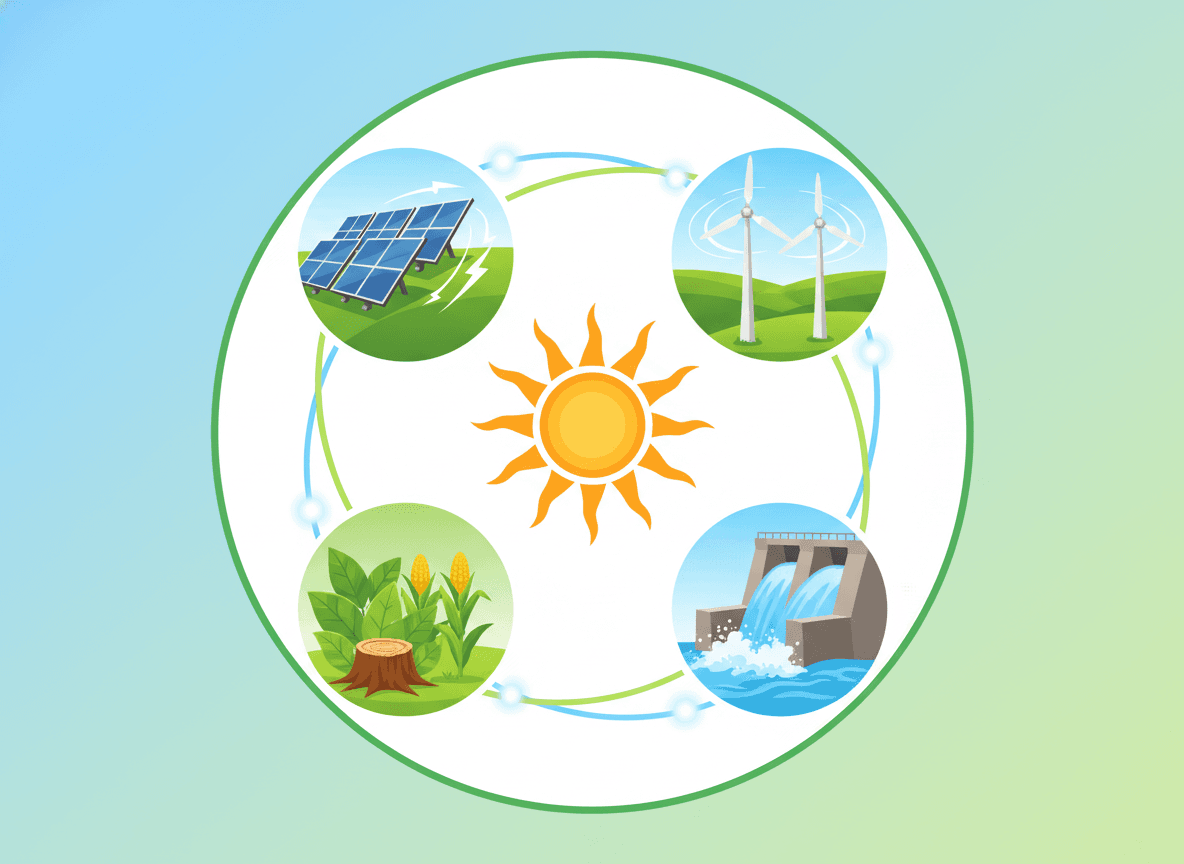
Solar: Solar panels capture energy from sunlight and convert it to electricity - Rooftop solar panels, solar-powered calculators
Wind: Wind turbines spin when wind blows, generating electricity - Wind farms on hills and offshore
Hydropower: Moving water spins turbines in dams - Hoover Dam, Niagara Falls power plants
Geothermal: Heat from inside Earth (volcanoes, geysers) is captured - Heating systems in Iceland, geothermal plants
Biomass: Organic material (wood, crops, waste) is burned or converted - Wood-burning stoves, biofuel for vehicles All renewable sources are considered cleaner because they produce little to no greenhouse gas emissions during operation.
Nonrenewable Energy Sources
Fossil fuels formed millions of years ago from the remains of ancient organisms compressed underground.
Coal: Burned in power plants to generate electricity - Releases CO2 and other pollutants
****Oil (Petroleum): Refined into gasoline, diesel, jet fuel - Spills damage ecosystems; releases CO2
Natural Gas: Burned for heating and cooking - Cleaner than coal, but still a fossil fuel; methane leaks possible Once burned, these fuels are gone forever. At current rates of use, known oil and gas reserves could be depleted within decades to centuries.
Environmental Impact
Burning fossil fuels releases carbon dioxide (CO2) and other greenhouse gases into the atmosphere. These gases trap heat, contributing to climate change - a long-term shift in global temperatures and weather patterns that affects ecosystems, sea levels, and the frequency of extreme weather.
Renewable energy produces far fewer emissions, which is why scientists and governments encourage the transition to renewables.
Conservation: Using Less Energy
Energy conservation means reducing energy use through habits and technology:
- Turning off lights when leaving a room
- Using energy-efficient appliances
- Insulating buildings so less heat escapes
- Walking or biking instead of driving
Conservation reduces pressure on all energy sources - renewable and nonrenewable alike.
Practice Activities
- Create a T-chart listing renewable and nonrenewable energy sources, then add pros and cons for each.
- Research one renewable energy source and create a poster or slide explaining how it works and where it is used.
- Calculate the school's energy use for a week and brainstorm specific ways to reduce it (conservation challenge).
- Watch a short documentary clip about renewable energy and identify at least two arguments for switching away from fossil fuels.
- Design an ideal energy system for a fictional town - students choose the mix of energy sources and justify their decisions.
Frequently Asked Questions
What makes an energy source renewable?
A renewable energy source is one that is replenished by natural processes faster than it is used up. Sunlight keeps shining, wind keeps blowing, and rivers keep flowing - so these sources are considered renewable on human timescales.
What are fossil fuels and why are they nonrenewable?
Fossil fuels (coal, oil, natural gas) formed from the remains of ancient plants and animals compressed underground over millions of years. Once we use them up, they cannot be replaced in any practical timeframe - hence nonrenewable.
What are greenhouse gases and why do they matter?
Greenhouse gases (mainly carbon dioxide and methane) trap heat in Earth's atmosphere, similar to how a greenhouse traps heat. When fossil fuels are burned, they release CO2. Higher concentrations of greenhouse gases lead to a warmer climate, which scientists link to more extreme weather events, rising sea levels, and ecosystem disruption.
Free Renewable and Nonrenewable Energy Worksheets
Curriculum-aligned printable worksheets for 4th – 5th Grade. Download free.


