What Is a Sentence Fragment?
Taught in US schools

Key Takeaways
- A sentence fragment is missing a subject, a predicate (verb), or is a dependent clause left alone without an independent clause.
- Fragments can be fixed by adding the missing part or by attaching the fragment to a nearby complete sentence.
- Some fragments are used intentionally in creative and persuasive writing for effect - but they are errors in formal academic writing.
What Is a Sentence Fragment?
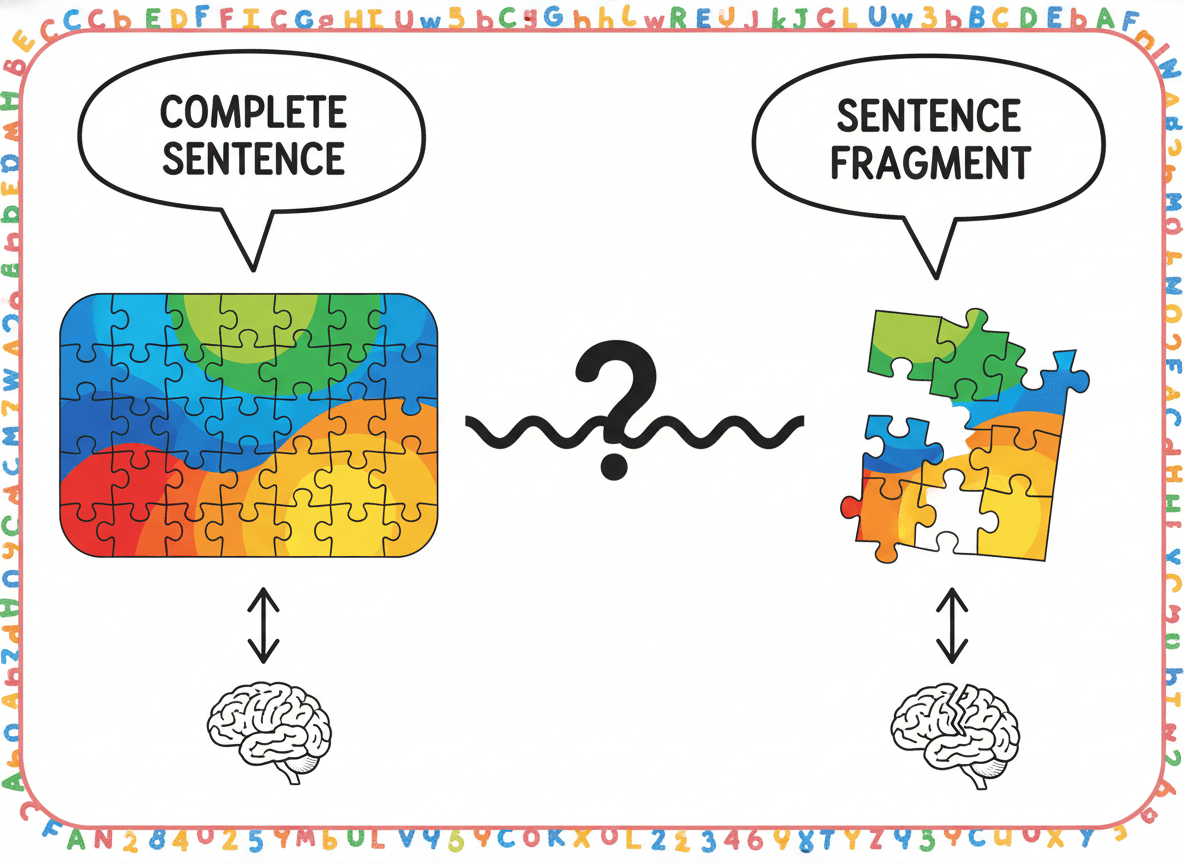
A sentence fragment is a group of words that is punctuated as a sentence (starts with a capital letter, ends with a period or other end mark) but is not a complete sentence because it is missing a required element.
A complete sentence must have:
- A subject - who or what the sentence is about
- A predicate - a verb that tells what the subject does or is
- A complete thought - it must make sense on its own
If any of these is missing, the result is a fragment.
Types of Sentence Fragments
1. Missing Subject
The fragment has a verb but no subject - we do not know who or what is performing the action.
Fragment: Ran down the street as fast as possible.
Fixed: The boy ran down the street as fast as possible.
2. Missing Predicate (Verb)
The fragment has a subject but no verb - it never tells us what the subject does or is.
Fragment: The big brown dog with the spotted ears.
Fixed: The big brown dog with the spotted ears barked all night.
3. Missing Both Subject and Predicate
A phrase with no subject and no verb - often a prepositional phrase or description standing alone.
Fragment: After the long rainy weekend.
Fixed: After the long rainy weekend, we were glad to be outside.
4. Dependent Clause Fragment
This is one of the most common fragment types in student writing. A dependent clause has a subject and a verb, but it begins with a subordinating conjunction (because, although, when, since, if, after, before, while, unless), making it dependent on a main clause to complete the meaning.
Fragment: Because it was raining.
Fixed: We stayed inside because it was raining.
Tip: If a sentence starts with because, although, when, or since, make sure it connects to a main clause - do not leave it alone.
How to Fix a Fragment
Add the missing part: Insert the subject or verb - Barked all night. → The dog barked all night.
Attach to neighbor: Connect the fragment to the sentence beside it - We stayed inside. Because it was raining. → We stayed inside because it was raining.
Intentional Fragments in Writing
Skilled authors sometimes choose to use fragments for deliberate effect:
-
Emphasis: She had one option. Surrender.
-
Pacing/drama: He opened the door. Silence. Nothing.
-
Dialogue/internal thought: Really? That was his answer?
The key distinction: an accidental fragment is an error. An intentional fragment is a stylistic choice made by a writer who fully understands the rule. Students in 3rd–5th grade first learn the rule, then can learn when and why to break it.
Practice Activities
- Give students a list of word groups - half complete sentences, half fragments - and have them label each one and explain what is missing.
- Fragment fix-up: students receive five fragments and must rewrite each as a complete sentence.
- Highlight dependent clause fragments starting with because and when in sample paragraphs.
- During peer editing, students underline every sentence in a partner's draft and circle any that feel incomplete.
- Read published writing and find two or three intentional fragments - discuss how the author uses them for effect.
Frequently Asked Questions
What makes a complete sentence?
A complete sentence needs three things: a subject (who or what the sentence is about), a predicate (a verb that tells what the subject does or is), and a complete thought. If any of these is missing, the group of words is a fragment.
How do I fix a sentence fragment?
You can fix a fragment two ways: (1) add the missing part (a subject, a verb, or both) to complete the thought, or (2) attach the fragment to the sentence before or after it that it belongs with.
Can fragments be correct in some types of writing?
Yes. Professional and creative writers sometimes use fragments intentionally for stylistic effect - for emphasis, rhythm, or spoken-voice feel. Example: She had one choice. Run. But in academic and formal writing, fragments are considered errors.
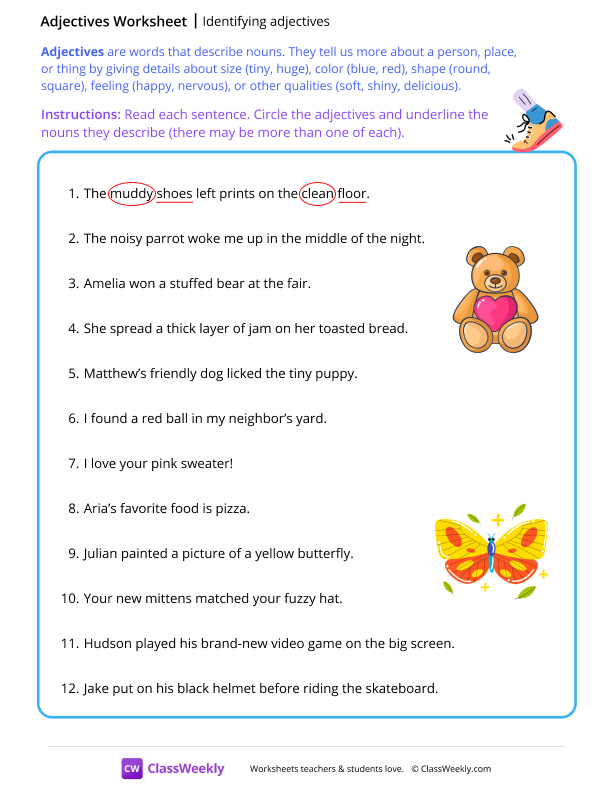
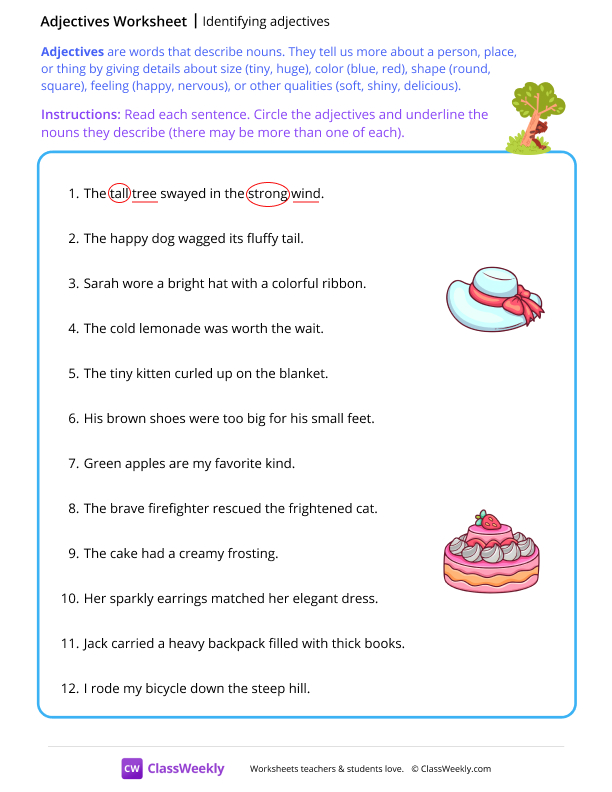
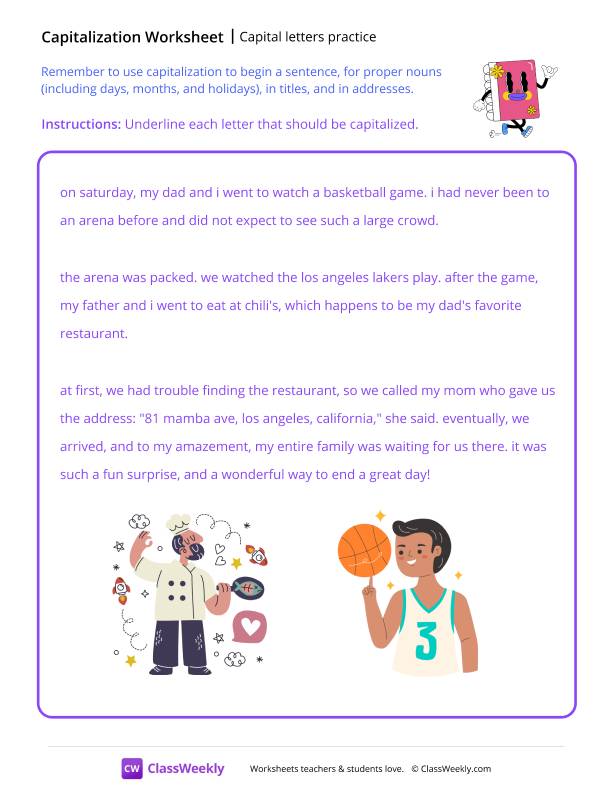
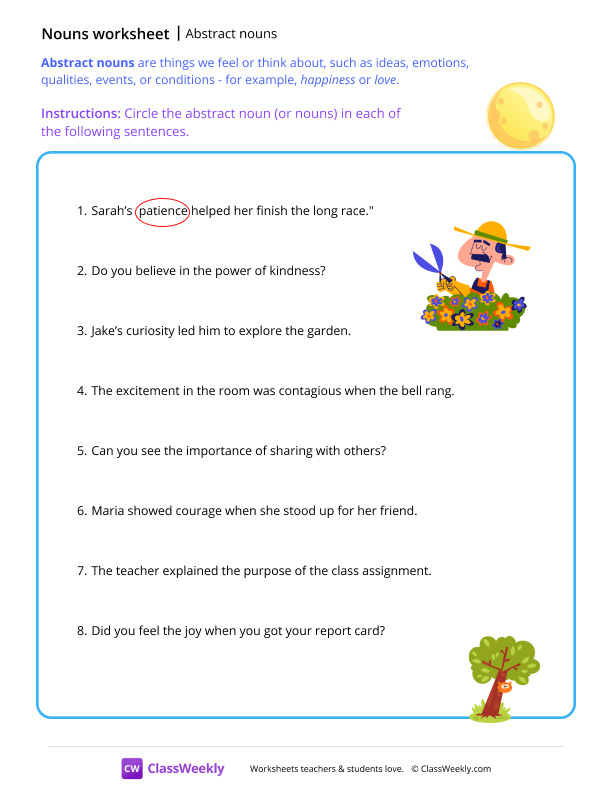
Free Sentence Fragment Worksheets
Curriculum-aligned printable worksheets for 3rd – 5th Grade. Download free.