What Is Democracy?
Taught in US schools

Key Takeaways
- Democracy is a system of government where citizens participate in decision-making, most often through voting for representatives.
- The United States is a representative democracy (democratic republic) - citizens vote for leaders who then make laws on their behalf.
- The right to vote has not always been equal - women gained the right to vote with the 19th Amendment (1920), and the Voting Rights Act of 1965 protected the voting rights of African Americans.
What Is Democracy?
Democracy is a system of government in which the people have a say in the decisions that govern their lives, most commonly by voting. The word comes from the Greek words demos (people) and kratos (rule) - meaning "rule by the people."
Democracy is built on the idea that government authority comes from the consent of the governed - the citizens.
Types of Democracy
Direct Democracy
In a direct democracy, citizens vote directly on every law and decision themselves. The ancient city-state of Athens practiced an early form of direct democracy. Today, ballot measures (when voters in a state vote directly on a law) are an example of direct democracy in action.
Representative Democracy (Democratic Republic)
In a representative democracy, citizens vote to elect representatives who then make laws and decisions on behalf of their constituents.
The United States is a representative democracy - also called a democratic republic. Citizens elect:
- Members of the House of Representatives and Senate (Congress) - who make federal laws
- A President - who leads the executive branch
- State governors, local mayors, and other officials
How Elections Work in the United States
Federal: President, Senators, Representatives
State: Governor, State legislators
Local: Mayor, City council, School board To vote in federal elections, U.S. citizens must be 18 years old. Voters register in their state and cast ballots on Election Day (the first Tuesday after the first Monday in November for federal elections).
The History of Voting Rights
The right to vote has expanded over time through amendments and legislation:
Constitution ratified: 1788 - Only white men with property could vote in most states
15th Amendment: 1870 - Prohibited denying vote based on race or former enslavement
19th Amendment: 1920 - Gave women the right to vote
Voting Rights Act: 1965 - Prohibited discriminatory voting practices targeting Black voters
26th Amendment: 1971 - Lowered voting age to 18
Key Figures in Expanding Voting Rights
-
Susan B. Anthony - led the women's suffrage movement for decades
-
Elizabeth Cady Stanton - co-organized the Seneca Falls Convention (1848)
-
John Lewis - Civil Rights leader and congressman who was beaten at Selma, Alabama while marching for voting rights
-
Fannie Lou Hamer - voting rights activist in Mississippi
Connecting to the Classroom
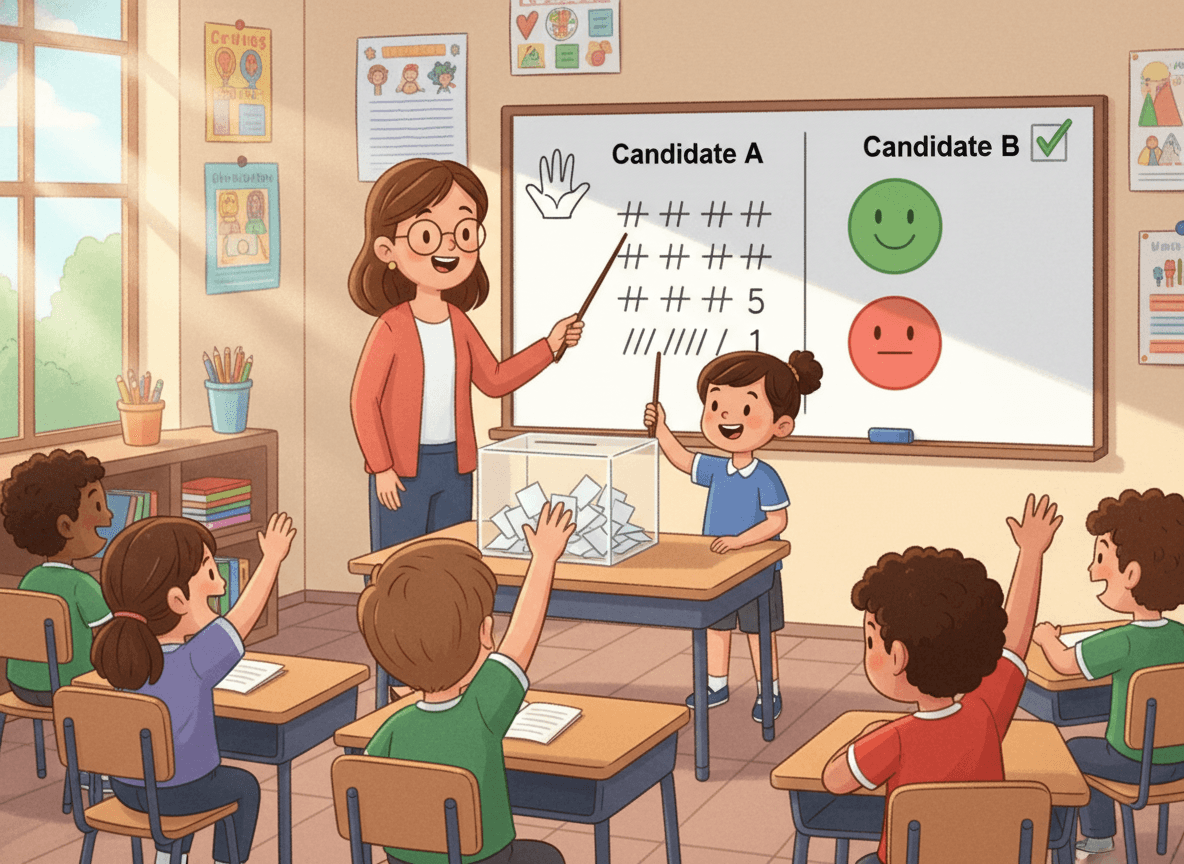
Democracy is not just a government concept - it shows up in everyday school life:
-
Class elections (voting for class president or representatives)
-
Classroom votes on activities or decisions
-
Student councils - representatives chosen to speak for the student body
These experiences give students practice in the processes that democracy depends on: deliberating, voting, and accepting the outcome.
Practice Activities
- Hold a class election for a classroom decision (book choice, activity preference) - use a secret ballot and discuss the process.
- Create a Venn diagram comparing direct democracy vs. representative democracy.
- Research one voting rights amendment - who it helped, who fought for it, and what obstacles they faced.
- Timeline of voting rights: mark each expansion of voting rights from 1788 to 1971 and discuss who was included or excluded at each stage.
- Read about a youth activist involved in civics today - how can young people participate in democracy before age 18?
Frequently Asked Questions
What is the difference between direct democracy and representative democracy?
In a direct democracy, citizens vote directly on every law and decision - like a class voting on every single classroom rule. In a representative democracy, citizens elect representatives who vote on laws on their behalf. The United States is a representative democracy (also called a democratic republic) - voters elect members of Congress, a president, and state and local officials to govern for them.
When did women get the right to vote?
The 19th Amendment to the U.S. Constitution, ratified on August 18, 1920, gave women the right to vote. This came after decades of campaigning by the women's suffrage movement, led by activists including Susan B. Anthony and Elizabeth Cady Stanton. However, many women of color continued to face obstacles to voting until the Voting Rights Act of 1965.
What is the Voting Rights Act of 1965?
The Voting Rights Act of 1965, signed by President Lyndon B. Johnson, prohibited discriminatory voting practices that had been used to prevent African Americans from voting, particularly in Southern states. These practices included literacy tests, poll taxes, and intimidation. The Act was a major achievement of the Civil Rights Movement.
Free Voting and Democracy Worksheets
Curriculum-aligned printable worksheets for 2nd – 5th Grade. Download free.