What Is Weather and Climate?
Taught in US schools
Key Takeaways
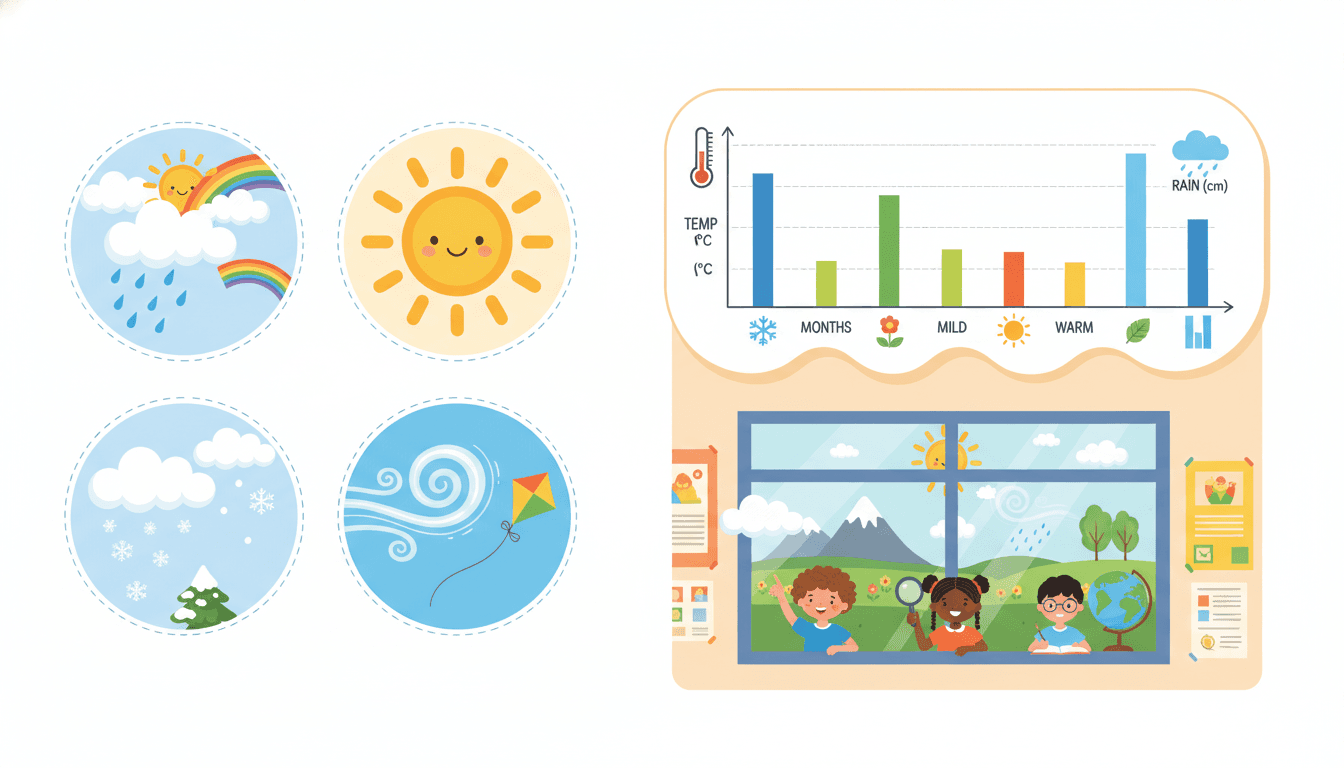
- Weather is what the sky and air are like on any given day - sunny, rainy, cold, or windy.
- Climate is the average weather pattern for a region over 30 or more years.
- Meteorologists use tools like thermometers, rain gauges, anemometers, and weather vanes to measure weather.
What Is Weather?
Weather describes what the atmosphere is like outside on any given day or at any given moment. Weather changes constantly - it can be sunny in the morning and rainy by afternoon. Weather includes:
-
Temperature - how hot or cold the air is
-
Precipitation - rain, snow, sleet, or hail
-
Wind - the speed and direction of moving air
-
Humidity - how much water vapor is in the air
-
Cloud cover - whether the sky is clear or cloudy
What Is Climate?
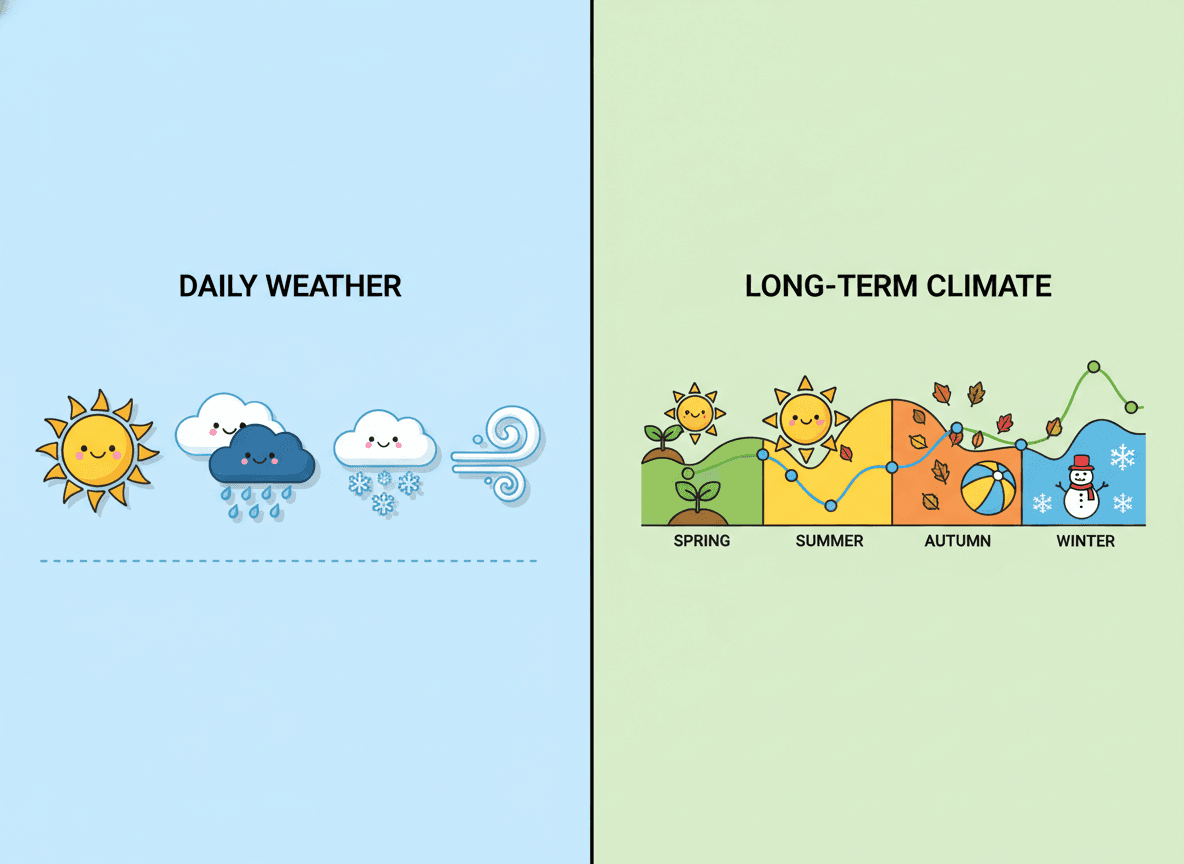
Climate is the average pattern of weather in a region over a long time - usually 30 years or more. Climate tells us what kind of weather to expect in a place across different seasons.
"Climate is what you expect. Weather is what you get."
For example, a tropical rainforest has a warm, wet climate year-round. A desert has a hot, dry climate. Antarctica has a cold, icy climate.
Weather Measurement Tools
Scientists called meteorologists measure weather using special instruments:
Thermometer: Temperature (°F or °C)
Rain Gauge: Amount of precipitation
Anemometer: Wind speed
Weather Vane: Wind direction
Barometer: Air pressure
Hygrometer: Humidity
Types of Clouds
Clouds are made of tiny water droplets or ice crystals. Identifying clouds helps predict weather:
-
Cirrus - thin, wispy, very high up; usually mean fair weather
-
Cumulus - puffy, white, flat-bottomed; fair weather
-
Stratus - flat, gray layers covering the whole sky; often bring drizzle
-
Nimbostratus - thick, dark gray; bring steady rain or snow
-
Cumulonimbus - tall, anvil-shaped storm clouds; bring thunderstorms
Seasons and Climate
Most of the US has four seasons: spring, summer, fall (autumn), and winter. Seasons happen because Earth is tilted on its axis as it orbits the sun. When your hemisphere tilts toward the sun, temperatures rise (summer). When it tilts away, temperatures fall (winter).
Grade-by-Grade Breakdown
Kindergarten: Name types of weather; dress for the weather
1st Grade: Observe and record daily weather; seasons
2nd Grade: Measure precipitation and temperature; cloud types
3rd Grade: Weather vs. climate; severe weather; reading weather maps
Practice Activities
-
Daily weather journal: Students record the weather each morning for one month and graph the results.
-
Cloud identification chart: Create a poster with drawings and descriptions of each cloud type.
-
Build a rain gauge: Use a plastic bottle to measure rainfall over a week.
-
Weather map reading: Show students a simple weather map and have them interpret symbols for sun, rain, and storms.
-
Climate comparison: Compare the climate of a desert vs. a rainforest using temperature and rainfall data charts.
Frequently Asked Questions
What is the difference between weather and climate?
Weather is what is happening outside right now or on a particular day. Climate is the average weather pattern over a long period of time (typically 30 years) for a specific region. A simple saying: climate is what you expect, weather is what you get.
What tools do meteorologists use to measure weather?
Meteorologists use thermometers to measure temperature, rain gauges to measure precipitation, anemometers to measure wind speed, barometers to measure air pressure, and weather vanes to show wind direction.
What are the main types of clouds?
The four main cloud types are cirrus (thin, wispy, high up), cumulus (puffy, white, fair weather), stratus (flat, gray, covering the sky), and nimbus (dark rain clouds). Cumulonimbus clouds produce thunderstorms.
Free Weather and Climate Worksheets
Curriculum-aligned printable worksheets for Kindergarten – 3rd Grade. Download free.


