
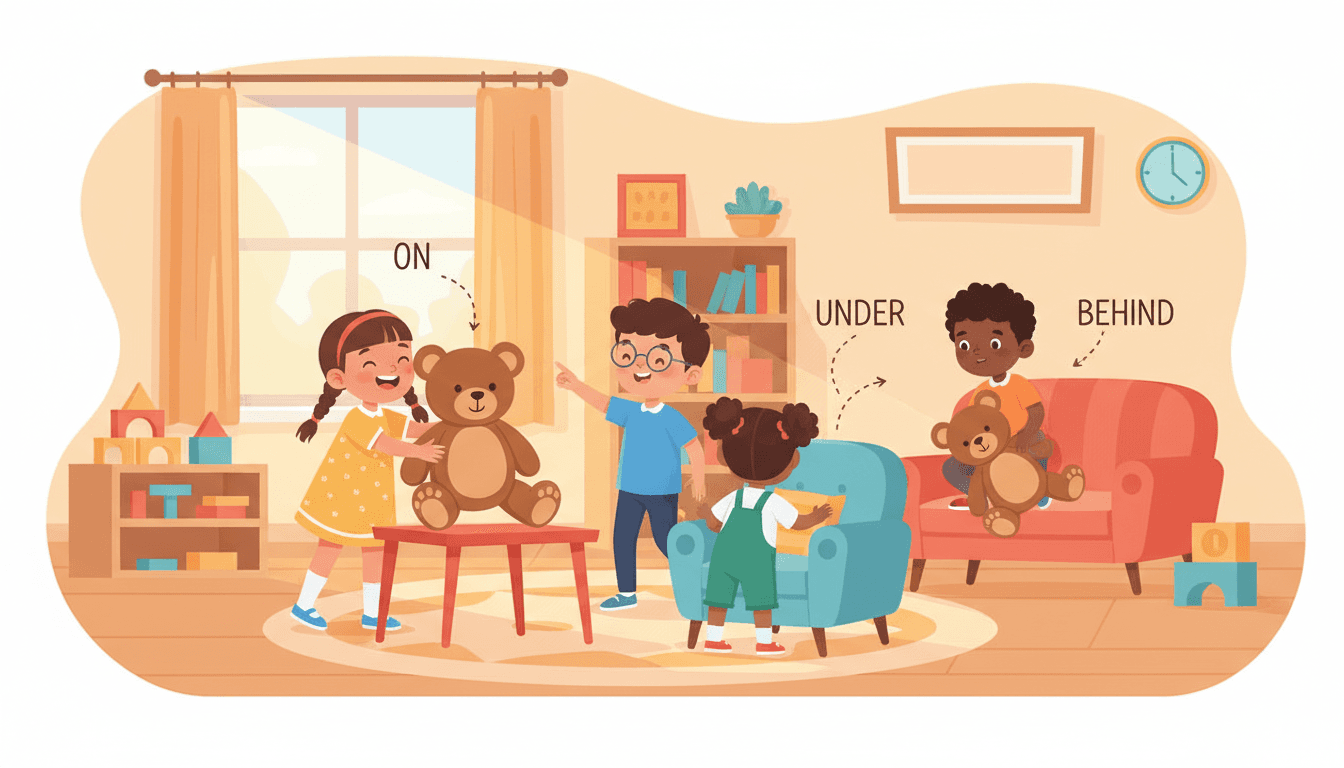
Prepositions for Kindergarten: How to Teach Them
Get 30 days of free worksheet downloads
Key Takeaways
- Start with position words like in, on, under, and over before introducing the term preposition
- Use movement-based activities first so children experience positions with their bodies
- Introduce beside, behind, and between only after the first four position words are automatic
- Anchor charts with pictures help students self-correct during independent writing and reading
- Between is the hardest preposition for kindergartners and needs the most physical practice time
How to Teach Prepositions to Kindergartners: Activities, Tips, and What Actually Works
"Put your backpack under your chair. No, not on it, under it."
If you've said something like that today, you've already been teaching prepositions. Our little ones hear position words all day long: in, on, under, over, beside, behind, between. They follow directions that use them. They use them when they talk. Teaching prepositions in kindergarten is really about slowing down, naming these small but powerful words, and helping students use them with confidence.
The beautiful thing about prepositions: they're physical. You can move your body into them. And for kindergartners, if you can move it, you can learn it.
Here are 10 practical ways to teach prepositions to kindergartners:
- Start With What Position Words Actually Do
- Teach In, On, Under, and Over First
- Add Beside, Behind, and Between
- Use Movement to Anchor the Meaning
- Build Spatial Awareness Through Play
- Incorporate Prepositions Into Read-Alouds
- Practice Drawing Prepositions
- Build Preposition Sentences Together
- Play Games That Make Position Words Stick
- How to Know When They've Really Got It
1. Start With What Position Words Actually Do
Before you call them "prepositions," call them position words. That's all they need to know at this stage. Position words tell us where something is in relation to something else.
"The cat is IN the box." The word "in" tells us where the cat is. Take away "in" and the sentence stops making sense. That's the key idea: position words are the words that tell us where.
Try these activities:
- Where is it?: Hold up a small object (eraser, toy, block). Move it to different positions relative to a box. Ask: "Where is it now?" Students call out the position word as you move it. In the box. On the box. Behind the box. Under the box.
- Follow my directions: Give students a small object and a piece of paper. "Put your eraser ON the paper. Now put it UNDER your hand. Now put it BESIDE the paper." Students follow each direction. This instantly shows you who knows which words.
- Two-word focus: Each day, introduce just one or two new position words rather than throwing all of them at once. "Today we're learning IN and ON." Practice only those two until they're solid.
- Preposition poster: Start a class anchor chart with the title "Position Words Tell Us WHERE." Add each new preposition as you introduce it, with a simple picture showing the meaning.
The anchor chart will become one of the most-referenced things in your room during this unit. Students will glance at it every time they're writing or answering a preposition question.
Free Kindergarten Preposition Worksheets


2. Teach In, On, Under, and Over First
These four are the backbone of kindergarten preposition instruction. They're the most frequently used, the easiest to demonstrate physically, and the ones the Common Core standards reference for kindergarten (CCSS.ELA-LITERACY.L.K.1e).
In: inside a container or space. On: on top of a surface. Under: below something. Over: above or across something.
To be fair, some of these activities take longer to set up than they take to run.
Try these activities:
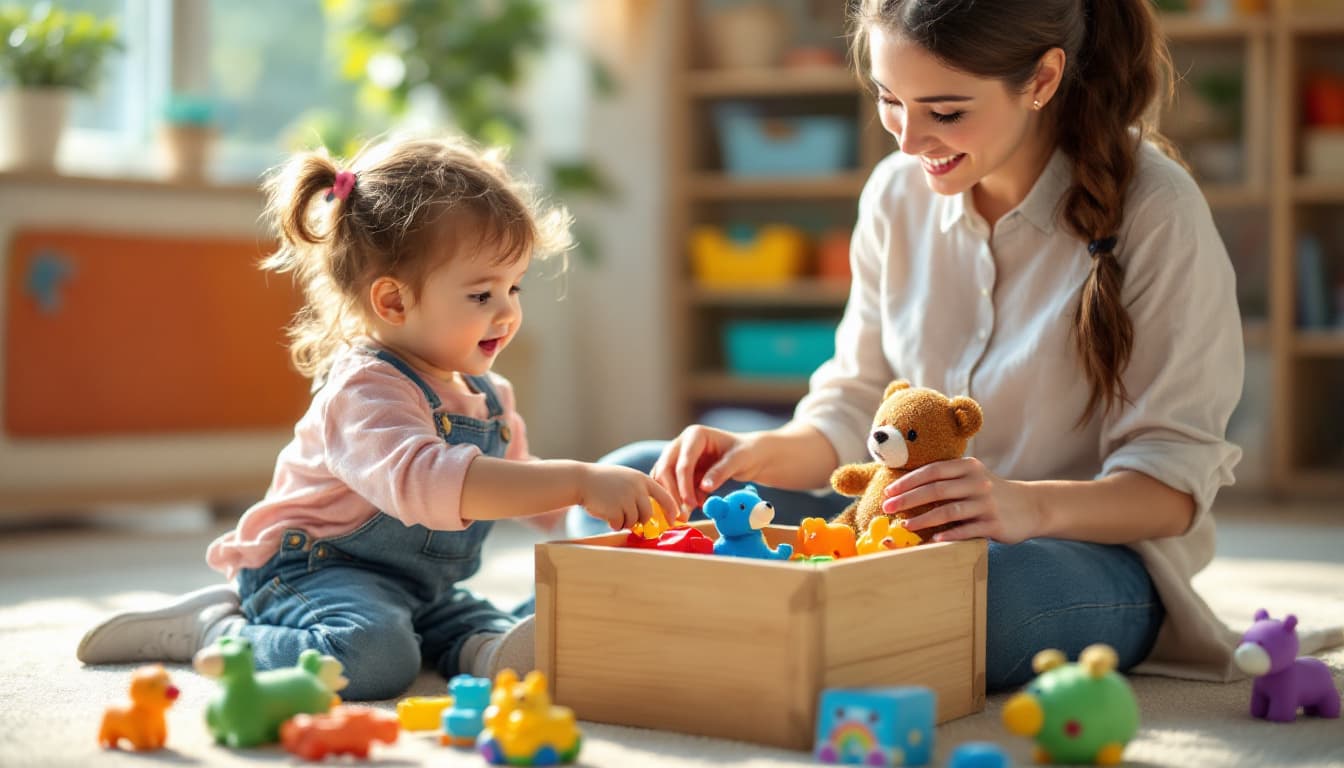
- Box and bear: Give each student a small box (tissue box, shoebox) and a small stuffed animal or eraser. You call out a position word, they move the object. IN the box. ON the box. UNDER the box. Hold the animal OVER the box. Fast, physical, and highly effective.
- Four corners poster: Divide a large poster into four quadrants labeled IN, ON, UNDER, OVER. Show picture cards and students point to the correct quadrant.
- Picture sorting: Give students a set of eight picture cards showing objects in different positions. They sort them under the correct heading: in, on, under, over.
- In my classroom: Do a quick scavenger hunt using only these four words. "Find something that is ON the wall. Find something that is UNDER a table. Find something that is IN a container." Students find the items and report back.
Repetition is everything here. Return to these four words for a full week before adding new ones. The goal is automatic recognition, not just recognition-with-effort.
3. Add Beside, Behind, and Between
Once in, on, under, and over are solid, layer in beside, behind, and between. These three are slightly harder because they require understanding relative position to another object (not just a surface or container).
Beside means next to. Behind means at the back of. Between means in the middle of two things.
Try these activities:
- Three friends: Line up three students. Practice: "Stand BESIDE your friend. Now stand BEHIND them. Now stand BETWEEN them." Seeing classmates model the positions is much more effective than a picture on the board.
- Three chairs: Arrange three chairs at the front of the room. A student places a stuffed animal beside, behind, or between the chairs following your direction. Classmates confirm: "Yes, that's beside!" or "Not quite, try again."
- Between is special: Spend extra time on "between" because it requires two reference points instead of one. "The pencil is between the book and the eraser." Students need to see this many times before it clicks.
- Positional drawings: Students draw a simple scene: a cat beside a tree, a dog behind a fence, a bird between two flowers. This forces them to internalize the word so they can draw it correctly.
Honest moment: "between" and "beside" are the two prepositions that kindergartners most often mix up. If you see this happening in your class, add extra physical practice before moving to paper activities.
4. Use Movement to Anchor the Meaning
Prepositions are perhaps the one grammar topic where movement-based instruction is not just a nice bonus but genuinely essential. When a child physically places their body behind a chair or under a table, the word locks in at a deeper level than any worksheet can achieve.
Think of this as the "body first, paper second" principle. Get them moving before you put a pencil in their hand.
Try these activities:
- Preposition obstacle course: Set up a simple course in the gym or classroom. Students go OVER the bench, UNDER the table, THROUGH the hoop, AROUND the cone, BESIDE the marker. Call each out as they move through it.
- Follow the word: Call out a preposition and an instruction. "Jump OVER the line. Sit BEHIND your chair. Stand BESIDE the door." Students move to the correct position as quickly as they can.
- Preposition freeze dance: Play music. When the music stops, call out a preposition ("ON!"). Students must immediately place some part of their body ON something nearby. Anything goes as long as the word is correct.
- Whole body sorting: Place two hula hoops on the floor, labeled "IN" and "ON." Students physically step INTO the IN hoop or ON the edge of the ON hoop when you call a sentence. "The book is in the bag." Students step in. "The cup is on the desk." Students step on.
Movement activities also work well for mixed readiness groups. Students who already know the words can show, and students who are still working it out can follow along and absorb.
5. Build Spatial Awareness Through Play
Prepositions are deeply tied to spatial reasoning: understanding where things are in space relative to each other. This isn't just grammar. It's a foundational thinking skill that supports math, science, and reading comprehension.
Block play, puzzle building, and even snack time are opportunities to weave spatial language in naturally.
Try these activities:
- Block architecture: During free choice or center time, build something with blocks and describe it using prepositions. "I put the blue block ON TOP of the red block. The small block is BETWEEN the two tall towers."
- Puzzle position talk: While building a puzzle, narrate positions: "This piece goes BESIDE the cloud piece. The flower piece goes UNDER the sun."
- Snack prepositions: During snack setup, give directions using position words. "Put your water bottle BESIDE your snack. Put your napkin UNDER your cup." Students love using prepositions for real purposes.
- Map reading basics: Draw a simple treasure map (a classroom map works perfectly). Ask students to follow directions: "Go past the reading corner. Stop BESIDE the big table. Look UNDER the chair."
Spatial awareness develops across the entire kindergarten year. Using position language consistently during play gives our kiddos a running head start in spatial reasoning, which will serve them well in geometry and beyond.
6. Incorporate Prepositions Into Read-Alouds
Children's books are packed with prepositions, and most of the time we read right past them. Slowing down during a read-aloud to highlight position words is a zero-prep way to build exposure and recognition.
Books to keep on hand for preposition focus: "Rosie's Walk" by Pat Hutchins (possibly the most preposition-rich kindergarten book in existence), "Where's Spot?" by Eric Hill, "In, On and Under" series, and "Over and Under the Snow" by Kate Messner.
Try these activities:
- Preposition spotting: Tell students before you read: "Every time you hear a position word, give me a thumbs up." During "Rosie's Walk" you'll get thumbs up roughly every three seconds, which students find hilarious.
- Act it out as you read: When you read "The hen walked over the haystack," have students move over something at their seat. This pairs movement with the text in real time.
- Retell with position words: After a story, ask students to retell using as many prepositions as they can. "First Rosie walked OVER the hill. Then she went THROUGH the fence." This builds both comprehension and grammar simultaneously.
- Preposition page: Choose one page from a book and count how many position words appear on it. Students are often surprised how many there are.
Read-alouds make prepositions feel natural rather than imposed. When position words live in beloved stories, they become part of the fabric of how our kiddos understand language.
7. Practice Drawing Prepositions
Drawing activities for prepositions are uniquely effective because they require students to show understanding rather than just say the word. A student who truly knows "between" can draw it. A student who's guessing cannot.
Keep these activities open-ended and low-pressure. The goal is application, not artistic perfection.
Try these activities:
- Put the cat where I say: Give students a simple line drawing of a room (or just a box and a table). You call out directions: "Draw a cat UNDER the table. Draw a bird ON the windowsill. Draw a mouse BEHIND the box." Students draw and you can see instantly who's got it.
- Preposition scenes: Students choose a preposition word and create a full picture showing it. "I drew a fish IN a bowl." Display these with the preposition word labeled.
- Copy the scene: Show students a simple picture (a dog beside a tree). Students look, then recreate it from memory, making sure to keep the correct position. This tests both memory and preposition understanding.
- Partner drawing: In pairs, one student gives instructions using position words while the other draws without seeing the original. Compare the results. How close did the drawing match the instructions?
For structured paper practice, our kindergarten preposition worksheets include picture-based identification activities, fill-in-the-blank sentences, and drawing prompts that reinforce every position word covered in this guide.
8. Build Preposition Sentences Together
Prepositions live inside sentences. Once students recognize position words and can demonstrate them physically, the next step is writing and saying them in complete sentences.
The target sentence structure for kindergarten: [noun] + [verb] + [preposition] + [noun]. "The dog sits under the table." "The bird flies over the roof." "My pencil is beside my book."
Try these activities:
- Sentence frame practice: Write on the board: "The _____ is _____ the _____." Model filling it in: "The frog is ON the log." Then let students try with their own words. The frame takes the pressure off the grammar so they can focus on the preposition.
- Describe the picture: Show any classroom illustration or book page and ask students to write or dictate one sentence using a preposition. Collect these on a class chart.
- Preposition of the day sentence: Each morning, pick a preposition and have students write one sentence using it before the day begins. Over the week, they'll have written five different preposition sentences.
- Find the preposition: Write three sentences on the board and ask students to circle the position word in each. This builds recognition at the sentence level, not just the word level.
Writing preposition sentences also reinforces other grammar skills: capital letters, periods, noun-verb agreement. Preposition practice is never just preposition practice.
9. Play Games That Make Position Words Stick
Games are the best maintenance strategy for prepositions. Once you've introduced the vocabulary, games keep it alive without requiring a whole new lesson.
Try these activities:
- Preposition Simon Says: "Simon says stand BESIDE your chair. Simon says put your book UNDER your desk. Simon says hold your pencil OVER your head." Students must follow only when "Simon says" comes first, adding a layer of listening practice.
- Preposition Jenga: Write a preposition on each Jenga block. When a student pulls a block, they must say a sentence using that position word before placing the block on top.
- Where is Teddy?: A class stuffed animal ("Teddy") hides in a new spot each morning. Students find Teddy and write a sentence telling where he was hiding. "Teddy was behind the bookcase."
- Preposition charades: One student acts out a preposition (sits under the table, stands beside the door). Classmates guess the position word. This brings back the physical element in a game format.
Games also give you natural formative assessment. Without making it a test, you can see which position words are fluent and which ones still need practice.
10. How to Know When They've Really Got It
Preposition mastery at the kindergarten level looks like confident, flexible use. Here's what you're watching for:
- Following positional directions without hesitation. "Put your pencil behind your ear." Done in two seconds, no confusion.
- Using position words in spontaneous speech. "My eraser fell under my desk" instead of just "my eraser fell down there."
- Identifying prepositions in text. During a read-aloud, they point out: "That's a position word! She went under the bridge."
- Correct use in written sentences. "The cat is in the box" rather than "The cat is on in the box" (mixing up two words, which is common earlier in the learning).
- Distinguishing between similar words. Beside vs. behind, over vs. above, under vs. below. These fine distinctions come later, but by the end of kindergarten, students should be reliably using the core seven (in, on, under, over, beside, behind, between).
Frequently Asked Questions
What prepositions should kindergartners learn?
The Common Core standards for kindergarten (CCSS.ELA-LITERACY.L.K.1e) specify the most frequently occurring prepositions: to, from, in, out, on, off, for, of, by, with. For position-specific instruction, the most important ones to cover are in, on, under, over, beside, behind, and between. These are the prepositions most commonly needed for spatial description in kindergarten writing and conversation.
What is the best way to teach prepositions to kindergartners?
Physical movement is the most effective starting point. When students can place their own body or an object in a position (under the table, beside the chair), the word takes on immediate, concrete meaning. Begin with movement-based activities before introducing written practice. Games, obstacle courses, and follow-the-directions activities are more effective at this age than worksheets alone.
How do you explain what a preposition is to a kindergartner?
Use the term "position word" instead of preposition at first. Tell students: "Position words tell us WHERE something is." Demonstrate with a simple object and a box. "Is the ball IN the box? ON the box? UNDER the box?" The concept clicks immediately because it's physically visible.
What books are good for teaching prepositions to kindergartners?
"Rosie's Walk" by Pat Hutchins is the classic choice: it uses over a dozen position words in 32 pages. "Where's Spot?" by Eric Hill uses prepositions as a guessing game throughout. "Over and Under the Snow" by Kate Messner builds beautiful position language in a nature context. Any book with strong positional description will work.
Keep Reading
- How to Teach Adjectives to Kindergartners: Activities, Tips, and What Actually Works
- How to Teach Pronouns to Kindergartners: Activities, Tips, and What Actually Works
- How to Teach Sentences to Kindergartners: Activities, Tips, and What Actually Works
Wrapping Up
Teaching prepositions to kindergartners is really just helping them name what they already experience every single day. In, on, under, over, beside, behind, between. Our little ones move through these positions every hour of the school day without even thinking about it.
Your job is to slow that down, name it, and give them the confidence to use position words intentionally in their speech and writing.
Start with the box and the bear. Let them move before they write. And trust that with repetition and playful practice, these small words will become a natural part of how your kiddos describe the world around them 😊
For ready-to-use practice, explore our full collection of kindergarten preposition worksheets. They're designed to reinforce every position word in this guide, with picture-based activities and sentence practice at exactly the right kindergarten level.
Happy teaching!

Adi Ackerman
Head Teacher
Adi is the Head Teacher at ClassWeekly, with years of experience teaching elementary students. She designs our curriculum-aligned worksheets and writes practical guides for teachers and parents.
Keep Reading
Ready to download? Try ClassWeekly free for 30 days.
Unlimited worksheets for PreK through 5th grade. Cancel anytime.