
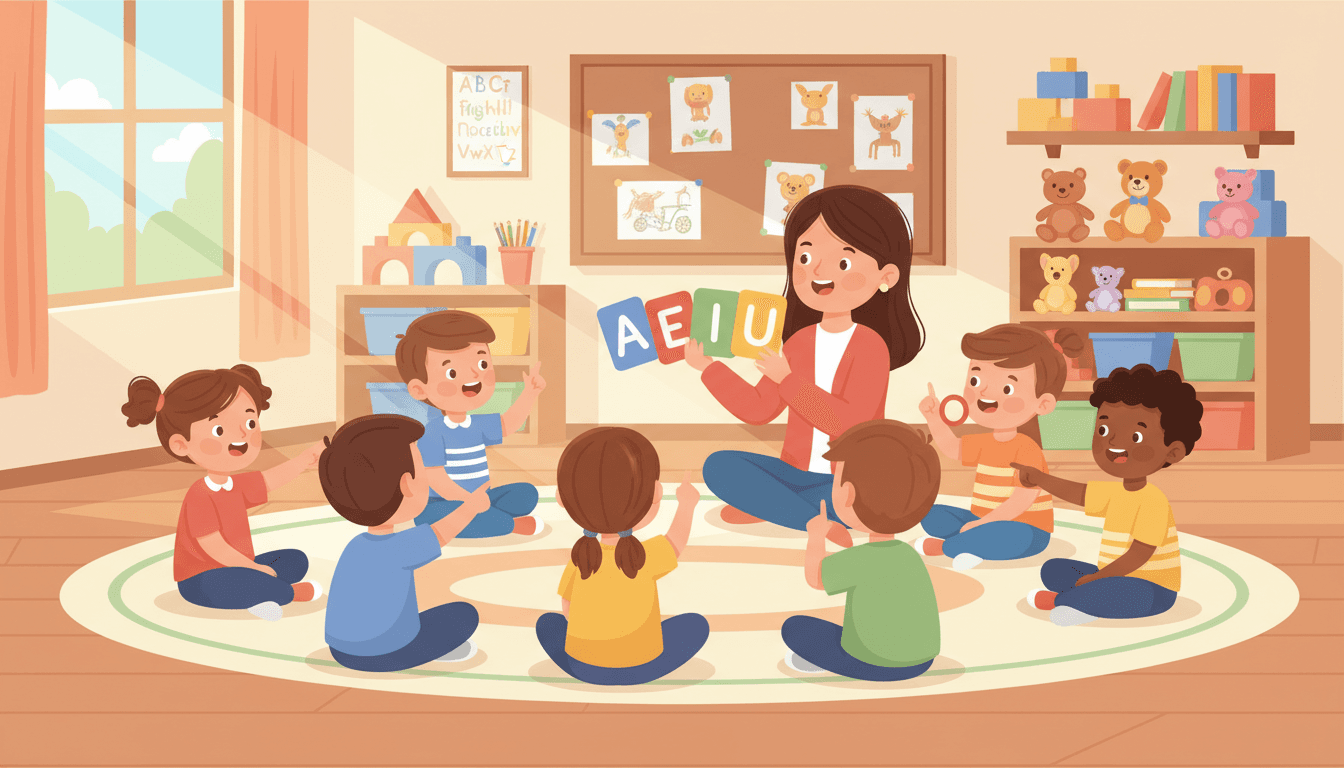
How to Teach Vowels and Consonants in Kindergarten
Get 30 days of free worksheet downloads
Key Takeaways
- Start with short vowels before introducing long vowels, since short vowel sounds appear in the most common early words like cat, bed, and sun.
- CVC words (consonant-vowel-consonant) are the first real words most children learn to decode, and even knowing just two short vowel sounds is enough to start building them.
- Vowels are open sounds with no physical anchor like lip closure, which is why they are genuinely harder for kindergartners to isolate than consonants.
- Multisensory instruction - combining songs, movement, tactile activities, and visual cues - builds more memory pathways than any single method alone.
- Worksheets work best as consolidation tools after a concept has already been introduced and practiced aloud, not as the introduction itself.
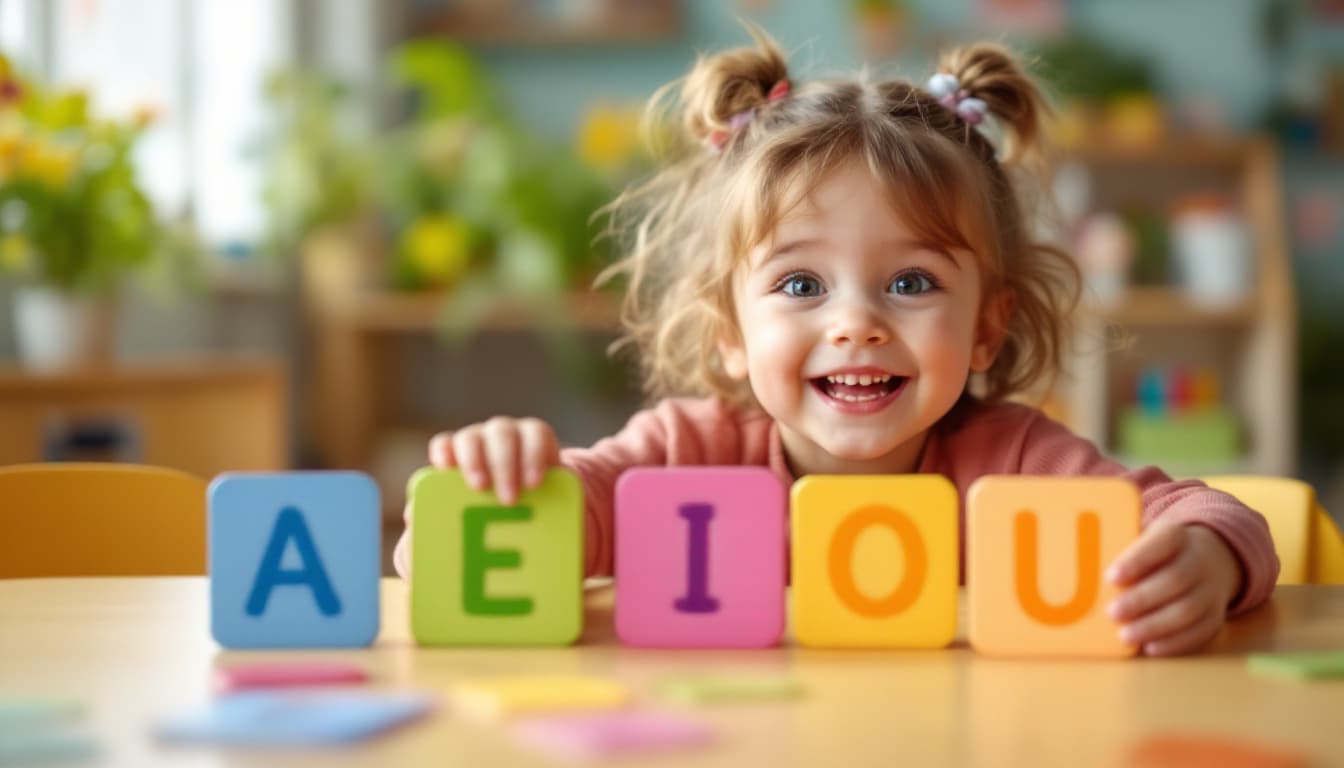
You hold up the letter card for the letter A and ask the class what sound it makes. Half the room shouts "ay!" Two kids say "ah!" One very confident little one announces it makes the sound a duck makes. And honestly? That last kid isn't entirely wrong to be confused.
Vowels are the trickiest part of early reading, and that's not a flaw in how you're teaching. It's the nature of the English language. A, E, I, O, U each carry more than one sound, they change depending on the word, and the rules have more exceptions than a substitute teacher on a Friday. The good news: with the right activities and a little repetition, your kiddos will start to hear and read vowels with real confidence.
Table of Contents
- Why Vowels Feel Hard (And Why That's Normal)
- Start With Short Vowels First
- Teaching Vowel Sounds vs. Consonant Sounds
- CVC Words: The Gateway to Reading
- Moving Into Long Vowels
- Vowel Songs and Chants That Actually Work
- Hands-On Activities for Every Learner
- How to Use Practice Pages Effectively
- Watching for Vowel Confusion
- Putting It All Together
Why Vowels Feel Hard (And Why That's Normal)
Before you plan a single lesson, it helps to understand what makes vowels genuinely difficult for five-year-olds.
Vowels are open sounds. Your mouth doesn't fully close when you say them, which makes them harder to isolate. When a child says "b," they feel their lips press together. When they say "a," there's no such anchor. It's just air shaped by the position of your tongue.
Add to that the fact that one letter can represent multiple sounds, and you have a recipe for genuine confusion. This isn't a comprehension problem. It's a phonological awareness challenge, and it responds beautifully to practice.
Free Kindergarten Vowel Worksheets


Start With Short Vowels First
Every reading program worth its salt starts with short vowels, and for good reason.
Short vowel sounds appear in the most common early words: cat, dog, bed, him, top, sun. They follow predictable patterns. And once a child has them down, they can start blending real words almost immediately.
Teach the short vowels in this order, which most phonics curricula follow: A (as in "apple"), I (as in "itch"), O (as in "olive"), E (as in "egg"), U (as in "up"). You don't need to teach all five before moving on to CVC words. Even having short A and short I is enough to start building simple three-letter words.
Activities for short vowels:
- Anchor word cards. Each vowel gets an image it "lives with." Short A lives with "apple." Short I lives with "igloo." When kids see the picture, they hear the sound.
- Sound sorting bins. Put small objects or picture cards into bins labeled with the vowel they contain. Cat, hat, and bag go in the A bin. Pit, fish, and bib go in the I bin.
- Clapping the vowel. Say a CVC word aloud, clap on the middle sound, and have kids identify which vowel they hear. "C-A-T. What sound did we clap? A! Good."
- Whiteboard practice. Call out a vowel sound, kids write it on mini whiteboards, hold them up. Fast, tactile, and you get instant feedback on who's got it.
- Vowel puppet. Each short vowel gets a silly character (you can draw them). "Short A Annie" always has an apple. When kids hear short A, they hold up Annie.
Teaching Vowel Sounds vs. Consonant Sounds
One of the best things you can do early on is help kids understand what a vowel is at a conceptual level, not just memorize a list.
Here's a simple framing: "Vowels are the sounds that hold words open. Every word needs at least one."
You don't need them to grasp linguistics. You just want them to feel the difference. Say a consonant like "b" or "t" and notice how your mouth closes. Say a vowel like "o" or "e" and notice how it stays open.
Activities for comparing vowels and consonants:
- Mirror mouths. Give each child a small mirror. Say a consonant, look at your mouth. Say a vowel, look at your mouth. "Which one stays open?"
- The clapping rule. Every word needs a vowel to clap (have a beat). Try to clap "str" without a vowel. You can't really do it. Now try "straw." There it is.
- Vowel highlight. Write a word on the board in two colors: consonants in black, vowel in red. Over time, kids start to see the pattern.
- Odd one out. Write four letters: B, T, A, D. Which one is different? Why?
- Vowel vs. consonant body game. Vowels: arms wide open. Consonants: arms crossed. Call out letters, they react with their body.
CVC Words: The Gateway to Reading
Once your little ones have even two short vowel sounds, you can start CVC words (consonant-vowel-consonant). These are the first real words most children learn to decode.
"Cat." "Sit." "Hop." "Red." "Run."
The reason CVC words work so well is the structure. There are three sounds, each clearly separated, and the vowel is always in the middle. When children learn to "tap" through a word (one finger per sound), they're decoding. That moment when a child sounds out a real word for the first time, that's the moment. Everything changes.
CVC word activities:
- Elkonin boxes (sound boxes). Draw three boxes. Tap one finger per box as you say each sound. Then write the letter in each box.
- Build-a-word. Give kids letter tiles: two consonant tiles and one vowel tile. Swap consonants to make new words. Change C to S and "cat" becomes "sat."
- CVC memory match. Picture cards face down, word cards face down. Flip one of each and see if they match.
- Sliders. A slider has a vowel in the middle and a movable strip of consonants on each side. Slide through combinations and read what appears.
- Word family sorting. All the -at words in one pile, all the -it words in another. Same vowel, different families.
Moving Into Long Vowels
Here's where I'll be honest: long vowels are a bigger ask for kindergartners. Most phonics programs don't fully introduce long vowel patterns until first grade. But you will encounter them in read-alouds, in sight words, and in questions from curious kiddos who notice that "cake" doesn't sound like "cat."
The most important thing to say about long vowels at this stage: the vowel says its name.
Long A says "ay." Long I says "eye." Long O says "oh." You don't need to go deep into spelling patterns like "silent E" or "vowel teams" in kindergarten. Just plant the seed.
Gentle long vowel activities:
- Name that vowel. Hold up a word like "cake" or "bike." "Do you hear A saying its name? That's long A!"
- Short vs. long sort. Two picture cards: "cap" and "cape." Which has short A? Which has long A? No spelling needed, just listening.
- Long vowel name game. Kids whose names have long vowels stand up. "Kate, Jake, Mike, Zoe." See them smile.
- Picture sort. Sort pictures into two groups: short vowel words and long vowel words. Focus on the sound, not the spelling.
Vowel Songs and Chants That Actually Work
There's a reason every kindergarten classroom has a vowel song. It works.
Songs attach sound to rhythm and melody, which gives the brain more hooks to hold onto. When a child can't remember which sound goes with E, sometimes just humming the first few bars of the song brings it back.
Songs and chants to try:
- "A, E, I, O, U" to the tune of "Twinkle Twinkle." Simple, familiar, and effective.
- "Short vowel chant." Each vowel gets a line: "A says ah like apple, E says eh like egg..." Clap on each vowel sound.
- "Apples and Bananas." This classic folk song changes the vowel sounds in each verse. Kids hear the same word with every vowel sound. It's silly and it sticks.
- Action vowel song. Add a movement to each vowel. A: tap your head. E: shrug. I: point to your eye. O: make a circle with arms. U: point to a friend.
The more multisensory you make it, the more pathways to memory you're building.
Hands-On Activities for Every Learner
Not every five-year-old learns the same way, and that's not a problem you need to solve. It's just a reminder to vary your approach.
For kinesthetic learners:
- Stamp vowels with ink pads
- Write vowels in sand trays or shaving cream
- Jump to vowels on a floor mat
For visual learners:
- Color-coded vowel charts on their desk
- Illustrated anchor charts for each vowel sound
- Highlight vowels in text with a yellow crayon
For auditory learners:
- Vowel echo games (you say, they echo)
- Rhyming games built around vowel families
- Listening for vowels in read-alouds and giving a thumbs-up signal
For social learners:
- Partner vowel quizzes
- Small group vowel hunts in books
- "Teach your stuffed animal" the vowel sounds
How to Use Practice Pages Effectively
Worksheets get a bad reputation, but used correctly, they're a great tool for consolidating what kids have already practiced aloud and physically.
The key word is "already." A worksheet should come after the concept has been introduced, practiced with movement, and discussed as a group. It's the anchor, not the introduction.
Practice with our kindergarten vowel worksheets, which cover short vowels, CVC word building, vowel sorting, and listening discrimination activities. Print one and use it as a warm-up review, or as a center activity once the concept is solid.
Tips for worksheets in kindergarten:
- Do the first 1-2 items together as a class before releasing kids to work independently
- Pair a worksheet with a verbal component: "Before you color the short A pictures, say each word out loud"
- Use worksheets as a quick check for understanding, not as a grade
Watching for Vowel Confusion
Some patterns in vowel confusion are very common and completely normal. Others are worth noting.
Common mix-ups:
- Short E and short I (bed vs. bid). These two sound genuinely similar, especially for some dialect backgrounds. Give extra practice with minimal pairs.
- Long and short versions of the same vowel. Especially A (cat vs. cake).
- Skipping the vowel entirely when writing. "CT" for "cat." This is a phonological awareness gap, not a vision problem.
If a child is consistently missing vowels in writing or struggling to identify them in words by mid-year, that's worth a closer look with a reading specialist or extra small-group support. Not panic, just attention.
Putting It All Together
The journey from "A makes what sound again?" to confidently reading CVC words and beyond happens faster than you'd expect when vowel instruction is consistent, playful, and multisensory.
You don't have to teach it all at once. Start with short A. Build from there. Celebrate every small win, because for a five-year-old, hearing the vowel in the middle of "cat" and naming it correctly is a genuine achievement.
Your kiddos are capable of more than you might expect. And you already know how to reach them. 🌟
Ready to reinforce these concepts with print-and-go practice? Grab our complete collection of kindergarten vowel worksheets and have your vowel centers ready to go.
Keep Reading
- How to Teach Blends and Digraphs to Kindergartners
- How to Teach Letter Recognition to Kindergartners: Activities That Build Confidence
- How to Teach Letter Sounds to Kindergartners: Activities That Actually Stick
Frequently Asked Questions
At what age should children know all five vowel sounds? Most children develop a solid foundation in short vowel sounds during kindergarten (ages 5-6). Long vowel patterns typically solidify in first grade. If a kindergartner knows short vowels well by spring, they're right on track.
Should I teach all five short vowels at once? No. Introduce one at a time, with plenty of practice before moving on. Most teachers spend at least a week on each short vowel before introducing the next.
My student keeps writing words without vowels. Is that a problem? It's very common in early kindergarten. Children often write the sounds they hear most clearly, and vowels are harder to isolate. Practice with Elkonin boxes and sound-tapping to help them slow down and hear all three sounds in a word.
What's the difference between phonics and phonemic awareness for vowels? Phonemic awareness is the ability to hear and manipulate sounds (no print involved). Phonics connects those sounds to letters. For vowels, start with phonemic awareness: can they hear the difference between "cat" and "cut"? Then add the letter-to-sound connection.

Adi Ackerman
Head Teacher
Adi is the Head Teacher at ClassWeekly, with years of experience teaching elementary students. She designs our curriculum-aligned worksheets and writes practical guides for teachers and parents.
Keep Reading
Ready to download? Try ClassWeekly free for 30 days.
Unlimited worksheets for PreK through 5th grade. Cancel anytime.