What Are Contractions?
Taught in US schools
Key Takeaways
- A contraction combines two words by replacing missing letters with an apostrophe.
- Common contractions include don't (do not), can't (cannot), they're (they are), I'm (I am).
- The apostrophe in a contraction marks exactly where the letters were removed.
- Contractions are informal - they are common in dialogue and everyday writing but less appropriate in formal writing.
What Are Contractions?
Contractions are shortened forms of two words merged together, with an apostrophe replacing the letters that were removed. They make language more fluid and natural, especially in speech and informal writing.
Examples:
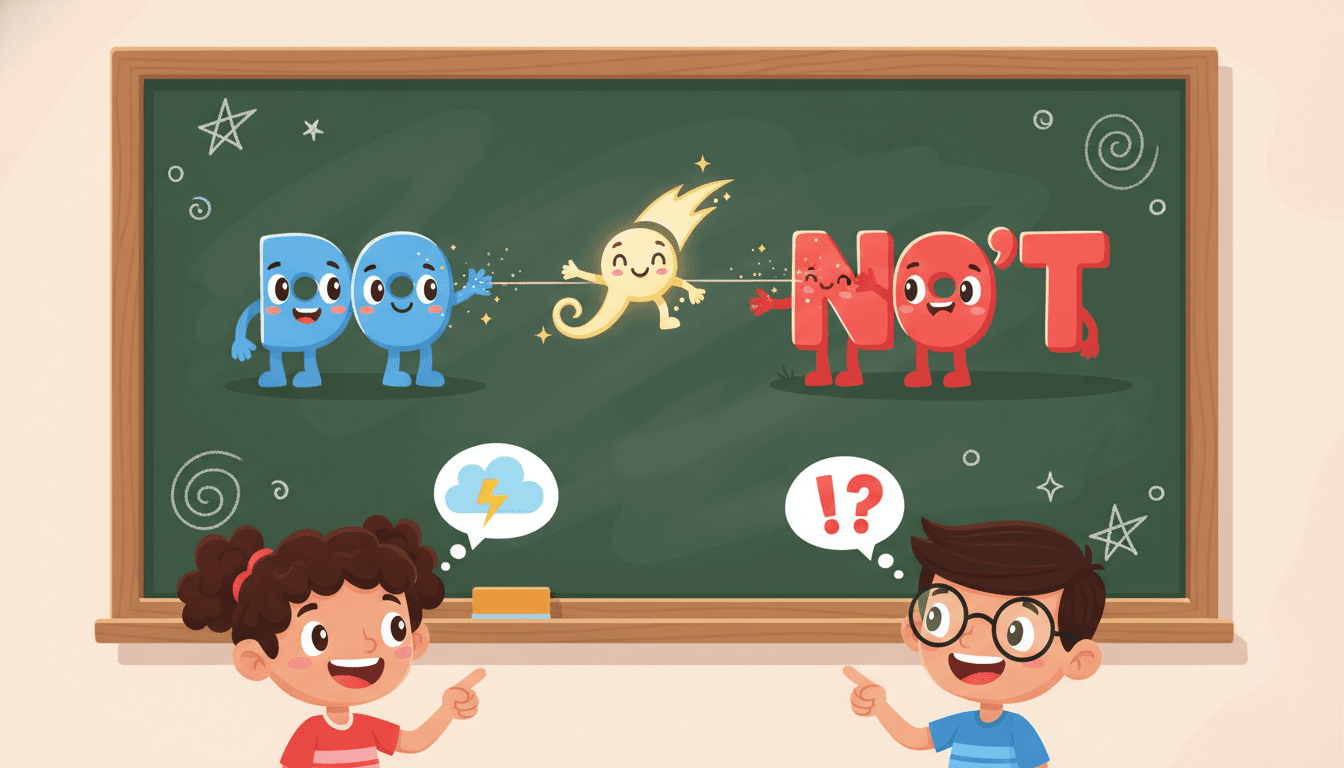
- do + not = don't (apostrophe replaces the "o" in not)
- I + am = I'm (apostrophe replaces the "a")
- they + are = they're (apostrophe replaces the "a")
- will + not = won't (special case - won't is not simply "will + not" with letters removed)
Common Contractions Chart
I am: I'm
you are: you're
he is: he's
she is: she's
it is: it's
we are: we're
they are: they're
do not: don't
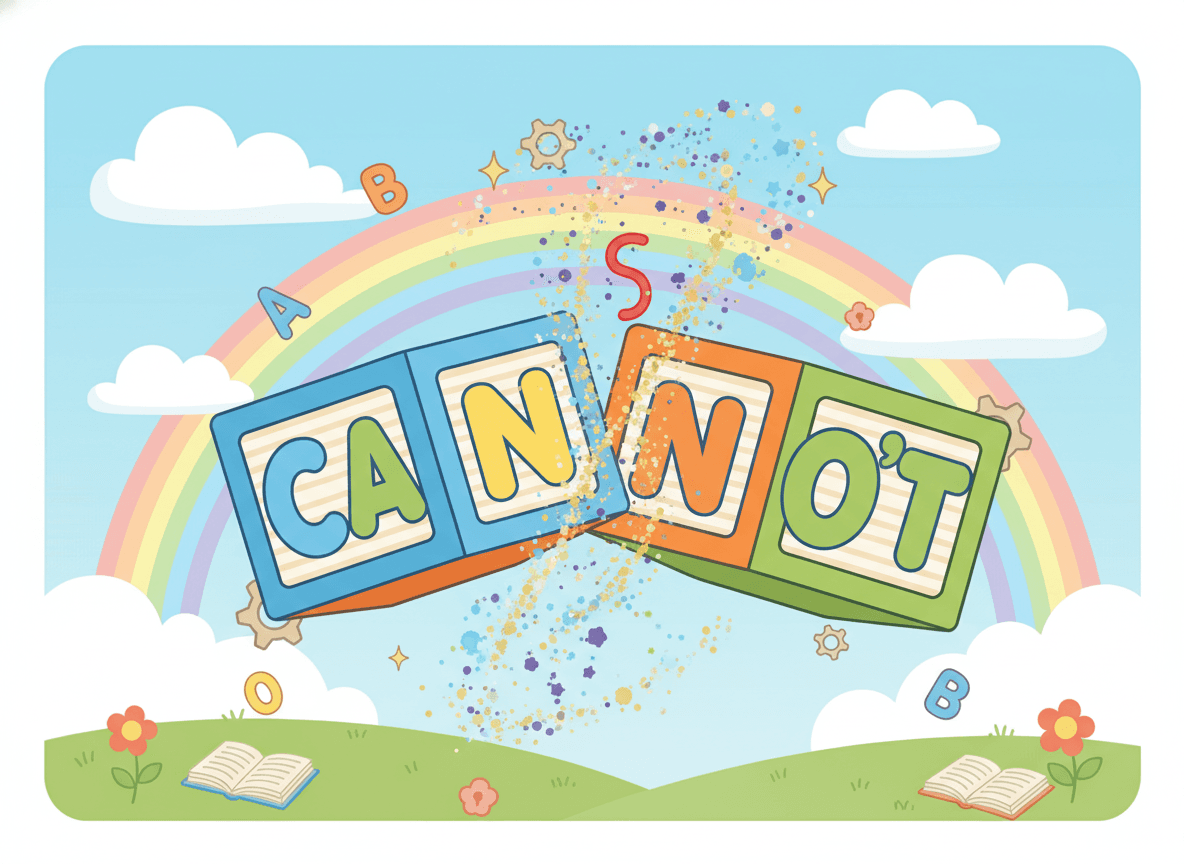
cannot: can't
is not: isn't
was not: wasn't
did not: didn't
will not: won't
would not: wouldn't
I will: I'll
I have: I've
The Apostrophe Rule
The apostrophe in a contraction goes exactly where the letters were omitted - not between the two original words.
- "didn't" → the apostrophe is between "n" and "t" (replacing the "o" in "not"), NOT between "did" and "n't"
- "they're" → the apostrophe is between "y" and "r" (replacing the "a" in "are"), NOT between the two words
Contractions and Homophones
Some contractions are homophones with possessive pronouns:
-
it's (it is) vs. its (possessive: the dog wagged its tail)
-
they're (they are) vs. their (possessive) vs. there (location)
-
you're (you are) vs. your (possessive)
This overlap makes correct usage one of the most important - and most frequently tested - grammar skills.
What Grade Do Kids Learn Contractions?
1st grade: Students encounter contractions informally in reading; some teachers introduce common ones.
2nd grade (L.2.2c): Students use an apostrophe to form contractions.
3rd grade (L.3.2c): Students use commas and apostrophes when writing; distinguish between possessives and contractions.
Common Misconceptions
The apostrophe goes between the two original words: Students often write "did'nt" or "they'are." The apostrophe marks where letters were removed, not where words joined.
All apostrophes mean "is" or "has": Apostrophes appear in possessives (no letters removed), contractions (letters removed), and some plurals (rare). Each has a different function.
Won't means "will not" literally: "Won't" is a contraction of "will not" but doesn't follow the expected pattern. It likely evolved from an older form of "will" ("wol"). It's an irregular contraction students simply memorize.
Practice Activities
-
Expansion practice: Write the full form of 10 contractions (don't → do not).
-
Contraction creation: Write the contraction for 10 word pairs (we + are → we're).
-
Sentence completion: Fill in the blank with the correct contraction from a pair of full words given.
-
Contraction vs. possessive sort: Cards with underlined words; students sort into "contraction" and "possessive" categories.
-
Editing for contractions: Take a formal passage and convert appropriate phrases to contractions for a dialogue version.
Frequently Asked Questions
What is a contraction?
A contraction is a shortened word formed by combining two words and using an apostrophe to mark where letters were left out. For example, 'do not' becomes 'don't' (the apostrophe replaces the 'o' in 'not'). 'I am' becomes 'I'm' (the apostrophe replaces 'a'). Contractions make speech and informal writing more natural and fluid.
What are the most common contractions students learn?
Frequently taught contractions include: I'm (I am), you're (you are), he's (he is), she's (she is), it's (it is), we're (we are), they're (they are), don't (do not), can't (cannot), isn't (is not), wasn't (was not), won't (will not), didn't (did not), wouldn't (would not), couldn't (could not), I'll (I will), I've (I have), I'd (I would/had).
What does the apostrophe mean in a contraction?
The apostrophe shows exactly where one or more letters were removed when the two words were combined. In 'don't,' the apostrophe replaces the 'o' from 'not.' In 'they're,' it replaces the 'a' from 'are.' The apostrophe is not decoration - it marks a real omission. Understanding this helps students remember where to place the apostrophe correctly.
How is a contraction different from a possessive noun?
Both contractions and possessives use apostrophes, which causes frequent confusion. Contractions mark missing letters from combined words: 'it's = it is.' Possessives show ownership: 'the dog's bone.' A key test: if you can expand the word to two words without losing meaning, it's a contraction. 'It's raining' → 'It is raining' (contraction). 'The dog's bone' → not expandable (possessive).
When should students avoid contractions in their writing?
Contractions are appropriate in dialogue (characters in stories speak using contractions), informal writing, personal narratives, and most everyday writing. They are generally avoided in formal essays, research reports, and academic papers. Teaching students when to use and when to avoid contractions is part of developing register awareness - adjusting writing to fit the audience and purpose.
Free Contractions Worksheets
Curriculum-aligned printable worksheets for 1st – 3rd Grade. Download free.