What Are Possessives?
Taught in US schools
Key Takeaways
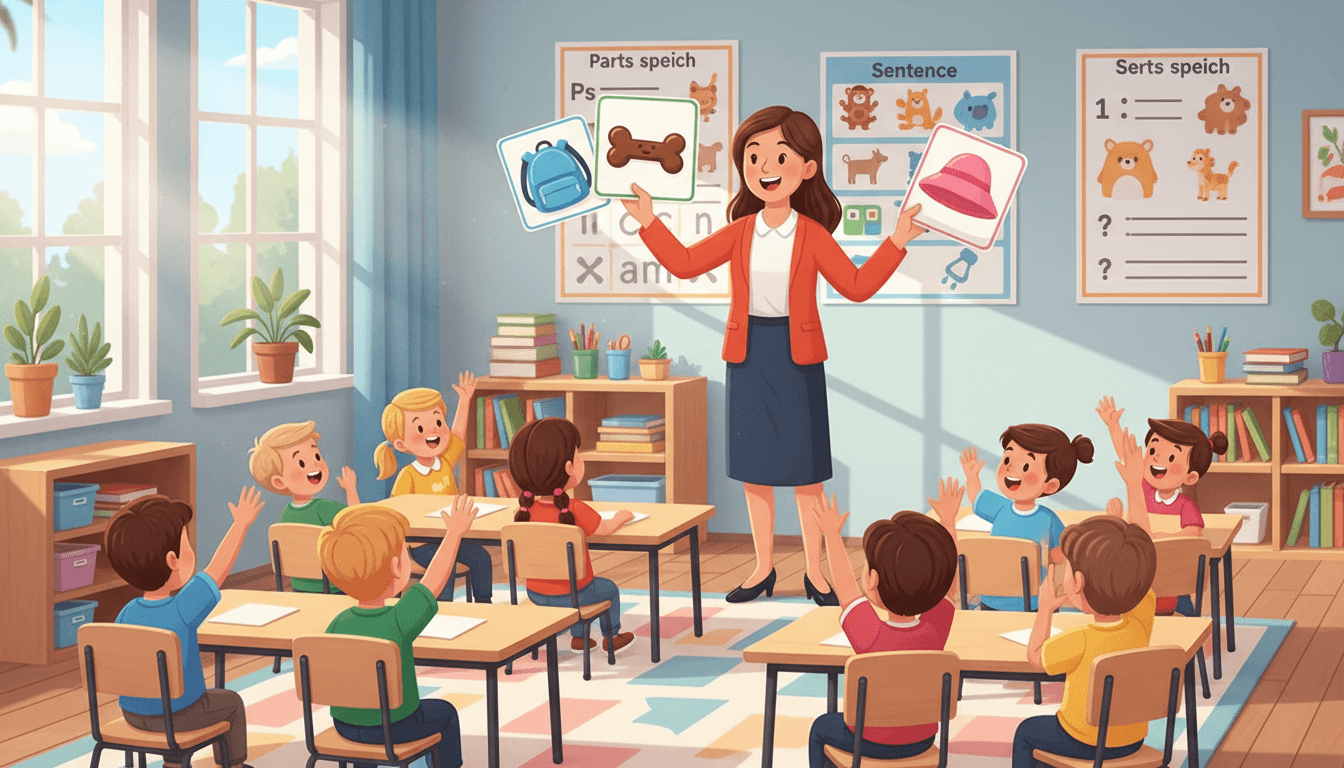
- Possessive nouns show ownership using an apostrophe + s: 'the dog's bone.'
- Plural possessives of nouns ending in -s use apostrophe only: 'the dogs' leashes.'
- Possessive pronouns (my, your, his, her, its, our, their) show ownership without an apostrophe.
- It's (contraction) vs. its (possessive) is one of the most common grammar errors.
What Are Possessives?
Possessives show that something belongs to or is connected with someone or something. English uses two main tools to express possession: possessive nouns (with apostrophes) and possessive pronouns (which change form entirely).
Examples:
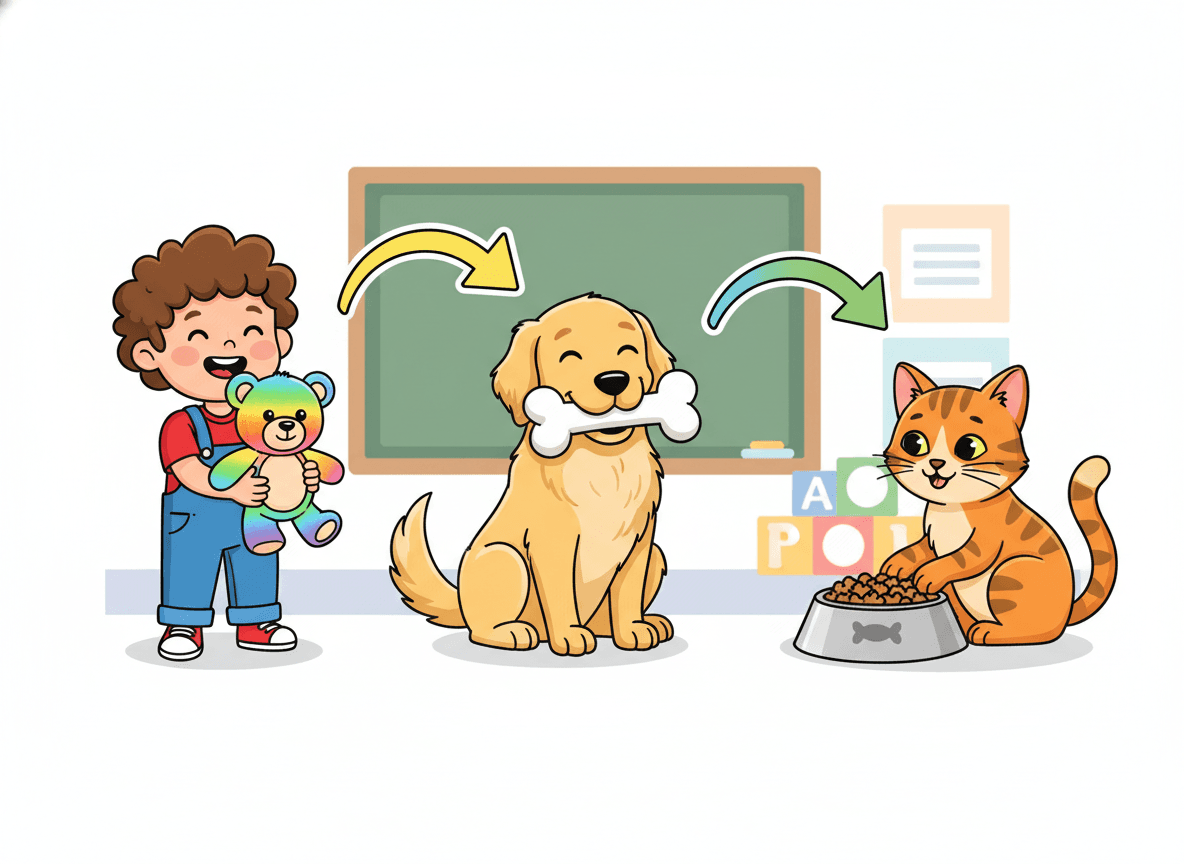
- "The cat's bowl is empty." (possessive noun - one cat)
- "The students' project won first place." (possessive noun - multiple students)
- "That is my book." (possessive pronoun)
- "The book is mine." (independent possessive pronoun)
Possessive Nouns: The Rules
Singular nouns (add 's):
- the girl → the girl's backpack
- the teacher → the teacher's desk
- James → James's (or James') notebook
Plural nouns ending in -s (add apostrophe only):
- the boys → the boys' lockers
- the teachers → the teachers' meeting
Irregular plurals not ending in -s (add 's):
- the children → the children's playground
- the men → the men's room
Possessive Pronouns: No Apostrophe Needed
my book: the book is mine
your pencil: the pencil is yours
his lunch: the lunch is his
her idea: the idea is hers
its tail: -
our classroom: the classroom is ours
their project: the project is theirs Note: its is NEVER written with an apostrophe when used as a possessive pronoun. "It's" (with apostrophe) = "it is."
What Grade Do Kids Learn Possessives?
2nd grade (L.2.2c): Students use an apostrophe to form possessives and contractions.
3rd grade (L.3.2d): Students form and use possessives.
4th grade (L.4.2d): Students use commas and apostrophes correctly in possessives.
Common Misconceptions
Apostrophe makes a plural: Many students write "cat's" when they mean "cats" (more than one cat). An apostrophe in a noun signals possession or a contraction - never a simple plural.
Possessive pronouns use apostrophes: No possessive pronoun uses an apostrophe: mine, yours, his, hers, its, ours, theirs. Students who write "your's" or "it's" (as a possessive) are applying the apostrophe rule from nouns incorrectly.
Plural possessives use 's: "The students's work" is incorrect. Plural nouns already ending in -s just add an apostrophe: "the students' work."
Practice Activities
-
Rewrite with possessives: "The bag belongs to Maya" → "Maya's bag."
-
Apostrophe placement: Cards with nouns; students add the apostrophe in the correct position.
-
Possessive pronoun sentences: Fill in the blank with the correct possessive pronoun (my/mine, their/theirs).
-
Its vs. it's editing: Passage with both forms used correctly and incorrectly; students find and fix errors.
-
Class possessives: "This is [student's name]'s desk" - practice with real names including those ending in -s.
Frequently Asked Questions
What is a possessive?
A possessive shows that something belongs to or is associated with someone or something. English forms possessives in two ways: (1) Possessive nouns use an apostrophe and sometimes an 's' (the girl's hat = the hat belonging to the girl). (2) Possessive pronouns change form entirely without needing an apostrophe (my, your, his, her, its, our, their, mine, yours).
How do you form a possessive noun?
Rules: (1) Singular noun (doesn't end in s): add 's - dog → dog's collar, child → child's toy, James → James's book. (2) Plural noun ending in s: add only an apostrophe - dogs → dogs' collars, students → students' books. (3) Irregular plural not ending in s: add 's - children → children's games, men → men's hats.
What are possessive pronouns?
Possessive pronouns show ownership without an apostrophe. They come in two forms: attributive (before a noun): my, your, his, her, its, our, their. Independent (stand alone): mine, yours, his, hers, ours, theirs. Example: 'This is my book' (attributive) vs. 'This book is mine' (independent). Note: 'its' is a possessive pronoun and never uses an apostrophe.
What is the difference between its and it's?
This is one of the most common grammar errors in English. 'Its' (no apostrophe) is a possessive pronoun showing that something belongs to it: 'The dog wagged its tail.' 'It's' (with apostrophe) is a contraction of 'it is' or 'it has': 'It's raining.' Test: if you can substitute 'it is,' use 'it's.' If not, use 'its.'
What happens with names ending in 's'?
For singular names ending in s, both styles are acceptable: James's book OR James' book. The Associated Press style uses just the apostrophe (James'), while other style guides prefer 's (James's). In elementary school, either is typically accepted. The important thing is consistency within a piece of writing.
Free Possessives Worksheets
Curriculum-aligned printable worksheets for 2nd – 4th Grade. Download free.