What Are Plural Nouns?
Taught in US schools

Key Takeaways
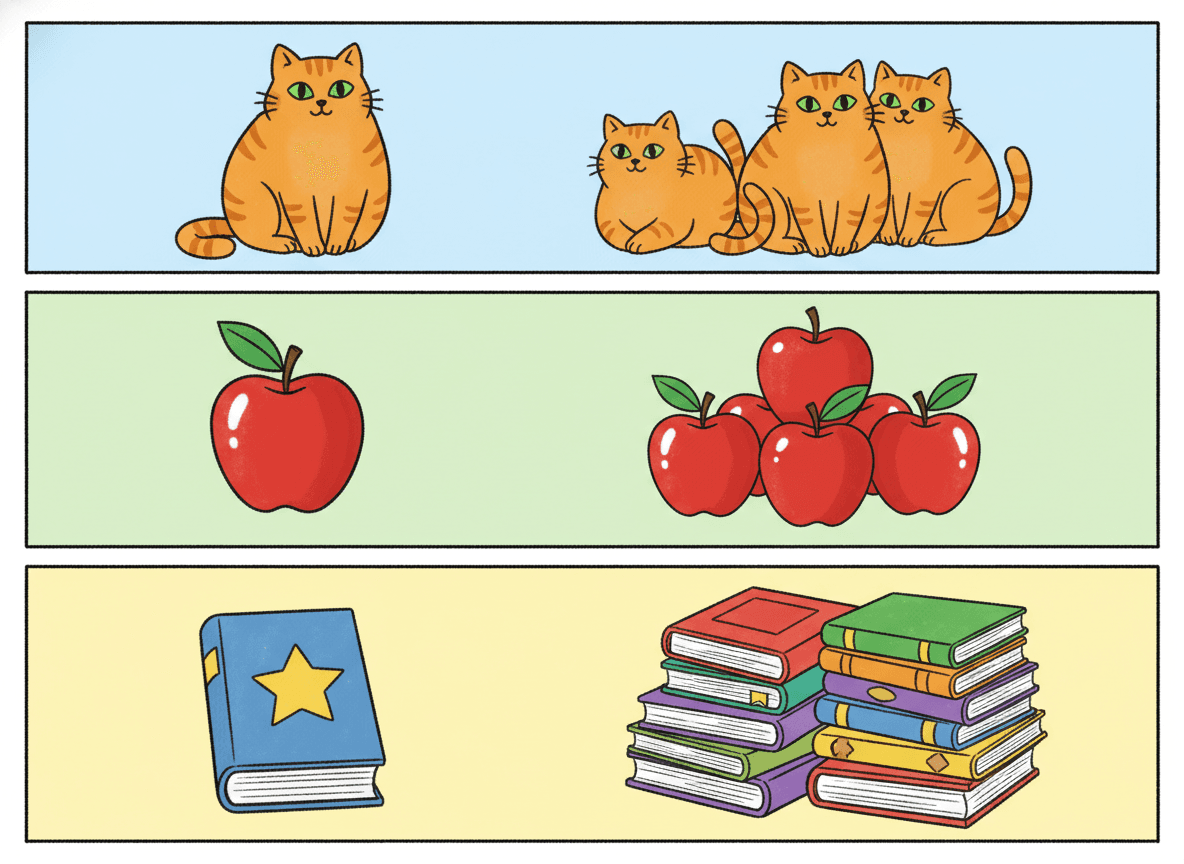
- Most nouns become plural by adding -s (cats, books) or -es (buses, dishes).
- Irregular plural nouns don't follow the -s/-es pattern: mouse → mice, child → children, foot → feet.
- Some nouns are the same in both singular and plural forms: deer, sheep, fish.
- Subject-verb agreement requires that plural nouns take plural verb forms.
What Are Plural Nouns?
Plural nouns name more than one person, place, thing, or idea. The singular noun names one; the plural names two or more.
- cat → cats
- box → boxes
- child → children
- foot → feet
English has several patterns for forming plurals - most follow regular rules, but a significant number of common words are irregular and must be learned individually.
Regular Plural Rules
Most nouns: Add -s - dog → dogs
-s, -sh, -ch, -x, -z: Add -es - bus → buses, dish → dishes
Consonant + y: Change y → i, add -es - baby → babies
Vowel + y: Add -s - toy → toys
-f / -fe: Change to -ves - leaf → leaves
-o (most): Add -s or -es - photo → photos; tomato → tomatoes The -f/-fe rule has many exceptions: roofs, beliefs, chefs (add -s, not -ves). Students learn the most common cases first.
Irregular Plurals
These must be memorized - they don't follow the -s/-es patterns:
child: children
mouse: mice
tooth: teeth
foot: feet
goose: geese
ox: oxen
man: men
woman: women
person: people
Same in both forms (zero plurals): deer, sheep, fish, moose, species, aircraft
What Grade Do Kids Learn Plural Nouns?
1st grade (L.1.1c): Students use frequently occurring irregular plural nouns (foot/feet, child/children).
2nd grade (L.2.1b): Students form and use frequently occurring irregular plural nouns.
3rd grade (L.3.1b): Students form and use regular and irregular plural nouns.
Common Misconceptions
Add -s to everything: Students apply -s universally ("mices," "childs," "gooses"). Direct instruction on the most common irregular plurals prevents this.
Apostrophe makes a plural: "Cat's" is possessive (or a contraction), NOT plural. "Cats" (no apostrophe) is plural. The misplaced apostrophe in plurals ("dog's for sale") is called a greengrocer's apostrophe.
Collective nouns are plural: The team IS playing (singular verb). A team is one unit, even though it contains many people.
Practice Activities
-
Irregular plural concentration: Match singular and irregular plural cards.
-
Sort the plurals: Regular vs. irregular sort cards.
-
Rule application: Give 20 words; students apply the correct rule and write the plural form.
-
Error correction: Sentences with incorrect plural forms; students identify and fix.
-
Zero plural hunt: Find all the words in a passage that are the same in singular and plural (deer, fish...).
Frequently Asked Questions
What is a plural noun?
A plural noun refers to more than one person, place, thing, or idea. Most English nouns become plural by adding -s or -es to the singular form. However, many common nouns have irregular plurals that must be memorized. Understanding plural nouns is essential for correct subject-verb agreement and clear communication.
What are the rules for making nouns plural?
Main rules: (1) Most nouns: add -s (dog → dogs, book → books). (2) Nouns ending in -s, -sh, -ch, -x, -z: add -es (bus → buses, dish → dishes, church → churches). (3) Nouns ending in consonant + y: change y to i and add -es (baby → babies, city → cities). (4) Nouns ending in vowel + y: just add -s (toy → toys, day → days). (5) Nouns ending in -f or -fe: often change to -ves (leaf → leaves, knife → knives).
What are irregular plural nouns?
Irregular plurals don't follow standard rules: mouse → mice, child → children, tooth → teeth, foot → feet, goose → geese, person → people (or persons), ox → oxen, man → men, woman → women. These must be memorized. Some have the same singular and plural form: deer, sheep, fish, aircraft, species.
What is a collective noun and is it singular or plural?
A collective noun names a group as a single unit: team, class, flock, family, crew. In American English, collective nouns are treated as singular ('The team is playing well'). The plural is formed with -s: teams, classes, flocks. Students sometimes confuse collective nouns with plural nouns - a 'class' refers to many students but is grammatically singular.
How do plural nouns affect subject-verb agreement?
In standard English, plural subjects take plural verb forms: 'The dogs run' (not 'runs'). When students misidentify the subject as singular, they choose a singular verb - the most common subject-verb agreement error. Identifying whether the subject is singular or plural is the first step in choosing the correct verb form.
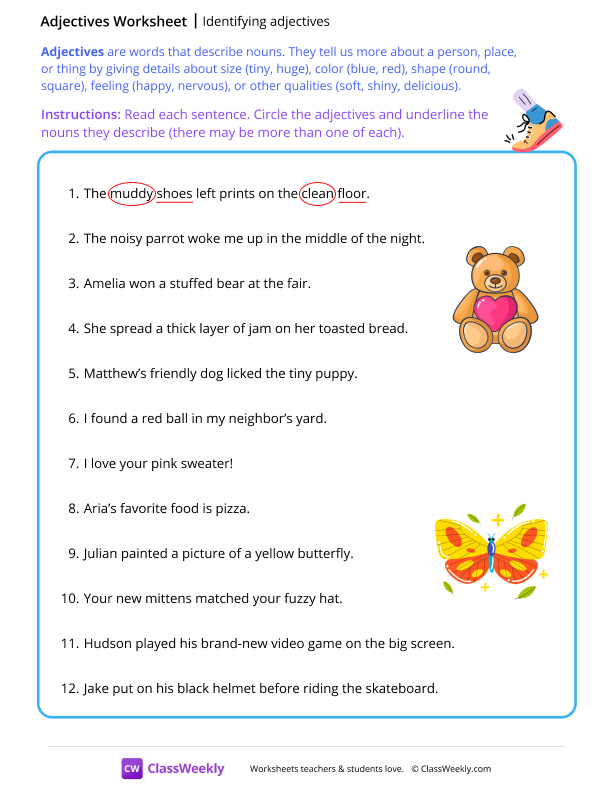
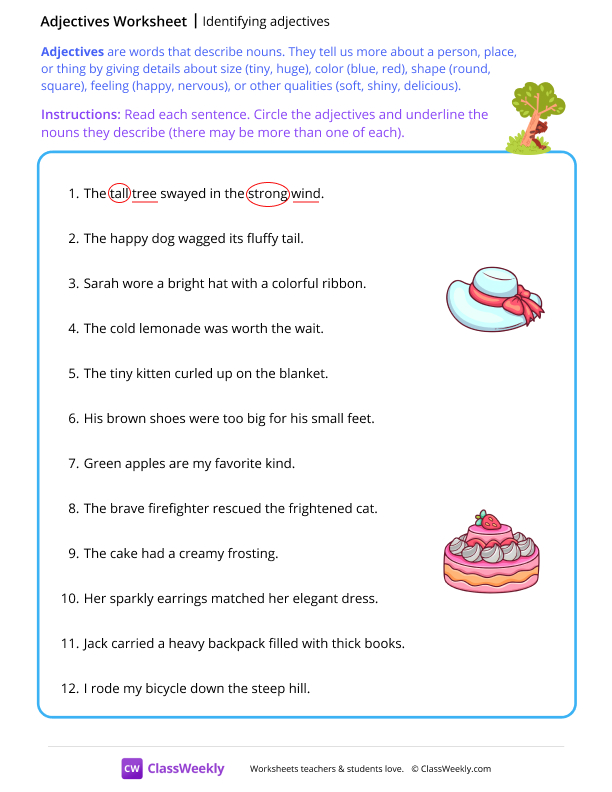
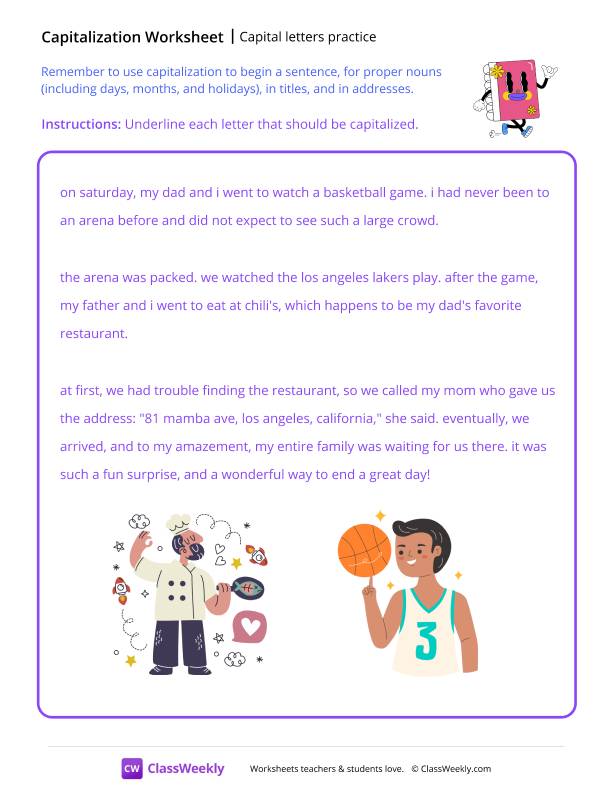
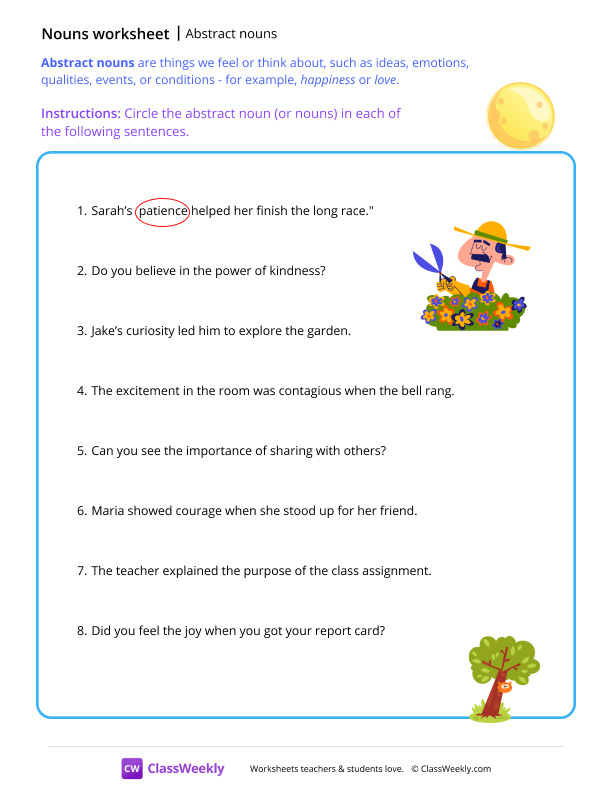
Free Plural Nouns Worksheets
Curriculum-aligned printable worksheets for 1st – 3rd Grade. Download free.