What Is Verb Tense?
Taught in US schools
Key Takeaways
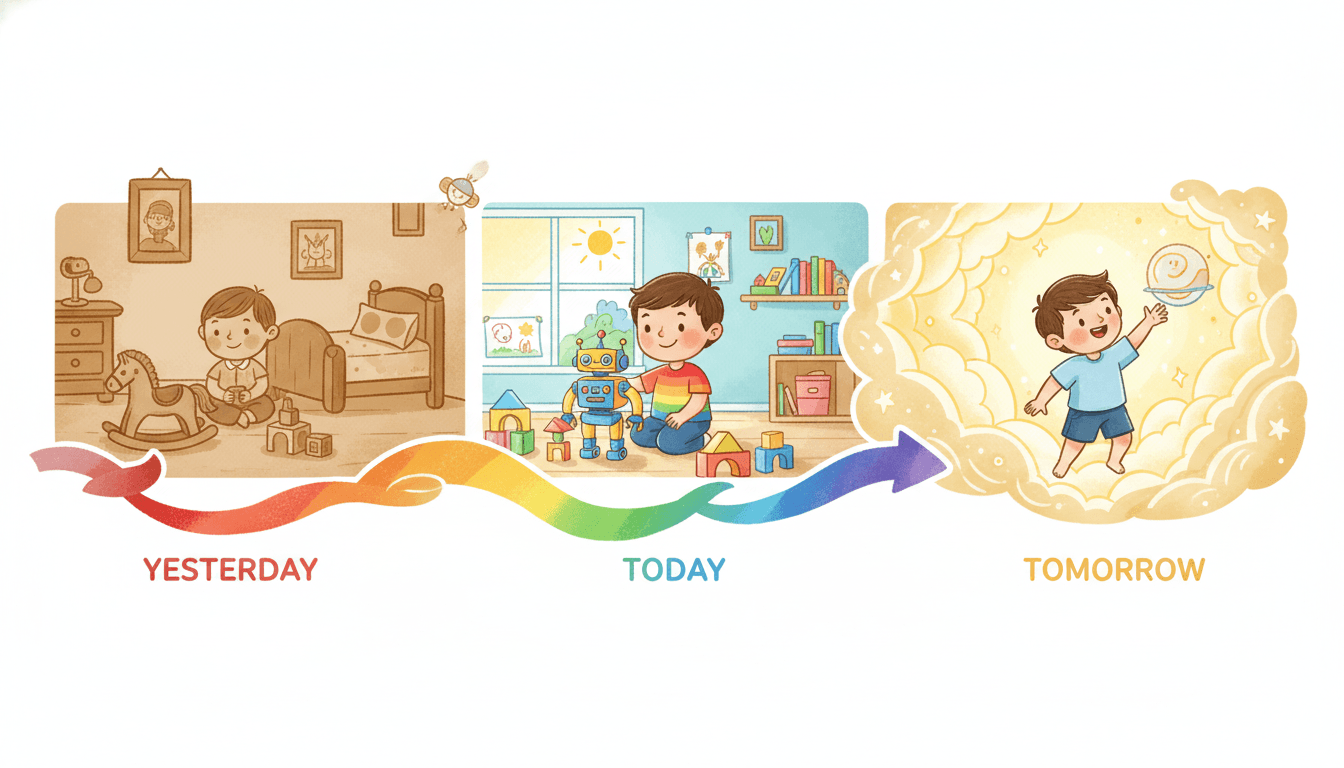
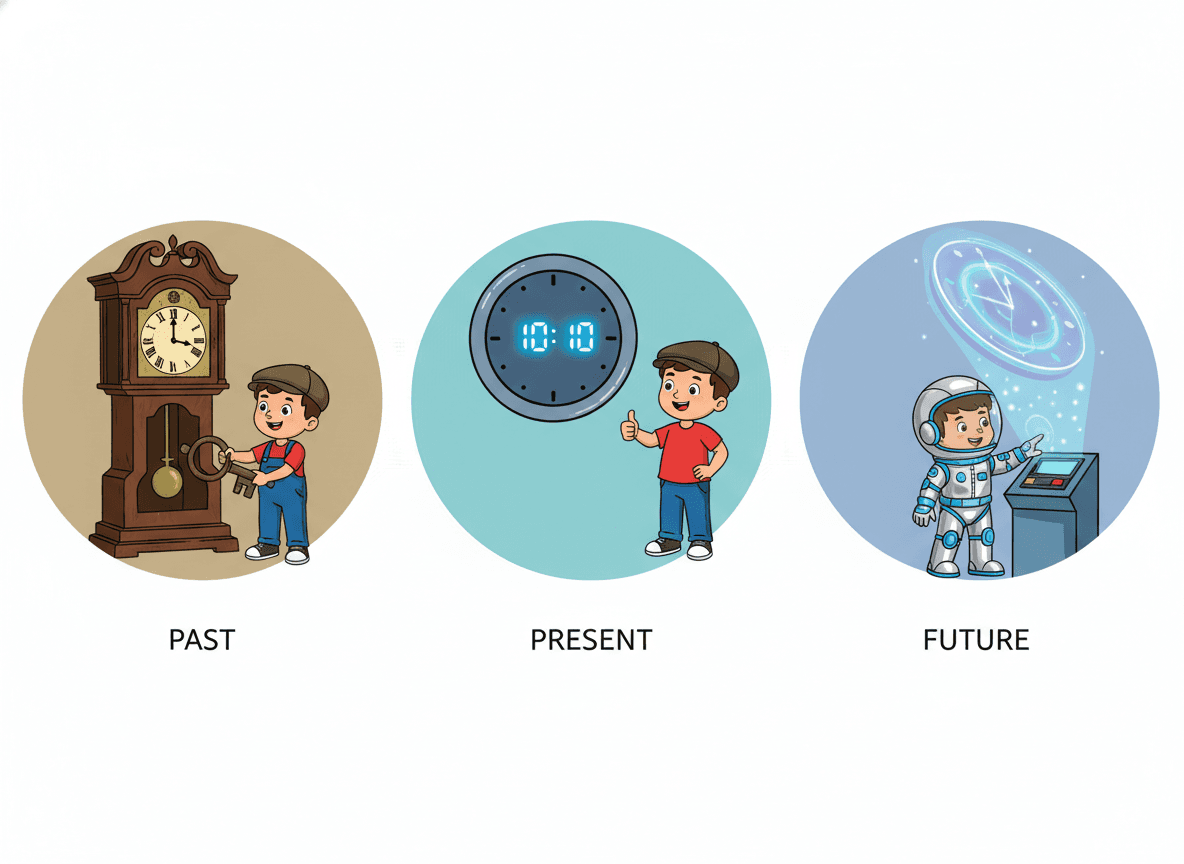
- Verb tense shows when an action happened: past (ran), present (runs), or future (will run).
- Regular past tense is formed by adding -ed; irregular past tense verbs must be memorized.
- Progressive tenses show ongoing action: was running (past progressive), is running (present progressive).
- Consistent use of verb tense within writing is an important convention students develop in grades 3-5.
What Is Verb Tense?
Verb tense indicates when an action or state of being takes place. English uses different verb forms to distinguish whether an event happened in the past, is happening in the present, or will happen in the future.
Understanding verb tense is foundational to both reading comprehension (understanding the timeline of events) and writing mechanics (using tense consistently).
The Three Primary Tenses
Past tense: Action already happened.
- Regular: walk → walked, jump → jumped, play → played
- Irregular: run → ran, go → went, eat → ate
Present tense: Action happening now or habitually.
- "She reads every night."
- "The dog barks at strangers."
Future tense: Action will happen.
- "She will walk home tomorrow."
- "They are going to study later."
Progressive Tenses
Progressive tenses show ongoing action using a form of to be + verb + -ing:
Present progressive: am/is/are + -ing - "She is running."
Past progressive: was/were + -ing - "She was running."
Future progressive: will be + -ing - "She will be running."
Perfect Tenses (Upper Elementary Introduction)
Perfect tenses show action completed relative to another time, using have/has/had + past participle:
- Present perfect: "She has finished her work." (completed sometime before now)
- Past perfect: "She had finished before dinner." (completed before another past event)
What Grade Do Kids Learn Verb Tense?
1st grade (L.1.1e): Students use verbs to convey past, present, and future tense.
2nd grade (L.2.1d): Students form and use the past tense of frequently occurring irregular verbs (sat, hid, told).
3rd grade (L.3.1e): Students form and use simple verb tenses; ensure subject-verb agreement.
4th grade (L.4.1b): Students form and use progressive verb tenses; explain the function of verbs and their tenses.
Common Misconceptions
Adding -ed always makes past tense: Irregular verbs (run → ran, not "runned") are among the most common verbs in English. Students overapply the -ed rule, creating "goed," "eated," "sitted."
"Will" and "going to" are always interchangeable: Both express future, but "will" is more spontaneous and "going to" suggests prior planning. This distinction is addressed in middle school grammar.
Tense only matters in creative writing: Verb tense is critical in informational writing, procedural writing, and literary analysis. Analyzing a text in present tense ("the character feels...") is a convention students learn in 4th–5th grade.
Practice Activities
-
Tense chart: Three columns (Past/Present/Future); students sort verb cards or write the correct form.
-
Irregular verb memory: Match pairs of irregular verb forms (go/went, run/ran, eat/ate).
-
Tense consistency edit: Give a passage with mixed tenses; students revise for consistency.
-
Timeline storytelling: Students draw a timeline and write past, present, and future events in the correct tense.
-
Progressive tense descriptions: Students describe what is happening in a photograph using present progressive ("The girl is laughing").
Frequently Asked Questions
What is verb tense?
Verb tense is the grammatical feature that shows when an action takes place relative to the present moment. The three primary tenses are past (happened before now), present (happening now or habitually), and future (will happen later). English has additional tenses formed with helping verbs, including progressive tenses (showing ongoing action) and perfect tenses (showing completed action).
What are the three main verb tenses?
Past tense: the action happened before now ('She walked to school'). Present tense: the action happens now or repeatedly ('She walks to school every day'). Future tense: the action will happen ('She will walk to school tomorrow'). Future is typically formed with the helping verbs 'will' or 'shall,' or with 'going to.'
What is the difference between regular and irregular verbs?
Regular verbs form their past tense by adding -ed: walk → walked, jump → jumped. Irregular verbs change their form completely and must be memorized: run → ran, eat → ate, go → went, is → was, see → saw, bring → brought. There are hundreds of irregular verbs in English, and they tend to be the most commonly used verbs.
What are progressive tenses?
Progressive tenses show ongoing or continuing action. Present progressive: 'She is running' (happening right now). Past progressive: 'She was running' (was ongoing in the past). Future progressive: 'She will be running' (will be ongoing in the future). Progressive tenses are formed with a form of 'be' + the main verb + -ing.
What does tense consistency mean?
Tense consistency means keeping the same tense throughout a piece of writing unless there is a good reason to shift. A student who starts a story in past tense ('He walked into the room...') should not switch to present tense mid-story ('He sees the dragon...') without purpose. Inconsistent tense is one of the most common mechanical errors in elementary writing.
Free Verb Tense Worksheets
Curriculum-aligned printable worksheets for 1st – 4th Grade. Download free.