What Is a Debate?
Taught in US schools
Key Takeaways
- Debate is a structured discussion where two sides argue opposing positions using evidence.
- Even informal classroom debate builds argumentation, listening, and critical thinking skills.
- Students benefit from arguing positions they don't personally hold - it builds perspective-taking.
- Debate is a bridge between oral discussion and written argumentative writing.
What Is a Debate?
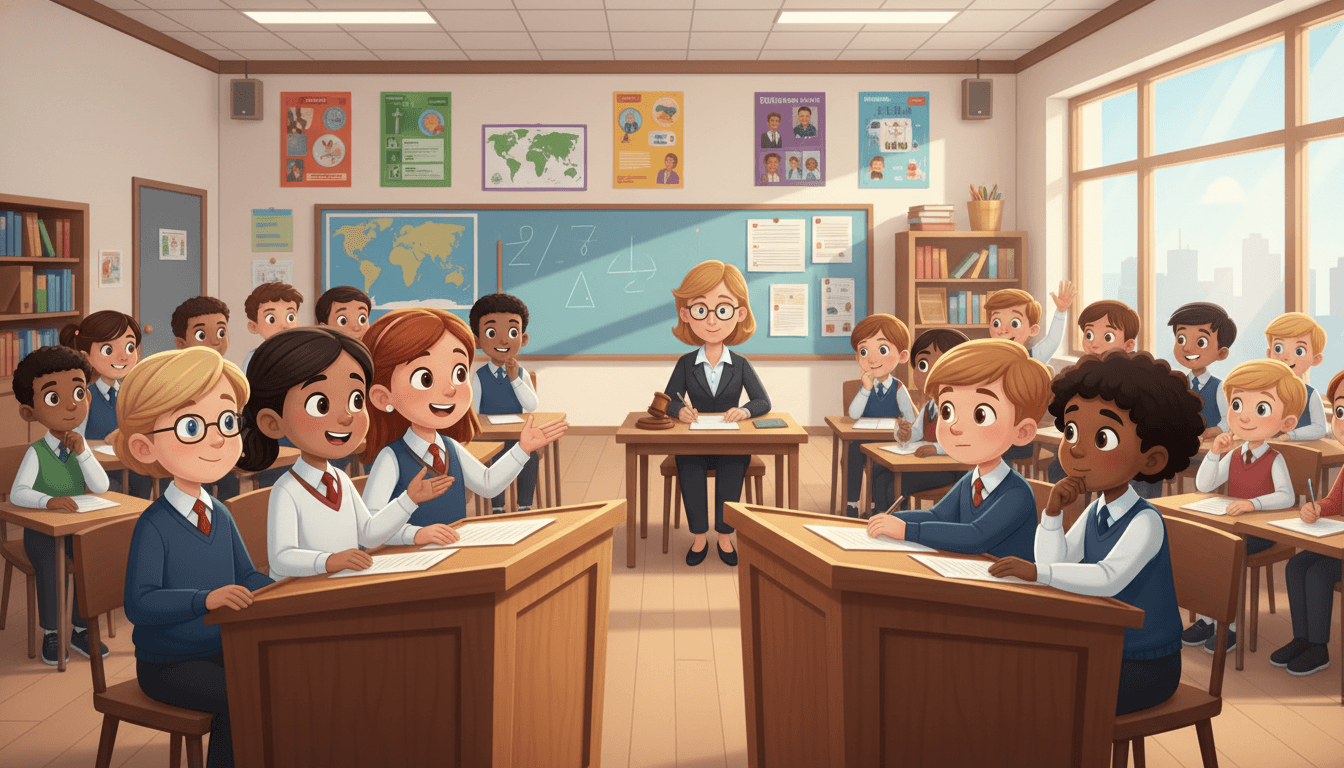
A debate is a structured discussion in which participants argue opposing positions on a debatable topic. Each side presents evidence-based arguments, responds to the other side's points, and attempts to persuade an audience or judge.
In classrooms, debate exists on a spectrum - from informal partner discussions where students argue two sides of a question, to structured formal debates with timed rounds and assigned roles.
Why Debate in Elementary School?
Debate is one of the richest language activities available in the classroom. In a single debate session, students are simultaneously:
-
Researching - finding evidence and facts to support a position
-
Arguing - constructing logical, evidence-based claims
-
Listening - actively attending to the other side in order to respond
-
Speaking - presenting ideas clearly and confidently
-
Thinking critically - evaluating the strength of arguments on both sides
Debate is also an excellent precursor to argumentative writing. Students who have verbally argued a position find it much easier to write an argumentative essay on the same topic.
Types of Classroom Debate
Four Corners - Students move to corners labeled "Strongly Agree," "Agree," "Disagree," "Strongly Disagree" in response to a statement. Each group explains their position.
Think-Pair-Debate - Like think-pair-share but students are assigned opposing positions and must argue their side, even if they personally disagree.
Fishbowl Debate - A small group debates in the center while the rest of the class observes and takes notes. Groups rotate in.
Formal Structured Debate - Teams of 2-4 students argue one side. Includes timed opening statements, rebuttals, and closing arguments. Works well in grades 4-5.
Philosophical Chairs - Students physically move to sides of the room based on their position and take turns speaking. The room position can shift during the discussion.
How to Run a Simple Classroom Debate
- Choose a genuinely debatable topic - it must have real arguments on both sides
- Assign or let students choose their position - arguing an opposing view builds perspective-taking
- Give research time - students gather evidence, examples, and counterarguments
- Set ground rules - respectful language, one speaker at a time, respond to ideas not people
- Run the debate - alternate sides, opening → response → rebuttal → closing
- Debrief - what were the strongest arguments? Did anyone change their mind? Why?
Practice Activities
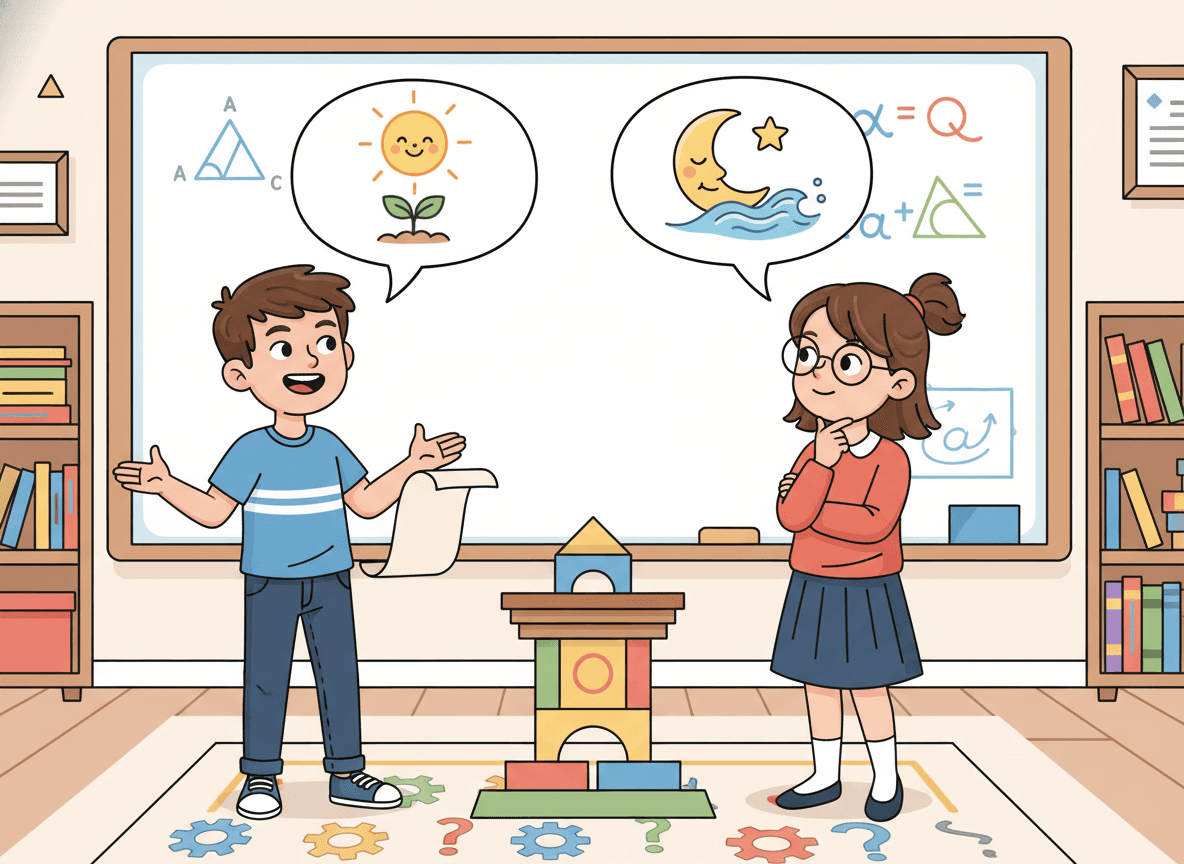
- Start with low-stakes topics: "Is summer better than winter?" - then gradually introduce topics that require research and evidence.
- Ask students to argue the opposite of what they personally believe - this is one of the most powerful perspective-taking exercises available.
- Have students take notes on the opposing side's arguments during the debate to prepare their rebuttal.
- After a debate, have students write a paragraph explaining the strongest argument they heard - even if it was from the other side.
Frequently Asked Questions
What is a classroom debate?
A classroom debate is a structured activity where students argue opposing sides of a debatable issue. Students research both sides, present arguments, respond to the other side's points, and use evidence to support their claims. Debates can be formal (timed rounds, judged) or informal (small-group discussion with assigned positions).
What topics are good for elementary school debates?
Good elementary debate topics are clearly debatable, age-appropriate, and have strong arguments on both sides. Examples: Should schools have longer recesses? Should students be required to wear uniforms? Should homework be banned? Is it better to live in a city or the country? These topics are accessible while still requiring students to find and use evidence.
How does debate help students?
Debate builds multiple skills simultaneously: research (finding evidence), argumentation (building a case), listening (responding to the other side), speaking (presenting clearly), and critical thinking (evaluating claims). It also builds confidence, vocabulary, and the understanding that reasonable people can disagree - and that disagreement can be productive.
Free Debate Worksheets
Curriculum-aligned printable worksheets for 3rd – 5th Grade. Download free.