What Are Questioning Strategies in Teaching?
Taught in US schools
Key Takeaways
- Questions are among the most powerful teaching tools - but only when they are planned and purposeful.
- Lower-order questions check recall; higher-order questions promote reasoning and analysis.
- Wait time (5-10 seconds after asking) dramatically improves the quality of student responses.
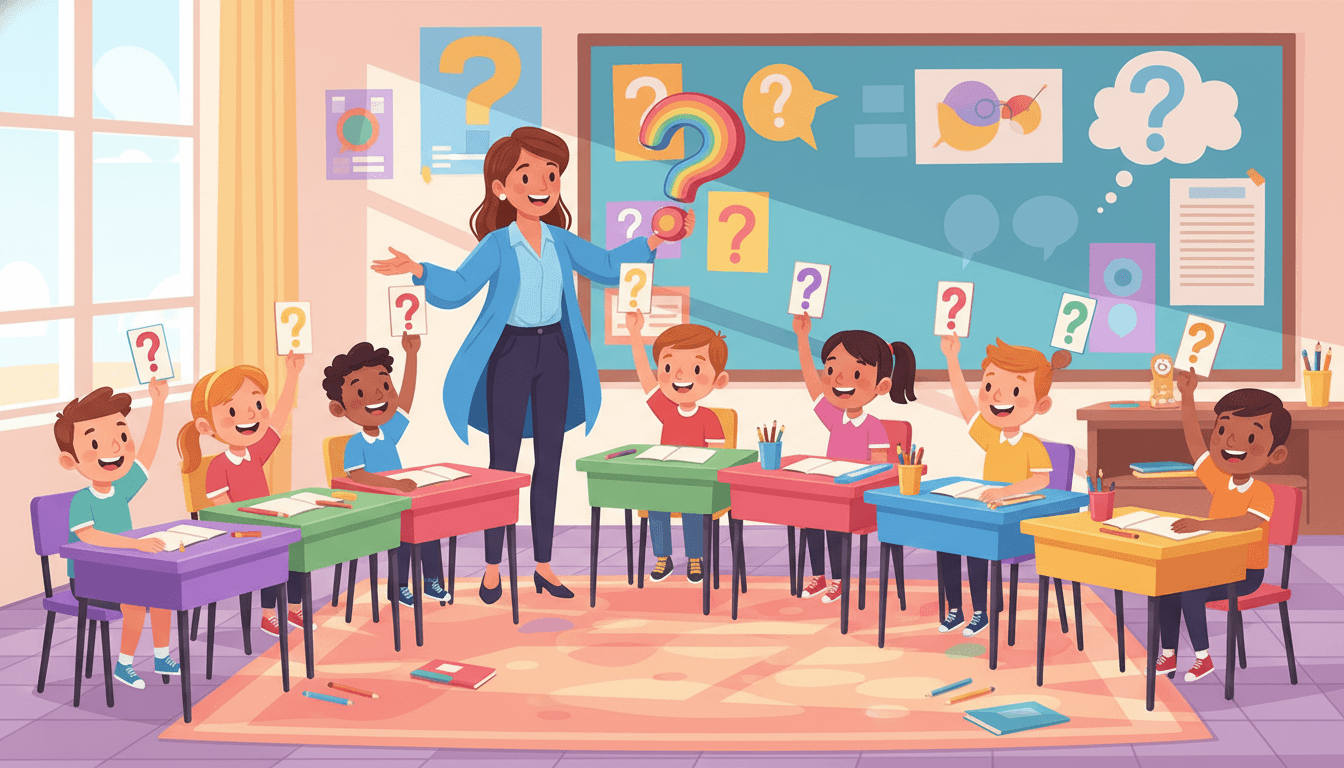
- Effective questioning turns students from passive listeners into active thinkers.
What Are Questioning Strategies?
Questioning strategies are the deliberate techniques teachers use to ask questions that promote thinking, understanding, and discussion. Questioning is one of the most frequently used teaching tools - and one of the most underutilized when it defaults to random or purely recall-based questions.
Research consistently shows that the quality of questions asked in a classroom is one of the most significant variables in student learning. The right question, at the right level, asked in the right way, can transform passive listening into active reasoning.
Types of Questions
Recall / Closed Questions One correct answer. Used to check whether students have the foundational knowledge needed for deeper thinking.
"What is the capital of France?" / "What is 8 × 7?"
Comprehension Questions Check whether students understand what they read or heard - not just memorized it.
"In your own words, what is the main idea of this passage?"
Analysis Questions Ask students to break information apart and examine relationships.
"Why do you think the character made that decision? What evidence supports your thinking?"
Evaluation Questions Ask students to judge, assess, or make a claim with support.
"Was the colonists' decision to declare independence the right one? Defend your answer."
Creation / Synthesis Questions Ask students to generate new ideas, solutions, or perspectives.
"If you were in charge, how would you solve this problem differently?"
The Power of Wait Time
Research by Mary Budd Rowe demonstrated that when teachers wait just 5-10 seconds after asking a question before accepting answers, the following happen:
- More students participate
- Responses are longer and more complete
- More students provide evidence for their answers
- Lower-achieving students participate more
- Students ask more of their own follow-up questions
The instinct to immediately call on the first raised hand is one of the most common barriers to quality thinking in classrooms.
Effective Questioning Techniques
Think-Pair-Share: All students think, every student speaks (to a partner), then some share with the class. Wait time is built in.
Cold calling with notice: "Everyone think of an answer... I'm going to call on someone in 30 seconds."
Follow-up questions: After any answer: "Can you say more about that?" / "What makes you think so?" / "Does anyone agree or disagree? Why?"
Probing misconceptions: "Tell me how you got that answer" - reveals process, not just product.
Student-generated questions: "What questions do you have about this?" / "What would you want to know if you were a scientist studying this?"
Practice Activities
- Pre-plan 3 levels of questions (recall, analysis, evaluation) for each lesson. Using a variety ensures students operate across cognitive levels.
- Track your wait time for one lesson: ask a question, count silently to 5 before accepting any hand - notice the difference in response quality.
- Teach students to ask their own questions using QFT (Question Formulation Technique) - students generate as many questions as they can about a topic, then sort them by type.
- Socratic seminar: a discussion structured entirely around student-generated and student-answered questions, with teacher facilitation only.

Frequently Asked Questions
What are questioning strategies in teaching?
Questioning strategies are the deliberate techniques teachers use when asking questions - including what type of question to ask, how to ask it, how long to wait for a response, and how to follow up. Good questioning is not random - it is planned to guide students toward specific thinking or understanding, promote discussion, check comprehension, and push students to reason at higher levels.
What is the difference between open and closed questions?
Closed questions have one correct answer: 'What year did the Civil War begin?' They are useful for checking factual recall. Open questions have multiple valid answers and invite reasoning: 'Why do you think the Civil War was inevitable?' or 'What might have happened if the South had won?' Open questions promote discussion, critical thinking, and deeper engagement. Effective teachers use both - closed to check facts, open to develop thinking.
What is wait time and why does it matter?
Wait time is the pause a teacher holds between asking a question and accepting an answer. Research by Mary Budd Rowe showed that increasing wait time from 1 second to 5-10 seconds produces dramatically better responses: answers are longer, more students participate, more students respond, and the quality of reasoning improves. The instinct to immediately call on a raised hand works against quality thinking.
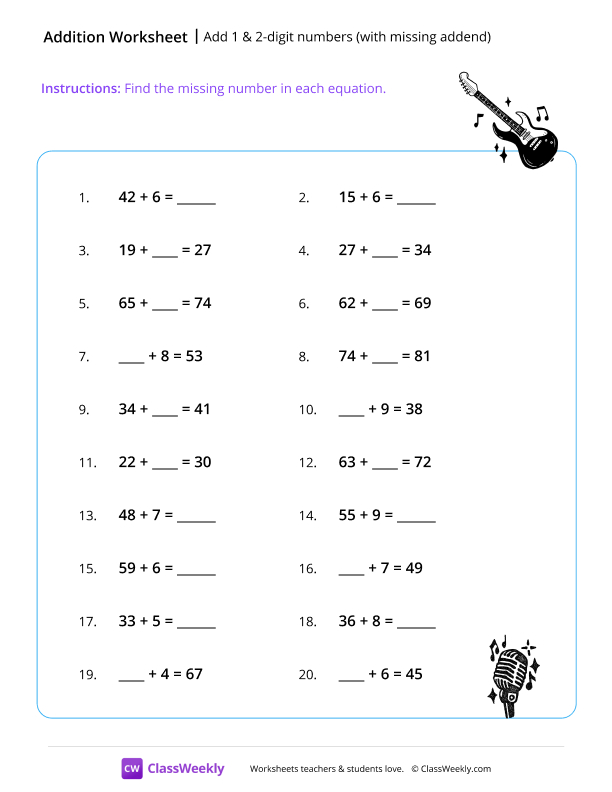
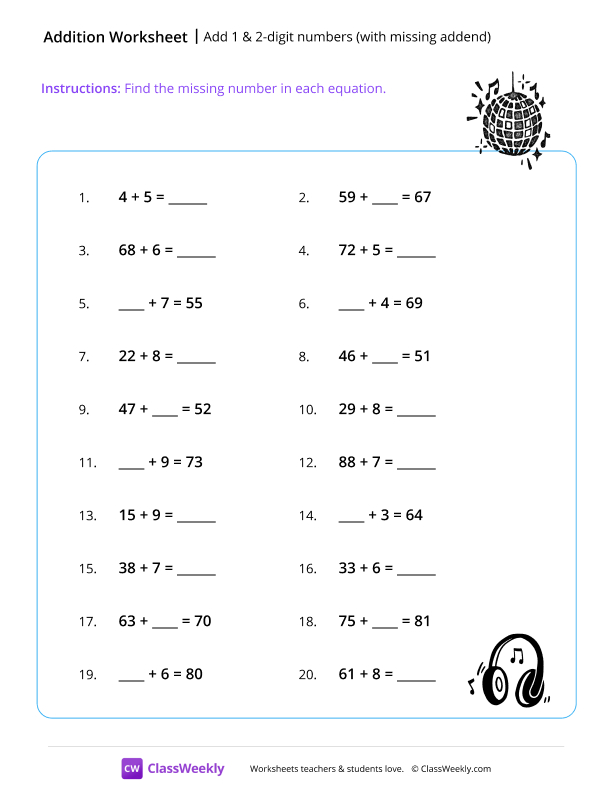
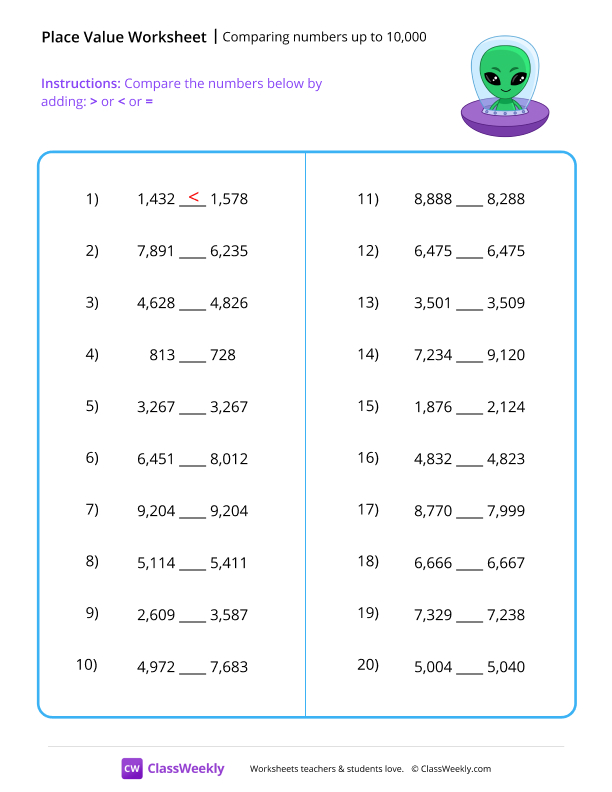
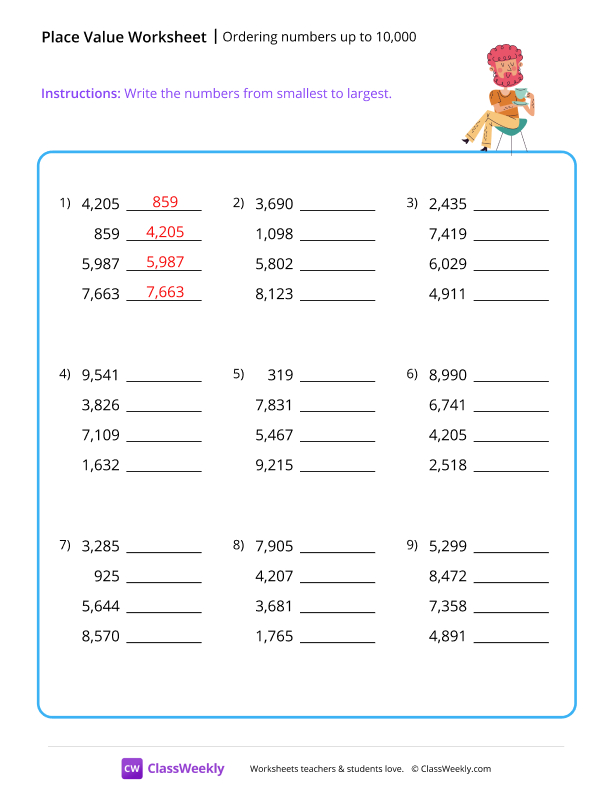
Free Questioning Strategies Worksheets
Curriculum-aligned printable worksheets for Kindergarten – 5th Grade. Download free.