Who Was Eleanor Roosevelt?
Taught in US schools
Key Takeaways
- Eleanor Roosevelt served as First Lady from 1933 to 1945 and used that platform to advocate for civil rights, women's rights, and the poor.
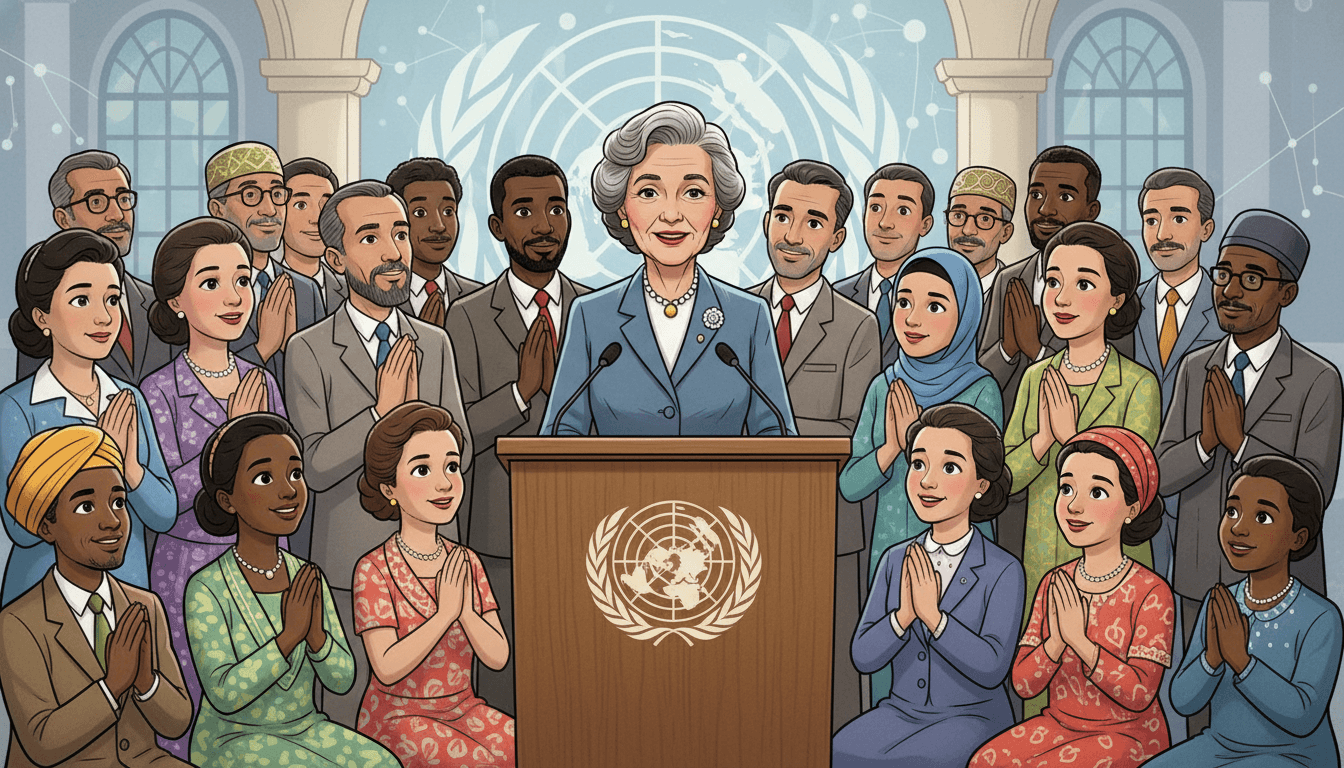
- After FDR's death, she was appointed as a US delegate to the United Nations, where she chaired the committee that drafted the Universal Declaration of Human Rights (1948).
- President Harry Truman called her the First Lady of the World in recognition of her global humanitarian impact.
Who Was Eleanor Roosevelt?
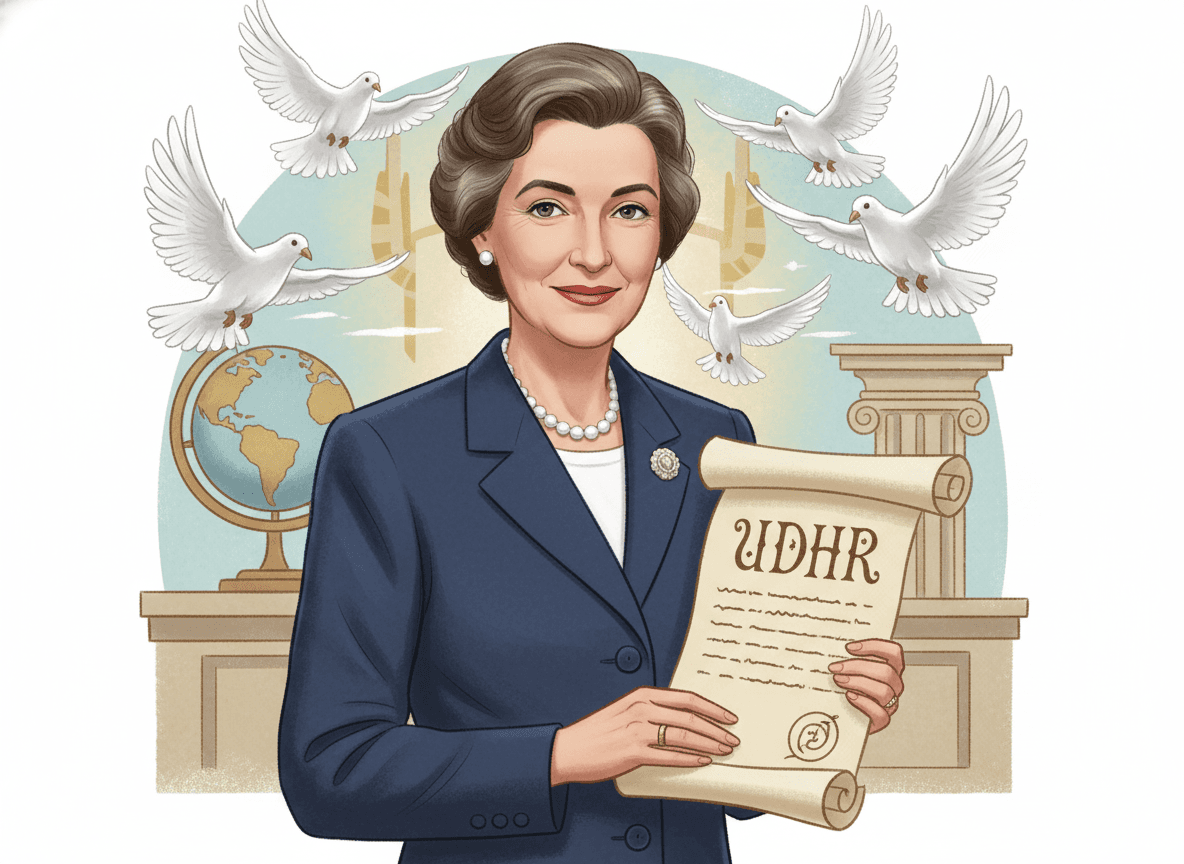
Anna Eleanor Roosevelt (October 11, 1884 – November 7, 1962) was the First Lady of the United States from 1933 to 1945, wife of President Franklin D. Roosevelt (FDR). She went far beyond the traditional role of First Lady to become one of the most influential human rights advocates of the 20th century.
President Harry Truman called her the "First Lady of the World" - a tribute to her global impact.
Early Life
Eleanor was born into a wealthy New York family but had a difficult childhood. Her mother died when she was eight, her father when she was ten, and she was raised by her maternal grandmother. She was a shy, serious child who grew into one of the most courageous public figures in American history.
She married Franklin Delano Roosevelt in 1905 and had six children (five survived to adulthood). Franklin was elected president in 1932.
As First Lady (1933–1945)
Eleanor Roosevelt transformed the role of First Lady from largely ceremonial to actively political:
Held press conferences: Only female journalists were allowed - forcing newspapers to hire women reporters
Wrote "My Day" newspaper column: A daily column she wrote for 27 years, reaching millions of readers
Traveled to see poverty firsthand: Visited coal mines, slums, and military hospitals during WWII
Advocated for civil rights: Publicly supported Black Americans' civil rights at a time when many politicians avoided the issue
Resigned from the DAR: Protested the exclusion of Black singer Marian Anderson; helped arrange her Lincoln Memorial concert The Great Depression (1929–early 1940s) hit Americans hard, and Eleanor became the conscience of the New Deal - pushing her husband and his administration to do more for the poor, unemployed, and marginalized.
After the White House
When FDR died in April 1945, Eleanor did not retire from public life. President Truman appointed her as a US Delegate to the United Nations, where she:
- Chaired the UN Commission on Human Rights
- Led the drafting of the Universal Declaration of Human Rights, adopted December 10, 1948
- Continued to speak, write, and advocate until her death in 1962
Legacy
Eleanor Roosevelt remains a symbol of compassion, courage, and conviction. Her belief that every person deserves dignity and rights regardless of race, gender, or background was ahead of her time - and her work still shapes international human rights law today.
Eleanor Roosevelt famously said: "You gain strength, courage and confidence by every experience in which you really stop to look fear in the face. You must do the thing you think you cannot do."
Practice Activities
- Create a biography timeline of Eleanor Roosevelt's life, from her difficult childhood to the Universal Declaration of Human Rights.
- Read an excerpt from her "My Day" newspaper column and write a response - do you agree with her views?
- Research the Universal Declaration of Human Rights and identify three rights you think are most important. Explain why.
- Compare Eleanor Roosevelt to another historical woman leader - what challenges did they share? What was different about their paths?
- Write a persuasive letter in Eleanor Roosevelt's voice, arguing for a cause she championed (equal rights, help for the poor, international peace).
Frequently Asked Questions
What made Eleanor Roosevelt unusual as a First Lady?
Unlike most First Ladies before her, Eleanor Roosevelt took a highly active public role. She gave speeches, wrote a daily newspaper column, traveled extensively to witness conditions for poor and marginalized Americans, and spoke out on controversial issues like racial inequality at a time when that was politically risky.
What is the Universal Declaration of Human Rights?
The Universal Declaration of Human Rights (UDHR), adopted by the United Nations in 1948, is a milestone document that proclaims the basic rights and freedoms that all people should have, regardless of nationality, race, religion, or sex. Eleanor Roosevelt chaired the committee that drafted it and was one of its chief architects.
How did Eleanor Roosevelt feel about civil rights?
Eleanor Roosevelt was a strong advocate for racial equality at a time when it was controversial. She resigned from the Daughters of the American Revolution (DAR) in 1939 when they refused to let Black opera singer Marian Anderson perform at their hall - and helped arrange for Anderson to perform at the Lincoln Memorial instead, drawing a crowd of 75,000.
Free Eleanor Roosevelt Worksheets
Curriculum-aligned printable worksheets for 3rd – 5th Grade. Download free.