What Is Energy? (Science)
Taught in US schools
Key Takeaways
- Energy is the ability to do work or cause change in matter.
- Kinetic energy is the energy of motion; potential energy is stored energy waiting to be used.
- Energy cannot be created or destroyed - it can only change form (law of conservation of energy).
- Energy transfer is when energy moves from one object or place to another.
What Is Energy?
Energy is the ability to do work or cause change. In science, "work" means making something move, change shape, or transform - and energy is what makes that happen.
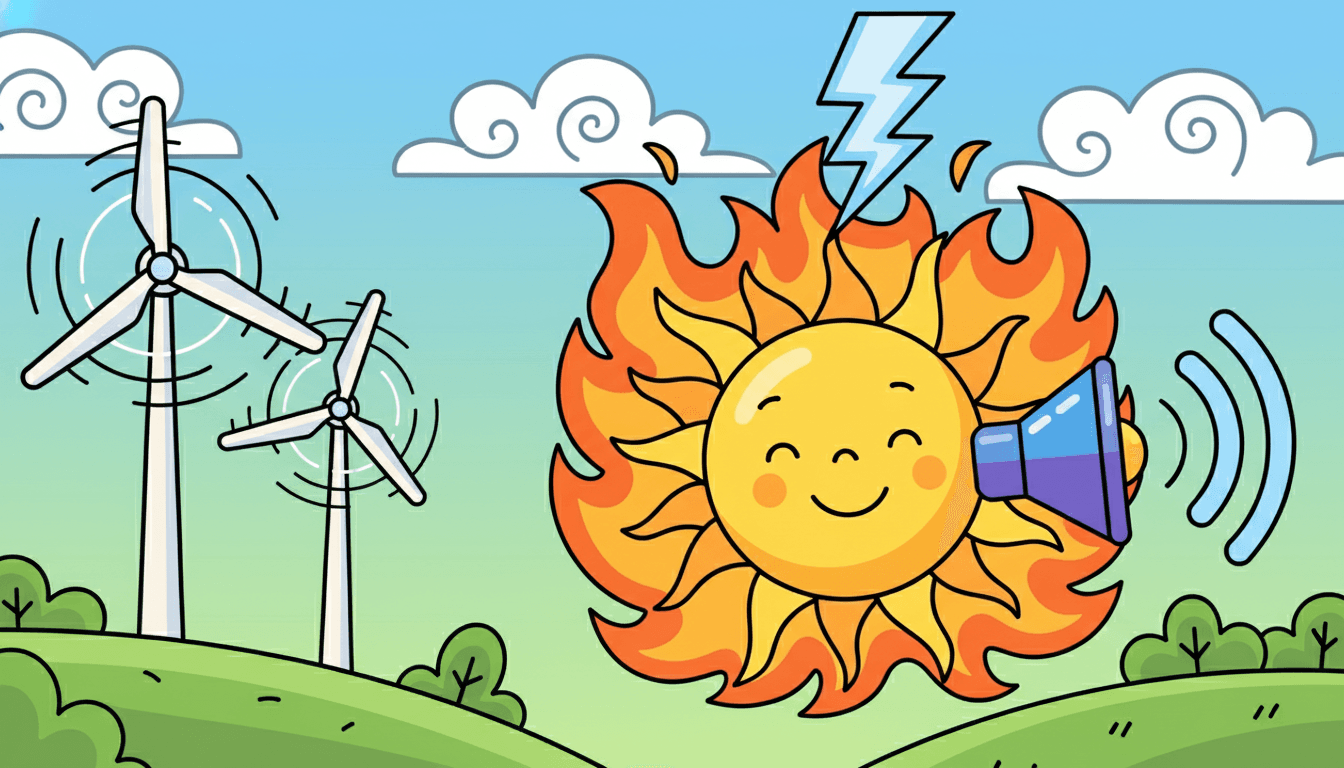
Energy is all around us. The sunlight warming a window, the sound of music, the movement of a bouncing ball, the heat cooking food - all of these are forms of energy.
Kinetic Energy: The Energy of Motion
Kinetic energy is the energy an object has because it is moving. The faster an object moves and the more mass it has, the more kinetic energy it has.
Examples of kinetic energy:
- A rolling ball
- A running dog
- Flowing water in a river
- Wind moving through the trees
- A vibrating guitar string
Potential Energy: Stored Energy
Potential energy is energy that is stored and ready to be used. It's energy based on an object's position or condition.
Gravitational potential energy - stored because of height. A roller coaster at the top of a hill has maximum gravitational potential energy.
Elastic potential energy - stored because something is stretched or compressed. A wound-up rubber band, a drawn bow, a compressed spring.
Chemical potential energy - stored in the bonds of molecules. Food, batteries, and fuel all contain chemical potential energy.
Energy Transfer and Transformation
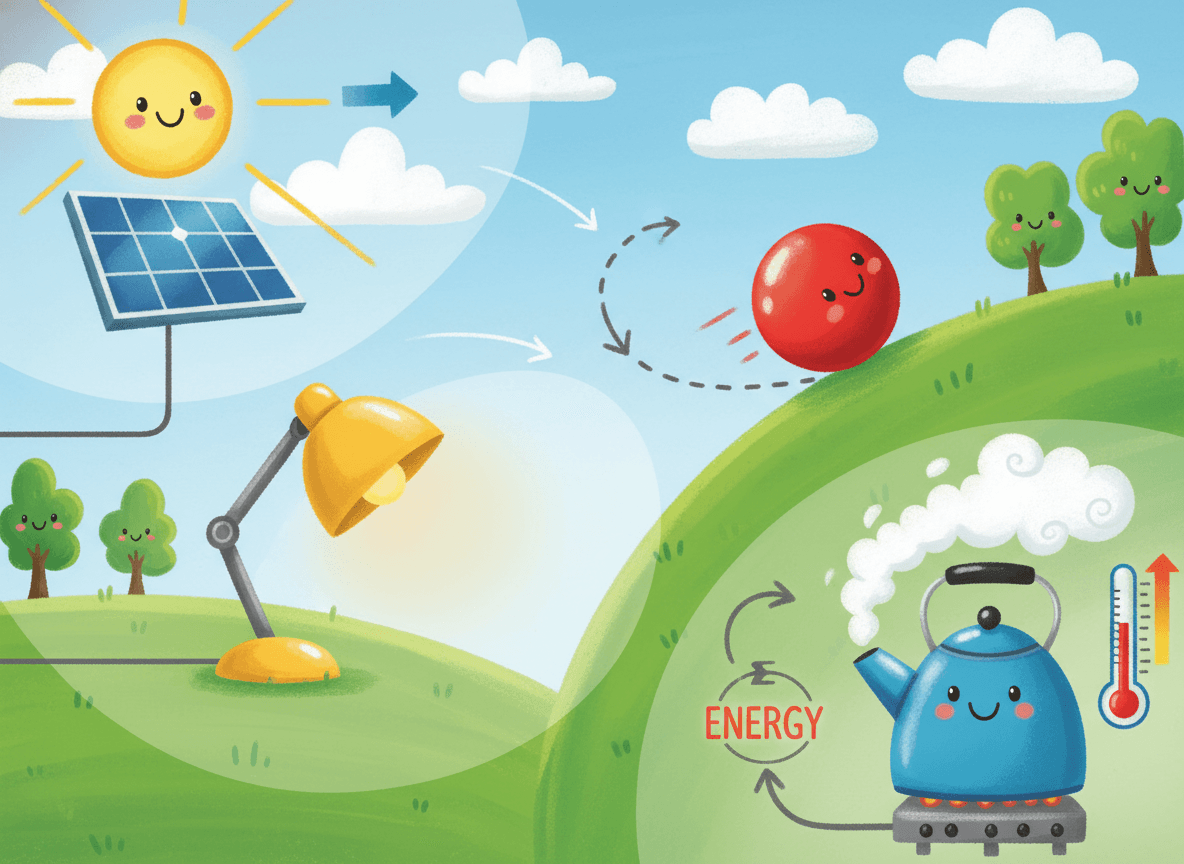
Energy cannot be created or destroyed - this is the law of conservation of energy. Energy can only be transferred (moved from one place to another) or transformed (changed from one form to another).
Examples:
- A ball rolling down a hill: potential energy → kinetic energy
- A light bulb: electrical energy → light energy + heat energy
- A plant growing: light energy → chemical energy (through photosynthesis)
- Eating lunch: chemical energy → kinetic energy (movement) + heat energy (body warmth)
Common Forms of Energy
Kinetic: Energy of motion - Moving car
Heat (Thermal): Movement of molecules - Hot stove
Light (Radiant): Electromagnetic waves - Sunlight
Sound: Vibrations moving through matter - Music
Electrical: Movement of electrons - Lightning, electricity
Chemical: Stored in molecular bonds - Food, batteries
Practice Activities
- Build a marble run: track where kinetic and potential energy exist at different points in the run.
- Drop balls from different heights and observe how height (potential energy) affects how high the ball bounces (kinetic energy).
- Demonstrate energy transformation: a wind-up toy (elastic → kinetic), a solar calculator (light → electrical), a hand warmer (chemical → heat).
- Have students trace the energy story of their breakfast: from sunlight → plant → food → body energy.
Frequently Asked Questions
What is energy in science?
Energy is the ability to do work or cause change. Scientifically, 'work' means making something move or change. Energy is what makes things happen - a ball flying through the air, a light turning on, a plant growing. Energy exists in different forms and can be transformed from one form to another.
What is the difference between kinetic and potential energy?
Kinetic energy is the energy an object has because it is moving. A rolling ball, a running child, and flowing water all have kinetic energy. Potential energy is stored energy - energy that an object has because of its position or condition. A ball held up high has gravitational potential energy. A stretched rubber band has elastic potential energy. When you let go of the rubber band, potential energy converts to kinetic energy.
What are examples of energy transfer?
Energy transfer is when energy moves from one object or form to another. Examples: a swinging bat hitting a ball (kinetic energy transfers from bat to ball); the sun warming the pavement (light energy converts to heat energy); plugging in a lamp (electrical energy converts to light energy); eating breakfast (chemical energy in food converts to kinetic energy in your body).
Free Energy Worksheets
Curriculum-aligned printable worksheets for 3rd – 5th Grade. Download free.


