What Is Estimation?
Taught in US schools
Key Takeaways
- Estimation means finding a reasonable approximate answer, not an exact one.
- Rounding is the most common estimation strategy, but front-end and compatible numbers are also useful.
- Estimation is a practical life skill used in shopping, cooking, travel, and planning.
- Checking estimates against exact answers builds number sense and helps students catch computation errors.
What Is Estimation?
Estimation is the mathematical skill of finding an approximate value that is close enough to the exact answer for the situation. It is not the same as guessing - estimation is a deliberate, reasoned process using specific strategies.
Estimation is one of the most practical math skills students will use throughout their lives: from estimating a grocery bill to deciding if a road trip is too long to judging whether a classroom holds enough chairs.
Estimation Strategies
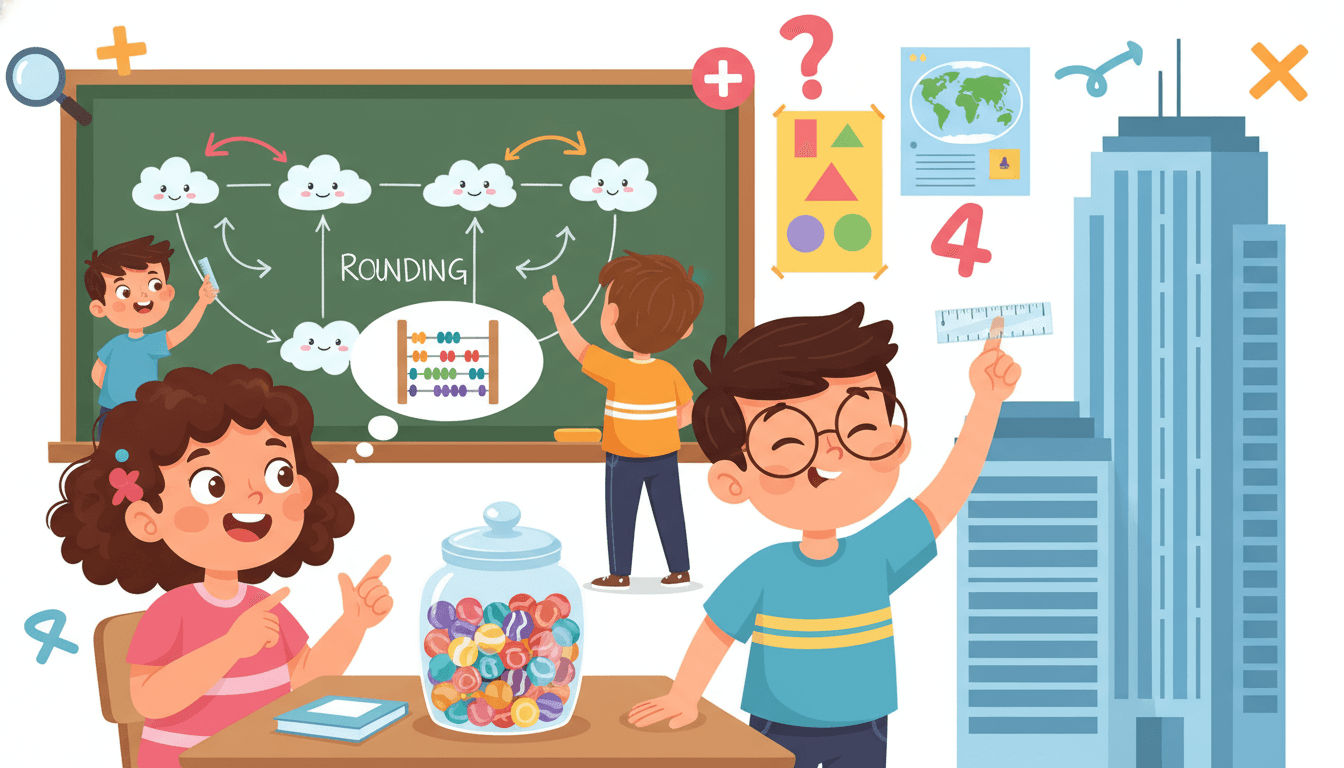
Rounding: The most common strategy. Round each number to the nearest ten, hundred, or thousand before computing.
- 37 + 52 → 40 + 50 = 90 (exact: 89)
Front-end estimation: Use only the front (leading) digit of each number and ignore the rest.
- 523 + 319 → 500 + 300 = 800
Compatible numbers: Replace numbers with nearby values that are easy to compute mentally.
- 47 × 5 → 50 × 5 = 250
Benchmark numbers: Use known reference points (25, 50, 100) to anchor estimates.
Estimation vs. Exact Computation
Estimation and exact computation both have their place. Estimation is preferred when:
- The problem asks "about how many" or "approximately"
- You're checking whether an exact answer is reasonable
- A quick mental answer is more useful than a precise one
Students should always compare their estimate to their exact answer. A large discrepancy signals a possible error in computation.
What Grade Do Kids Learn Estimation?
2nd grade: Students estimate and count groups of objects; compare estimates to exact counts.
3rd grade: Estimation is applied to multi-step word problems (3.OA.D.8) to assess reasonableness.
4th grade: Estimating sums, differences, products, and quotients of multi-digit numbers using rounding (4.NBT.A.3).
5th grade: Estimating with decimals using rounding (5.NBT.A.4).
Common Misconceptions
Estimation means being wrong: Students sometimes feel that an estimate is a failure to find the right answer. Reframe estimation as a purposeful tool that has its own value separate from exact computation.
Only one "right" estimate: Many problems have multiple reasonable estimates depending on the strategy used. Teaching several strategies and comparing results builds flexibility.
Closer is always better: While accuracy matters, over-precision defeats the purpose of estimation. Students don't need to find 87.3 when "about 90" is sufficient.
Practice Activities
-
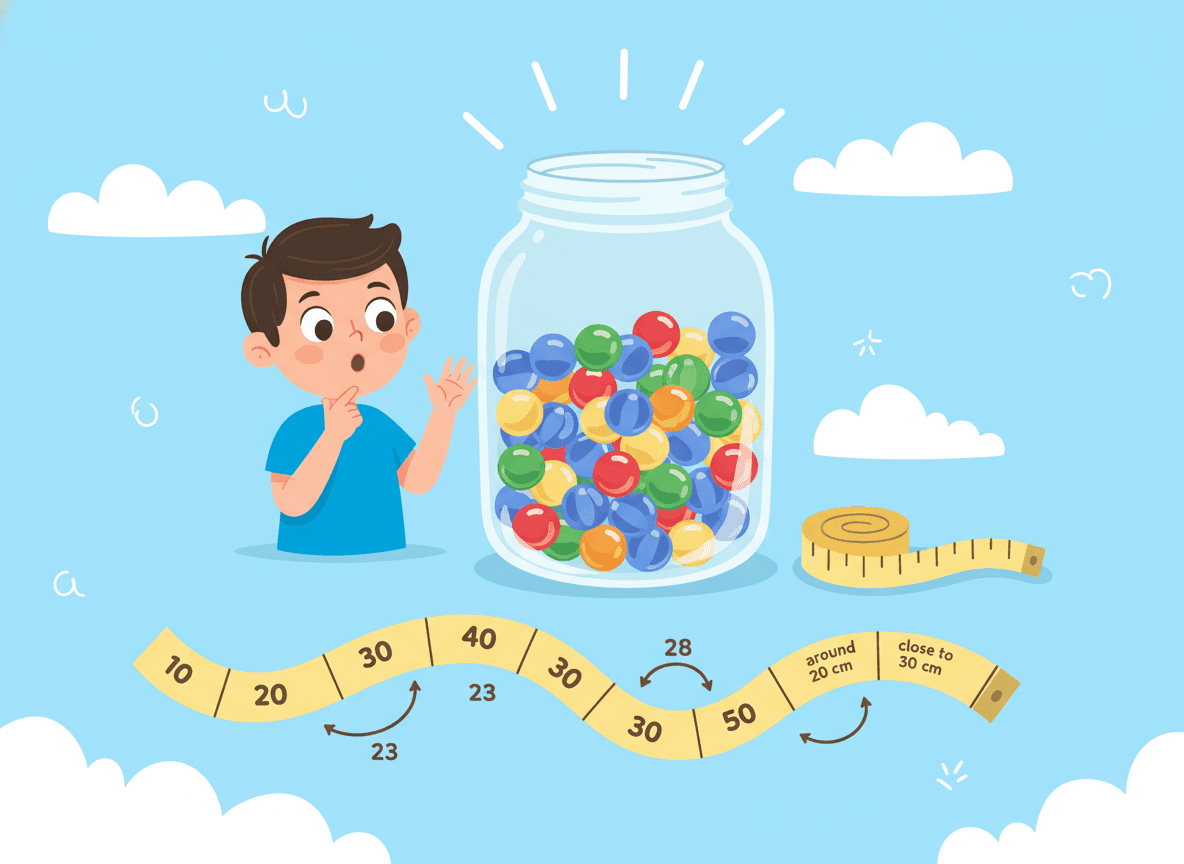
Estimation jars: Fill a jar with small objects; students estimate the count, then verify by grouping in tens.
-
Grocery estimate: Present a list of prices and ask students to estimate the total bill before adding exactly.
-
Estimate then compute: Solve a page of problems twice - first with an estimate, then exactly, and compare.
-
Round-trip race: Students race to estimate answers before a calculator provides the exact result.
-
Reasonableness check: Give students computation results (some with errors) and ask them to identify unreasonable answers using estimation.
Frequently Asked Questions
What is estimation in math?
Estimation is the skill of finding an answer that is close to the exact answer without calculating precisely. It is used when an approximate answer is sufficient, when you want to quickly check if a calculated answer is reasonable, or when exact data is not available.
What are the main estimation strategies?
The three most common estimation strategies are: (1) Rounding - round each number to the nearest ten, hundred, etc., then compute. (2) Front-end estimation - use only the leading digits of each number. (3) Compatible numbers - replace numbers with nearby values that are easy to compute mentally (e.g., changing 47 to 50).
When should students estimate instead of finding the exact answer?
Students should estimate when the problem asks for 'about how many,' when they want to check if their exact answer makes sense, or when the context doesn't require precision (e.g., 'about how many students can sit in the gym?'). Estimation is also valuable before computing to set a target range.
How is estimation different from guessing?
A guess is random, with no mathematical reasoning behind it. An estimate is a thoughtful approximation based on what you know about the numbers and the problem. Estimation strategies like rounding and compatible numbers make the process systematic rather than arbitrary.
Is estimation a required skill in Common Core?
Yes. Common Core standards require students to use estimation strategies, particularly in the context of rounding (3.NBT.A.1, 4.NBT.A.3) and multi-step problems (3.OA.D.8). Students are expected to determine whether their answers are reasonable, which requires estimation skills.
Free Estimation Worksheets
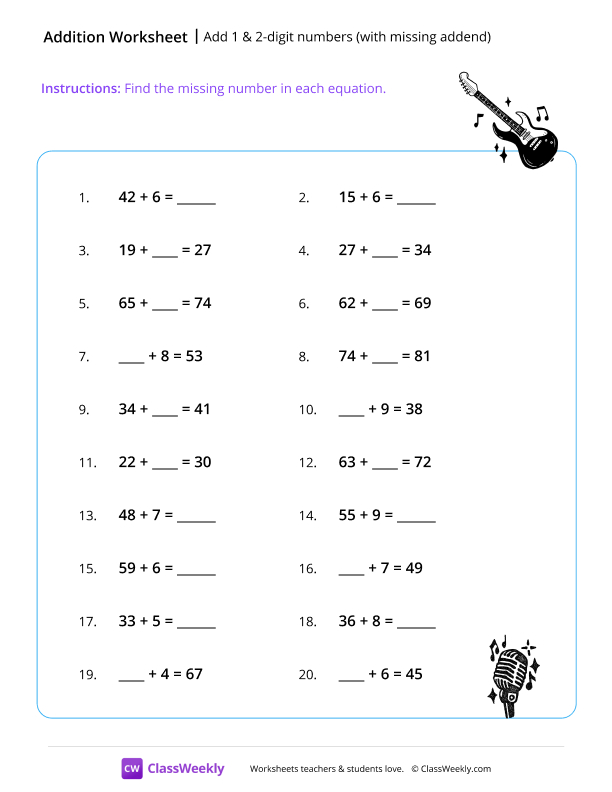
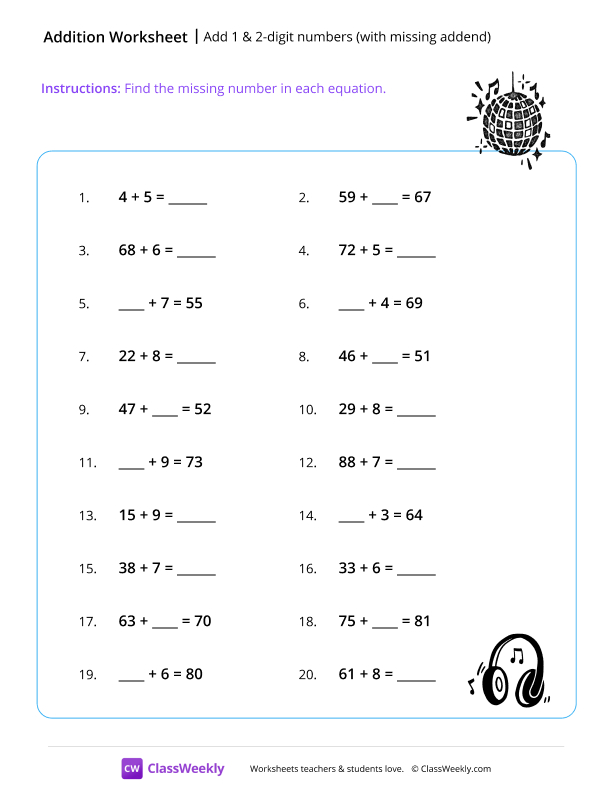
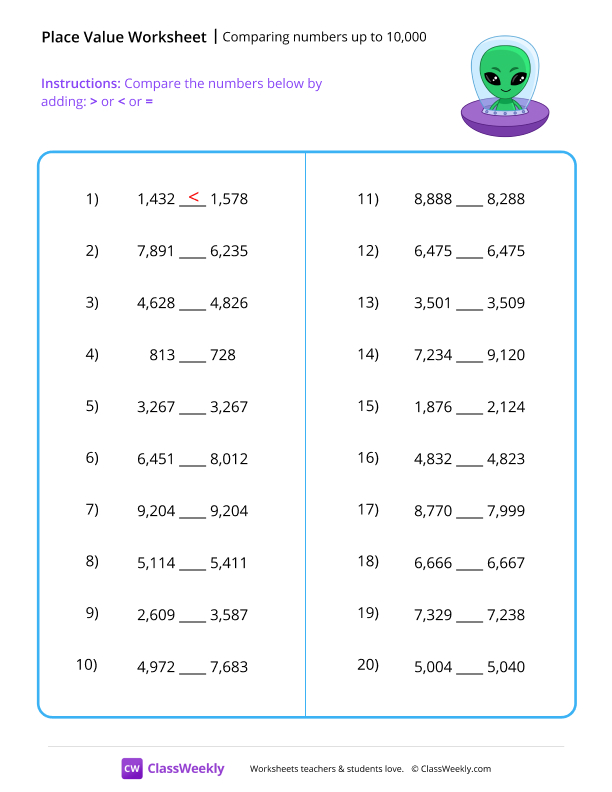
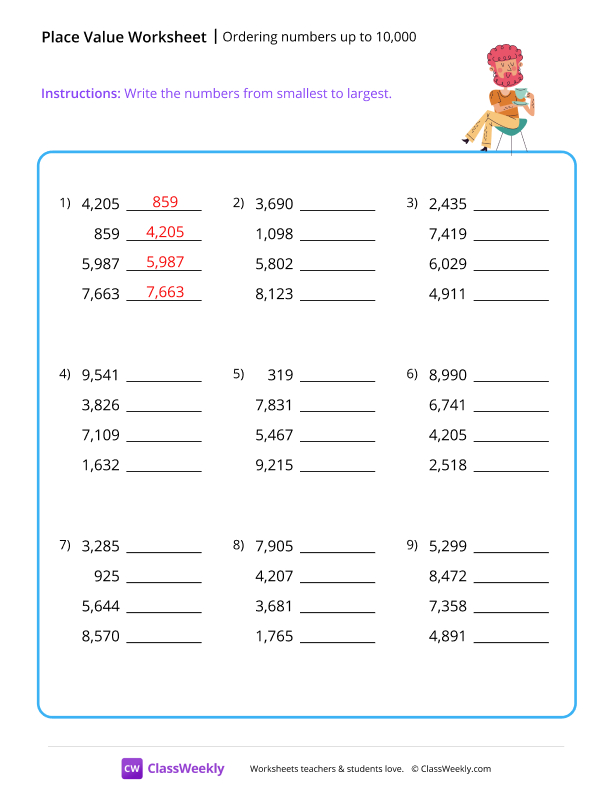
Curriculum-aligned printable worksheets for 2nd – 5th Grade. Download free.