What Are the Five Senses?
Taught in US schools
Key Takeaways
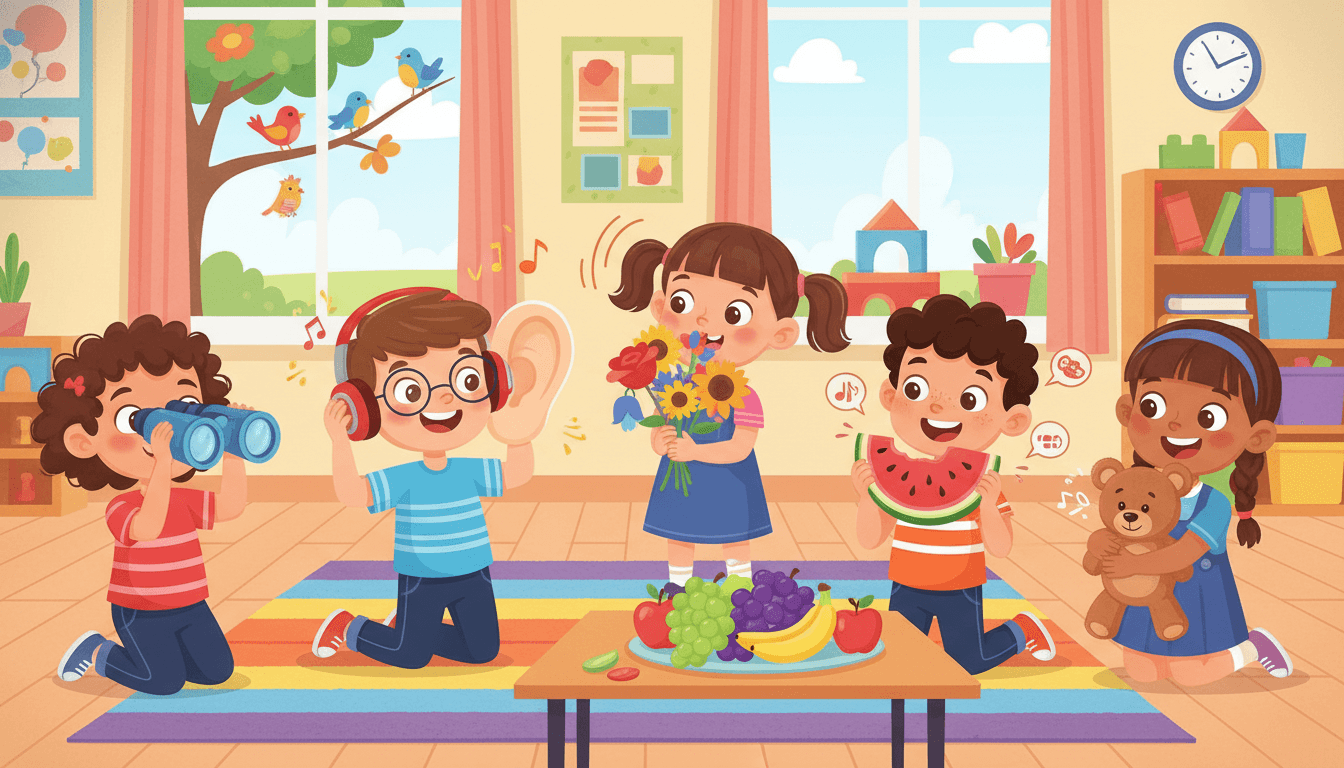
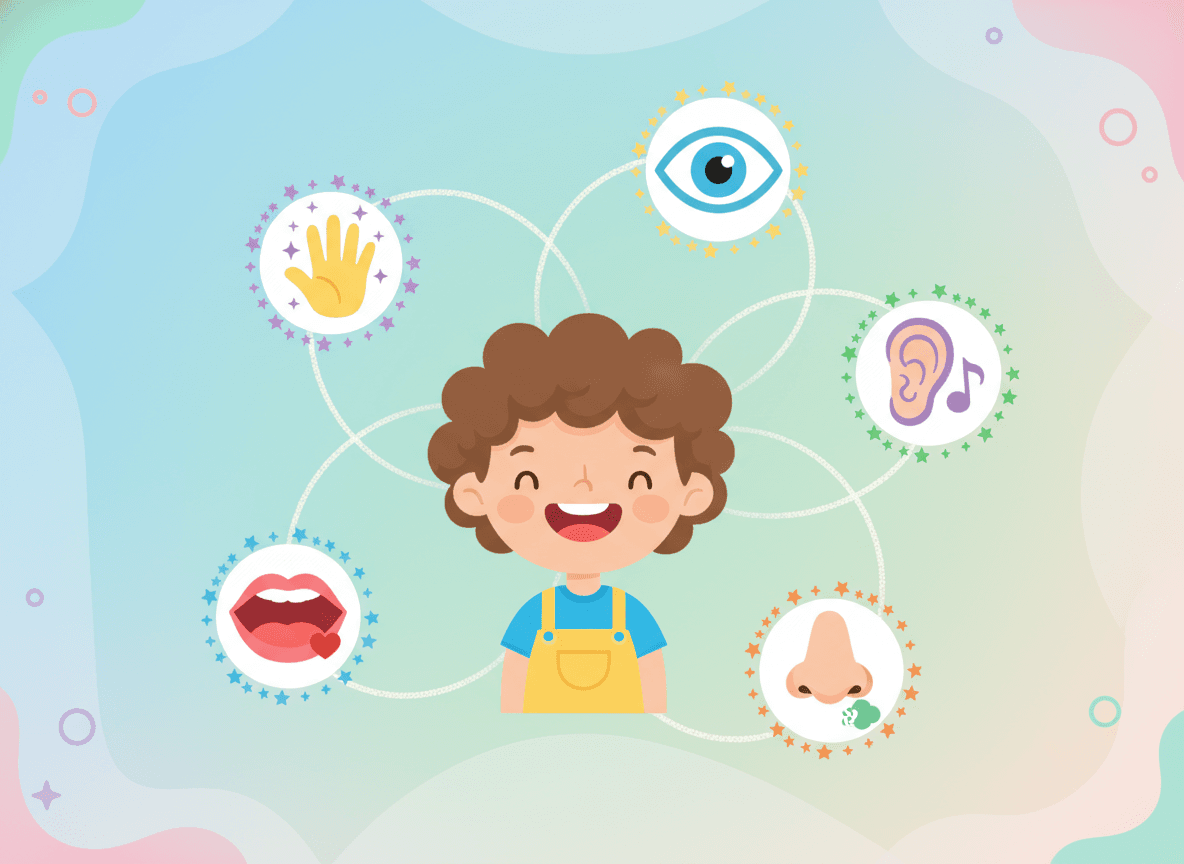
- The five senses are sight, hearing, smell, taste, and touch.
- Each sense has a specific body part (organ) that collects the information.
- The brain receives and interprets the information from all five senses.
- Scientists use their senses - especially sight - as their primary observation tools.
What Are the Five Senses?
The five senses are the ways our bodies collect information about the world around us. Each sense uses a specific body part - called a sense organ - to gather information and send it to the brain for interpretation.
Sight: Eyes - Light, color, shape, movement
Hearing: Ears - Vibrations (sound)
Smell: Nose - Airborne chemicals (odors)
Taste: Tongue - Chemicals in food and drink
Touch: Skin - Texture, pressure, temperature, pain
How Each Sense Works
Sight (Eyes) Eyes detect light. Light enters through the pupil, is focused by the lens, and lands on the retina at the back of the eye. The retina sends signals to the brain, which creates the images we see. Eyes also detect color, depth, and movement.
Hearing (Ears) Sound is made of vibrations. When something vibrates - a drum being hit, a voice speaking - it creates sound waves in the air. The ear collects these waves, and tiny structures inside the ear turn them into nerve signals the brain can interpret.
Smell (Nose) The nose detects chemicals floating in the air. Special cells inside the nose (olfactory receptors) pick up these chemicals and send signals to the brain. Smell and taste are closely linked - much of what we "taste" is actually what we smell.
Taste (Tongue) The tongue has tiny taste buds that detect chemicals in food and drink. Humans can detect five basic tastes: sweet, salty, sour, bitter, and savory (umami). Smell plays a major role in our experience of flavor.
Touch (Skin) The skin is the body's largest sense organ. Nerve endings throughout the skin detect touch, pressure, temperature, and pain. Fingertips have a very high density of touch receptors, making them especially sensitive.
The Senses and Observation in Science
Scientists rely on their senses - especially sight - to make observations. When students learn to observe carefully using all appropriate senses (not taste for everything!), they are practicing a fundamental scientific skill.
A good scientific observation describes what something looks like, sounds like, feels like, and (when safe) smells like - with specific detail, not guesses or interpretations.
Practice Activities
- Set up a "mystery bag" station - students reach in and describe what they feel without looking, then guess the object.
- Blindfold taste test: can students identify foods by taste alone (without sight or smell)?
- Draw a body outline and have students label the sense organs in the correct locations.
- Go on a "senses walk" - students record what they observe using each of the five senses during a short outdoor walk.
Frequently Asked Questions
What are the five senses?
The five senses are: (1) sight - using the eyes to see; (2) hearing - using the ears to hear sounds; (3) smell - using the nose to detect odors; (4) taste - using the tongue to detect flavors; and (5) touch - using the skin to feel texture, temperature, and pressure. All five senses send information to the brain, which interprets them.
Why do we have five senses?
Our senses help us understand and interact safely with the world around us. Sight helps us navigate our environment. Hearing lets us communicate and detect danger. Smell and taste work together to tell us whether food is safe to eat. Touch lets us feel if something is hot, sharp, or textured. Each sense provides different information, and together they give us a complete picture of our surroundings.
What happens when a sense is missing or impaired?
When one sense is impaired, the brain often compensates by strengthening others. People who are blind often develop heightened hearing and touch. People who cannot smell often also have difficulty tasting, because the two senses work closely together. This adaptability shows how interconnected and flexible our sensory systems are.
Free Five Senses Worksheets
Curriculum-aligned printable worksheets for Kindergarten – 2nd Grade. Download free.


