What Are Human Body Systems?
Taught in US schools
Key Takeaways
- The human body has several major organ systems, each with a specific job that keeps the body healthy and alive.
- Body systems work together - for example, the respiratory and circulatory systems team up to deliver oxygen to all body cells.
- The skeletal system provides structure, the muscular system moves the body, and the nervous system controls everything.
What Are Human Body Systems?
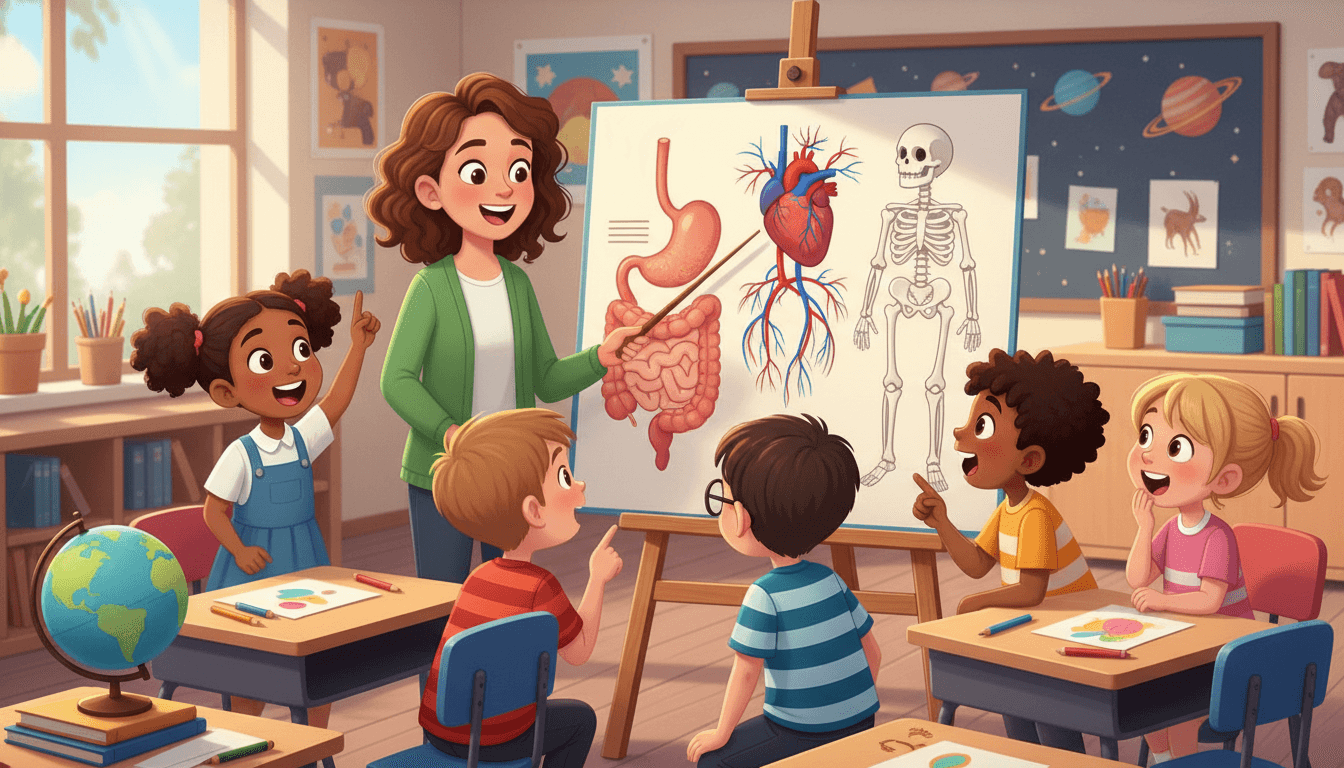
The human body is made of cells, which group together to form tissues, which form organs, which work together in organ systems. Each body system has a specific job, and all the systems work together to keep you alive, healthy, and moving.
The Major Body Systems
Skeletal System
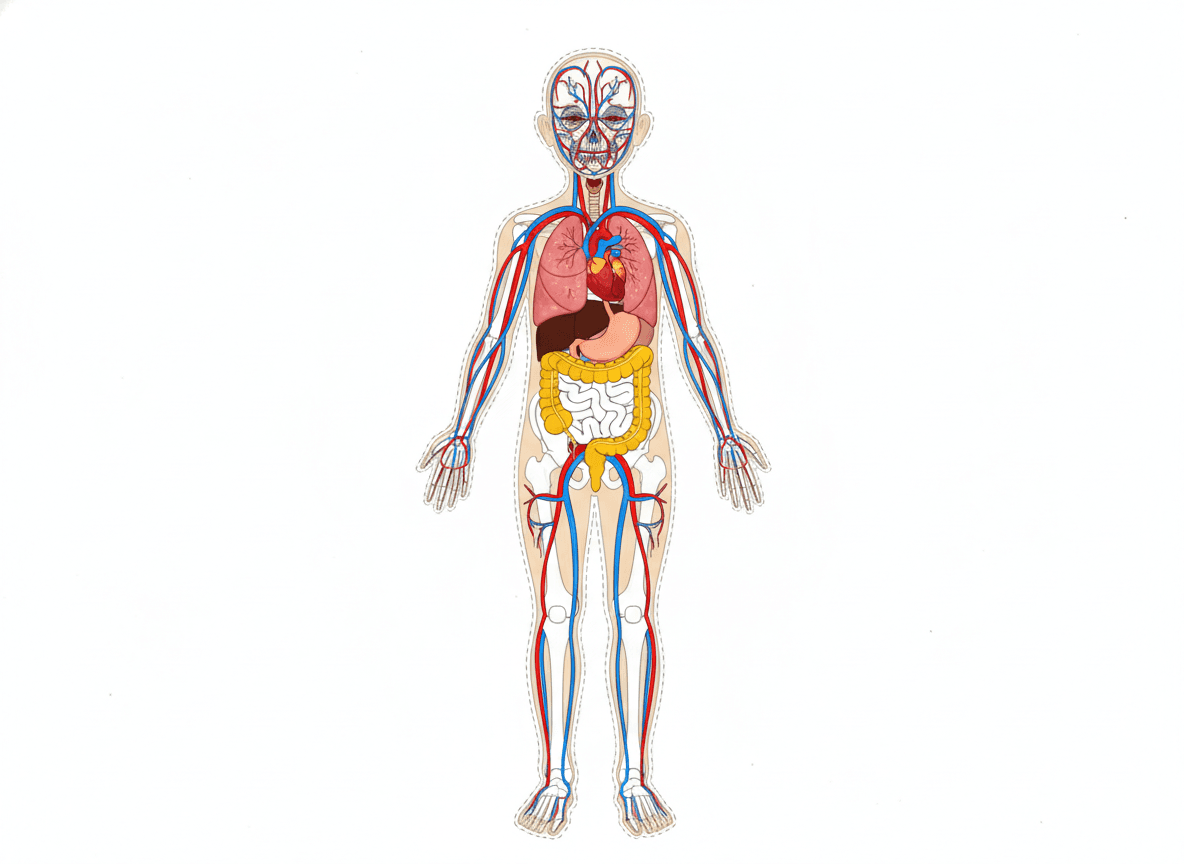
The skeletal system is made of 206 bones in an adult human. It provides the body's framework, protects vital organs (the skull protects the brain; the rib cage protects the lungs and heart), and works with muscles to allow movement. Bones also store minerals and produce blood cells in bone marrow.
Muscular System
The muscular system has over 600 muscles. Muscles pull on bones to create movement. There are three types:
-
Skeletal muscles - voluntary muscles you control (like your arm muscles)
-
Smooth muscles - involuntary muscles inside organs (like the stomach)
-
Cardiac muscle - the heart muscle; works automatically without rest
Digestive System
The digestive system breaks food down into nutrients the body can use. Food travels from the mouth → esophagus → stomach → small intestine (nutrients absorbed) → large intestine (water absorbed) → and waste exits the body. Organs include the stomach, liver, and pancreas.
Respiratory System
The respiratory system brings oxygen into the body and removes carbon dioxide. When you breathe in, air travels through the nose/mouth → trachea (windpipe) → bronchi → lungs. Tiny air sacs called alveoli transfer oxygen into the blood and pull CO₂ out.
Circulatory System
The circulatory system pumps blood throughout the body. The heart is the pump, blood vessels (arteries, veins, capillaries) are the highways. Blood carries oxygen, nutrients, and hormones to cells and removes carbon dioxide and waste products.
Nervous System
The nervous system is the body's command center. The brain processes information and sends instructions. The spinal cord relays messages. Nerves carry signals between the brain and the rest of the body, controlling movement, senses, thoughts, and automatic functions like heartbeat.
How Systems Work Together
Respiratory + Circulatory: Deliver oxygen to cells; remove CO₂
Skeletal + Muscular: Work as levers to create movement
Digestive + Circulatory: Absorb nutrients into the blood and deliver them to cells
Nervous + All Systems: Brain controls and coordinates every other system
Grade-by-Grade Breakdown
2nd Grade: Basic bones and muscles; what organs do
3rd Grade: Digestive and respiratory systems in depth
4th Grade: Circulatory system; how systems interact
5th Grade: All major systems; homeostasis; disease and health
Practice Activities
-
Body outline project: Trace a student's body on large paper and draw/label the major body systems inside.
-
Stethoscope lab: Listen to a partner's heartbeat before and after exercise to observe the circulatory system working.
-
Digestive system model: Model the journey of food using a banana and a zip-lock bag to simulate digestion.
-
Bone count: Give students an x-ray image to study; discuss how bones connect and protect organs.
-
System connections web: Draw each body system as a circle and draw lines showing which systems work together and why.
Frequently Asked Questions
What are the six major body systems students learn about in elementary school?
The six major systems are: skeletal (bones), muscular (muscles), digestive (breaking down food), respiratory (breathing), circulatory (heart and blood), and nervous (brain and nerves). Each has a different job but they work as a team.
How do the respiratory and circulatory systems work together?
The respiratory system brings oxygen into the lungs. The circulatory system picks up that oxygen in the blood and carries it to every cell in the body. On the return trip, the blood collects carbon dioxide and brings it back to the lungs to be exhaled.
What is the largest organ in the human body?
The skin is the largest organ in the human body. It is part of the integumentary system, which protects the body from germs, regulates temperature, and provides the sense of touch.
Free Human Body Systems Worksheets
Curriculum-aligned printable worksheets for 2nd – 5th Grade. Download free.


